Gymshark vs Lululemon — The Price Gap Is Real. Is the Quality Gap Real Too?
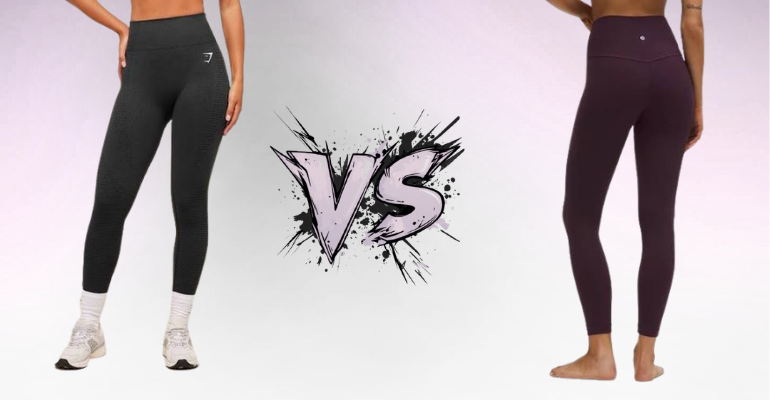
The difference between a Gymshark legging and a Lululemon legging is somewhere between £40 and £70 depending on the specific style. That’s a meaningful amount of money. It’s the kind of difference that makes you want someone to tell you definitively that one is clearly worth it and one clearly isn’t, so you can make the decision and move on. I’m going to tell you that the answer is more complicated than that, but not in the way that usually means the answer is actually simple and I’m just being coy about it. The genuine complication here is that the right answer depends on what you’re buying, what you’re doing in it, and how much the brand story matters to you relative to the physical product. Where these brands are coming from Lululemon is a twenty-six-year-old Canadian company that essentially invented the premium women’s activewear category. The brand has built enough equity and enough genuine product innovation over that period that the premium has something concrete behind it — specific fabrics that took years to develop, a design philosophy that has remained coherent through significant growth, and a quality guarantee that exists because the company genuinely expects its products to last. Gymshark is a twelve-year-old British company that built its entire initial growth through social media and fitness influencer partnerships before that was a standard playbook. The brand was founded by Ben Francis in his parents’ garage in Birmingham and scaled to a billion-pound valuation through a specific combination of community-building and accessible pricing. The brand has an authenticity to its origin that Lululemon’s more corporate scale doesn’t replicate, and it resonates particularly strongly with the fitness community it was built within. These different origin stories produce different products. Fabric — the single most important comparison Lululemon’s Nulu fabric is the thing most people mean when they say Lululemon justifies its price. There is no comparable fabric in Gymshark’s range. Nulu is a proprietary development that delivers a combination of softness, weight, and shape retention that other brands — including Gymshark — haven’t matched. For yoga, Pilates, barre, and any movement where maximum skin comfort is what you want from the fabric, there is no Gymshark equivalent. Gymshark’s Seamless fabric is a different product doing a different job. It has a textured surface quality, a comfortable fit, and better-than-expected durability. It’s not trying to be Nulu. It’s trying to be good activewear at an accessible price and it succeeds at that. The Vital Seamless legging in particular is one of the most consistently well-reviewed affordable activewear products available, and the review consensus is that it performs above its price point. The Gymshark Adapt collection, with its more structured compression fabrics, performs well for high-intensity training. This is actually a category where the comparison between Gymshark and Lululemon is closer — Lululemon’s equivalent training pieces (the Wunder Train, the Fast and Free) use fabrics that are more about performance than comfort, and Gymshark’s competition-level pieces are closer to this territory than they are to the Nulu category. Durability — what happens after twenty washes Lululemon pieces that are well cared for genuinely last. The Align I’ve had for three years looks marginally different from when it was new — the Nulu has softened slightly further, which is actually pleasant — but it’s structurally intact, the waistband hasn’t stretched, and there’s no significant pilling. Gymshark’s durability is reasonable but not in the same category. After a year of regular washing, the Vital Seamless shows slight pilling at the inner thigh. Not dramatic. Not unwearable. But visible in a way the Lululemon equivalent hasn’t shown. This is a fair comparison because the Gymshark is half the price — the longevity question is always relevant to the total cost of ownership. If a Gymshark legging lasts eighteen months of regular use and a Lululemon lasts three years, the per-wear cost narrows the apparent price gap. Sizing and fit Gymshark has historically sized for a specific body type and been criticized for it. The brand has expanded its size range and improved the fit documentation on their website, but if you’re outside the mid-range of sizes, Gymshark can be less reliable than Lululemon for fit accuracy. Lululemon’s sizing is inconsistent across product lines — this is a known issue and a reasonable frustration — but their customer service for fit issues is responsive and the size range is broader than Gymshark’s. The community and identity dimension I want to mention this without overstating it. Both brands have built real communities. Gymshark’s is younger, more fitness-competition oriented, more tied to social media culture. Lululemon’s is more established, more yoga-and-wellness oriented, and embedded into a broader lifestyle identity. Neither of these is a reason to buy or avoid either brand. But for some people, which community they want to be associated with is part of the purchasing decision, and I’d rather acknowledge that than pretend buying activewear is a purely functional decision for everyone. The actual recommendation Buy Gymshark if: you’re primarily doing higher-intensity training, you’re budget-conscious and want solid performance activewear at a lower price point, you’re newer to the premium activewear category and want to test whether the investment is worthwhile before spending more, or you specifically like the Gymshark aesthetic and community identity. Buy Lululemon if: the Nulu fabric is specifically what you want (nothing else does what Nulu does), you’re buying primarily for yoga or Pilates, you want the quality guarantee and the longer expected lifespan, or you’re buying for a use case where maximum fabric comfort matters more than maximum performance. The conclusion worth landing on: Gymshark is not a compromise brand. It’s a genuinely good activewear brand at accessible prices. Lululemon is not just a brand you pay for the name. It has specific products — primarily the Nulu collection — that deliver something no one else quite replicates. Knowing which product justifies which price is what actually matters.
IKEA vs Wayfair — I’ve Bought from Both More Times Than I’d Like to Admit

There’s a specific kind of furniture purchase that most people make at some point — probably more than once — where the primary constraint is that you need something that looks decent, fits the space, and doesn’t cost what a sofa should actually cost if furniture was priced honestly. IKEA and Wayfair both live in this territory. They both have thousands of options at accessible prices. They’re also completely different operations doing completely different things, and treating them as equivalent produces predictable disappointment. Let me tell you what I’ve learned from furnishing multiple spaces with products from both. What IKEA is and how it works IKEA is a vertically integrated manufacturer. They design the products, they have significant influence over how they’re made, they ship them flat-packed to their own warehouses, and they sell them in their own stores (and increasingly online) at prices that reflect the efficiency of this model. The IKEA Billy bookcase is cheap because IKEA has manufactured millions of Billy bookcases and refined every element of its production to reduce cost while maintaining function. The implications of this: IKEA quality is consistent. Not always high — some IKEA products are not well-made and everyone who has used IKEA knows which categories to approach carefully — but consistent. A Billy bookcase from 2026 is built to the same specification as a Billy bookcase from 2010. You can look up reviews from any year and they describe the same product. IKEA design is also consistent in a specific way. The aesthetic is Scandinavian minimalism that has become so widely imitated that it’s now just described as “modern.” Clean lines, functional design, limited ornamentation. This either fits your aesthetic or it doesn’t. If it does, IKEA’s range covers an enormous variety of storage, seating, bedroom, and kitchen furniture at prices that are hard to argue with. What Wayfair is and how it actually works Wayfair is a marketplace. They don’t manufacture anything. They host products from thousands of suppliers — most of them in China, Vietnam, India, and parts of Eastern Europe — and sell those products under a collection of Wayfair house brand names: Andover Mills, Kelly Clarkson Home, Mercury Row, Laurel Foundry Modern Farmhouse. These aren’t different companies. They’re labels applied to products from different manufacturers. The implications of this: Wayfair quality is wildly inconsistent. A rug from one supplier and a bookshelf from another supplier are essentially unrelated products that happen to be listed on the same website. The 4.3-star rating on a sofa and the 4.3-star rating on a dining table come from two completely different manufacturing sources with two completely different quality floors. This is the most important thing to understand about Wayfair and the thing that causes the most disappointment for people who treat it like a conventional retailer. You cannot transfer your trust in one Wayfair product to another Wayfair product the way you can with IKEA. The quality question — what you’re actually getting at similar prices At the £100-300 price point that covers most IKEA furniture and a significant chunk of Wayfair’s mid-range: IKEA is more predictable. The quality will be what the reviews say it is. The dimensions will be accurate. The assembly instructions, while sometimes infuriating, are consistent with the product. At this price point on Wayfair: you can find genuinely excellent products that exceed IKEA’s quality by some margin, and you can find genuinely terrible products that represent poor value even at low prices. The mechanism for telling which you’re looking at before buying is: reading every negative review, looking at customer-uploaded photos rather than product photos, and filtering by most recent reviews rather than aggregate rating. At the £500-1,500 price point: Wayfair’s range includes products that IKEA simply doesn’t offer — specific styles, specific proportions, specific aesthetics that the IKEA range doesn’t accommodate. For a sectional sofa in a specific configuration, a bed frame in a specific style, or a dining table in a specific material that IKEA doesn’t make, Wayfair’s breadth is its genuine advantage. Assembly — what it’s actually like IKEA assembly has become a cultural shorthand for furniture frustration, but IKEA’s instructions are actually quite good by flat-pack standards. Visual step-by-step diagrams, hardware sorted by step, consistent screw and dowel sizing within a product. Most IKEA assembly, done without rushing, goes well. The pieces fit because the tolerances are designed by the same company that designed the furniture. Wayfair assembly varies by manufacturer and is sometimes genuinely poor. Instructions that reference the wrong step, hardware bags that don’t correspond to the labeling in the instructions, pieces that don’t align in the way the instructions suggest because the tolerances from the actual manufacturer aren’t what the generic instructions describe. When Wayfair assembly goes wrong it goes wrong in ways that feel like a problem with the product rather than user error, because sometimes it is. Returns — the thing that matters enormously for furniture IKEA has a 365-day return policy for most products, and returns to their stores are simple. If you’ve assembled it and it doesn’t work, you can disassemble and return within the policy window. The in-store return process is functional if occasionally queue-based. Wayfair’s return policy for large furniture items requires you to organize and pay for return shipping in most cases. A sofa that arrived in a van and needs to be collected by a van to be returned is not a frictionless return. The cost of returning large Wayfair furniture can be substantial — sometimes exceeding the cost of the furniture itself for very large pieces. This is the most significant consumer protection concern with Wayfair and it gets buried in the shopping experience. Understanding this before buying large Wayfair items is not optional. Know what return means for the specific item you’re purchasing before you add it to cart. The practical guide by furniture type Bedroom storage, bookshelves, simple shelving: IKEA. The PAX wardrobe system and the KALLAX shelving are among the best value products in furniture
Charlotte Tilbury vs MAC — Two Professional Makeup Brands, Two Completely Different Experiences
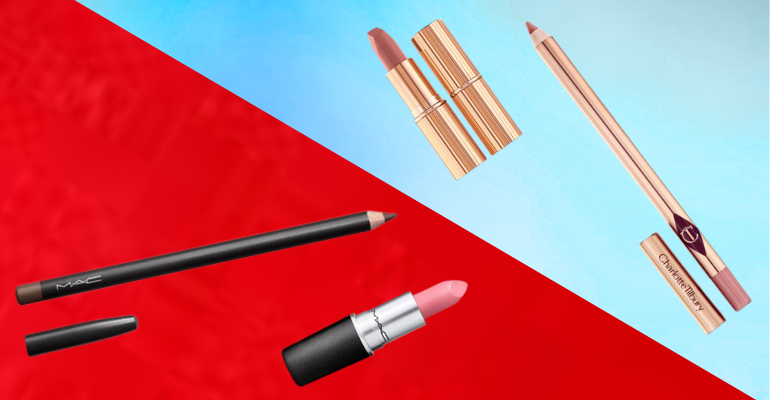
I’ve been wearing makeup long enough to have gone through phases with both of these brands. The MAC phase in my early twenties when a Studio Fix foundation was the answer to every skin question I had. The Charlotte Tilbury phase that started when someone handed me a sample of Flawless Filter and I immediately understood what the fuss was about. They’re both professional-quality brands. They’re both expensive. They’re both genuinely good at what they do. But they’re designed for different people with different relationships with makeup, and choosing the wrong one for your priorities is how you end up with a beautiful product that sits in a drawer. The philosophies behind the brands MAC was founded in Toronto in 1984 by Frank Toskan and Frank Angelo. The brand’s origin was professional — it was created for photographers and makeup artists who needed products that performed under lights and cameras. The professional heritage is embedded in the product philosophy: formulations designed for maximum performance, wide shade ranges that cover genuine skin diversity, and a product line structured around the technical requirements of makeup artistry rather than the aspirational lifestyle marketing that most beauty brands lead with. Charlotte Tilbury launched in 2013 after its founder had spent decades as a celebrity makeup artist whose client list was as impressive as anyone in the industry. The brand philosophy is overtly glamorous — every product is named after a look or an idea, the packaging is a specific shade of rose gold that’s immediately identifiable, and the whole experience is built around the aspiration of looking like someone who knows the secrets that a high-end makeup artist knows. Charlotte Tilbury’s marketing is some of the best in beauty because Tilbury herself is a genuinely charismatic presence who communicates not just what the products do but how they’re supposed to make you feel. These different origins produce genuinely different products. Foundation — the category where the comparison is most instructive MAC’s Studio Fix line is one of the most reliably reviewed foundations in professional makeup. The coverage is buildable from medium to full, the shade range is one of the most comprehensive available, and the formula holds up under conditions — photography, events, long days — in a way that reflects the professional origin. The finish is matte, which is right for some skin types and wrong for others, and there are enough variations within the MAC foundation range (Face and Body for sheerer coverage, Pro Longwear for maximum durability, Studio Radiance for more glow) that most skin types find a version that works. Charlotte Tilbury’s Beautiful Skin Foundation is a different product doing a different thing. The coverage is lighter — medium buildable, not full coverage without layering. The finish is radiant in a way that reads as skin rather than makeup, which is the specific effect Charlotte Tilbury has spent her career creating for clients. The shade range has improved significantly since launch but is still narrower than MAC’s. The honest comparison: MAC for full coverage performance, durability under challenging conditions, and the widest shade range. Charlotte Tilbury for a luminous, skin-like finish that looks like very good skin rather than very good coverage. Complexion products — Flawless Filter deserves its own conversation Charlotte Tilbury’s Flawless Filter is the product that most clearly represents what the brand does that MAC doesn’t. It’s a primer, filter, and light coverage product that can be worn alone or under foundation. The effect is a specific kind of radiance — a lit-from-within glow that doesn’t read as shimmer or highlight but as skin that’s genuinely healthy and rested. There is no direct MAC equivalent to Flawless Filter. MAC makes excellent primers and highlighters but they’re not trying to do what Flawless Filter does. For the specific effect of looking like you’ve slept well and have good skin even when you haven’t and don’t, Flawless Filter is the product. This is not a comparison where MAC wins on the same terms — they’re not trying for the same result. Lipstick — where both brands are genuinely excellent MAC’s lipstick range is legendary and deservedly so. The Matte collection covers an enormous range of shades with a formula that’s consistent across colors and delivers the coverage and staying power that the professional heritage suggests. MAC’s Ruby Woo remains one of the most reliably perfect blue-red matte lipsticks available despite being decades old. Charlotte Tilbury’s Matte Revolution lipstick is genuinely excellent in a different way — the formula is more comfortable on the lips than MAC’s matte, trading some of the maximum coverage for wearability, and the shade selection is curated rather than comprehensive. The Pillow Talk family of shades has become iconic in a way that’s genuinely earned — it photographs beautifully on an extraordinary range of skin tones and lip shapes. Price comparison MAC is slightly more accessible than Charlotte Tilbury across comparable products. Foundation at MAC runs £27-35. Charlotte Tilbury runs £34-42. Lipstick at MAC: £19-22. Charlotte Tilbury: £27-32. Both brands are genuinely premium. Neither is cheap. But if budget within the premium tier is a consideration, MAC typically offers slightly more product for the money. Honest recommendation Buy MAC if: shade range is a priority (particularly for darker skin tones where Charlotte Tilbury’s range, though improved, is still not MAC’s equal), you want maximum performance and coverage, you’re interested in professional makeup techniques, or you want the widest possible selection within a category. Buy Charlotte Tilbury if: the luminous skin-like finish is the effect you want, you specifically want the Flawless Filter experience, you prioritize the overall brand experience and aesthetic, or you’re shopping for something that will photograph particularly beautifully. Use both: MAC for workhorse products where performance is the primary requirement, Charlotte Tilbury for the specific products it does better than anyone else.
Drunk Elephant vs The Ordinary — Years of Testing Both. Here’s the Honest Answer.
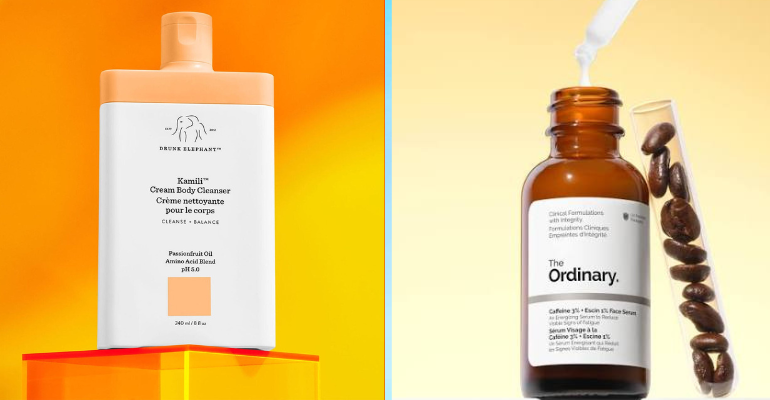
There’s a version of the skincare world where you have to pick a side: either spend serious money on prestige formulations or go budget and accept some limitations. Drunk Elephant vs The Ordinary gets framed this way constantly, as if the brands are in direct competition and choosing one means abandoning the other. They’re not in direct competition. They’re doing different things and they’re each genuinely good at some of those things and less good at others. I have spent more money on skincare than I am comfortable admitting. I have also spent very little money on skincare during periods when I couldn’t spend more. I know which things from each brand actually changed my skin and which things were purchases I felt good about making without results to justify them. Here’s what I actually know. The backstory, because it matters The Ordinary launched in 2016 under the DECIEM umbrella. The founder, Brandon Truaxe, had a specific mission that was genuinely unusual in the beauty industry: price products according to actual production cost rather than brand positioning. Niacinamide costs very little to produce. Hyaluronic acid costs very little to produce. A 30ml bottle of 10% niacinamide serum should not cost £30 when the ingredients cost pennies. The result was a product range priced at £4-15 for most items, with clinical packaging (the products look like they came from a laboratory, not a spa), and names that are the actual chemical compound names rather than invented product names. The Ordinary’s 10% Niacinamide + 1% Zinc is exactly those ingredients at exactly those concentrations. Nothing is obscured. Drunk Elephant launched the same year, 2016, with an entirely different approach. The founder, Tiffany Masterson, was interested in clean formulations — avoiding what the brand calls “The Suspicious 6” ingredients — and in creating products that work together as a cohesive system. The packaging is colorful and proprietary-feeling. The product names are invented. The prices are prestige. These two brands becoming the comparison point for the “budget vs luxury skincare” debate makes sense but it also flattens something important: they’re not equivalent product-for-product replacements. The Ordinary makes excellent single-ingredient actives at extraordinary value. Drunk Elephant makes complex formulations where the interaction between ingredients is part of what you’re paying for. Where The Ordinary genuinely wins and shouldn’t be replaced by anything more expensive Niacinamide 10% + Zinc 1%. This is the product that made The Ordinary famous and it deserved to. Niacinamide at 10% concentration is well-researched for pore minimization, skin tone evening, and general skin health improvement. The formulation is stable. The price (around £5-6) is absurd in the best possible sense. I have tried niacinamide serums from brands charging ten times this amount and the results were not ten times better. Some were marginally different. Most were not. If niacinamide is the primary active you need, buy The Ordinary’s version. There is no meaningful reason to pay more. The AHA 30% + BHA 2% Peeling Solution. The red mask. The cult product. At around £8 it delivers chemical exfoliation that requires real care (this is a potent product with real activity and real potential for irritation if misused) but produces real results. Skin texture improvement, the softening of old acne marks, brightening — these effects are consistent with what AHA/BHA exfoliation is supposed to do and The Ordinary delivers them at a price that removes the barrier to regular use. Hyaluronic Acid 2% + B5. Simple, effective hydration. At £7, this is the correct amount of money to spend on a hyaluronic acid serum. Retinol products. The Ordinary offers retinol at multiple concentrations (0.2%, 0.5%, 1%) in different formulations, which is genuinely useful for someone building up a retinol routine incrementally. The prices make it sensible to test lower concentrations before committing to higher ones. The formulations are not as elegant as some prestige retinol options but the active ingredient is real and the results are real. Where Drunk Elephant justifies its price and The Ordinary doesn’t quite compete The C-Firma Fresh Day Serum. This is the product where Drunk Elephant’s formulation investment is most visible and most meaningful. Topical vitamin C is genuinely tricky chemistry. L-ascorbic acid, the form of vitamin C that’s most proven in skincare research, oxidizes quickly and loses efficacy. The stabilization of vitamin C formulations is one of the harder problems in skincare science. Drunk Elephant’s C-Firma contains 15% L-ascorbic acid with ferulic acid and phloretin — a combination that both stabilizes the vitamin C and enhances its efficacy. The product performs. It’s expensive (around £85) and it’s worth it if vitamin C is a priority in your routine. The Ordinary has vitamin C options but they’re either less stable forms (ascorbic acid derivatives that don’t have the same research backing) or they require mixing yourself (the vitamin C powder), which is accurate but inconvenient and has its own stability concerns. The Lala Retro Whipped Cream. Drunk Elephant’s moisturizer is considerably more sophisticated than their vitamin C gets credit for. The formulation includes multiple ceramides, fatty acids, and plant oils in a way that genuinely feels different on the skin from a simple moisturizer. For dry skin specifically, the richness and the way it sits on the skin is meaningful. The Ordinary’s moisturizer options are less impressive than their actives — this is one category where spending more is genuinely justified. The Protini Polypeptide Cream. Peptide skincare is a category where formulation complexity matters considerably and where The Ordinary’s offerings (their Buffet serum being the primary peptide product) are functional but don’t quite have the same breadth of peptide types that Drunk Elephant’s Protini includes. The products from each brand that I wouldn’t recommend The Ordinary’s foundation and concealer range: not what the brand does best. The coverage and the finish are both mediocre. Buy skincare from The Ordinary, not makeup. Drunk Elephant’s F-Balm Electrolyte Waterfacial: an overnight mask at around £52 that I found genuinely underwhelming relative to the price. The results didn’t justify the
Activewear Brands for Women — Ranked By Someone Who Has Spent Too Much Money Finding Out

I want to tell you something before this list starts. The activewear industry is one of the most aggressively marketed categories in fashion, and it has gotten very good at making you believe you need new things when you don’t, and that the newest thing is better than what you have when it often isn’t. So before we get into which brands are worth buying: you probably don’t need more activewear. You need better activewear. There’s a difference and it’s the difference between spending $400 on pieces that actually work and spending $400 on four things that are fine. This list is what I’d tell a friend who was starting from scratch or replacing a worn-out collection and wanted to spend well. Lululemon — still the benchmark, complicated feelings included Lululemon’s Align legging is the reference point against which everything else in this category gets measured, and the reason for that is simple: the Nulu fabric is genuinely unlike other fabrics. It’s soft in a way that makes every other activewear brand’s “soft” claim feel slightly inadequate. For yoga, Pilates, barre, and any movement that doesn’t require aggressive compression, the Align is still the best product of its type. But I want to be honest about what’s happened to Lululemon’s quality consistency over the last three years, because it affects how I’d tell someone to shop there. The brand has scaled enormously and something has shifted. Not dramatically. But pieces from 2020 feel more substantial than equivalent pieces from 2024. The Align I bought four years ago has held up better than the Align I bought eighteen months ago. This is anecdotal but it’s consistent with what I hear from people who’ve been buying Lululemon for a long time. What to buy from Lululemon in 2026: the Align for gentle movement and daily wear, the Wunder Train for actual high-intensity workouts, the Define jacket which has maintained its quality and remains one of the most flattering fitted athletic jackets available, and the ABC trousers which are genuinely excellent work-casual trousers masquerading as activewear. What to be more careful about: anything in categories where Lululemon has expanded beyond their original strengths, very lightweight fabrics that feel thin on arrival, and anything you’re ordering online without having touched the fabric first. Girlfriend Collective — the brand more people should be talking about Girlfriend Collective doesn’t have Lululemon’s marketing budget or Alo’s celebrity adjacency. What they have is an excellent product at a lower price point and a sustainability story that’s more substantive than the industry average. The Compressive High-Rise Legging is genuinely compressive in a way that makes it excellent for any workout where you want things held in place. The fabric is made from recycled plastic bottles — a claim that sounds like greenwashing until you see how it translates into a material that’s durable, moisture-managing, and comfortable for extended wear. Girlfriend Collective also runs proper extended sizing, which matters, and their LITE collection is lighter and more breathable for hot weather or outdoor running. The price point is meaningful: typically $68-88 for leggings versus Lululemon’s $98-128. That’s not a small difference. If you’re buying multiple pieces, the savings accumulate into something real. What’s not as strong at Girlfriend Collective: the aesthetic is functional rather than fashion-forward. If you want activewear that looks like it belongs in a fashion editorial, Girlfriend Collective isn’t trying to deliver that. The pieces look like sportswear. That’s fine if sportswear is what you want. It’s a limitation if aesthetics are a priority. Alo Yoga — the one for when you want to look specifically good There is a version of buying activewear where function is secondary to looking like someone who takes very good care of themselves. I’m not saying this disparagingly. The aesthetic dimension of how you feel when you’re working out or going about your day in your activewear is real and it affects whether you actually use the stuff. If wearing Alo makes you more likely to go to the studio, the price is justified. Alo’s Airbrush fabric has real compression and real structure. The pieces hold their shape in ways that make them particularly good for any movement that’s being photographed — reformer Pilates, yoga, outdoor running. The matching sets are one of Alo’s strongest categories and they photograph exceptionally well as a result. The things that bother me about Alo: the size range is still not as inclusive as it should be for a brand at this price point and visibility. The brand has expanded but not enough. If you’re outside a fairly standard size range, Alo’s options become limited quickly. The things I genuinely like about Alo: the product development is real. The Airbrush has gotten better since it launched. The accessories — specifically the crossbody bags and the headwear — are well-made additions to the range that work both in and out of the gym context. And the Alo Moves app, included with purchases, is a genuinely good workout resource that adds value beyond the product. On Running — because footwear is activewear and these are the shoes right now On Running has done something remarkable which is to make a technical Swiss running shoe into a lifestyle object that people wear everywhere. The Cloud series — the Cloudmonster, the Cloudstratus, the Cloudsurfer — are legitimately good running shoes with specific cushioning technology. They’re also the shoe you see on every woman in any major city right now who has an active lifestyle or wants to project one. I want to be careful here because the lifestyle halo can obscure whether the shoe is actually right for you. On Running shoes have a specific feel — more responsive and less maximally cushioned than something like a Brooks Ghost or a HOKA Clifton. If you’re a heavy heel-striker with any knee issues, the responsiveness that performance runners love can be less comfortable for you specifically. Try before you buy rather than purchasing based on the aesthetic. What’s genuinely
Zara vs Mango — The European Fashion Comparison That Actually Matters
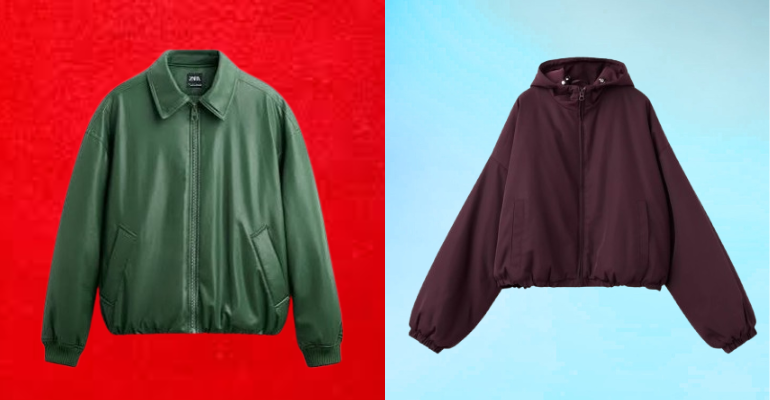
Something that doesn’t get said enough in fashion comparisons: the right question isn’t which brand is better. The right question is which brand is better for what you’re specifically trying to buy. I’ve been shopping both Zara and Mango for over a decade. I’ve had experiences with both that made me feel like I got genuine value and experiences that made me feel like I wasted money. The pattern that emerged from all of those purchases took a while to see clearly, but once I saw it I couldn’t unsee it. Here it is simply: Zara is better for trend-specific pieces you’re buying for a season. Mango is better for foundation pieces you want to last. Shopping both without this understanding is how you end up with a wardrobe full of things that don’t work together. The brands, honestly Zara is the most successful fashion retailer in the world by revenue. This is not incidental. The business model — identify what’s happening on runways and in street style, reproduce it quickly at accessible price points, put it on shelves in weeks rather than months — is genuinely brilliant as a commercial operation. The clothes look current because they’re designed to be current. The trade-off embedded in this model is that “current” has a built-in expiration date, and the production speed required means quality is sometimes sacrificed at the altar of timing. Mango is the quieter story. Spanish, like Zara, founded in Barcelona in 1984, considerably smaller. Mango has never chased Zara’s trend velocity. Instead they’ve spent the last decade repositioning themselves as something more elevated — better fabrics, slower design cycles, a more coherent aesthetic identity. The Mango you’re shopping now is not the Mango that existed in 2015. The brand quality has genuinely improved in ways that aren’t always acknowledged. Quality — what it actually means in practice When people say “quality” about fashion they usually mean a vague combination of fabric feel, construction precision, and how long the thing looks good. All three matter. None of them are simple. Zara’s quality is inconsistent in a way that requires you to develop a skill: knowing which product categories to trust and which to approach carefully. Their tailoring — blazers, structured trousers, coats — is frequently better than you’d expect. The construction on a Zara blazer from their Studio line is often genuinely impressive for the price. Their floaty summer dresses, the thin jersey tops, the pieces clearly designed to be bought for one summer and not worried about beyond that — these reflect the price more honestly. The fabric composition label is your most useful tool at Zara. A piece that’s 80% viscose and 20% polyester is going to behave differently than a piece that’s 70% linen and 30% cotton. The same silhouette in different fabrics from the same collection will have completely different longevity. Reading the label before buying takes thirty seconds and will save you more disappointment than any other single habit. Mango’s quality is more consistent partly because the range is narrower. They’re not trying to make everything for everyone in the way that Zara is. The linen category at Mango is genuinely good — the fabric weight is appropriate, the construction doesn’t cut corners, the pieces wash well and hold their shape across multiple seasons. The knitwear has gotten meaningfully better in recent years. The tailored pieces — specifically the blazers and the structured trousers — are where Mango competes most directly with brands that charge significantly more and doesn’t embarrass itself in the comparison. Style and aesthetic Zara’s aesthetic philosophy, if you can call it that, is to have no fixed aesthetic philosophy. They’re a mirror of the cultural moment. When quiet luxury was everywhere in 2022 and 2023, Zara was doing quiet luxury. When the Miu Miu micro-skirt was the cultural reference point, Zara had a version. When ballet flats came back (and they came back again in 2026, they keep coming back), Zara had thirty options within two months of the trend appearing in street style documentation. This is either exactly what you want from a fashion retailer or it’s completely exhausting, depending on your relationship with trends. For someone who loves following what’s happening and wants to participate at accessible price points, Zara’s trend responsiveness is a service. For someone who wants to build a wardrobe with longevity and coherence, buying specifically into trends at Zara means regular obsolescence. Mango’s aesthetic is more fixed and more identifiable. Mediterranean European minimalism is probably the most accurate description — clean silhouettes, materials that drape rather than structure, a palette that runs toward warm neutrals and occasional saturated tones that feel considered rather than reactive. You can usually tell a Mango piece by its silhouette even without the label. This is a design achievement that Zara, almost by definition, can’t replicate because Zara’s identity is built on not having one. Sizing — a real conversation Both brands have historically been sized for a narrow range of body types and both have faced legitimate criticism for this. Zara’s sizing varies notoriously within collections. You might be a medium in a trouser and a large in a blouse from the same seasonal drop. This isn’t laziness — it’s a consequence of working with multiple manufacturers across multiple countries on tight timelines where standardization suffers. It means trying things on at Zara is not optional, it’s necessary. Buying online from Zara requires knowing which specific product categories run large or small from prior experience. Mango’s sizing is more consistent particularly in the tailored categories. The trousers and blazers run relatively predictably. Where Mango sizing gets complicated is in the more relaxed categories — the linen pieces and the oversized styles where the intended fit is specifically ambiguous and getting it right requires knowing your own preferences precisely. Both brands have expanded their size ranges in the last few years. Neither has fully resolved the original criticism. If size inclusivity is a primary consideration, both brands have
McGee & Co Review — Worth It After the $80K Rewards Controversy?

McGee & Co’s most serious 2026 evidence isn’t a single dissatisfied customer — it’s a detailed, specific account from buyers who’d spent over $80,000 with the company over multiple years, who’d deliberately saved roughly $4,000 in accumulated rewards points specifically for a future large purchase, only to have the company retroactively change its rewards program to limit redemptions to just $100 at a time. Understanding why this specific kind of customer — genuinely loyal, high-spending, long-term — ended up writing a formal complaint is the most useful structure for this review. Quick Highlights ✅ Genuine design talent and brand recognition behind the products — founders Shea and Syd McGee have a Netflix show (Dream Home Makeover) and over 2 million social media followers, with real editorial coverage in House Beautiful and Apartment Therapy ✅ Multiple long-term, multi-purchase customers confirm genuine satisfaction — “I’ve purchased several furniture pieces and seasonal décor, and I’ve never been disappointed,” with a separate four-year, three-home furnishing customer specifically praising the brand among comparable competitors ✅ Free fabric swatches and a catalog are offered to support purchasing decisions before committing to expensive items — a genuinely useful risk-reduction tool given the brand’s premium pricing ✅ More accessible Studio McGee at Target line provides a lower-cost entry point to the brand’s aesthetic for budget-conscious shoppers ✅ Multiple specific accounts confirm strong outdoor and lighting category performance, with one detailed customer specifically distinguishing “lighting has been great” even within an otherwise disappointing larger order ❌ A specific, detailed, dollar-amount-documented complaint describes the company retroactively changing its rewards program after customers had accumulated approximately $4,000 in points over years specifically saved for a larger purchase, limiting redemptions to just $100 at a time without meaningful warning — described directly as “a retroactive decision that strips loyal customers of what they’ve rightfully earned” ❌ A specific, serious BBB complaint describes a $6,000 custom bed ordered “almost 6 months ago,” significantly past its shipping timeline, with the company refusing both a status update and a cancellation/refund request despite its own inability to fulfill the order ❌ A separate, detailed account describes a custom-made Clegg chair arriving with a “structural defect” (a visibly slanted arm), with the company specifically dismissing the issue as “acceptable range of variation for handmade pieces” and refusing any exchange or partial refund despite the customer providing multiple photographs ❌ No direct phone access to customer service is confirmed across multiple independent sources, with responses described as “automated or AI-generated rather than personalized or solution-oriented” — a meaningfully serious gap for a brand whose average order size frequently runs into the thousands of dollars ❌ A specific, detailed account describes a $1,800 dresser ordered by mistake (in duplicate, by a professional interior designer placing a client order) where the company refused any refund or “creative solution,” leaving the designer to personally cover the cost out of pocket and lose a client relationship ❌ Multiple separate, specific accounts describe items going on extended, unexplained backorder after an order has already been placed and charged — with at least one customer’s pointed observation: “I am not sure the way they do business is legal under consumer protection laws. You can buy a piece of furniture and suddenly it will go on backorder after you order, by 4-6 months or more” ❌ A specific account documents a returning customer’s third and final purchase from the brand specifically because a mirror arrived with “many flaws due to poor craftsmanship and use of cheap materials,” unable to leave a review about it directly on the company’s own website — which the customer specifically characterizes as “seems shady” Best for: Buyers specifically wanting McGee & Co’s distinctive modern farmhouse aesthetic for smaller, lower-risk purchases (decor, lighting, outdoor pieces) or shopping the more accessible Studio McGee at Target line, who avoid accumulating significant loyalty points given the documented program reversal, confirm exact delivery timelines in writing before large custom furniture orders, and pay via a method offering strong purchase dispute protection given the documented cancellation-refusal pattern on delayed orders. Why Trust This Review Cross-referenced from BBB’s documented complaint and customer review archive for Studio McGee, LLC, Trustpilot’s 568+ verified review collection, Thingtesting’s aggregated brand review collection, HonestGuideHub’s detailed structured 2026 review breakdown, Knoji’s 85-review aggregate, and HonestBrandReviews’ detailed brand and Target-crossover analysis. No commercial relationship with McGee & Co. Table of Contents About McGee & Co McGee & Co Review: Full Breakdown Best McGee & Co Products Worth Buying What Customers Actually Think Is McGee & Co Worth It? Where to Buy FAQs Final Verdict About McGee & Co McGee & Co is the furniture and home decor retail arm of Studio McGee, the interior design business founded by husband-and-wife team Syd and Shea McGee. What began as a small interior design practice grew into a full home furnishings brand specifically built around the founders’ signature “modern farmhouse meets luxury minimalism” aesthetic. The brand has achieved substantial mainstream visibility through its Netflix series Dream Home Makeover and a popular, more accessible Studio McGee collaboration line sold through Target. The core McGee & Co catalog spans furniture, lighting, rugs, decor, bedding, and kitchen and bath accessories, all curated to fit cohesively within a consistent design aesthetic. McGee & Co Review: Full Breakdown Design Quality and Aesthetic — The Brand’s Genuine, Undisputed Strength This is where McGee & Co consistently and credibly earns its reputation, and it’s worth acknowledging directly before addressing the more serious documented concerns. One detailed, long-term Thingtesting reviewer: “I’ve always loved the Studio McGee / McGee & Co. aesthetic. Yes, it’s a splurge — but the quality and timeless style make it worth it. I’ve purchased several furniture pieces and seasonal décor, and I’ve never been disappointed.” A separate reviewer specifically describes the brand as a “go-to for ‘wow’ statement pieces,” particularly praising the rug selection. The genuine design talent and cohesive aesthetic vision behind the brand is not in dispute across the available evidence — what requires careful, direct treatment is
Sephora vs Ulta — I’ve Belonged to Both Loyalty Programs for Years. Here’s What I Actually Think.
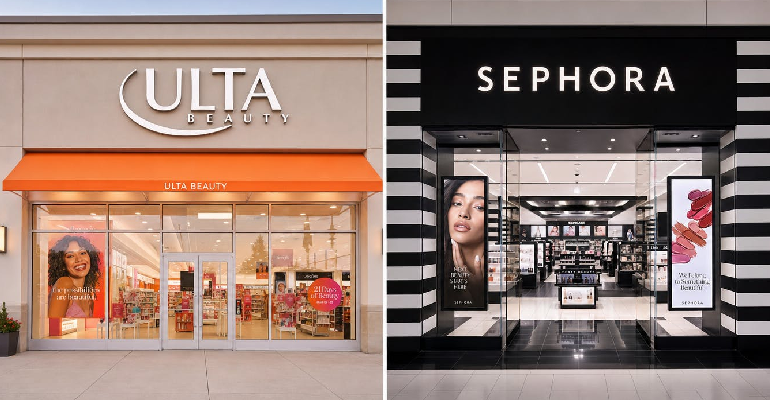
There’s a specific frustration that comes with belonging to two loyalty programs simultaneously and watching points accumulate in both places without ever quite reaching the redemption level that makes them feel worthwhile. I did this for about two years before I sat down and actually worked out what my spending was doing for me in each program. That exercise changed how I shop. Not dramatically. But meaningfully enough that I think most people who split their beauty spending between Sephora and Ulta without a deliberate strategy are leaving something on the table. This comparison isn’t going to tell you one store is better. They serve genuinely different purposes and there are real reasons to use both. But it’s going to tell you how to get the most out of each one, and which to prioritize if you have to pick. What these stores are actually trying to be Sephora opened in France in 1970 and came to the United States in 1998. The model was innovative for its time: a beauty specialty retailer where you could pick up and test products freely, staffed by people with specific beauty expertise rather than cosmetic counter reps whose loyalty was to a single brand. The black and white aesthetic, the open floor plan, the sampling culture — all of it was deliberate and all of it communicated a specific thing: this is where beauty enthusiasts come, not where people come to reluctantly buy something they need. The brand mix at Sephora has always leaned prestige. Charlotte Tilbury, Tatcha, Drunk Elephant, Rare Beauty, Fenty Beauty — these are the brands Sephora either had first or has most completely. The drugstore tier is essentially absent. You go to Sephora for mid-range to high-end beauty and nothing else. Ulta Beauty launched in 1990 in Illinois and made a different bet entirely. The format — prestige brands and drugstore brands under one roof, with a salon in the back — shouldn’t have worked as coherently as it does. The conventional wisdom in retail was that prestige beauty needed its own environment, that putting La Mer next to L’Oreal would cheapen both. Ulta proved that wrong. The customer didn’t care about the theoretical hierarchy of the beauty retail world. They cared about getting everything in one trip and collecting points on all of it. The loyalty programs — this is where you should spend the most time thinking Sephora’s Beauty Insider runs on a three-tier system. Free to join as Insider, VIB requires $350 in annual spending, Rouge requires $1,000. The points rate is one point per dollar at all tiers. The redemption is where things get complicated. Points can be used for sample kits (which have gotten smaller and less compelling over time), for rewards during the bi-annual sales, or toward product redemptions that rarely land at good value per point. The most useful thing about being Rouge is the 20% discount during the annual Rouge sale event, which for someone spending $1,000+ per year represents genuinely significant savings. For people who don’t hit $1,000, the program is more about access (early access to launches, invitations to events) than about cash value. Ulta’s Ultamate Rewards is simpler and more immediately tangible. One point per dollar at the base, 1.25 points at Platinum ($500 annual spend), 1.5 points at Diamond ($1,200). Every 100 points is $3 off a future purchase. There is nothing confusing about this. You spend money, you get points, points become dollars. The math is easy, the value is consistent. The 21 Days of Beauty sale — where Ulta offers a different prestige product at 50% off each day for twenty-one days — is the single best beauty deal event that runs annually. Products from brands like Too Faced, Urban Decay, and IT Cosmetics at genuine half-price for twenty-four hours. It requires planning and some shopping-day-of energy, but for someone who buys prestige cosmetics regularly, this event alone can justify the loyalty. Brand selection — what you can only get where This is the practical question that overrides loyalty program math for many shoppers. Charlotte Tilbury is exclusive to Sephora in the US. If Charlotte Tilbury is in your regular rotation — and the Flawless Filter and the Beautiful Skin Foundation have earned their reputations — this ends a portion of the comparison. You’re going to Sephora for Charlotte Tilbury regardless of points calculations. Rare Beauty (Selena Gomez) is Sephora-exclusive in retail. So is Fenty Beauty for the core range. So is Drunk Elephant. Ulta carries brands that Sephora doesn’t — Morphe has a stronger presence at Ulta, as do some of the mid-tier brands that sit between drugstore and prestige. The drugstore coverage at Ulta is complete: L’Oreal, Maybelline, NYX, e.l.f., Neutrogena, CeraVe — all available, all points-eligible. If any portion of your beauty spending goes toward drugstore products (and most people’s does, even people who primarily buy prestige), Ulta is capturing value that Sephora isn’t. The Kylie Cosmetics and ColourPop presence at Ulta has also been significant. The brand that defined independent DTC cosmetics in the mid-2010s has a retail home at Ulta, not Sephora. The in-store experience — which one actually feels better to be in This is subjective and I know it, but it matters for how much you enjoy shopping. Sephora is better for discovery. The store layout encourages browsing. The staff are trained specifically on the products in the store rather than on a single brand’s products. If you walk in without knowing exactly what you want and you’re open to being educated or redirected, Sephora’s environment is more suited to that experience. The sampling culture is also genuinely better at Sephora — more extensive, more encouraged, more available. Ulta is better for efficiency. You know what you want, you get it, you get points on everything including the CeraVe you grabbed from the drugstore end, maybe you get a blowout in the salon. The one-stop shop quality is a genuine practical advantage for people who buy across
Yoto Player UK Review — Genuinely Worth It?

Yoto’s fresh 2026 evidence is unusually well-suited to a precise, direct decision framework — a detailed Mumsnet test specifically comparing the Yoto Player against the Yoto Mini across three sisters aged 7, 5, and 2 gives genuinely useful, hands-on guidance for the single most common parent question: which model to actually buy. Pairing this with a specific, separate, documented pattern of return-process friction gives this fresh review its most useful structure. Quick Highlights ✅ A specialist children’s retailer’s detailed, age-by-age guide confirms genuine, specific developmental fit: “18 months to 3 years: Yoto Mini works well… 3 to 6 years: The sweet spot… 6 to 10 years: Chapter books, longer stories, podcasts” — concrete, actionable age-range guidance from a source that sells the product daily ✅ A direct, hands-on Mumsnet comparative test confirms the Player’s specific advantages over the Mini for home use: a nightlight, better audio quality, wireless charging, an extra 16GB of storage, and a room thermometer — concluding “it’s worth the extra money if you’re looking for an educational audio player to use at home, that’ll last your child many years” ✅ Customer service receives extensive, specific, repeated praise — “A good product with a bad customer service behind is like a beautiful car with a horrible engine” is notably one of the few genuinely critical service comments, standing in clear contrast to the much larger volume of “great customer service” and “promptly sent a replacement” accounts ✅ A genuinely strong, independent comparative review from a tester with 5-7 years of experience across competing brands specifically rates Yoto highest on app quality and content range ✅ The “Make Your Own” card feature continues to receive specific, repeated praise for genuinely extending value beyond the commercial card catalog at no ongoing cost ❌ A specific, detailed UK account documents genuine, repeated return-process difficulty: ordering the wrong item, being sent through “numerous links” to request a refund via chat, receiving a QR code, dropping off the parcel, only to have it returned to the customer’s own address — followed by repeated incorrect QR codes before the issue was understood, with the customer’s own direct characterization: “To request for a return should be simple, not painful” ❌ Multiple separate, fresh accounts document genuine delivery reliability problems — one specific Australian buyer ordered for a granddaughter’s March 8th birthday and was still waiting with no delivery confirmation weeks later; a separate account describes ordering cards in September and only realizing a month later they’d never arrived ❌ Bluetooth connectivity is specifically flagged as “patchy” in at least one otherwise enthusiastic detailed review, alongside a separate confirmation that connecting from a phone “takes a long time and often needs a” repeated attempt ❌ A specific, fair critique from a self-described primary school teacher notes the app, while described as “the most educational option on the market compared to competitors,” still has room for improvement in specific unspecified ways ❌ Battery life concerns are specifically documented for the Mini specifically — at least one reviewer notes it “needs to be plugged in for extended use,” a real limitation for the model most marketed around portability Best for: Families with children aged 3-10 specifically — the age range a specialist retailer’s detailed guide and the brand’s own broader review pattern both confirm as the genuine sweet spot — who choose the Player for home/bedtime use and the Mini specifically for portability and younger children, and who track any return or delivery issue actively given the documented friction pattern in both areas. Why Trust This Review Cross-referenced from Mumsnet’s detailed hands-on Player-vs-Mini comparative test across three sisters, Learning Bugs’ specialist retailer age-by-age guide (a business that sells Yoto daily), Trustpilot’s UK collection (40,164+ reviews across multiple pages), Thingtesting’s aggregated review collection, Busy Busy Learning’s detailed 5-7 year multi-brand comparative review, and Skinnedcartree’s nearly-two-year personal family ownership account. No commercial relationship with Yoto. Table of Contents About Yoto Yoto UK Review: Full Breakdown Best Yoto Products Worth Buying What Customers Actually Think Is Yoto Worth It? Yoto Player vs Yoto Mini Where to Buy FAQs Final Verdict About Yoto Yoto is a UK screen-free audio platform built around physical cards inserted into a player to trigger stories, music, podcasts, and educational content — no screen, no app navigation required on the child’s side once content is loaded. The current core lineup spans the Yoto Player (full home device, with nightlight and room thermometer) and the more compact Yoto Mini (designed specifically for travel and portability), both sharing the same card library and the Yoto Club subscription option for ongoing content delivery. Yoto UK Review: Full Breakdown The Player vs Mini Decision — Genuinely Useful, Fresh Comparative Evidence This deserves direct emphasis because it directly answers the single most common practical question UK buyers have. A detailed Mumsnet test, conducted with three sisters aged 7, 5, and 2 over multiple weeks across home, garden, and bedtime use, confirms the specific differences precisely: “The Yoto Player has a nightlight, better audio, wireless charging, an extra 16GB of storage and a room thermometer. It’s larger than the Yoto Mini and £40 more expensive.” Their direct, practical conclusion: “If you’re looking for a player to use at home and for bedtime, the Yoto Player has the edge with its nightlight feature. If you’re after a player to take on car journeys, camping and on holidays, the Yoto Mini is a better bet.” A separate specialist retailer’s age-by-age breakdown — genuinely useful precisely because it comes from a business with daily direct sales experience rather than a single household’s perspective — confirms: “18 months to 3 years: Yoto Mini works well at this age with song and nursery rhyme cards… 3 to 6 years: The sweet spot. Story cards, sleep sounds, audiobooks… 6 to 10 years: Chapter books, longer stories, podcasts.” Their direct, specific guidance on the broader Tonie comparison: “Yoto wins for most ages — particularly 3 and up. The card library is bigger, the content is higher quality and
Lululemon vs Alo Yoga — I’ve Spent Real Money on Both. Here’s the Honest Truth.
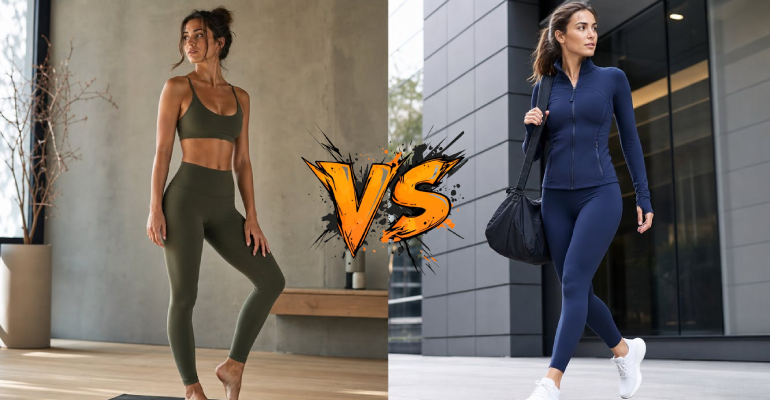
Let me tell you something that took me an embarrassingly long time to figure out. The reason people argue about Lululemon versus Alo Yoga so intensely online is that both sides are right and both sides are also wrong, and the actual answer depends on something nobody wants to admit: what you’re doing in the clothes. I have Lululemon pieces I’ve owned for four years. I have Alo pieces I bought eighteen months ago. I’ve worn both to actual workouts, to grocery stores, to sitting on my couch watching television. I’ve washed them on wrong settings. I’ve forgotten things in gym bags for longer than I should have. I know what holds up and what doesn’t. This isn’t the comparison that’s going to tell you one brand is objectively superior. But it’s the one that’s going to tell you which one you should actually buy. How these two brands ended up competing in the first place Lululemon launched in 1998 in Vancouver and spent about a decade being the brand that yoga instructors wore before it became the brand that everyone wore. The Align legging didn’t exist until 2015 and it changed everything — not just for Lululemon but for the whole category. Before the Align, activewear fabric was either compressive and structured or it was cheap and baggy. The Nulu fabric split the difference in a way nobody had quite managed, and suddenly everyone wanted to be in that space. Alo launched in 2007 in Los Angeles and positioned itself differently from the beginning. Where Lululemon was Canadian and sensible and about performance-meets-comfort, Alo was LA and aspirational and about looking like you’d just come from a boutique studio session even when you hadn’t. The brand made a deliberate choice to be more fashion-forward, and it worked. Slowly, then very suddenly, Alo became the brand you saw on everyone whose Instagram made you feel vaguely inadequate about your own wellness routine. By 2020 they were unambiguously competing for the same customer. That customer — willing to spend $100+ on a pair of leggings, interested in both performance and aesthetics, buying for an active lifestyle that probably includes some actual workouts and quite a bit of looking active — had to pick, or split their spending between both. The fabric situation, which is where this really lives I want to spend real time here because this is the thing most comparisons rush past to get to the price table. Lululemon’s Nulu fabric is hard to describe accurately to someone who hasn’t touched it. Saying it’s soft doesn’t capture it. It’s soft in a specific way that feels almost weightless — like if you put something on your skin that was barely there but still doing its job. The Align legging in Nulu has essentially no compression. It holds its shape, it moves with you, it doesn’t dig or shift or bunch, but it’s not squeezing anything. For yoga, for Pilates, for stretching and recovery, for any movement that doesn’t require you to be held together forcefully, it’s the best fabric I’ve encountered at any price point. The problem with Nulu is that it’s delicate in a way that isn’t immediately obvious. It pills. Not immediately, not dramatically, but after enough washes and enough friction, small pills appear at the inner thighs and wherever the fabric rubs against itself consistently. This is a known issue. Lululemon doesn’t advertise it. Long-term owners know about it and factor it into how they wash and store the leggings, but a first-time buyer isn’t warned. Alo’s Airbrush fabric is doing something different. It has real compression — not aggressive compression, not the kind that makes you feel like you’ve been vacuum-sealed, but you feel it. The fabric is thicker, more structured, slightly shiny in a way that reads expensive in photos and in person. It holds its shape during movement in a way that Nulu doesn’t because Nulu isn’t trying to. For a spin class, for HIIT, for anything where you’re moving fast and you want things to stay exactly where you put them, the Airbrush performs better than the Align. The Airbrush doesn’t have Nulu’s pillow-like softness against the skin. In exchange it has better durability in my experience — after eighteen months the Airbrush leggings look essentially the same as they did when I bought them. The compression hasn’t sagged, the sheen hasn’t dulled significantly, the waistband hasn’t stretched out. So here’s the thing: you can’t call one fabric better than the other without knowing what you need the fabric to do. For gentle movement and maximum comfort: Nulu wins clearly. For performance and longevity: Airbrush has an edge. What Lululemon actually gets right besides the Align Everyone focuses on the Align because it’s the famous one but Lululemon’s range is considerably broader and some of the other pieces are genuinely where the brand is strongest. The Wunder Train tight is the legging for actual athletic activity. More compression than the Align, different fabric (Everlux, not Nulu), designed to handle sweat and intensity in a way the Align doesn’t really claim to. If you’re buying Lululemon for running or HIIT specifically and you’re buying the Align, you’re buying the wrong thing. The Define jacket is one of the most reliably flattering pieces of clothing I own. It’s not particularly revolutionary — a fitted athletic jacket — but the construction is precise in a way that feels considered, and it has held its shape through more washes than I can count. The Wunder Puff jacket does something that sounds impossible: looks fashionable enough to wear outside the gym context while being actually functional insulation. I’ve worn mine in temperatures where I should have been wearing a proper winter coat and been genuinely warm. The quality control problem that’s real: Lululemon pieces from five years ago feel more substantial than pieces from recent years. The brand has scaled significantly and something has shifted in consistency. Not dramatically, not catastrophically, but if you’ve had a