HOME | Fashion | Beauty | Home Furnishing | Comparison | Top Reviews |
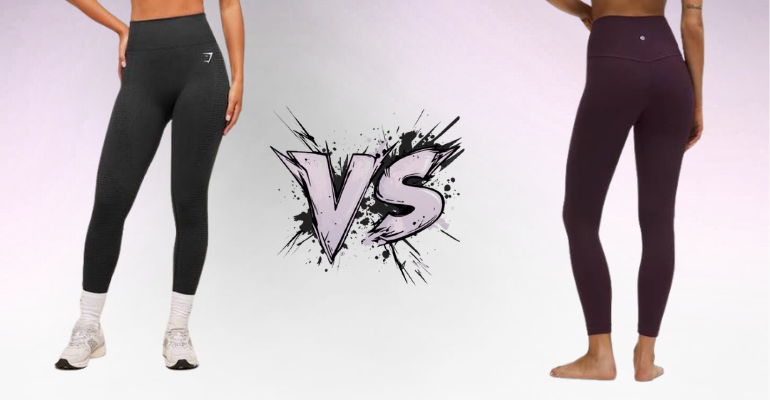
The difference between a Gymshark legging and a Lululemon legging is somewhere between £40 and £70 depending on the specific style. That’s a meaningful amount of money. It’s the kind of difference that makes you want someone to tell you definitively that one is clearly worth it and one clearly isn’t, so you can make the decision and move on.
I’m going to tell you that the answer is more complicated than that, but not in the way that usually means the answer is actually simple and I’m just being coy about it. The genuine complication here is that the right answer depends on what you’re buying, what you’re doing in it, and how much the brand story matters to you relative to the physical product.
Lululemon is a twenty-six-year-old Canadian company that essentially invented the premium women’s activewear category. The brand has built enough equity and enough genuine product innovation over that period that the premium has something concrete behind it — specific fabrics that took years to develop, a design philosophy that has remained coherent through significant growth, and a quality guarantee that exists because the company genuinely expects its products to last.
Gymshark is a twelve-year-old British company that built its entire initial growth through social media and fitness influencer partnerships before that was a standard playbook. The brand was founded by Ben Francis in his parents’ garage in Birmingham and scaled to a billion-pound valuation through a specific combination of community-building and accessible pricing. The brand has an authenticity to its origin that Lululemon’s more corporate scale doesn’t replicate, and it resonates particularly strongly with the fitness community it was built within.
These different origin stories produce different products.
Lululemon’s Nulu fabric is the thing most people mean when they say Lululemon justifies its price. There is no comparable fabric in Gymshark’s range. Nulu is a proprietary development that delivers a combination of softness, weight, and shape retention that other brands — including Gymshark — haven’t matched. For yoga, Pilates, barre, and any movement where maximum skin comfort is what you want from the fabric, there is no Gymshark equivalent.
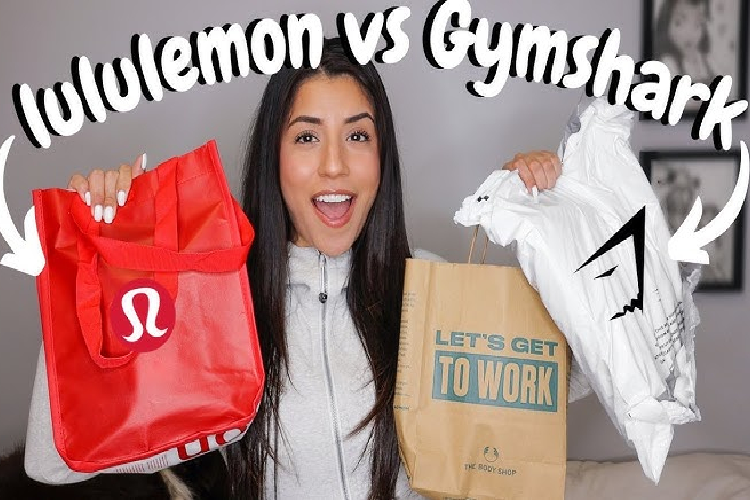
Gymshark’s Seamless fabric is a different product doing a different job. It has a textured surface quality, a comfortable fit, and better-than-expected durability. It’s not trying to be Nulu. It’s trying to be good activewear at an accessible price and it succeeds at that. The Vital Seamless legging in particular is one of the most consistently well-reviewed affordable activewear products available, and the review consensus is that it performs above its price point.
The Gymshark Adapt collection, with its more structured compression fabrics, performs well for high-intensity training. This is actually a category where the comparison between Gymshark and Lululemon is closer — Lululemon’s equivalent training pieces (the Wunder Train, the Fast and Free) use fabrics that are more about performance than comfort, and Gymshark’s competition-level pieces are closer to this territory than they are to the Nulu category.
Lululemon pieces that are well cared for genuinely last. The Align I’ve had for three years looks marginally different from when it was new — the Nulu has softened slightly further, which is actually pleasant — but it’s structurally intact, the waistband hasn’t stretched, and there’s no significant pilling.
Gymshark’s durability is reasonable but not in the same category. After a year of regular washing, the Vital Seamless shows slight pilling at the inner thigh. Not dramatic. Not unwearable. But visible in a way the Lululemon equivalent hasn’t shown. This is a fair comparison because the Gymshark is half the price — the longevity question is always relevant to the total cost of ownership. If a Gymshark legging lasts eighteen months of regular use and a Lululemon lasts three years, the per-wear cost narrows the apparent price gap.
Lululemon’s sizing is inconsistent across product lines — this is a known issue and a reasonable frustration — but their customer service for fit issues is responsive and the size range is broader than Gymshark’s.
I want to mention this without overstating it. Both brands have built real communities. Gymshark’s is younger, more fitness-competition oriented, more tied to social media culture. Lululemon’s is more established, more yoga-and-wellness oriented, and embedded into a broader lifestyle identity.
Neither of these is a reason to buy or avoid either brand. But for some people, which community they want to be associated with is part of the purchasing decision, and I’d rather acknowledge that than pretend buying activewear is a purely functional decision for everyone.
Buy Gymshark if: you’re primarily doing higher-intensity training, you’re budget-conscious and want solid performance activewear at a lower price point, you’re newer to the premium activewear category and want to test whether the investment is worthwhile before spending more, or you specifically like the Gymshark aesthetic and community identity.
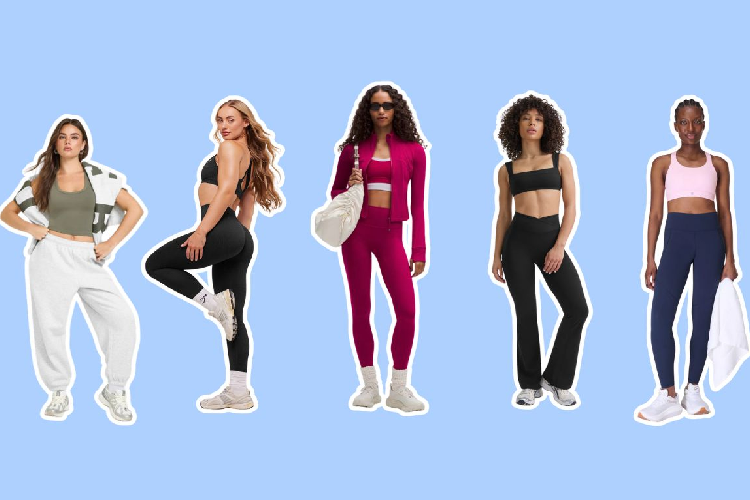
Buy Lululemon if: the Nulu fabric is specifically what you want (nothing else does what Nulu does), you’re buying primarily for yoga or Pilates, you want the quality guarantee and the longer expected lifespan, or you’re buying for a use case where maximum fabric comfort matters more than maximum performance.
The conclusion worth landing on: Gymshark is not a compromise brand. It’s a genuinely good activewear brand at accessible prices. Lululemon is not just a brand you pay for the name. It has specific products — primarily the Nulu collection — that deliver something no one else quite replicates. Knowing which product justifies which price is what actually matters.