HOME | Fashion | Beauty | Home Furnishing | Comparison | Top Reviews |
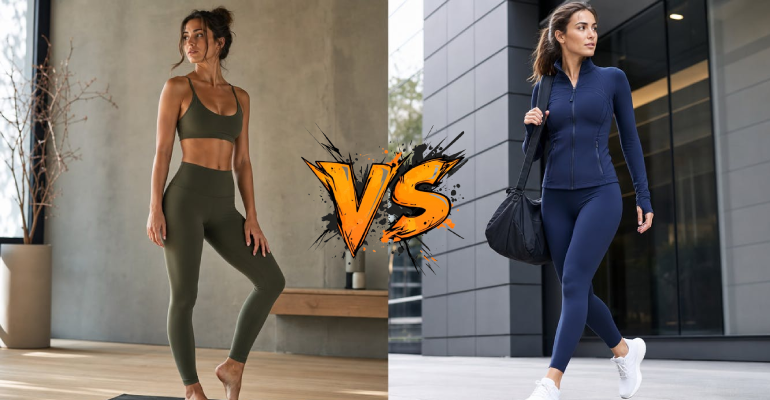
Let me tell you something that took me an embarrassingly long time to figure out. The reason people argue about Lululemon versus Alo Yoga so intensely online is that both sides are right and both sides are also wrong, and the actual answer depends on something nobody wants to admit: what you’re doing in the clothes.
I have Lululemon pieces I’ve owned for four years. I have Alo pieces I bought eighteen months ago. I’ve worn both to actual workouts, to grocery stores, to sitting on my couch watching television. I’ve washed them on wrong settings. I’ve forgotten things in gym bags for longer than I should have. I know what holds up and what doesn’t.
This isn’t the comparison that’s going to tell you one brand is objectively superior. But it’s the one that’s going to tell you which one you should actually buy.
Lululemon launched in 1998 in Vancouver and spent about a decade being the brand that yoga instructors wore before it became the brand that everyone wore. The Align legging didn’t exist until 2015 and it changed everything — not just for Lululemon but for the whole category. Before the Align, activewear fabric was either compressive and structured or it was cheap and baggy. The Nulu fabric split the difference in a way nobody had quite managed, and suddenly everyone wanted to be in that space.
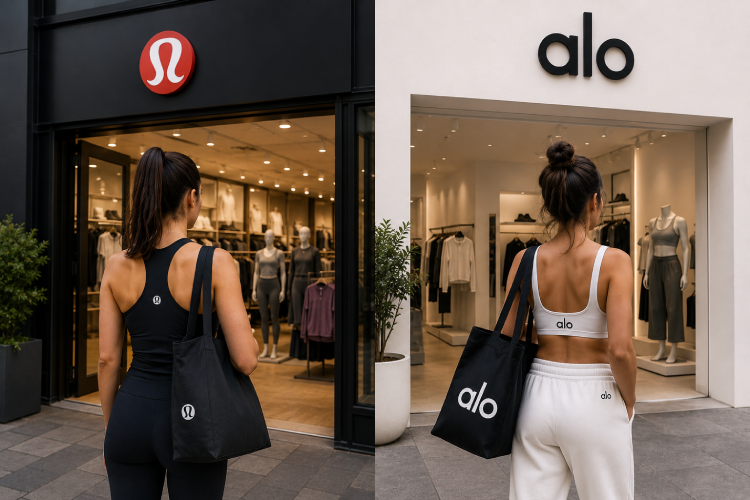
Alo launched in 2007 in Los Angeles and positioned itself differently from the beginning. Where Lululemon was Canadian and sensible and about performance-meets-comfort, Alo was LA and aspirational and about looking like you’d just come from a boutique studio session even when you hadn’t. The brand made a deliberate choice to be more fashion-forward, and it worked. Slowly, then very suddenly, Alo became the brand you saw on everyone whose Instagram made you feel vaguely inadequate about your own wellness routine.
By 2020 they were unambiguously competing for the same customer. That customer — willing to spend $100+ on a pair of leggings, interested in both performance and aesthetics, buying for an active lifestyle that probably includes some actual workouts and quite a bit of looking active — had to pick, or split their spending between both.
I want to spend real time here because this is the thing most comparisons rush past to get to the price table.
Lululemon’s Nulu fabric is hard to describe accurately to someone who hasn’t touched it. Saying it’s soft doesn’t capture it. It’s soft in a specific way that feels almost weightless — like if you put something on your skin that was barely there but still doing its job. The Align legging in Nulu has essentially no compression. It holds its shape, it moves with you, it doesn’t dig or shift or bunch, but it’s not squeezing anything. For yoga, for Pilates, for stretching and recovery, for any movement that doesn’t require you to be held together forcefully, it’s the best fabric I’ve encountered at any price point.
The problem with Nulu is that it’s delicate in a way that isn’t immediately obvious. It pills. Not immediately, not dramatically, but after enough washes and enough friction, small pills appear at the inner thighs and wherever the fabric rubs against itself consistently. This is a known issue. Lululemon doesn’t advertise it. Long-term owners know about it and factor it into how they wash and store the leggings, but a first-time buyer isn’t warned.
Alo’s Airbrush fabric is doing something different. It has real compression — not aggressive compression, not the kind that makes you feel like you’ve been vacuum-sealed, but you feel it. The fabric is thicker, more structured, slightly shiny in a way that reads expensive in photos and in person. It holds its shape during movement in a way that Nulu doesn’t because Nulu isn’t trying to. For a spin class, for HIIT, for anything where you’re moving fast and you want things to stay exactly where you put them, the Airbrush performs better than the Align.
The Airbrush doesn’t have Nulu’s pillow-like softness against the skin. In exchange it has better durability in my experience — after eighteen months the Airbrush leggings look essentially the same as they did when I bought them. The compression hasn’t sagged, the sheen hasn’t dulled significantly, the waistband hasn’t stretched out.
So here’s the thing: you can’t call one fabric better than the other without knowing what you need the fabric to do. For gentle movement and maximum comfort: Nulu wins clearly. For performance and longevity: Airbrush has an edge.
Everyone focuses on the Align because it’s the famous one but Lululemon’s range is considerably broader and some of the other pieces are genuinely where the brand is strongest.
The Wunder Train tight is the legging for actual athletic activity. More compression than the Align, different fabric (Everlux, not Nulu), designed to handle sweat and intensity in a way the Align doesn’t really claim to. If you’re buying Lululemon for running or HIIT specifically and you’re buying the Align, you’re buying the wrong thing.
The Define jacket is one of the most reliably flattering pieces of clothing I own. It’s not particularly revolutionary — a fitted athletic jacket — but the construction is precise in a way that feels considered, and it has held its shape through more washes than I can count.
The Wunder Puff jacket does something that sounds impossible: looks fashionable enough to wear outside the gym context while being actually functional insulation. I’ve worn mine in temperatures where I should have been wearing a proper winter coat and been genuinely warm.
The quality control problem that’s real: Lululemon pieces from five years ago feel more substantial than pieces from recent years. The brand has scaled significantly and something has shifted in consistency. Not dramatically, not catastrophically, but if you’ve had a piece for a long time and you buy a new one in the same style, you may notice a difference. The quality guarantee helps — they will exchange items with quality issues — but needing to invoke a quality guarantee is its own thing.
The aesthetic is genuinely distinctive. This sounds like a superficial compliment but it isn’t, not entirely. When a brand has a strong enough visual identity that you can identify their pieces without seeing the label, that’s a design achievement. Alo’s silhouettes, the specific shades they use, the way their pieces photograph — it’s coherent in a way that takes real creative intentionality.
The matching sets are one of Alo’s strongest categories. The top-and-legging or top-and-shorts combinations in the same fabric and colorway look expensive in a way that outpaces their price. If you’re someone who wants to look visually coordinated for the gram or for a studio class, buying an Alo set is a more efficient path to that result than trying to coordinate pieces from multiple brands.
The Alo Moves app, which gives members access to workout content, is a genuine additional value for people who use it. Not everyone does but for those who want guided workouts it adds something meaningful to the brand relationship.
What Alo doesn’t do well: size inclusivity. The range is limited. The brand has been called out for this and has expanded somewhat but not enough. If you’re outside the size range that Alo primarily serves, this comparison ends here — Lululemon’s range is meaningfully broader.
Lululemon Align High-Rise Pant: $98-128 depending on length.
Alo High-Waist Airbrush Legging: $114-138.
The prices are close. At this price point, both brands should produce pieces that last multiple years. Both generally do. The question of which represents better value depends on how long the specific piece you buy actually lasts, which varies.
What I’d say about price: if you’re spending $100+ on leggings, spend it on the right item for the right use. A Lululemon Align for yoga and daily wear, a Lululemon Wunder Train for high intensity, an Alo Airbrush for the gym or studio when aesthetics matter — buying the wrong piece from the right brand is not a good deal.
Buy Lululemon if: the Align’s softness is specifically what you want, you do predominantly low-intensity movement, you want a broader size range, or you want the quality guarantee as a safety net.
Buy Alo if: the visual aesthetic matters as much as function, you do higher-intensity workouts and want real compression, you want pieces that photograph particularly well, or the matching set format appeals to you.
Buy neither if: you’ve never tried either brand and you’re about to spend $130 on your first pair. Try Girlfriend Collective or Athleta first at lower price points and make sure the premium activewear category is genuinely right for you before committing at this level.