HOME | Fashion | Beauty | Home Furnishing | Comparison | Top Reviews |
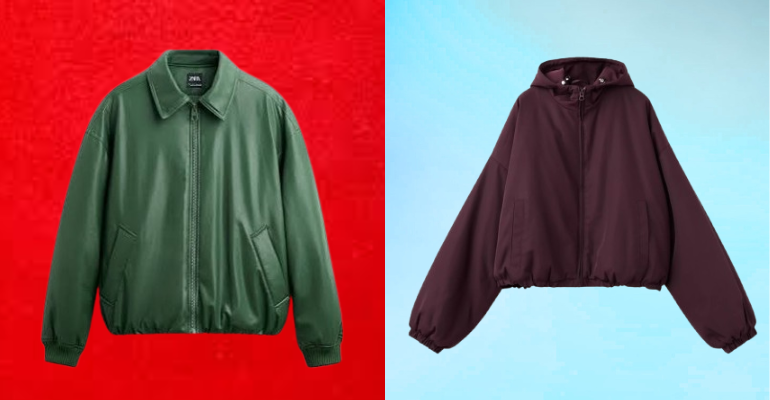
Something that doesn’t get said enough in fashion comparisons: the right question isn’t which brand is better. The right question is which brand is better for what you’re specifically trying to buy.
I’ve been shopping both Zara and Mango for over a decade. I’ve had experiences with both that made me feel like I got genuine value and experiences that made me feel like I wasted money. The pattern that emerged from all of those purchases took a while to see clearly, but once I saw it I couldn’t unsee it.
Here it is simply: Zara is better for trend-specific pieces you’re buying for a season. Mango is better for foundation pieces you want to last. Shopping both without this understanding is how you end up with a wardrobe full of things that don’t work together.
Zara is the most successful fashion retailer in the world by revenue. This is not incidental. The business model — identify what’s happening on runways and in street style, reproduce it quickly at accessible price points, put it on shelves in weeks rather than months — is genuinely brilliant as a commercial operation. The clothes look current because they’re designed to be current. The trade-off embedded in this model is that “current” has a built-in expiration date, and the production speed required means quality is sometimes sacrificed at the altar of timing.
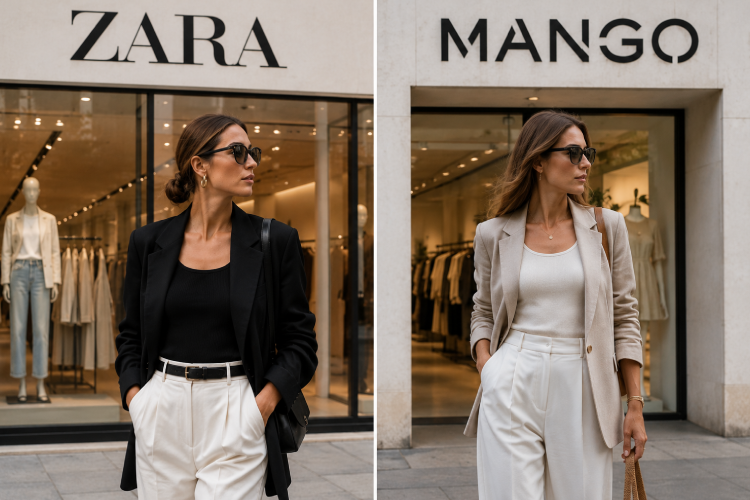
Mango is the quieter story. Spanish, like Zara, founded in Barcelona in 1984, considerably smaller. Mango has never chased Zara’s trend velocity. Instead they’ve spent the last decade repositioning themselves as something more elevated — better fabrics, slower design cycles, a more coherent aesthetic identity. The Mango you’re shopping now is not the Mango that existed in 2015. The brand quality has genuinely improved in ways that aren’t always acknowledged.
When people say “quality” about fashion they usually mean a vague combination of fabric feel, construction precision, and how long the thing looks good. All three matter. None of them are simple.
Zara’s quality is inconsistent in a way that requires you to develop a skill: knowing which product categories to trust and which to approach carefully. Their tailoring — blazers, structured trousers, coats — is frequently better than you’d expect. The construction on a Zara blazer from their Studio line is often genuinely impressive for the price. Their floaty summer dresses, the thin jersey tops, the pieces clearly designed to be bought for one summer and not worried about beyond that — these reflect the price more honestly.
The fabric composition label is your most useful tool at Zara. A piece that’s 80% viscose and 20% polyester is going to behave differently than a piece that’s 70% linen and 30% cotton. The same silhouette in different fabrics from the same collection will have completely different longevity. Reading the label before buying takes thirty seconds and will save you more disappointment than any other single habit.
Mango’s quality is more consistent partly because the range is narrower. They’re not trying to make everything for everyone in the way that Zara is. The linen category at Mango is genuinely good — the fabric weight is appropriate, the construction doesn’t cut corners, the pieces wash well and hold their shape across multiple seasons. The knitwear has gotten meaningfully better in recent years. The tailored pieces — specifically the blazers and the structured trousers — are where Mango competes most directly with brands that charge significantly more and doesn’t embarrass itself in the comparison.
Zara’s aesthetic philosophy, if you can call it that, is to have no fixed aesthetic philosophy. They’re a mirror of the cultural moment. When quiet luxury was everywhere in 2022 and 2023, Zara was doing quiet luxury. When the Miu Miu micro-skirt was the cultural reference point, Zara had a version. When ballet flats came back (and they came back again in 2026, they keep coming back), Zara had thirty options within two months of the trend appearing in street style documentation.
This is either exactly what you want from a fashion retailer or it’s completely exhausting, depending on your relationship with trends. For someone who loves following what’s happening and wants to participate at accessible price points, Zara’s trend responsiveness is a service. For someone who wants to build a wardrobe with longevity and coherence, buying specifically into trends at Zara means regular obsolescence.
Mango’s aesthetic is more fixed and more identifiable. Mediterranean European minimalism is probably the most accurate description — clean silhouettes, materials that drape rather than structure, a palette that runs toward warm neutrals and occasional saturated tones that feel considered rather than reactive. You can usually tell a Mango piece by its silhouette even without the label. This is a design achievement that Zara, almost by definition, can’t replicate because Zara’s identity is built on not having one.
Both brands have historically been sized for a narrow range of body types and both have faced legitimate criticism for this.
Zara’s sizing varies notoriously within collections. You might be a medium in a trouser and a large in a blouse from the same seasonal drop. This isn’t laziness — it’s a consequence of working with multiple manufacturers across multiple countries on tight timelines where standardization suffers. It means trying things on at Zara is not optional, it’s necessary. Buying online from Zara requires knowing which specific product categories run large or small from prior experience.
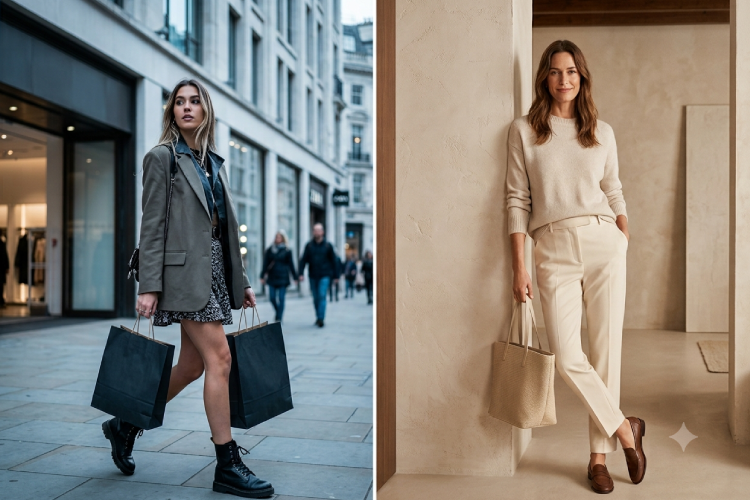
Mango’s sizing is more consistent particularly in the tailored categories. The trousers and blazers run relatively predictably. Where Mango sizing gets complicated is in the more relaxed categories — the linen pieces and the oversized styles where the intended fit is specifically ambiguous and getting it right requires knowing your own preferences precisely.
Both brands have expanded their size ranges in the last few years. Neither has fully resolved the original criticism. If size inclusivity is a primary consideration, both brands have room to do better.
Zara wins: trend pieces, the Studio line for elevated tailoring, footwear (Zara’s shoes are genuinely good value for money), and the homeware section which has become a legitimately strong offering.
Mango wins: linen everything, knitwear, the Committed sustainable collection for foundation pieces, blazers at a realistic price point, and anything you’re buying with the intention of wearing it for three seasons rather than one.
Both do well: denim, outerwear when you catch the right piece, accessories.
Both struggle: consistent sizing, sustainability in the fast fashion context (despite both brands’ claims to be improving), and synthetic fabric pieces at lower price points.
If you’re shopping for a wedding guest outfit or a specific occasion piece: Zara. The trend-responsiveness means they’re likely to have something current and appropriate.
If you’re buying a work blazer you’ll wear fifty times: Mango. Spend the extra few euros for better construction.
If you’re buying a summer dress for one holiday: either, depending on which has something you love when you look.
If you’re building out a capsule wardrobe of pieces meant to work together over time: Mango for the foundation pieces, Zara selectively for specific trend-forward additions.