Best Face Sunscreens — Which Ones You’ll Actually Wear Every Day
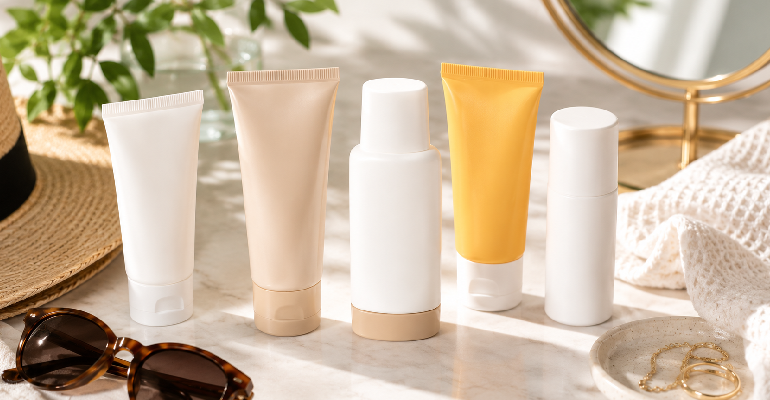
The most commonly cited reason people don’t wear sunscreen daily is not that they don’t know they should — most adults know they should. It’s that the experience of wearing sunscreen is uncomfortable in ways that make skipping it feel like a reasonable trade-off. Heavy texture. White cast. Greasy finish that makes makeup slide off. Pilling under foundation. The smell of chemical filters. The good news is that sunscreen formulation has improved significantly in the past five years, particularly through innovation in Korean and Japanese cosmetics markets where sunscreen is treated as a cosmetic product rather than a medical one. The current best options genuinely don’t have these problems — they feel like skincare rather than medicine. ISDIN Fusion Water SPF 50 — the everyday reference The ISDIN Fusion Water SPF 50 ($40-45) is the sunscreen most consistently recommended by dermatologists for daily use on the face. The ultra-light, water-like texture absorbs immediately without white cast, greasiness, or pilling under makeup. The chemical filter combination is elegantly formulated for the European market and produces no significant residue on skin. After application, skin feels slightly smoother than before — the hyaluronic acid and glycerin in the formula add a layer of hydration rather than just sitting on top of the skin. This is the experience that makes people describe the ISDIN as feeling like skincare, which is what daily sunscreen compliance actually requires. The SPF 50 rating is adequate for most daily urban use. The water-resistant formulation is not the highest water resistance rating for extended outdoor activity but it’s appropriate for commuting, office work, and daily life where reapplication is possible. Anua Birch Juice Moisturizing Sun Serum SPF 50+ — the Korean formula worth knowing The Anua Birch Juice Sun Serum ($22-25 on most K-beauty retailers) represents the Korean sunscreen approach: a serum-weight texture that’s imperceptible on skin, combined with genuine SPF 50+ protection and a cosmetically elegant formula that layers under makeup without any of the problems Western sunscreens typically create. The birch juice base provides hydration alongside protection, and the finish is so close to invisible that most people who use it describe forgetting they’re wearing sunscreen — which is the ideal daily sunscreen experience. The chemical filter combination used in Korean sunscreens (often including Tinosorb M and Tinosorb S, filters approved in the EU and South Korea but not the US) produces better cosmetic elegance than the filters approved by the US FDA, which is why Korean sunscreens are consistently smoother and more cosmetically elegant than US-formulated alternatives at equivalent SPF ratings. La Roche-Posay Anthelios UV Correct SPF 50+ — for sensitive and acne-prone skin The La Roche-Posay Anthelios UV Correct ($38-42) is the recommendation for sensitive, acne-prone, or reactive skin that doesn’t tolerate many sunscreen formulas. The Anthelios range is tested specifically for sensitive skin and formulated without fragrance or alcohol in the formulas most likely to cause sensitivity. The UV Correct adds niacinamide to the SPF formula, providing tone-evening and pore-minimizing benefits alongside sun protection. The finish is matte enough to suit oily and combination skin types, and the formula is compatible with most makeup applications without pilling. Mineral vs chemical sunscreen — the actual difference The debate has been made more complicated than it needs to be. Mineral sunscreens (zinc oxide and titanium dioxide) sit on top of the skin and physically block UV rays. They’re generally better tolerated by sensitive skin and are the FDA-recognized safe filters in the US market. The trade-off is white cast, particularly zinc oxide in higher percentages. Chemical sunscreens absorb into the skin and convert UV rays to heat through a chemical reaction. They produce no white cast and are cosmetically more elegant in most formulations. The concern about chemical sunscreen ingredient safety relates to a small number of chemical filters (specifically oxybenzone and octinoxate) absorbing into the bloodstream — concerns primarily relevant to high-surface-area application or prolonged daily use. The European and Korean filter alternatives avoid these specific compounds. For daily face use: a cosmetically elegant chemical sunscreen you’ll actually wear every day provides more UV protection than a mineral sunscreen you’ll skip because of the white cast. Compliance is the primary variable in sunscreen effectiveness.
Denim Jackets For Women Right Now — Honest Picks Across Every Budget

A denim jacket is one of those rare pieces of clothing that genuinely never stops working. I have worn the same Levi’s denim jacket for six years. I have worn it over summer dresses in June and over three knitwear layers in October. I have worn it to festivals, to casual dinners, to airport terminals, and to grocery runs. The denim jacket doesn’t require thought. You put it on and whatever you’re wearing underneath immediately looks more complete. The problem with buying one is that the category contains everything from the genuinely excellent to the genuinely disappointing, often at similar price points. A cheap denim jacket can look exactly like an expensive one in product photographs and reveal itself in person through poor construction — uneven stitching, stiff fabric that doesn’t soften properly, buttons that gap, collars that don’t sit flat. Knowing what makes a denim jacket worth buying is the knowledge that prevents the disappointing purchase. What Makes A Denim Jacket Worth Buying The denim weight. This is the variable most people don’t know to check. Denim fabric is measured in ounces per square yard. A 10-12 oz denim jacket has appropriate weight — substantial enough to hold its shape, drape correctly, and feel like proper outerwear. Below 10 oz and the jacket starts to feel thin and insubstantial. Above 14 oz and it becomes too stiff and heavy for a casual layer. The weight affects how the jacket hangs on the body, how it looks when worn open, and how long it holds its structure through repeated wear. The construction quality. Chain stitching at the seams (the stitching used in traditional denim construction) allows the seams to flex with the fabric’s natural movement without cracking. Chain-stitched seams on quality denim jackets are visible on the inside as an interlocking pattern. Lock-stitched seams on cheaper jackets don’t have this flexibility and develop the white cracking lines that make cheap denim look cheap over time. The hardware. Buttons, rivets, and snaps on a quality denim jacket are metal — not plastic coated to look like metal, but actual metal that tarnishes gradually rather than losing its coating and revealing plastic. Press the buttons — they should have weight and a satisfying click. Push the rivets — they should be tight and flush with the fabric. The fit. Denim jackets should fit the shoulders precisely — the shoulder seam should sit at the exact edge of the shoulder, no further. A denim jacket with shoulders that are even half an inch too wide looks shapeless on most body types because the shoulder seam drops below the natural shoulder line and the jacket loses its structure. The Best Denim Jackets To Buy Right Now Levi’s Original Trucker Jacket — The One That Set The Standard Buy Now The Levi’s Trucker Jacket is not famous because it has been marketed well, though it has. It is famous because it has been the reference denim jacket design since 1967 and the reference remains correct. The four-pocket construction, the pointed collar, the cinch tabs at the back — these are the design decisions that have produced every other denim jacket worth wearing. The Trucker is the jacket that other jackets are compared to. The construction on the Levi’s Trucker uses the same chain stitching and copper riveting that the brand has used since the 1880s when they developed riveted denim workwear. This is not heritage marketing — it is the reason Levi’s denim jackets develop the specific fading pattern that makes worn-in denim look good rather than simply old. The chain-stitched seams flex with the fabric as it’s worn and washed, allowing the denim to develop the natural crease fading at the elbows and shoulders that cheap denim with lock-stitched seams cannot replicate. The denim weight is appropriate — the Trucker uses 11.5-12 oz denim that sits in the correct range for a jacket meant to be worn as a casual outer layer. It feels substantial without being heavy. Sizing: the Trucker runs true to size for most people. The fit is designed to be slightly boxy rather than fitted — this is correct for the design, not a flaw. If you want a more fitted silhouette, size down. If you want to wear knit layers underneath, stay true to size. The standard Trucker comes in multiple washes from dark rigid denim to mid-wash to light vintage wash. The mid-wash is the most versatile across outfit combinations. The dark wash is the most polished and works in semi-professional casual contexts. The light wash is the most casual and pairs best with darker outfit pieces. Price: $89.50Available at: Levi’s directly, ASOS, Nordstrom, John LewisBest for: Those who want the original and best version of the classic denim jacket. AGOLDE 90s Denim Jacket — For The Premium Investment Buy Now AGOLDE has built its reputation in denim by producing pieces at the upper end of the accessible luxury tier that genuinely justify the premium through fabric quality and construction rather than brand positioning alone. Their 90s Denim Jacket applies the same standard to outerwear that their jeans have earned recognition for. The jacket is cut from Cone Mills denim — the same premium US denim mill that supplies the best independent denim brands — in a slightly oversized 90s-inspired silhouette that sits differently from the Levi’s Trucker’s more structured fit. The AGOLDE jacket is more relaxed through the body, shorter in length, and has the slightly dropped shoulder that defines the 90s aesthetic. It works beautifully thrown over a slip dress or worn open over a fitted t-shirt and straight-leg jeans. The denim itself feels different from mass-market denim in a way that’s immediately apparent when you handle it. The weight is correct, the hand feel is softer than cheap denim, and the construction details — the riveting, the seaming, the pocket placement — are precise in the way that indicates genuine care in manufacturing rather than speed. After washing, the AGOLDE jacket returns close to
Best Mascaras — Honest Reviews After Wearing Them All Day
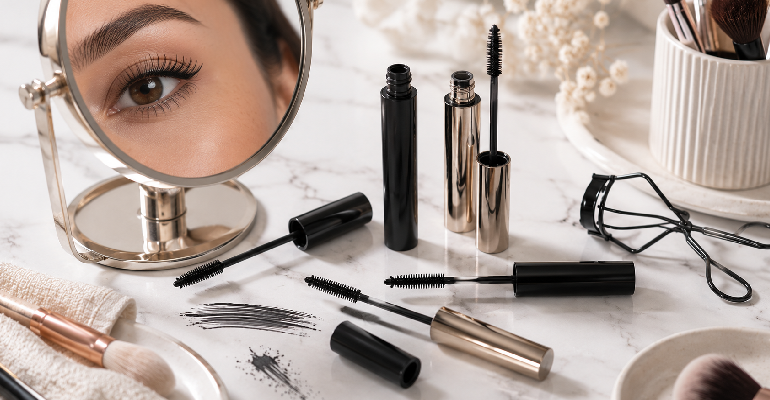
Mascara reviews have a reliability problem: photographs taken immediately after application look dramatically different from photographs taken at the end of a day. A mascara that produces impressive volume at application and has migrated under the eyes by midday is not a good mascara regardless of how good the before photograph looks. A mascara that builds length gradually and stays exactly where it was applied through eight hours of wear is a good mascara regardless of how modest the immediate result seems. Testing mascaras across a full day of real wear — including rubbing eyes once with accidental tiredness, drinking hot drinks that produce steam, and whatever the day actually involves — produces different conclusions from application-only testing. Charlotte Tilbury Pillow Talk Push Up Lashes — the full-service mascara The Charlotte Tilbury Pillow Talk Push Up Lashes ($29) is the mascara that produces the most significant change in lash appearance in a single coat: the curved wand lifts lashes from the root, the formula holds the curl without stiffening the lashes into uncomfortable rigidity, and the build is genuinely buildable to higher drama without clumping in the way that more pigment-dense formulas do when layered. The wear through a full day is reliable — no significant migration under the eyes, the curl hold doesn’t relax significantly in the first eight hours — and the removal is thorough without requiring aggressive rubbing that stresses the lashes. At $29 it’s in the premium mascara category rather than drugstore, and the performance justifies the price over drugstore alternatives in the specific categories of curl and lash lift. For people who specifically want lifted, curled-looking lashes without an eyelash curler: this is the product. L’Oreal Telescopic Mascara — the lengthening reference The L’Oreal Telescopic has been recommended consistently for over fifteen years and the current formula still earns the recommendation. The precision wand — narrow, with short, closely spaced bristles — coats individual lashes rather than bundling them together, which produces length and separation rather than volume. For people who want the appearance of longer, more defined lashes rather than fuller, more dramatic ones, the Telescopic produces this result more reliably than most alternatives at any price. The mascara at $12-15 is the drugstore product that most directly competes with prestige mascaras on the specific performance dimension of lengthening. The formula is buildable but doesn’t multiply volume dramatically with additional coats — it extends and separates rather than adds bulk. For people who specifically want volume alongside length, a different formula layered over the Telescopic is the approach many makeup artists use. Benefit BADgal BANG — for maximum volume The Benefit BADgal BANG ($28) is the volumizing mascara that produces the most significant increase in lash fullness from a single product. The formula uses aerospace micro-technology (actual carbon fiber technology borrowed from aerospace materials) to build volume without the heavy, clumping weight that most volumizing formulas add. The result wears well — the volume doesn’t collapse through the day and the formula doesn’t flake — and the removal requires thorough but not excessive effort. For occasions where more dramatic lash impact is the goal, the BADgal BANG produces a result that few other mascaras match. Rare Beauty Perfect Strokes Mascara — the underrated option The Rare Beauty Perfect Strokes Mascara ($20) is consistently underrated in mascara conversations that focus on the bigger brands. The spherical wand tip reaches corner lashes and lower lashes more precisely than most conventional wands, and the formula provides a balance between volume and length that suits people who find most mascaras too far in either direction. At $20 it sits between drugstore and premium pricing and performs above what most drugstore mascaras achieve. For someone looking for a single mascara that covers most bases adequately — some length, some volume, reliable wear, comfortable removal — the Rare Beauty Perfect Strokes is the most sensible recommendation. The drugstore mascara that’s genuinely worth buying The Maybelline Sky High Mascara ($10-12) has had a cultural moment driven by genuine product quality rather than just social media marketing. The flexible brush extends to catch every lash, including the short inner corner lashes that most wands miss, and the formula provides length and slight volume without clumping or drying stiff. For everyday wear where the priority is looking put-together without the effort or cost of a full makeup look, the Sky High delivers a genuine improvement in lash appearance at a price that makes it a non-deliberate purchase.
How to Start Using Retinol Without Wrecking Your Skin — The Honest Beginner Guide
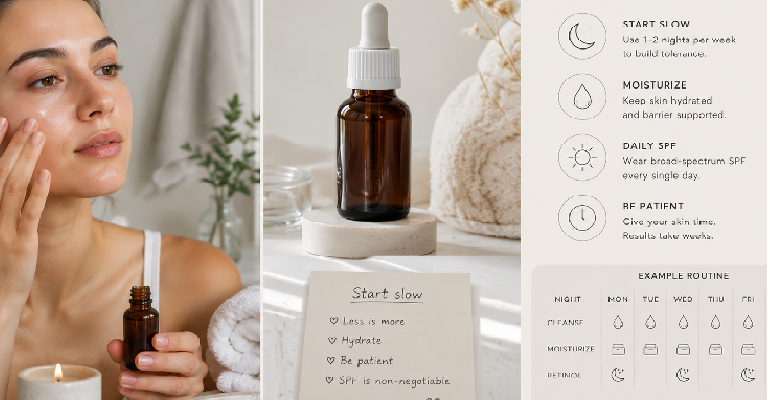
Retinol has the best evidence base of any over-the-counter skincare ingredient for the things most people want skincare to do: reduce fine lines, improve skin texture, minimize pores, fade hyperpigmentation, and increase cell turnover. The research is consistent and spans decades. The problem is that starting retinol incorrectly produces the specific experience of red, peeling, irritated skin that causes most people to either give up or conclude their skin doesn’t tolerate it. Most skin tolerates retinol fine with a proper introduction. Most retinol failures are not retinol failures — they’re starting-too-fast failures. What retinol actually does and why the science supports it Retinol is a form of Vitamin A that the skin converts to retinoic acid — the active form that produces the effects retinol is known for. This conversion process is why over-the-counter retinol (which converts to retinoic acid in the skin) is gentler than prescription tretinoin (which is already retinoic acid and therefore more immediately active). Retinoic acid accelerates cell turnover — the rate at which the skin produces new cells and sheds old ones. Faster cell turnover produces fresher skin at the surface, reduces the appearance of fine lines (because surface skin cells are newer), helps fade hyperpigmentation (because the pigmented cells are shed faster), and unclogs pores (because dead cell buildup, one of the primary causes of pore enlargement, is reduced). The irritation associated with starting retinol is a direct consequence of this accelerated cell turnover in skin that hasn’t adapted to the pace. The redness, peeling, and sensitivity are the skin’s response to a rate of cell turnover faster than it’s accustomed to. Introducing retinol slowly gives the skin time to adapt — the irritation phase is shorter and milder, and the long-term benefits are the same. The introduction protocol that actually prevents irritation Start at the lowest available percentage. For over-the-counter retinol, 0.025% to 0.1% is the starting range. There is no benefit to starting at a higher percentage as a beginner because the skin can’t use the higher concentration more effectively — it just produces more irritation. The Ordinary Retinol 0.2% in Squalane ($10-12) is the most recommended starting product because the 0.2% is appropriate for beginners and the squalane base provides hydration that counteracts dryness. Use it once a week for the first two weeks. One application per week. Not every night — once per week, in the evening after cleansing and before moisturizer. This allows the skin to show you how it responds before increasing frequency. Weeks three and four: twice per week if no significant irritation occurred during the first two weeks. If irritation occurred, stay at once per week for another two weeks before increasing. Month two and beyond: increase frequency gradually toward every other night, then every night, over the course of several months. The final goal for most people is every-night use, but arriving there over months rather than weeks is what prevents the irritation that causes people to abandon the process. The moisturizer-first method (sometimes called “buffering”): applying moisturizer to the skin before retinol rather than after is an approach that reduces irritation further by creating a diluting layer between the retinol and the skin surface. Less efficient for delivering retinol but significantly more comfortable during the introduction phase. The specific mistakes that cause retinol to fail Using retinol every night immediately. The most common mistake. The skin’s tolerance for retinol has to be built over time and starting at the frequency you’ll eventually reach produces the full irritation response on unprepared skin. Using retinol around the eyes without specific care. The skin around the eyes is significantly thinner than the rest of the face and retinol causes more irritation there as a result. Starting with a small distance from the eye area and moving closer as tolerance builds is more sensible than applying directly under the eye from the first use. Using retinol with other active ingredients before tolerance is established. Vitamin C, AHAs, BHAs, and niacinamide are all fine to use alongside retinol once tolerance is established. Starting retinol while also using AHAs regularly produces cumulative irritation that’s more than the sum of either part. Introduce retinol into a simple routine — cleanser, moisturizer, SPF — before adding additional actives. Skipping SPF. Retinol increases photosensitivity — the skin is more sensitive to UV damage during retinol use. Daily SPF is not optional alongside retinol. It’s non-negotiable. What to buy — specific product recommendations The Ordinary Retinol 0.2% in Squalane ($10-12): the starting point for most people. Low percentage, non-irritating base, accessible price that makes the cost of a new tube irrelevant if your skin reacts and you need to pause. Paula’s Choice 1% Retinol Treatment ($60): the product to graduate to after establishing tolerance for lower percentages. The 1% is at the upper end of what over-the-counter retinol offers and produces results equivalent to some prescription formulations at lower percentages. RoC Retinol Correxion Line Smoothing Cream ($25): the drugstore recommendation that occupies a useful middle position — higher than The Ordinary’s lowest percentage, accessible price, available everywhere. The prescription option worth knowing about: Tretinoin (prescription-only in most markets, available through dermatologists and some online services) is the most effective form of topical retinoid and produces results faster than any OTC retinol. For people who’ve established OTC retinol tolerance and want to progress to prescription strength, a consultation with a dermatologist is the appropriate path.
Best Foundation for Your Skin Type — The Honest Guide
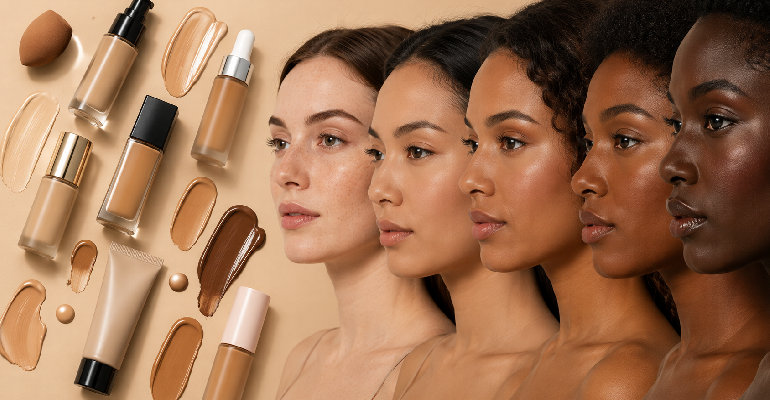
Foundation fails visibly in ways that most other makeup doesn’t. The shade that matched in the store and oxidized to orange by afternoon. The formula that looked smooth at application and settled into every texture and fine line by midday. The full-coverage product that looked like a mask rather than skin within two hours. These failures are more visible than foundation worn correctly, which is why choosing by skin type is the decision that matters most — before shade, before coverage level, before brand. For oily skin — the category that requires the most discipline in formula choice Oily skin breaks down most foundation formulas through the day as natural oil production interacts with the formula and breaks its hold. The foundations that work on oily skin are specifically formulated to resist this — either through oil-controlling ingredients, setting powder compatibility, or film-forming agents that prevent oil from disrupting the base. The Estée Lauder Double Wear Stay-in-Place Foundation ($52) has maintained its position as the reference oily-skin foundation for over a decade because it consistently delivers on its core promise: staying in place through a full day on oily skin without sliding, sheening, or changing color. The coverage is full and buildable. The finish is matte without being flat. The shade range is extensive enough to suit most skin tones. The limitation worth knowing: Double Wear is not for dry or dehydrated skin. The formula that grips oily skin also grips texture and settles into fine lines on dry skin, looking progressively worse through the day on skin types it’s not designed for. The drugstore alternative for oily skin: the L’Oreal Infallible 24HR Fresh Wear Foundation ($15) performs comparably on oily skin at a fraction of the price. The wear time and oil control are genuinely competitive with Double Wear. The shade range is less complete for deeper skin tones. For combination skin with oily zones: the NARS Natural Radiant Longwear Foundation ($50) provides medium-to-full buildable coverage with a natural finish that doesn’t over-mattify dry areas while still providing adequate oil control in the T-zone. The formula sits between the extremes of a full matte and a dewy finish in a way that combination skin specifically benefits from. For dry skin — dewy and hydrating formulas Dry skin’s specific foundation challenge: formulas that don’t hydrate the skin during wear look increasingly flat and emphasize texture as the day progresses. The best foundations for dry skin add hydration alongside coverage rather than sitting on top of dry skin without addressing it. The Charlotte Tilbury Beautiful Skin Foundation ($46) is the reference for skin-like coverage on dry skin. The formula contains glycerin and hyaluronic acid alongside the pigment — it’s treating the skin while covering it rather than just covering it. The coverage is medium and buildable rather than full, which suits dry skin because attempting to build full coverage on dry skin emphasizes texture in ways that medium coverage doesn’t. The finish is radiant and looks like good skin rather than like makeup, which is the specific effect that most people with dry skin are trying to achieve and that heavy, matte formulas actively work against. The Rare Beauty Liquid Touch Weightless Foundation ($29) is the accessible alternative for dry skin — a lightweight formula with a natural finish that doesn’t feel heavy or look cakey and performs well above its price point. The unique bottle design (flattened, one-handed pour) is a functional design detail rather than a gimmick. Preparation for dry skin foundation: moisturizer matters more for dry skin foundation application than for any other skin type. A well-hydrated skin surface before foundation application dramatically reduces the appearance of texture and prevents the foundation from looking dry and settled by midday. Waiting five minutes after moisturizer before foundation allows absorption rather than mixing. For mature skin — light formulas and different coverage goals Foundation on mature skin has a specific challenge that’s counterintuitive: the instinct to cover texture and signs of aging with full coverage foundation usually makes both more visible rather than less. Heavy coverage formulas settle into fine lines and emphasize them. The skin-like, lighter coverage formulas that don’t fully cover what they’re applied over typically produce a better result because they let skin’s natural texture show while evening tone. The NARS Sheer Glow Foundation ($50) is the recommendation specifically for mature skin — a sheer-to-medium buildable coverage with a luminous finish that catches light in a way that makes skin look alive rather than covered. The hyaluronic acid in the formula provides hydration during wear that prevents the settling-into-lines problem. The Ilia True Skin Serum Foundation ($54) is the alternative that performs as both skincare and foundation — SPF 20 and squalane alongside the coverage, in a formula that works with skin rather than on top of it. For acne-prone skin — non-comedogenic formulas that don’t make it worse The primary requirement for acne-prone skin is non-comedogenic formulation — ingredients that don’t block pores and contribute to breakouts. Beyond that, coverage level is personal and depends on whether you’re covering existing spots, managing active breakouts, or primarily concerned with prevention. The Clinique Even Better Clinical Foundation ($30) is the reference for acne-prone and blemish-prone skin — genuinely non-comedogenic, medium buildable coverage, and specifically formulated not to aggravate existing skin concerns. The Vitamin C and niacinamide in the formula contribute to long-term improvement rather than just covering the issue. The e.l.f. Halo Glow Liquid Filter ($14) is the accessible option — a skin-tint level coverage that evens tone without sitting heavily on skin, non-comedogenic, and priced low enough to be easily replaceable.
Sweaty Betty Honest Review — After Wearing Their Pieces for Over a Year
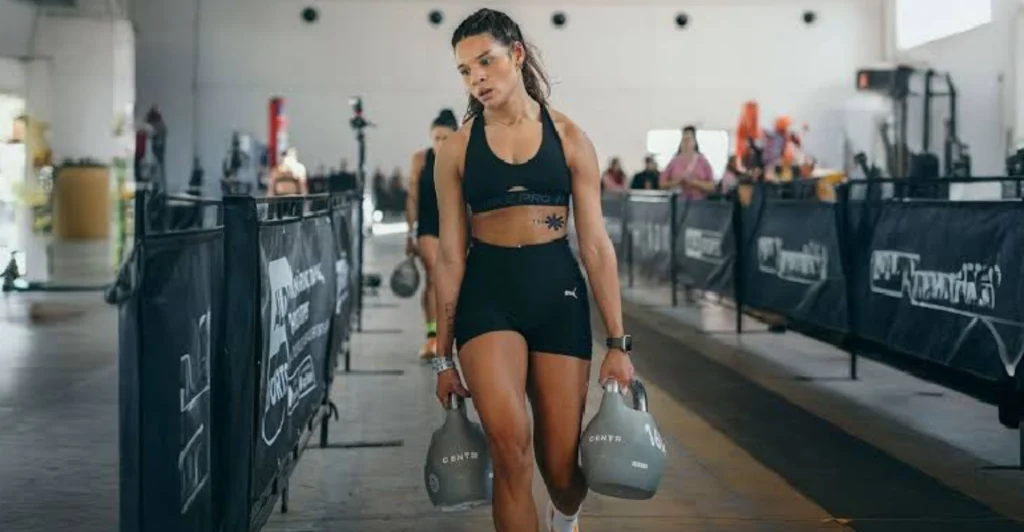
Sweaty Betty holds a specific position in the UK activewear market that doesn’t have a direct equivalent elsewhere. Founded in London in 1998 — significantly before the premium activewear category existed as a mainstream concept — the brand built a following through physical stores in affluent areas and a product range that positioned itself above high street activewear without quite claiming the premium status of American competitors. In 2021, Wolverine World Wide acquired Sweaty Betty for $410 million, which represented a significant validation of the brand’s market position. Whether the post-acquisition product quality matches the reputation the brand built before that transaction is the question worth examining. The flagship product — Zero Gravity leggings The Zero Gravity Tight ($130-140) is Sweaty Betty’s most recognizable product and the one that most directly competes with the Lululemon Align in the UK market. The fabric is a proprietary blend that provides more compression than the Align’s Nulu — sitting between the Align’s soft embrace and Alo’s firmer Airbrush in its compression profile. The Zero Gravity holds its shape well during a yoga or Pilates class and the compression is consistent across a full session without feeling restrictive. The waistband stays in position through inversions and transitions in a way that lower-waist alternatives don’t. The fabric has a slight sheen that photographs well in studio settings. After twelve months of regular wearing and washing, the Zero Gravity tight shows minimal pilling and has maintained its compression characteristics. This is the durability test that most activewear fails before the end of year one, and the Zero Gravity passing it is a genuine recommendation for the product’s construction quality. Where Sweaty Betty performs well The yoga and Pilates range is where the brand’s quality is most consistent. The Power Pose Tight, the Gary Yoga Jacket, and the Sweaty Betty yoga tops are each well-made for their intended use. The run range has received strong reviews for the Zero Gravity Run Tight specifically — the compression and fabric weight suit running better than some competitors’ yoga-first designs. The Sweaty Betty running jackets are functional and well-constructed. The swim and ski ranges are worth mentioning because they’re categories where Sweaty Betty’s quality advantage over accessible alternatives is most clear — the construction and fabric technology in their technical outdoor range is genuinely above what most other brands produce at equivalent prices. The honest comparison with Lululemon At similar prices, the Sweaty Betty and Lululemon products are genuinely comparable in construction quality. The primary differences are aesthetic and fabric-preference rather than quality: Lululemon’s Nulu is softer and less compressive, Sweaty Betty’s Zero Gravity is firmer and more structured. The Lululemon brand carries more cultural weight globally but less specifically in the UK market where Sweaty Betty has longer-established retail presence. For UK-based buyers choosing between the two: both are genuinely quality products at premium prices. The decision is primarily about fabric preference and whether you want to shop in physical stores — Sweaty Betty’s UK retail presence is more extensive. What’s not worth buying from Sweaty Betty The accessories range — bags, water bottles, yoga mats — reflects the premium pricing of the clothing without matching the quality differential that makes the clothing worth the premium. The yoga mats in particular are not competitive with dedicated yoga mat brands at comparable prices. The more fashion-forward seasonal pieces that move away from the core technical range tend to be less consistent in quality than the established technical lines. The brand’s strength is in performance-led design rather than fashion-led design, and pieces that prioritize the latter over the former don’t always justify the price.
White Sneakers Worth Buying Right Now — And Why Each One Is Worth It
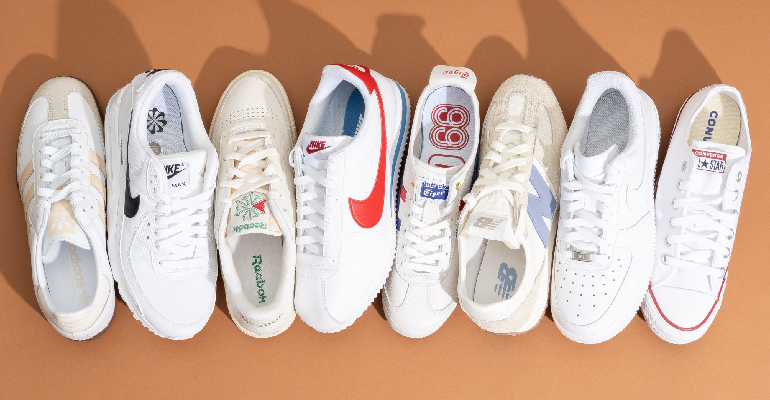
I have bought and returned more white sneakers than I care to admit. There was the pair that looked perfect on the website and arrived with a slightly cream sole that aged to a dingy yellow within three months. There was the pair that fit correctly in the store and stretched out after two weeks of daily wear until they were half a size too large. There was the pair that everyone on social media was wearing, that I bought because everyone on social media was wearing them, and that I stopped reaching for within a month because they were uncomfortable past the second hour of wear. After all of that, here is what I’ve actually learned: a great white sneaker is not complicated. It needs to hold its color, hold its shape, feel comfortable for a full day, and work with at least three-quarters of the things in your wardrobe. The fact that so many pairs fail one or more of these tests is the reason this category requires as much thought as it gets. The picks below are specific. Each one is included for a reason, and the reason is explained alongside the recommendation so you can make the decision that’s right for your specific situation rather than just following a list. What Actually Makes A White Sneaker Worth Buying Before the recommendations, the variables worth understanding. The upper material determines almost everything about longevity. Genuine leather holds its shape through daily wear, takes a polish, and develops a patina with age rather than looking simply worn. Canvas is lighter and more casual but absorbs dirt more readily and doesn’t clean as thoroughly. Technical mesh is breathable but the most delicate — snags, discoloration, and surface breakdown happen faster on mesh than on leather or canvas. The sole material determines yellowing. Most white soles yellow over time when exposed to UV light and oxidation — this is a chemical reaction in the rubber compound and it’s essentially unavoidable. Soles with higher-quality rubber compounds yellow more slowly. Cleaning the sole regularly and storing sneakers away from direct sunlight slows the process. The sole material determines yellowing. Most white soles yellow over time when exposed to UV light and oxidation — this is a chemical reaction in the rubber compound and it’s essentially unavoidable. Soles with higher-quality rubber compounds yellow more slowly. Cleaning the sole regularly and storing sneakers away from direct sunlight slows the process. The Best White Sneakers To Buy Right Now Adidas Stan Smith — The Classic That Actually Deserves Its Reputation Buy Now There are shoes that are famous because they’re good and shoes that are good because they’re famous. The Stan Smith is the former. The design has been in production since 1971 and the reason it’s still in production isn’t marketing — it’s that the proportions are genuinely correct. The low profile, the clean upper, the minimal perforated stripe detailing. It sits on the foot in a way that looks right with an extraordinary range of outfits. The leather version — specifically the leather, not the vegan leather or canvas alternatives — is what’s worth buying. The full-grain leather upper holds its shape through daily wear, takes a polish with a damp cloth and a small amount of leather cleaner, and develops the specific patina of well-maintained leather shoes over time. This patina is different from being dirty. A Stan Smith that’s been cared for and worn regularly for two years looks like a quality shoe. A Stan Smith that’s been neglected looks like an old shoe. The sizing is consistent and runs true across most people’s experience. The fit is slightly narrow in the toe box — people with wider feet consistently report needing a half-size up to get comfortable room. The heel is well-constructed with a firm heel counter that prevents the back of the shoe from collapsing with daily wear. The retail price sits at $90-100, which is genuinely reasonable for a shoe that will last three to four years of regular wear with appropriate care. Buy from Adidas directly or from Nordstrom where the return policy is genuinely easy to use if sizing is an issue. Available at: Adidas, Nordstrom, ASOSPrice: $90-100Best for: Those who want a true classic that works with everything from tailored trousers to weekend jeans. Veja Campo — For Those Who Care About Both Quality And What The Shoe Is Made From Buy Now Veja’s supply chain transparency is the most substantive in the affordable sneaker category. The brand publishes where their materials come from, what workers are paid, and what the environmental impact of their manufacturing is. Most brands that make sustainability claims are protecting that information rather than sharing it, which tells you something about the difference between genuine commitment and marketing positioning. The Campo is the Veja silhouette most worth recommending for people who want a clean, everyday white sneaker rather than a more fashion-forward choice. The low profile and simple design are closest in spirit to the Stan Smith. The leather comes from ranches that are audited for both animal welfare and land use. The sole uses wild rubber from the Amazon, which is a more expensive material than petroleum-based rubber and directly supports the communities who harvest it. The wearing experience is excellent once broken in. The first two weeks of the Campo require acknowledgment — the leather is stiff from new and needs to adapt to the shape of your foot. This is normal for quality leather shoes and the end result is a shoe that fits better than it did on day one rather than worse. By week three, the Campo is comfortable for a full day. Sizing note: runs small. The standard recommendation across reviews is to go up half a size. Check Veja’s size guide against your foot measurement before ordering. The retail price is $140-170, which reflects both the material quality and the genuine additional cost of the supply chain commitments Veja makes. Available at:
Outdoor Running Jackets For Women — Honest Reviews
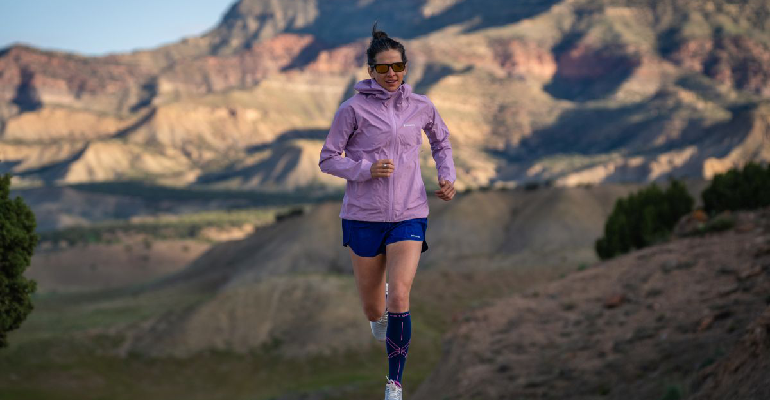
Pilates clothing has requirements that differ from general gym wear in specific ways that most people discover at their first class rather than before it. The leggings that were fine for spinning class slide on the reformer carriage. The crop top that’s acceptable in a general gym is too short for the leg circles and inversions in Pilates. The regular socks that work on every other gym floor are a genuine safety issue on a Pilates reformer. Here is the specific guide for what to wear so you can focus on the class rather than on what you’re wearing. Leggings — the fit and fabric that matter for Pilates The reformer requires leggings that stay in place during significant leg movement — leg circles, footwork, long stretch — and that don’t bunch, ride up, or slide. This means a high-waist construction that stays at the waist through inversions, a fabric that has some grip rather than being fully slippery, and a length that covers the knee because the knee resting on the carriage pad during certain exercises is more comfortable with coverage. The Lululemon Align is the most-mentioned Pilates legging recommendation and the reasons are specific: the Nulu fabric grips slightly against the reformer surface rather than sliding, the waistband stays put through the full range of Pilates movement including inversions, and the fabric is breathable enough for the sustained but lower-intensity effort of Pilates. The seamless construction means no seam in the inner thigh to dig during the hip abduction work that Pilates involves. The Girlfriend Collective Compressive legging is the accessible alternative — the compression fabric has enough surface texture to grip the reformer carriage without being the smooth, slippery surface that some fabrics produce. What doesn’t work: very slippery fabrics that slide on the reformer. Very loose or baggy bottoms that catch on the springs and straps. Leggings with external seams on the inner thigh that create friction during leg work. Tops — the coverage requirements that aren’t obvious Pilates involves more inversion and leg-lifting movement than most gym classes. A regular cropped top that’s fine standing upright becomes too short during the teaser, the hundred, and any movement that brings the legs above hip height. The top that stays covering during a forward fold in yoga doesn’t stay covering during the full range of Pilates movement. A close-fitting tank or long crop that stays tucked into or over the leggings throughout movement is the correct choice. The Lululemon Swiftly Tech Long Sleeve or any snug-fitting long-line tank stays in place through Pilates movement in a way that shorter crops don’t. Loose tops also catch on reformer springs and straps during transitions. Close-fitting is both more practical and safer. Grip socks — not optional on a reformer Grip socks are required at most reformer Pilates studios because bare feet on reformer footbar and carriage surfaces is a genuine slip risk and most studios have hygienic requirements that bare feet don’t meet. The grips on the sole of Pilates socks provide purchase on the footbar and carriage surface during footwork exercises. The Tavi Noir grip socks are the studio staple — reliable grip, durable after multiple washes, and available in multiple lengths. The ToeSox full-toe grip socks are the alternative preferred by people who find the individual toe slots improve proprioception during balance and footwork exercises. The grip socks sold at most Pilates studios are usually overpriced and lower quality than what you can buy directly. Buying a few pairs before starting a regular Pilates practice is more economical than buying one pair at the studio at each session. What to avoid at Pilates Baggy clothing of any kind — it catches on springs and straps and makes the instructor’s job of observing your form harder. Zips or buttons on the back of clothing — they catch on the reformer carriage. Very long layers that drape beyond the body — same problem. Hard-soled shoes worn on the reformer — some studios allow trainers for standing work but generally closed footwear isn’t appropriate on the reformer carriage.
How to Build a Gym Wardrobe on a Budget — Without Compromising on What Matters
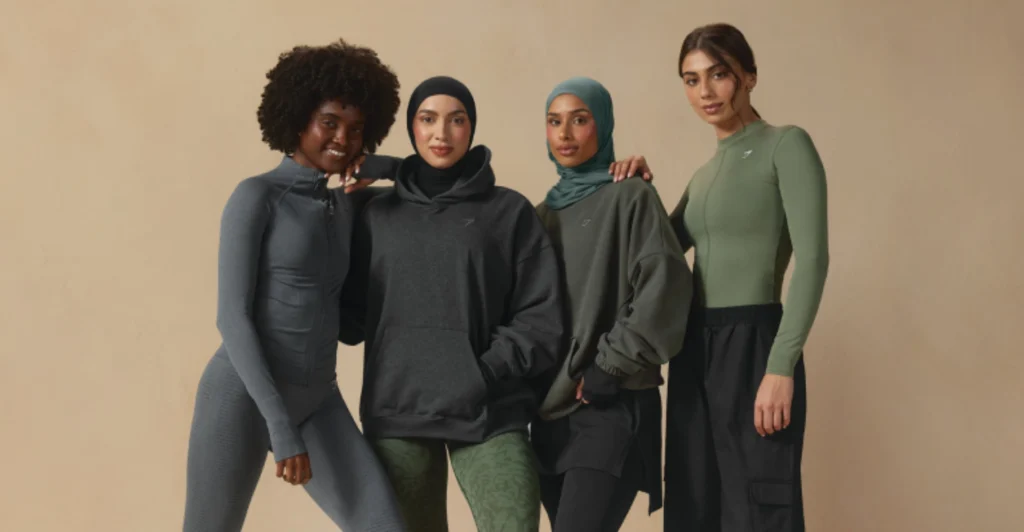
The premium activewear conversation dominates the category to a degree that misrepresents the actual situation. You can train effectively, comfortably, and in clothes that hold up without spending £100 on a pair of leggings. The performance gap between mid-price activewear and premium activewear is real but smaller than the price gap suggests for most applications. Here is how to build a complete gym wardrobe without spending more than necessary on any of it. The pieces you actually need — not the full Instagram wardrobe Before buying anything, identify what training you’re actually doing. The person who primarily lifts weights needs different pieces than the person who primarily runs. The person who takes yoga classes needs different fabric behavior than the person who does HIIT. Buying a complete activewear wardrobe before understanding your actual training needs produces duplicates of the wrong things and gaps in the right ones. The minimum viable gym wardrobe for most training types: two pairs of leggings or shorts, three to four workout tops, one supportive sports bra per high-impact workout day, and one pair of appropriate training shoes. Everything else is addition rather than foundation. Where to find quality activewear without premium prices Decathlon is the most consistently underrated source of quality activewear at genuinely low prices. Their Domyos brand for gym training and their Kalenji brand for running have both improved significantly in quality over the last five years. A pair of Domyos training leggings at £15-20 performs comparably to H&M Sport alternatives at similar prices and significantly above fast fashion activewear in the same price range. The Decathlon sports bras in particular receive strong reviews for support relative to price — their high-impact range ($15-25) provides genuine support for running and HIIT that many more expensive options don’t match. H&M Move is the H&M activewear line that’s separated from their main activewear range in quality. The Seamless fabric in their Move leggings performs above the H&M brand expectation — less pilling than standard H&M, better compression maintenance. At £20-35 for leggings, this is genuinely good value. ASOS Activewear is mixed but contains specific pieces that perform well above their price. Reading reviews specifically for durability after washing — rather than initial impressions — identifies which specific pieces hold up. The budget hierarchy — what to spend more on even within a budget Even within a budget gym wardrobe, some categories justify more spending than others. Sports bras warrant more investment than leggings or tops because inadequate support during high-impact exercise has documented effects on breast ligament health over time. The Shock Absorber Run Bra at £40-50 is accessible within most budgets and provides genuine high-impact support. This is the piece where the budget shouldn’t be minimized. Training shoes warrant more investment than clothing because the stability and support they provide directly affects training safety and effectiveness. Budget training shoes with poor heel stability are worse for lifting than no shoes at all. A single quality pair of training shoes at £80-130 is a more sensible allocation than spreading the same budget across multiple pairs of lower-quality options. Leggings and tops can absorb the bulk of the budget reduction. A mid-price legging at £20-35 that holds up for a year of regular washing is a better value proposition than a premium legging at £100 that holds up for two years — the per-year cost is comparable and the lower price produces less psychological pressure around the purchase. Secondhand activewear — the underused strategy Quality activewear from premium brands appears regularly on resale platforms (Vinted, Depop, eBay) because the category attracts aspirational purchases that don’t align with actual use. Lululemon leggings worn twice before the buyer decided they preferred running outside appear on Vinted at 30-40% of retail regularly. Gymshark pieces in excellent condition are available on Depop for under £20. The search strategy: specific brand names plus size plus condition filter. The quality that makes premium activewear worth buying in the first place also makes it worth buying secondhand — the fabric and construction that justify the full price also make the item worth owning at reduced cost.
How to Improve Gut Health — What the Evidence Actually Says

Gut health content has a misinformation problem that’s serious enough to warrant addressing before anything else. The category online is dominated by influencers selling probiotic supplements, elimination diets, and “leaky gut” protocols that range from unsupported to actively counterproductive. The microbiome research that underlies the legitimate interest in gut health is genuinely exciting and genuinely complex, and it’s being simplified and monetized in ways that don’t accurately reflect what the science says. What follows is the evidence-based version. Which means it’s less dramatic and less monetizable than most gut health content, but more likely to actually help. What the gut microbiome actually is The human gut contains approximately 38 trillion microorganisms — bacteria, viruses, fungi, and others — whose collective genetic material exceeds the human genome in volume. This community, the gut microbiome, influences digestion, immune function, the production of certain vitamins and neurotransmitters, and potentially mood and cognitive function (through the gut-brain axis, a bidirectional communication pathway). The research is genuine and the clinical implications are growing. However: the microbiome is complex enough that most interventions produce modest and variable results rather than dramatic consistent improvements. The “fix your gut, fix your life” content significantly overstates what current science supports. What actually improves gut microbiome health — the evidence Dietary fiber is the most consistently evidence-supported gut health intervention. The gut microbiome is fed by fiber from plant foods — the indigestible components of vegetables, fruits, legumes, and whole grains that reach the large intestine intact and are fermented by gut bacteria. This fermentation produces short-chain fatty acids (butyrate specifically) that support gut lining integrity and have anti-inflammatory effects. The practical implication: eating more varied plant foods is the most evidence-supported thing most people can do for gut health. Not a specific superfood. Not a specific fiber supplement. A wider variety of plants — aiming for 30+ different plant species per week is a target that appears in gut health research as associated with greater microbiome diversity. This is more achievable than it sounds: different colors of vegetables, different fruits, different legumes, herbs, nuts, seeds, and whole grains each count. Fermented foods show evidence for microbiome benefit that probiotic supplements, despite more research attention, have less consistent evidence for. The Stanford research published in Cell in 2021 found that a diet high in fermented foods (yogurt, kefir, kimchi, sauerkraut, kombucha) increased microbiome diversity and reduced markers of inflammation more than a high-fiber diet alone over ten weeks. Sleep, stress, and exercise each affect the gut microbiome through mechanisms that are progressively better understood. Chronic sleep disruption and chronic stress both negatively affect microbiome composition. Exercise is associated with greater microbiome diversity in multiple studies. Probiotics — the honest assessment Probiotic supplements contain live bacteria in specific strains at specific quantities. The research on their effectiveness is mixed for several reasons: different strains have different effects, different individual microbiomes respond differently to the same probiotic, and most probiotic supplements contain strains that don’t survive the journey through the stomach acid and small intestine to reach the large intestine in meaningful quantities. For specific clinical conditions — antibiotic-associated diarrhea, certain IBS subtypes — specific probiotic strains have genuine evidence for benefit. For general gut health improvement in healthy people, the evidence is less clear and the effects where they exist are modest. Fermented foods provide live bacteria alongside fiber and other compounds that may support their survival and integration with the existing microbiome better than isolated probiotic supplements do. The evidence for fermented foods is currently more consistent than the evidence for probiotic supplements for general microbiome health. What to ignore — the gut health myths Leaky gut as a distinct diagnosis: “leaky gut syndrome” is not recognized as a medical diagnosis by major gastroenterological bodies. Intestinal permeability is a real phenomenon relevant in specific conditions, but it’s being used as a catch-all explanation for diverse symptoms by supplement sellers and wellness influencers without adequate evidence. Elimination diets as general gut health interventions: removing specific food categories without medical indication removes potential fiber sources and can reduce microbiome diversity. Elimination diets are appropriate with medical supervision for specific suspected conditions (IBS subtype identification, suspected food intolerances). They’re not appropriate as general wellness protocols. Most “gut health” supplements beyond well-studied probiotic strains for specific conditions: the market for gut health supplements is enormous and the regulation is minimal. Evidence for most specific products is either absent or funded by the companies selling them.