Leather Bags For Women Under $500 — Quality Picks That Last For Years
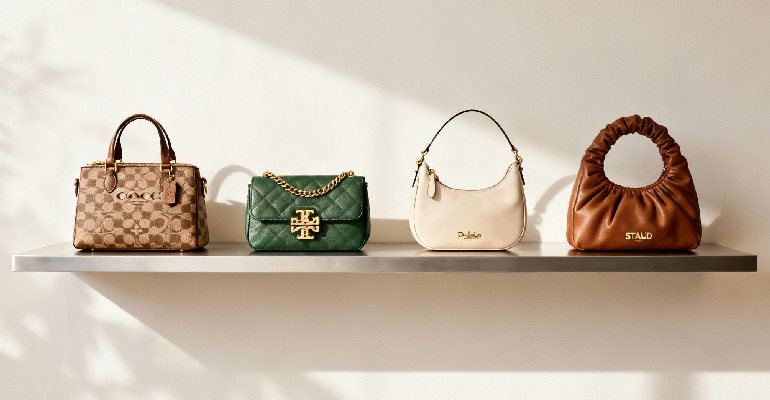
There is a specific frustration that comes from buying a bag that looked expensive in the product photograph and arrived looking like nothing in particular. The leather that seemed rich and substantial online and felt thin and plasticky in real life. The structure that was firm in the image and collapsed the moment you put anything inside. The stitching that looked clean from a distance and revealed itself on arrival as inconsistent and already pulling at one corner. A leather bag is one of the purchases where the difference between good and bad quality is immediately apparent once you know what to look for — and where getting it right produces something you carry for years rather than months. The good news is that genuinely good leather bags are available well below the price points of designer houses. The brands in this guide are producing bags that will still look excellent in five years at prices that don’t require the kind of deliberation that a four-figure purchase does. What Makes A Leather Bag Worth Buying The leather itself. Full-grain leather is the highest quality — it’s the outermost layer of the hide and the most durable. It develops a patina with use that looks intentional rather than simply worn. Top-grain leather is slightly lower quality (it’s been sanded or buffed to remove surface imperfections) but still genuine leather that ages reasonably well. Bonded leather (reconstituted leather scraps glued together) and PU leather (polyurethane synthetic) are the categories to avoid for anything you want to last. The hardware. Zippers should glide smoothly and not catch. Clasps should close with positive resistance rather than loose or rattling. D-rings for straps should be solid metal without flex when you pull the strap. The hardware finish should be consistent across all pieces rather than varying in tone or texture. The stitching. Even, consistent stitch length with no loose threads and no puckering is the baseline. Pull gently on the stitching at the corners — these are the points of highest stress. Quality stitching doesn’t pull or loosen. Cheap stitching shows weakness at the first application of pressure. The structure. Put the bag down on a flat surface. A quality structured bag holds its shape. It doesn’t collapse or lean. Internal structures — the stiffener in the base, the shaping in the sides — maintain the bag’s profile when it’s empty as well as when it’s full. The Best Leather Bags Under $500 Polène Numéro Un — The Structured Bag With A Distinctive Identity Buy Now Polène is a French brand that has built a significant following primarily through the quality-to-price argument, which is the most durable kind of following to build. The Numéro Un is their original and signature piece — a structured top-handle bag in their proprietary Peau de Blé leather that sits in a position between everyday bag and occasion bag with unusual success. The Peau de Blé leather is the detail that defines the bag. It’s a textured, matte leather that looks expensive in a specific way that glossy leathers don’t — the texture catches light differently and ages more gracefully than smooth leather, developing a rich patina while maintaining its matte quality. The leather is sourced from tanneries certified under the Leather Working Group’s standards, which is a genuinely meaningful environmental certification rather than a marketing claim. The internal organization is well-considered — a main compartment large enough for daily essentials plus laptop under 13 inches, a zip pocket on the interior, and the overall size that’s carried comfortably as a top handle or shoulder bag using the optional longer strap. The construction is clean at every point of inspection: the handles are attached securely, the hardware is consistent, and the base sits flat and holds its shape when the bag is empty. The color range is deliberately restrained — Polène produces limited color drops rather than maintaining an extensive permanent range, which means specific colors sell out. The classic neutrals (camel, cream, greige, black) are available consistently and are the most versatile choices. Price: $290-350Available at: Polène directly (polene-paris.com)Best for: Those who want a structured, distinctive everyday bag that reads as genuinely premium. Strathberry East/West Mini — The Scottish Bag That Punches Above Its Price Buy Now Strathberry is a Scottish leather goods brand whose East/West mini tote has developed a cult following that is genuinely earned rather than manufactured. The bar closure hardware — a horizontal bar that flips open to access the bag — has become recognizable as a design signature and sets the bag apart visually from the sea of simple magnetic closures and zip tops. The bag is made in Spain from full-grain leather. The construction is excellent at close inspection — the leather edges are properly finished rather than raw or coated, the stitching is even and consistent, and the hardware is solid metal with appropriate weight. The bar closure mechanism clicks with positive resistance and stays shut securely under the conditions a handbag actually experiences. The proportions are very specifically calibrated — the long, shallow format of the East/West creates a distinctive silhouette that photographs particularly well and works with both casual and more dressed-up outfits. It carries more than its appearance suggests: a phone, wallet, keys, small notebook, and daily essentials fit comfortably despite the bag’s intentionally minimal look. Available in an extensive color range — Strathberry maintains a wider permanent color selection than Polène, which makes it easier to find the specific tone you want rather than waiting for a color drop. Price: $495Available at: Strathberry directly, Selfridges, NordstromBest for: Those who want a distinctive, recognizable bag with genuine quality credentials. Cuyana Classic Zip Tote — The Most Practical Everyday Bag Buy Now Cuyana is an American brand built explicitly around the “fewer, better things” concept and the Classic Zip Tote is the product that best demonstrates what that means in practice. It is not the most interesting or distinctive bag on this list. It is the most genuinely useful
Everyday Jewelry Brands — Which Ones Actually Last
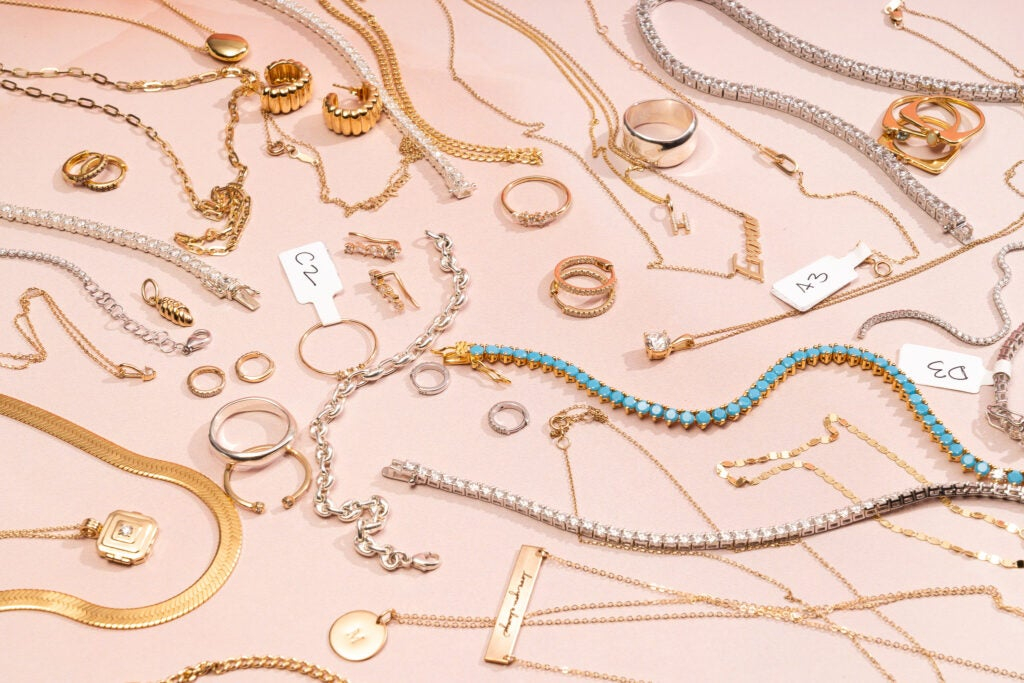
Everyday jewelry has fundamentally different requirements from occasion jewelry. The pieces worn every day — through morning showers, gym sessions, contact with sweat and perfume and sunscreen — face conditions that occasional pieces never encounter. What lasts and what fails in everyday wear is determined primarily by the material and quality of the base metal, not by how it looks when new. The material hierarchy — what actually holds up Solid gold (10k, 14k, or 18k) is the only material that maintains its appearance indefinitely in daily wear. Solid gold doesn’t tarnish, doesn’t react with most skin chemistry, and develops a gentle patina that most people find attractive rather than problematic. The cost is proportional to gold content and craftsmanship — 14k is the most common choice for everyday jewelry because it balances durability (higher gold content is softer and more susceptible to scratching) with affordability. Gold-fill is the middle ground worth understanding. Gold-fill is a mechanical bond of a thick layer of gold to a base metal core — significantly more substantial than plating — that can maintain its appearance through years of daily wear with appropriate care. The gold layer in gold-fill must legally be at least 1/20th of the total weight of the item, which is dramatically thicker than standard plating. Gorjana is the most recommended accessible brand for gold-fill everyday jewelry. Gold plating is the most common and least durable option at lower price points. The gold layer is thin enough to wear through at friction points — rings and bracelets show this fastest — revealing the base metal underneath. How quickly this happens depends on plating thickness, base metal, and how the piece is worn. Most gold-plated pieces from fast fashion brands show wear within three to six months of daily use. Mejuri — the reference for accessible solid gold Mejuri offers solid 14k gold pieces at prices that are the most accessible entry into the solid gold category — a simple 14k gold chain at $150-200, a delicate ring at $100-180. The quality is consistent with the material: solid gold behaves like solid gold, which means it doesn’t tarnish, doesn’t need to be removed before showering, and looks the same in five years as it does now. The styling is deliberately minimal — thin chains, simple geometric shapes, no-branding approach that lets the material speak without logo decoration. This is either the appeal or the limitation depending on preference. For people building a curated everyday jewelry collection, Mejuri’s pieces work as foundation items that pair with stronger statement pieces from other sources. Gorjana — the gold-fill standard Gorjana jewelry costs $30-90 for most pieces and is the most consistently recommended gold-fill brand for everyday wear. The 18k gold-fill over sterling silver provides warmth and durability above what plated pieces offer, and the brand’s pieces are specifically designed for the everyday-wear use case — thin chains that don’t kink, simple clasps that hold through activity, designs that suit casual and dressed contexts equally. The specific Gorjana pieces most recommended for everyday wear: the Ava Chain Necklace (a simple, delicate everyday chain that layers well), the Parker Huggie Earrings (small hoops that work for active daily wear), and the Chloe Ring (a simple band that stacks well with other rings). What to avoid for everyday wear Sterling silver without rhodium plating tarnishes in daily contact with air, sweat, and sulfur compounds. The tarnishing is reversible with a silver polishing cloth, but it requires maintenance that many people don’t want to provide for everyday pieces. Brass-base plated jewelry: brass oxidizes as well as losing its plating, and the green skin reaction that some people experience from jewelry is typically a reaction to copper in brass rather than to the gold plating on top of it. Anything with intricate details or settings that trap water and product during daily showering or hand washing — these areas become breeding grounds for bacteria and corrode faster than smooth pieces.
How to Layer Necklaces Without It Looking Wrong — The Specific Guide
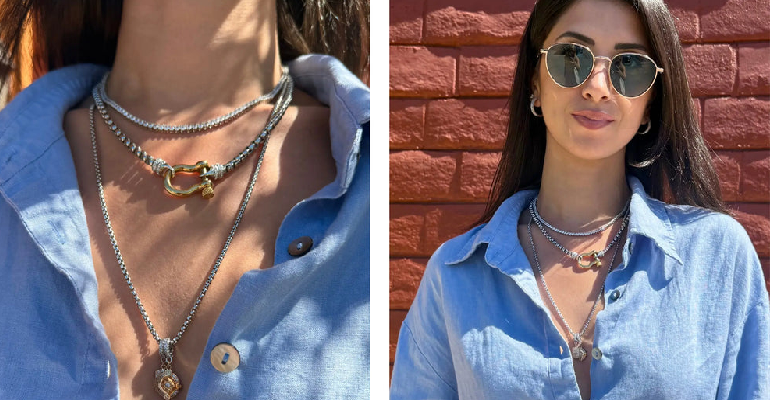
Layered necklaces look deliberate and considered when done correctly. They look like an accident when done incorrectly. The difference between the two is almost never about the cost or quality of the jewelry — it’s about three specific variables that most necklace layering guides skip past too quickly. Length differentiation — the rule that changes everything Each necklace in a layered stack needs to be at a meaningfully different length from the others. Not two centimeters apart. Not five centimeters apart. Ten to fifteen centimeters apart at minimum so that each piece occupies a clearly different visual zone on the chest. The three-necklace layering stack that works: a short piece at 14-16 inches sitting at the collarbone, a medium piece at 18-20 inches sitting across the upper chest, and a longer piece at 24-26 inches reaching toward the sternum. These three lengths are each visible simultaneously without competing. Each reads as an individual piece with its own place rather than as a confusing tangle of similar lengths. The reason same-length necklaces don’t work: they sit in the same visual zone and the eye can’t distinguish individual pieces — it reads them as clutter rather than as a curated stack. Visual weight — the element most layering guides miss The stack that looks intentional typically has variation in visual weight as well as length. One very delicate chain, one piece with a pendant that provides visual anchor, and one slightly chunkier or more substantial element creates a hierarchy that makes each piece readable rather than competitive. Three heavy chains layered together create competition rather than hierarchy — none of them can be read clearly. One heavy chain worn alone with two delicate layering chains produces clear hierarchy where the statement piece reads first and the delicate pieces provide texture. Mixing metals — the current approach Mixing metals is now accepted and in many cases looks more contemporary than matched metals. The condition for mixed metals to look intentional: wearing each metal in multiple pieces so the mixing reads as a deliberate choice rather than a mistake. One silver piece among four gold pieces looks like a forgotten necklace that wasn’t swapped out. Two gold pieces and two silver pieces in a layered stack looks like a specific aesthetic choice. The specific combinations that work consistently: yellow gold and silver, yellow gold and rose gold, silver and rose gold. All three combinations are visible in contemporary jewelry styling without reading as mismatched. Anti-tangle strategy — the practical concern The specific tangle problem in layered necklaces usually comes from similar-weight chains moving into each other during wear. Solutions: a necklace layering clasp (a single clasp that attaches multiple necklaces and keeps them at set intervals from each other), choosing one or two necklaces in different chain styles (box chain versus cable chain versus ball chain), and avoiding very fine chains in the same length range as slightly heavier chains.
How to Find Your Fragrance — The Honest Guide
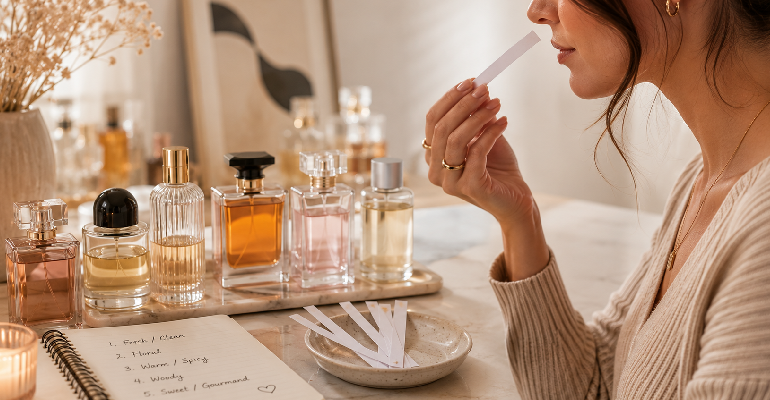
Fragrance is the most personal category in beauty and the one where most shopping advice is least useful. “Floral with a woody base” and “fresh and citrusy” are descriptions that sound precise and are almost meaningless until you’ve smelled the specific fragrance — because every “floral with a woody base” smells different from every other, and what reads as fresh and clean to one person reads as sharp and chemical to another. Finding your fragrance requires understanding enough about how fragrance is structured to narrow down what to try, and then actually trying things before buying full bottles. Fragrance families — the framework that helps Fragrance families are the categories that describe the overall character of a scent. Understanding which families you respond to narrows down what to sample. Floral fragrances center on flower notes — rose, jasmine, peony, lily of the valley. They range from the single-flower soliflore (a fragrance that smells like one specific flower) to complex blends of multiple florals to florals blended with other family elements. Floral is the largest fragrance family and the most varied — “I like florals” tells you less than knowing whether you like fresh green florals, rich heady florals, or powdery soft florals. Woody fragrances are warm, grounding, and rich. Sandalwood, cedarwood, vetiver, and patchouli are the common wood notes. Woody fragrances tend to last longer on skin and project more firmly than lighter families. They’re typically associated with evening or formal wear but modern woody fragrances span a wide range of occasions. Fresh fragrances include citrus (lemon, bergamot, grapefruit), aquatic (ocean, clean air), and green (cut grass, leaves, herbs). They tend to be lighter and shorter-wearing than other families, which makes them better candidates for warmer weather or daytime wear. Oriental fragrances are rich, warm, and often sweet — amber, vanilla, benzoin, and spices are common elements. They last extremely well, project strongly, and are typically evening-wear fragrances. The name “oriental” is being replaced in most contemporary fragrance discussions with “amber” or “gourmand” for the sweeter interpretations. How to test fragrance without wasting money Sample sets from brands (most high-end brands now offer discovery sets of 1-2ml samples for $30-60 that can be applied toward a full purchase) are the most cost-effective way to test multiple fragrances before committing. Wearing a fragrance for a full day — not just the initial spray — tells you how it performs as it dries down, which is where most fragrances transform significantly from the top notes that hit immediately. Decant services (Scent Split, The Perfumed Court, and similar) sell 5-10ml decants of almost any fragrance for $10-25, which provides several weeks of use to decide before buying a full bottle. The skin chemistry reality: fragrances smell different on different people because skin pH, natural oils, and individual biochemistry interact with fragrance molecules differently. A fragrance that smells extraordinary on one person and strange on another is the skin chemistry difference, not a quality difference. The fragrances worth knowing about in 2026 For a modern floral: Maison Margiela Replica Flower Market ($175 for 100ml) is the clean, fresh floral that works across seasons and ages without reading as old-fashioned. The peony and white rose center is contemporary rather than traditionally powdery. For a woody signature: Le Labo Santal 33 ($225 for 100ml) has had a cultural moment that seems outsized until you understand why — the sandalwood and cedarwood blend with violet and cardamom in a way that’s genuinely distinctive and consistently well-received across different people’s skin chemistry. For an accessible everyday fragrance: Zara has produced a series of fragrances that are acknowledged in fragrance communities as high-quality compositions at accessible prices ($30-40 for 100ml). The Zara Orchid fragrance and the Rich Warm Addictive collection are the most consistently recommended.
Best Eyeshadow Palettes Worth Buying — Where Every Shade Actually Gets Used

The eyeshadow palette category has a specific and consistent design flaw: most palettes contain one or two shades that inspired the purchase and ten to sixteen shades that will never see the brush. The bright blue that looked exciting in the press release. The glitter that’s too much for anywhere you actually go. The shade almost identical to three other shades already in the palette. The palettes worth buying are the ones where every shade has a use case in your actual life rather than the aspirational life the palette’s editorial imagery suggests. Charlotte Tilbury Luxury Palette in The Sophisticate — the daily use reference The Charlotte Tilbury Luxury Palette in The Sophisticate ($65) is built around a four-shade formula that covers the complete eye look in one product: a matte highlight, a matte mid-tone, a deeper matte for the crease, and a shimmer for the lid. Four shades, one complete look, no redundancy. The quality of the shades individually is what earns the price: the mattes are pigmented and blendable without being so pigmented that mistakes are hard to correct, the shimmer is smooth rather than chunky-glittery, and the formula is forgiving enough for beginners while refined enough for more experienced users to work with precisely. The specific advantage of the four-shade format is the absence of decision fatigue — there’s no “which of these similar mid-tones do I want” question because there’s only one of each type. This is either liberating or limiting depending on how much variety in eye looks matters to you. Urban Decay Naked3 — for neutral-warm everyday looks The Urban Decay Naked palettes are the reference neutral palettes for a reason that goes beyond marketing: the formula, the shade range, and the quality-to-price ratio have been consistently good across the iterations. The Naked3 ($54) specifically focuses on rose-gold and warm neutral tones that suit most complexions and have a versatility across looks that the more dramatic palettes in the range don’t match. The twelve shades include everything from light matte highlights through to deep shimmer transitions, and the shade range is genuinely versatile rather than featuring duplicates or specialty shades that belong in a specific looks-focused palette rather than an everyday one. e.l.f. Bite-Size Eyeshadow Palettes — the drugstore recommendation The e.l.f. Bite-Size eyeshadow palettes ($10-12 each, nine shades) represent what the drugstore eyeshadow category looks like when it’s done well. The smaller format forces curation — nine shades, all of which should serve the palette’s specific color story — and the quality of the formula at $10 is genuinely above what the price would suggest. The Camo collection (army greens, khakis), the Pumpkin Spice palette (warm autumn tones), and the Nude Mood palette (versatile neutrals) are the most consistently reviewed. The mattes blend well — the specific quality that separates drugstore eyeshadow palettes that work from those that don’t — and the shimmers apply smoothly without fallout.
Best Hair Care for Damaged Hair — What Actually Repairs vs What Just Coats
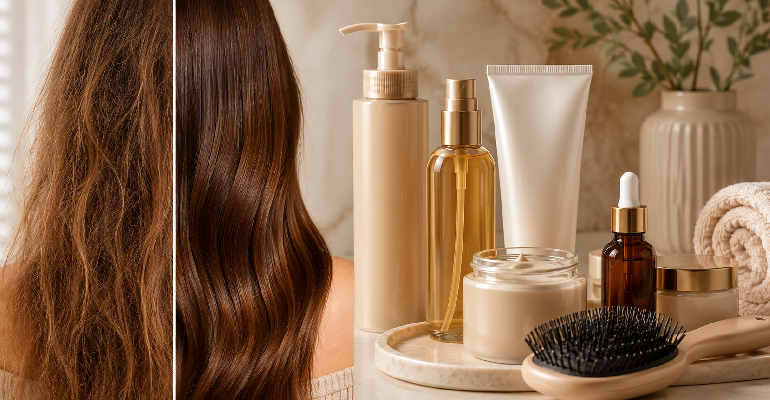
Hair damage is a structural problem that most hair care products address cosmetically rather than actually. The conditioning treatments and masks that make damaged hair feel smooth and look shiny are coating the hair shaft with silicones and oils that fill in roughness temporarily. Wash the hair again and the coating washes away with it. The underlying damage — broken disulfide bonds in the hair’s protein structure — remains. The distinction between products that coat damaged hair and products that repair it is the most important thing to understand in this category. What hair damage actually is Healthy hair has a protein structure where disulfide bonds hold the protein chains in alignment. Chemical processing (bleaching, coloring, relaxing, perming), heat damage, and physical damage from aggressive brushing all break these disulfide bonds. Broken bonds change the structural integrity of the hair — hair becomes weaker, more porous, more prone to breakage, and less able to hold style or color. Cosmetic conditioning treatments — silicones, oils, ceramides, proteins — make damaged hair feel better by filling in surface roughness and temporarily reducing frizz. They’re genuinely useful for manageability but don’t address the underlying bond breakage. Rebuilding those bonds requires chemistry that most conditioning treatments don’t contain. Olaplex — the bond repair reference Olaplex was the first widely available product to address disulfide bond repair rather than just surface conditioning, and fifteen years after its professional launch, the chemistry is still the reference. The active ingredient (bis-aminopropyl diglycol dimaleate) works within the hair shaft to reconnect broken disulfide bonds rather than coating the surface. Olaplex No. 3 ($30) is the at-home maintenance product — applied to damp hair before shampooing, left for as long as possible (the recommended minimum is ten minutes, longer is better), then washed out. Used weekly, it produces a cumulative improvement in hair strength and condition that becomes visible within a month. Olaplex No. 4 Bond Maintenance Shampoo and No. 5 Bond Maintenance Conditioner ($30 each) continue the bond-repairing chemistry in the wash routine, which is where most people’s hair care begins and ends. The honest assessment: Olaplex works as described. The chemistry is genuine and the results are observable. The product is worth the premium over standard hair care for anyone dealing with chemical or heat damage. K18 — the alternative worth knowing K18 ($75 for the full size leave-in treatment) uses a different approach to hair repair: a peptide that mimics the natural proteins in hair to reconnect broken hair chains. The leave-in application (applied to freshly washed hair without rinsing out) provides results that some users describe as more dramatic than Olaplex, particularly for very severely damaged hair. The comparison with Olaplex is genuinely close for most users. The K18 is more expensive and the single-application leave-in format is more convenient than Olaplex’s rinse-out application for busy routines. For severely damaged hair that needs the most intensive repair: K18 is worth trying if Olaplex alone hasn’t produced adequate results. The drugstore option that’s genuinely effective The Pantene Rescue Shots ($4-5 per unit) and the L’Oreal Elvive Bond Repair Pre-Shampoo Treatment ($10-12) represent the most accessible options for hair repair and perform above what their price would suggest. The L’Oreal Elvive Bond Repair specifically claims bond repair chemistry comparable to Olaplex and while the chemistry isn’t identical, the results for moderately damaged hair are genuinely close. For hair that’s mildly to moderately damaged and doesn’t require the intensive repair that Olaplex or K18 provide for severely damaged hair, the L’Oreal Elvive Bond Repair at $10 is the most cost-effective entry into the bond repair category.
Best Lip Products Worth Buying — Honest Reviews

Lip products fail faster and more visibly than almost any other makeup category. You eat, you drink, you talk — every normal activity tests a lip product in ways that eyeshadow and foundation aren’t tested. A lipstick that photographs beautifully and disappears within two hours isn’t a good lipstick. A lip gloss that makes lips look incredible and transfers to everything it touches isn’t worth wearing outside the house. Testing lip products through actual days rather than application-only sessions produces different rankings from most reviews. Lip liner — the most skipped and most important step Lip liner is what keeps any lip product in place for the maximum amount of time. It creates a barrier that prevents feathering into fine lines around the mouth, provides a pigment base that anchors the lip color applied over it, and after eating or drinking, the liner creates a visible outline that makes reapplication easier and faster. The MAC Lip Pencil ($20) in Spice (a universally flattering brownish-nude that suits most skin tones) is the reference. The formula applies smoothly without dragging, the pigment is rich enough to work as a base when applied all over the lip, and the staying power through meals is above most alternatives. The Charlotte Tilbury Lip Cheat in Pillow Talk ($27) is the alternative for a cooler, pinker nude that suits lighter complexions particularly well. The formula is slightly softer than MAC’s, easier to apply, and the color is the defining Pillow Talk shade that suits an exceptional range of skin tones. Long-wearing lipstick for all-day events The L’Oreal Infallible 2-Step Lipstick ($12-15) is the drugstore product that genuinely provides full-day wear through eating and drinking when most prestige lipsticks don’t. The two-step system — liquid lip color followed by moisturizing topcoat — is the same technology used in professional long-wearing lip products at ten times the price. The color range is wide. The staying power is genuine. The Charlotte Tilbury Matte Revolution ($34) is the prestige formula for people who want comfortable long-wear. It’s not transfer-proof but it provides four to six hours of wear before significant fading, and the formula is comfortable enough to wear through the day without the drying effect that many matte lip products produce. Lip oil — the category that genuinely improved lip health The Dior Addict Lip Glow Oil ($38) is the reference lip oil for its combination of gloss finish, subtle color, and genuine conditioning properties that improve lip texture with regular use. The non-sticky texture is what separates it from standard gloss — the oil-based formula doesn’t produce the adhesive quality that plumping glosses typically create. The Rhode Peptide Lip Treatment ($16) is the accessible alternative that received significant attention for genuine performance rather than just founder association. The peptide formula provides conditioning alongside a subtle gloss finish and the blurring effect smooths fine lines around the mouth visually while the peptides work on the texture over time. The lip gloss that’s worth the drama The Too Faced Lip Injection Maximum Plump ($25) is the plumping gloss that actually plumps through a mild tingling sensation from ginger root and capsicum. The plumping effect is temporary (lasting two to four hours) and visible rather than subtle. For events where fuller-looking lips are the goal, the Lip Injection Maximum Plump delivers the effect it promises. For everyday gloss without the plumping sensation: the NARS Lip Gloss ($26) in Orgasm is the reference — a neutral peachy-pink with golden shimmer that photographs beautifully and suits most complexions.
Midi Dresses For Women Right Now — Beautiful Picks That Are Actually Worth Buying
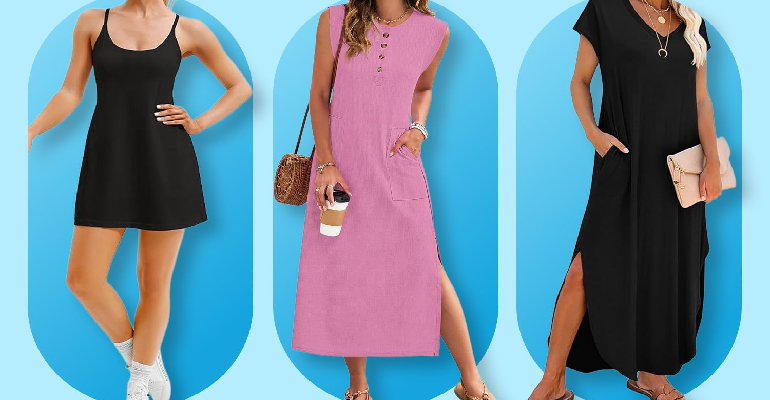
The midi dress does more work in a wardrobe than almost any other single garment. It is the dress you reach for on the mornings when you want to look put-together without actually putting in effort. It works in summer with sandals and in autumn with ankle boots. It works for offices that have moved past strictly formal dress codes and for Saturday dinners and for weddings where the invitation says “smart casual” without further clarification. The reason the midi dress earns this versatility is proportion. The length — falling between the knee and ankle, typically at mid-calf — is long enough to read as dressed up and short enough to move freely. It creates a silhouette that’s feminine without being costume-y, polished without being corporate. The challenge is that not all midi dresses are equal. The wrong fabric drapes badly. The wrong length cuts the leg at an unflattering point. The wrong construction turns a flattering silhouette into a shapeless column. The picks below are specific about what makes each one worth buying and for whom. The Best Midi Dresses To Buy Right Now Reformation Ketra Dress — The One People Keep Buying Twice Buy Now Reformation’s Petra dress has had a cultural moment that has lasted several years, which is unusual for any fashion piece and tells you something about why. The dress combines a fitted bodice with a flowing skirt in a way that flatters the waist without requiring the dress to be tight anywhere else. The deep V-neckline is specific to this dress’s success — it elongates the neck and torso in a way that makes the mid-calf length feel elegant rather than frumpy. The fabric options rotate seasonally, but Reformation consistently uses materials that behave correctly for the silhouette — the silk satin version drapes with the specific elegance of quality satin, the linen version breathes in a way that makes it genuinely wearable in summer heat, and the chiffon version photographs exceptionally well. The Tencel versions (Reformation’s sustainable alternative to silk-look fabrics) are the most accessible of the range and hold up through washing better than silk alternatives. What makes the Petra specifically worth buying rather than a similar midi from another brand: the construction at the waist. The fitted bodice is constructed with internal boning or structure at the waistline that creates the fitted effect without requiring the dress to be tight through the body. This means the dress flatters a waist without requiring a specific body type to pull it off, which is the specific quality that has driven the dress’s longevity. Available in extended sizes up to 4X and in petite lengths — the petite length is specifically worth mentioning because the proportions of the bodice are recalibrated for shorter frames rather than simply hemmed, which produces a significantly better result for petite wearers. Price: $198-248Available at: Reformation directlyBest for: Those who want a dress that photographs beautifully and flatters genuinely. & Other Stories Satin Midi Slip Dress — For Simple Evening Elegance Buy Now & Other Stories produces satin slip dresses across their range that represent some of the best value in this specific category. The satin is weight-appropriate for a slip dress — substantial enough to drape smoothly rather than clinging to every line, light enough to be genuinely comfortable for an evening out. The construction is clean, the seams are finished properly, and the adjustable spaghetti straps allow the length to sit correctly across different heights. The specific detail that distinguishes an & Other Stories satin midi from cheaper satin alternatives: the bias cut. Cutting on the bias (45 degrees to the fabric grain) produces the specific fluid drape that makes satin slip dresses look expensive rather than flat. Bias-cut satin moves with the body and falls in the smooth, fluid way that straight-cut satin doesn’t. Not all brands bother with the bias cut at this price point because it wastes more fabric. & Other Stories does. The color range is consistently excellent — the brand tends toward muted, sophisticated tones (dusty rose, sage, ivory, champagne, deep burgundy) rather than the garish saturated colors that appear in cheaper alternatives. Any of the neutral or muted tones work across seasons and occasions with minor restyling. Price: $95-125Available at: & Other Stories directly, ASOS (selected styles)Best for: Those who want effortless evening elegance at an accessible price. Free People Intimately Maxi Midi Dress — For Everyday Comfort That Looks Considered Buy Now Free People’s Intimately line uses jersey and modal fabrics that are specifically engineered for comfort without looking like loungewear. The midi dresses in this range occupy a specific and useful position — they feel like the most comfortable thing you own while reading as an intentional, put-together outfit to anyone who sees you wearing them. The specific fabrics Free People uses in the Intimately line — primarily modal, modal-cotton blends, and their proprietary stretch fabrics — have the softness of loungewear with a drape and visual quality that reads as proper clothing. The silhouettes tend toward relaxed and simple: clean A-line cuts, simple round or V-necklines, minimal detailing that allows the fabric’s natural quality to do the work. What Free People does particularly well in the midi dress category is the color and print selection. Their seasonal palette consistently includes muted floral prints, earth tones, and the kind of romantic, slightly bohemian colors that look more expensive than they are. A Free People Intimately midi in a dusty floral print looks genuinely beautiful for the price. The care requirements are more forgiving than satin or structured alternatives — most Intimately pieces are machine washable, which for a dress worn regularly matters. Price: $98-148Available at: Free People directly, ASOS, AnthropologieBest for: Those who want daily comfort without sacrificing the appearance of intentional dressing. Anthropologie Maeve Midi Dress — The Office-To-Evening Option Buy Now Anthropologie’s Maeve label consistently produces midi dresses at a price point that slightly surprises people who expect the quality to match the Anthropologie price —
How to Do Your Eyebrows Properly — The Honest Beginners Guide
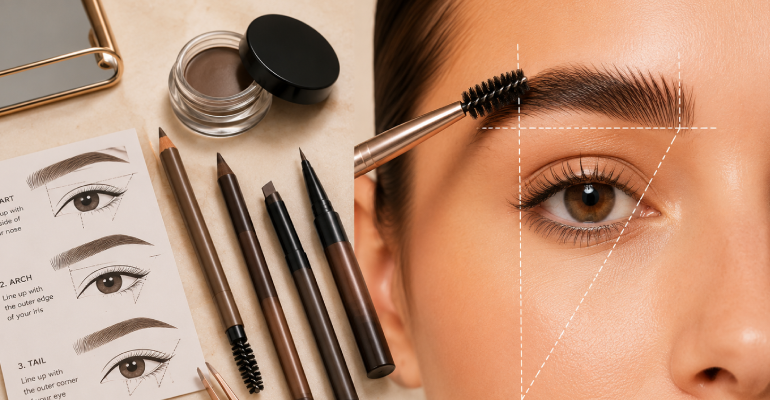
Eyebrows have more impact on the overall face than most people who don’t think about them realize. The eyebrow that’s well-shaped and appropriately filled pulls the whole face into focus in a way that’s difficult to attribute to any single change. The eyebrow that’s too thin, too arched, too filled, or the wrong color for the hair undermines every other element of the face and makeup regardless of how well everything else is done. Getting eyebrows right is a specific skill that requires knowing your face’s natural brow shape, choosing the right products for the result you want, and developing a consistent technique. Here is the honest guide. Understanding your natural brow shape first The biggest mistake in eyebrow grooming is imposing a shape rather than working with the natural shape. Your natural brow has a specific start point (aligned roughly with the inner corner of the eye), a highest arch point (roughly above the outer edge of the iris), and an end point (aligned roughly with the outer corner of the eye extended diagonally). These natural points are the guide — filling or shaping too far outside them creates a drawn-on look that reads as artificial. The three-point mapping: hold a pencil vertically against the side of the nose to identify the natural start point, angle the pencil from the nose through the pupil to identify the arch point, and angle from the nose past the outer corner of the eye to identify the natural end point. These three points are where the brow should sit. Working within them produces a natural look. Working outside them in any direction produces the specific unnaturalness of over-drawn brows. Products by use case — choosing correctly before buying Pencils produce the most natural, hair-like strokes and are the most versatile eyebrow product for most people. The technique — light, short strokes in the direction of hair growth — produces the most natural fill without the block-color effect of some other products. The Anastasia Beverly Hills DIPBROW Pomade is the reference for pomade — the most pigmented, longest-lasting option for people who want maximum definition. The learning curve is higher than pencils because pomade sets quickly and requires confident application. Brow gels are the maintenance product rather than the filling product — clear gel sets the existing brow hair in place and is the appropriate product for people with full, well-shaped brows that just need taming. Tinted brow gels add slight color alongside setting. Powders produce the softest, most diffused fill and suit people with already-full brows who want subtle definition rather than visible filling. The specific products worth buying The Anastasia Beverly Hills Brow Wiz ($23) is the pencil recommendation for most people. The ultra-fine tip allows the hair-stroke application technique that produces natural-looking fill, the spoolie on the opposite end brushes through after filling for blending, and the shade range covers most hair colors. The NYX Professional Micro Brow Pencil ($10) is the drugstore alternative that performs comparably in application and shade range at a significantly lower price. The Benefit 24-Hr Brow Setter ($24) is the brow gel recommendation for setting and holding — clear formula, strong hold, and doesn’t produce the crunchy texture that some stronger-hold gels create. The one technique that changes everything Brush through the brow hairs with the spoolie before applying any product. This shows you the natural shape, direction of growth, and any sparse areas that need filling. Filling without this step often places product in the wrong areas and misses the areas that actually need it. After filling, brush through again with the spoolie to blend any product into the hair rather than sitting visibly on top of it. This single step is what separates brows that look natural from brows that look drawn on.
Best Blush Products — Liquid, Powder, and Cream Honestly Compared
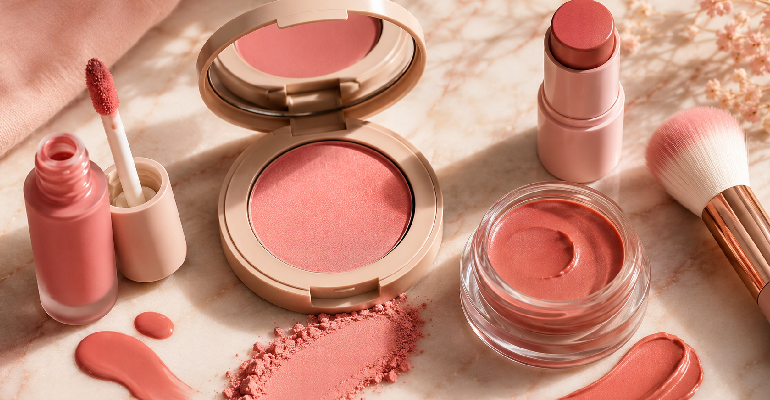
Blush has had a significant cultural moment over the past few years — from the barely-there minimalism of the early 2020s to the flushed, sun-kissed, “just came from somewhere nice” look that dominates editorial and social media now. The moment has also produced a proliferation of blush products across formulas and finishes that makes choosing genuinely difficult. Here is the comparison that actually helps. Why formula matters more than shade in 2026 Shade selection is personal and varies by skin tone. Formula selection is more universal — the choice between liquid, powder, and cream blush affects texture, longevity, application ease, and finish in ways that apply across skin tones and preferences. Liquid blush: the most wearable, most buildable formula that produces the most natural-looking flush. Blended quickly and sheers out to look like natural color in the skin rather than color on top of the skin. Lasts well on most skin types. The application learning curve is slightly higher than powder — blending speed matters. Powder blush: the most forgiving to apply, the most straightforward to correct if too much product is applied, and the format most people are familiar with. Provides a more clearly defined flush rather than the inner-glow quality of liquid. Can look drier on mature skin. Cream blush: sits between liquid and powder in application ease and finish quality. The most hydrating option for dry skin. Can be harder to build without looking heavy, and doesn’t perform as well on very oily skin. Rare Beauty Soft Pinch Liquid Blush — the reference for liquid formula The Rare Beauty Soft Pinch Liquid Blush ($20) is the product that drove the current liquid blush moment and it earned its cultural position through genuine performance. The formula is so concentrated that a small amount — one small dot the size of a pinhead per cheek — blends to a complete, natural-looking flush when worked quickly with fingers or a brush. The saturation means the product lasts a long time despite the small bottles and a significant learning curve around the quantity to use. The shades range from genuine neutrals (Grateful, a peachy nude) through natural flushes (Joy, a warm peach) to stronger statements (Hope, a bright berry; Serenity, a bright purple-red). For most complexions wanting a natural daytime flush, Grateful or Joy are the starting shades. The longevity is exceptional on most skin types — the formula sets to a blendable-but-staying texture that doesn’t migrate during the day the way cream formulas sometimes do. Charlotte Tilbury Pillow Talk Beauty Blush Wand — for ease of use The Charlotte Tilbury Pillow Talk Blush Wand ($39) is the applicator-included liquid blush that’s designed for on-the-go use and quick application without brushes. The doe-foot applicator provides a consistent amount per application, and the product is easier to control for people who find the ultra-concentration of the Rare Beauty intimidating. The Pillow Talk shade (a universally flattering peachy-pink) is the hero product and genuinely suits the widest range of skin tones of any single blush shade in the premium category. NARS Blush — the powder reference The NARS Blush ($32) is the powder blush that’s maintained its position as the category standard for twenty years because the pigmentation, longevity, and shade range are consistently better than competitors. The Orgasm shade — a peachy-pink with golden shimmer — became famous for a reason: the golden shimmer adds luminosity to the flush in a way that flat powder formulas don’t. For powder blush specifically and for anyone building a first quality makeup kit, the NARS blush is the recommendation that ages well — the formula performs consistently regardless of application technique.