HOME | Fashion | Beauty | Home Furnishing | Comparison | Top Reviews |


Layered necklaces look deliberate and considered when done correctly. They look like an accident when done incorrectly. The difference between the two is almost never about the cost or quality of the jewelry — it’s about three specific variables that most necklace layering guides skip past too quickly.
Each necklace in a layered stack needs to be at a meaningfully different length from the others. Not two centimeters apart. Not five centimeters apart. Ten to fifteen centimeters apart at minimum so that each piece occupies a clearly different visual zone on the chest.
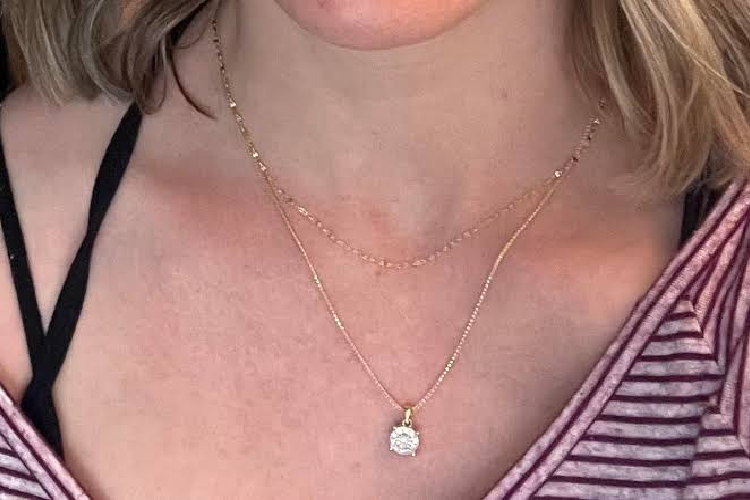
The three-necklace layering stack that works: a short piece at 14-16 inches sitting at the collarbone, a medium piece at 18-20 inches sitting across the upper chest, and a longer piece at 24-26 inches reaching toward the sternum. These three lengths are each visible simultaneously without competing. Each reads as an individual piece with its own place rather than as a confusing tangle of similar lengths.
The reason same-length necklaces don’t work: they sit in the same visual zone and the eye can’t distinguish individual pieces — it reads them as clutter rather than as a curated stack.
The stack that looks intentional typically has variation in visual weight as well as length. One very delicate chain, one piece with a pendant that provides visual anchor, and one slightly chunkier or more substantial element creates a hierarchy that makes each piece readable rather than competitive.
Three heavy chains layered together create competition rather than hierarchy — none of them can be read clearly. One heavy chain worn alone with two delicate layering chains produces clear hierarchy where the statement piece reads first and the delicate pieces provide texture.
Mixing metals is now accepted and in many cases looks more contemporary than matched metals. The condition for mixed metals to look intentional: wearing each metal in multiple pieces so the mixing reads as a deliberate choice rather than a mistake. One silver piece among four gold pieces looks like a forgotten necklace that wasn’t swapped out. Two gold pieces and two silver pieces in a layered stack looks like a specific aesthetic choice.
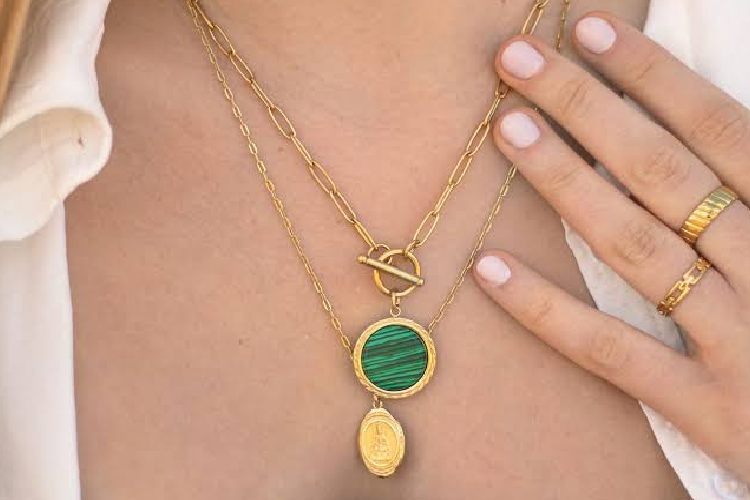
The specific combinations that work consistently: yellow gold and silver, yellow gold and rose gold, silver and rose gold. All three combinations are visible in contemporary jewelry styling without reading as mismatched.
The specific tangle problem in layered necklaces usually comes from similar-weight chains moving into each other during wear. Solutions: a necklace layering clasp (a single clasp that attaches multiple necklaces and keeps them at set intervals from each other), choosing one or two necklaces in different chain styles (box chain versus cable chain versus ball chain), and avoiding very fine chains in the same length range as slightly heavier chains.