Ear Piercing Guide — Placement, Healing, and What Jewelry to Use
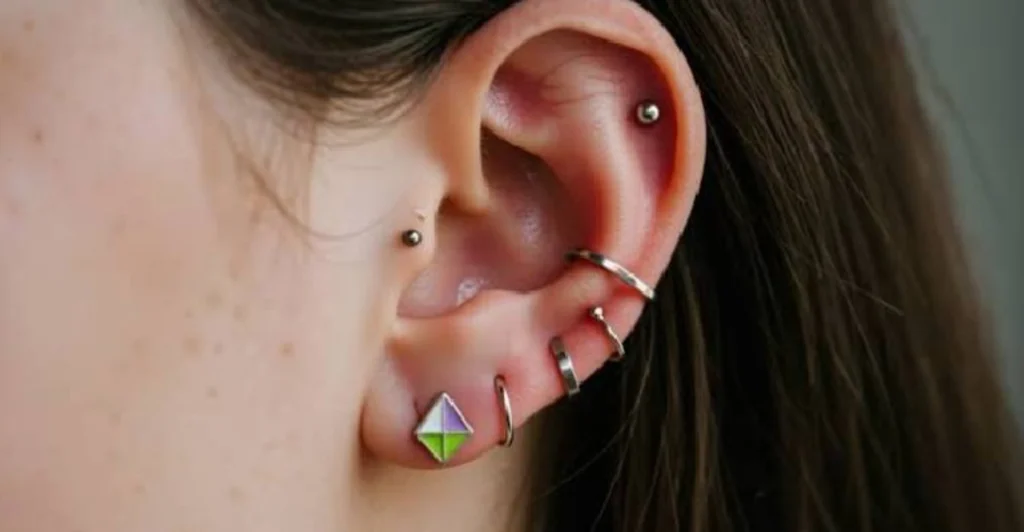
The curated ear — multiple piercings in a deliberate arrangement that creates visual interest — has been a dominant jewelry trend for several years and shows no sign of fading because it’s a genuine expression of personal aesthetic rather than a passing moment. But the curated ear requires planning, patience, and appropriate care that most people don’t fully understand before committing. The placements worth knowing The lobe is the starting point for most people and the fastest healing location — typically six to eight weeks for initial healing, though full healing takes longer. The standard single lobe piercing and the second lobe piercing are the lowest-commitment, fastest-healing piercings in the ear. The helix (outer cartilage) is the most common cartilage piercing and the one that appears most frequently in curated ear arrangements. Healing time: six to twelve months. The upper helix, mid helix, and forward helix each have different visual positions in a curated ear arrangement. The tragus (the small piece of cartilage that partially covers the ear canal) and the anti-tragus (directly opposite) are smaller piercings that add precision detail to a curated ear at a moderate healing timeline (six to twelve months). The daith (the innermost cartilage fold) and the rook (the inner upper cartilage) are the statement cartilage piercings — more visible than a helix from the front, healing timelines similar to other cartilage piercings. The conch (the center cartilage of the ear) provides significant presence when healed and jeweled, and suits either a stud or a hoop depending on the placement within the conch area. Healing timelines and what actually affects them Cartilage piercings take significantly longer to heal than lobe piercings because cartilage has less blood supply than the fleshy lobe. The initial healing (the wound closing externally) happens in two to four months. Full healing (the piercing channel mature enough to withstand jewelry changes) takes six to twelve months for most cartilage piercings and in some cases longer. Sleep position is the most consistent variable in healing timeline — sleeping on a new piercing compresses and irritates the wound repeatedly throughout the night, extending healing significantly. Travel pillows (the U-shaped neck travel pillow used with the opening to the side where the piercing is) or piercing pillows with a cutout are the practical solutions. Touching the piercing with unwashed hands, swimming in chlorinated or natural bodies of water before full healing, and changing the jewelry before the piercing is fully healed are the primary causes of delayed healing and piercing bumps. Jewelry for new piercings — material is critical Implant-grade titanium is the most recommended material for new piercings — it’s lightweight, hypoallergenic, and available in anodized colors if you want something other than silver-tone metal. Implant-grade titanium is specifically the grade that’s safe for healing piercings, not all titanium. Implant-grade steel and solid 14k or 18k gold are both appropriate for healed piercings and for initial piercing jewelry from reputable piercers. Lower-karat gold (9k, 10k) contains higher amounts of alloy metals that can cause reactions in healing piercings. The jewelry sold in most high-street fashion retail as “earrings” — plated metals, often brass or mystery-alloy base — is appropriate only for fully healed piercings, and even then carries the risk of reaction. Never use fashion jewelry in a healing piercing.
How to Build a Bracelet Stack That Looks Intentional — The Honest Guide
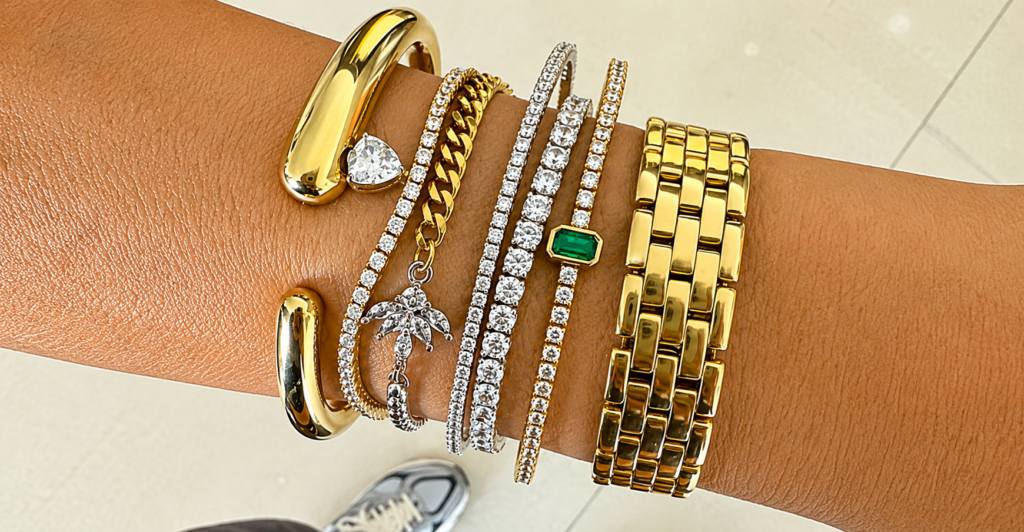
A bracelet stack that looks intentional is built around the same principles as necklace layering and ring stacking — variation in texture, dimension, and material rather than accumulation of similar pieces. The wrist stack that looks effortless is the one that was actually thought about before being assembled. The components of a successful bracelet stack A thin chain bracelet provides delicacy and moves against the wrist in a way that adds visual interest without weight. A beaded bracelet (natural stones, wooden beads, or metal beads) provides texture that chain doesn’t. A cuff or bangle provides structure and visible presence. A charm bracelet or piece with a pendant element provides visual focal point. Four piece types, four different visual qualities — the combination produces a stack that reads as layered rather than as multiples of the same thing. Sizing and fit for stacking Bracelets in a stack need to fit at slightly different positions on the wrist to work as individual visible pieces rather than bunching together. This means: one bracelet that fits close to the wrist, one or two that have slightly more play and move up the wrist slightly, and one that sits somewhat loosely and falls toward the hand. The movement between these positions on the wrist is what produces the visual interest of a live bracelet stack versus bracelets worn in photographs only. The starting point for most wrist stacks A simple gold or silver chain bracelet as the base — Gorjana’s Parker adjustable bracelet ($38-48) for gold-fill, or a similar simple sterling chain. Add one stone or beaded bracelet in a color that suits your overall jewelry palette. Add one bangle or cuff in the same metal as the chain. If a fourth piece: a charm or meaningful piece. This four-piece starting point is expandable and works across casual and dressed contexts in a way that larger, more elaborate stacks sometimes don’t.
Personalised Jewelry — Which Brands Make Pieces Worth Keeping
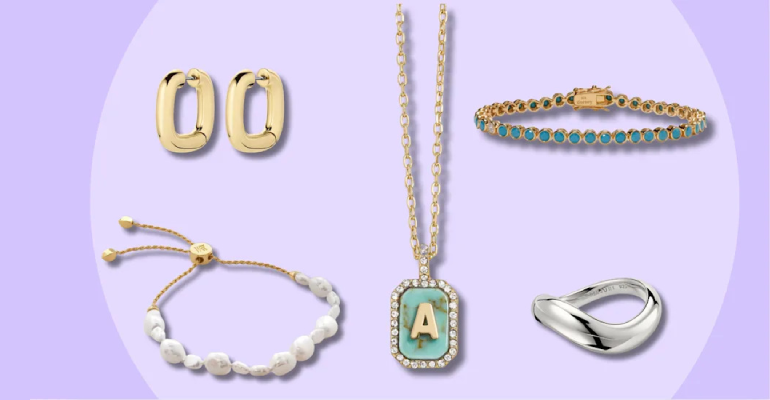
Personalised jewelry occupies a specific emotional territory — it carries meaning beyond the object, which makes the object itself more significant and makes a poorly made one more disappointing than a poorly made generic piece would be. A personalised necklace with a name that tarnishes within three months isn’t just bad jewelry — it’s a bad version of something that was supposed to be meaningful. The quality consideration that matters most in personalised jewelry Engraving quality determines how the personalisation reads — both immediately and over time. Deep, clean laser engraving or hand engraving holds its legibility over years of wear. Shallow engraving on soft plated metal fills with verdigris and loses clarity within a year. The quality of the engraving is visible in photographs — clear, even, consistent letter depth with clean edges versus scratchy, uneven, too-shallow letters that suggest a machine set at insufficient depth. The base metal under any plating determines how long the piece lasts as daily wear. Sterling silver base (even if gold plated) holds up dramatically better than brass base with gold plating. The brands worth buying from Oak and Luna is the reference brand for personalised fine jewelry in the accessible luxury space. The pieces are made in silver and gold vermeil, the engraving quality is consistently high, and the range covers initial necklaces, bar necklaces, name necklaces, birthstone pieces, and coordinate engravings. At $60-150 for most pieces, the price reflects the quality — not as expensive as fine jewelry, not as cheap as fast fashion personalised pieces that don’t last. Merci Maman (UK-based, ships internationally) is the alternative with a specifically elegant approach to personalised jewelry — the handwritten font they use for engraving produces a warmer, less mechanical look than laser engraving produces on many pieces. Their personalised necklaces at £80-150 are frequently cited as gifts that have lasted years with appropriate care. Etsy for genuinely custom pieces: independent jewelers on Etsy offer genuine customization — specific fonts, specific designs, specific materials — that brands with standardized processes can’t match. For something truly individual, an Etsy jeweler with strong reviews and portfolio evidence of their engraving quality is the correct source.
Winter Boots For Women — Honest Picks That Keep You Warm And Look Good
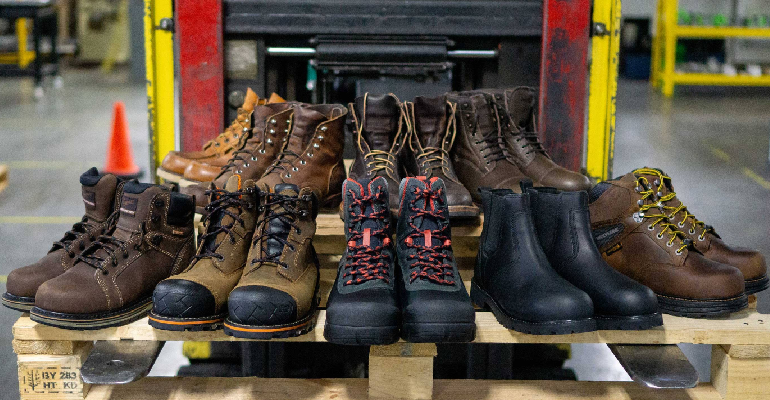
Winter boots have one requirement that summer shoes don’t: they need to actually work in winter. A boot that looks beautiful on a dry day and becomes a miserable experience the moment the weather turns from crisp to genuinely cold and wet is not a winter boot — it is a boot you can only wear in the conditions least likely to occur in winter. The best winter boots are the ones that solve the actual winter problem — cold, wet, slippery, and often all three simultaneously — while remaining something you want to put on rather than something you wear because you have to. This guide separates the boots that genuinely do both from the ones that sacrifice function for appearance or appearance for function. The Best Winter Boots To Buy Right Now Totême Croco Embossed Knee-High Boot — The Investment That Pays Back Every Winter Buy Now The Totême knee-high boot is the reference for what a truly excellent winter boot looks like from a fashion brand that also understands function. The construction is Italian, the leather is full-grain, and the block heel (approximately 5cm) is substantial enough to provide real height without the instability that narrow heels create on winter surfaces. The knee-high silhouette is the most versatile boot length for winter because it provides genuine weather protection for the calf while creating the leg-lengthening effect that shorter boots don’t match. The Totême version fits close to the leg without being tight — the interior measurements are calibrated for real calves rather than the standard boot last that often runs narrow in the shaft. After a season of wear, the croco-embossed leather on the Totême boot develops in the way that quality embossed leather does — the texture remains defined while the leather itself becomes more supple and conforms to the natural movement of the foot and ankle. The boot looks better at the end of the season than at the beginning, which is the quality indicator that distinguishes genuine investment footwear. The price is significant — $595-695 — and requires the honest argument that it costs less per wear over three to four years of ownership than a mid-priced boot does over one season. This argument is true if you wear the boots regularly and care for them (regular leather conditioning, proper storage during off-season). It requires you to be someone who actually does those things. Price: $595-695Available at: Totême directly, Net-A-Porter, NordstromBest for: Those making a genuine long-term investment in the best version of the knee-high winter boot. Sam Edelman Packer Riding Boot — The Best Mid-Price Knee-High Buy Now Sam Edelman’s riding boot has maintained its position in the mid-price boot category through consistent quality at an accessible price point rather than through marketing. The Packer specifically — their classic riding-boot silhouette — is the product most worth recommending because the construction is reliable, the silhouette is classic enough to remain relevant across seasons, and the price at $150-180 makes the purchase straightforward. The leather is not full-grain — it’s top-grain leather, which is lower quality than full-grain but still genuine leather that ages reasonably well with appropriate care. The shaft is slightly wider than the Totême, which suits more calf sizes without alteration. The heel is a modest riding-boot heel — functional rather than fashion — which makes the boot stable in genuinely winter conditions. For people who want a knee-high boot for regular winter use without the investment price, the Sam Edelman Packer is the most honest recommendation. It will need replacing every two to three seasons with regular use, but the price makes that expectation appropriate rather than disappointing. Price: $150-180Available at: Sam Edelman, Nordstrom, ASOS, ZapposBest for: Those who want reliable quality at an accessible price. Dr. Martens 1460 Boots — For Genuine Weather Protection With Distinctive Style Buy Now Dr. Martens occupy a specific position in winter footwear that no other brand quite replicates: genuinely waterproof, genuinely durable, and genuinely distinctive in appearance rather than simply functional. The 1460 — the original eight-eyelet boot that the brand was founded on in 1960 — has been worn through actual winters by actual people for sixty-five years, which is the most credible endorsement of weather performance available. The Goodyear-welted construction bonds the upper to the sole with heat rather than adhesive, producing a bond that doesn’t separate in cold and wet conditions the way cemented soles do. The PVC sole is oil and fat resistant and provides genuine traction on wet surfaces. The AirWair sole technology (the air-cushioned sole that’s visible in the distinctive yellow stitching) provides genuine cushioning for long days of standing and walking. The leather is polished smooth and responds well to water — wipe dry after wear, apply leather conditioner regularly, and the 1460 repels light rain naturally. For more sustained wet conditions, applying a leather waterproofing product provides additional protection. The leather is polished smooth and responds well to water — wipe dry after wear, apply leather conditioner regularly, and the 1460 repels light rain naturally. For more sustained wet conditions, applying a leather waterproofing product provides additional protection. Price: $170-200Available at: Dr. Martens directly, ASOS, Nordstrom, SchuhBest for: Those who want genuine weather protection with a distinctive aesthetic that ages beautifully. Sorel Joan of Arctic Boot — For Serious Cold Weather Buy Now The Sorel Joan of Arctic is on this list specifically for people who experience genuinely cold winters — temperatures below -10°C — where fashion boots are simply inadequate. The Joan of Arctic is rated to -40°C (yes, minus forty degrees) and provides genuine insulation through 9mm removable felt inner boot and a vulcanized rubber shell that waterproofs the lower half of the boot completely. The upper is full-grain waterproof leather with seam-sealed construction — no moisture enters through the seams, which are the failure point in most leather boots in wet conditions. The lug outsole provides traction on ice and compacted snow in a way that smooth-soled fashion boots don’t approach.
How to Wear Pearls — The Modern Approach
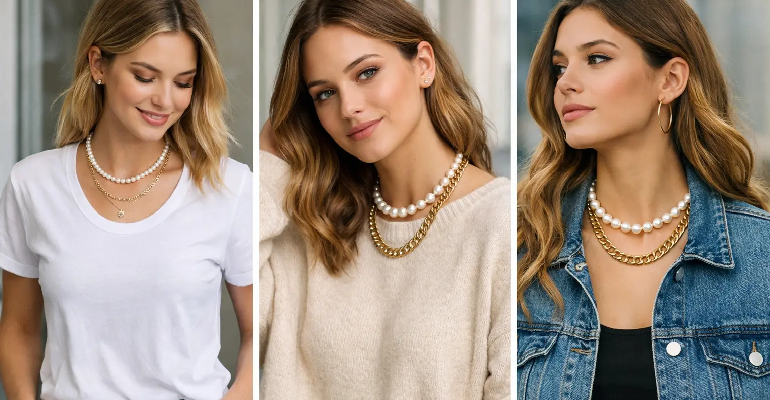
Pearl jewelry carries an aesthetic history that makes it feel formal and traditional in a way that doesn’t match how pearls are actually worn in 2026. The pearl-as-grandmother’s-jewelry association is genuinely outdated — contemporary pearl styling has moved significantly toward a different use case, and the brands producing modern pearl jewelry are making pieces that work in casual contexts, with streetwear, and in the kind of everyday styling where a traditional pearl strand would look incongruous. The styling shift that makes pearls contemporary The traditional pearl styling — full strand worn with formal or business attire — is one application of pearl jewelry. Contemporary pearl styling tends toward: single baroque pearls as pendants on thin gold chains, mixed into necklace layers with non-pearl pieces, small pearl studs with casual outfits, and the deliberate casual-formal contrast of wearing a pearl piece with jeans and a t-shirt where the softness of the pearl against the casual context produces an interesting tension rather than looking overdressed. The pairing that’s appeared most frequently in editorial and street style: a single baroque pearl pendant necklace layered with one or two thin gold chains, worn with casual or minimal clothing. The organic, irregular shape of a baroque pearl reads as more casual and contemporary than a classic round pearl, and the contrast of something traditionally formal with casual clothing creates the specific interest that drives the pairing. Types of pearls — the practical guide Freshwater pearls are cultured in freshwater mussels, primarily in China, and are the most accessible pearl type. The range of shapes is wide — freshwater pearls include the perfectly round, the baroque (irregularly shaped), the rice grain, and the coin shape. The quality range is also wide — from very affordable freshwater pearls with visible blemishes and poor luster to high-quality freshwater pearls that compete with more expensive types. Akoya pearls are saltwater pearls cultured in Japan and China, typically round, with the classic high luster and white-pink overtone most people associate with a “good pearl.” The most commonly used for fine pearl jewelry. Higher price than freshwater, consistent quality range. South Sea pearls (from Australia, the Philippines, Indonesia) and Tahitian pearls (from French Polynesia) are the highest-tier pearl types — large, deeply lustrous, and significantly more expensive than freshwater or Akoya. For contemporary styling: freshwater baroque pearls offer the most visual interest at the most accessible price, making them the natural choice for the trend-responsive pearl jewelry that’s being worn now. For investment-level pearl jewelry: Akoya or South Sea pearls in classic settings. Brands producing contemporary pearl jewelry Completedworks (London) is the brand most associated with sophisticated, contemporary pearl jewelry — irregular forms, unusual settings, and a design approach that treats pearls as interesting materials rather than formal ones. The prices are in the accessible luxury range ($150-400 for most pieces). Matisse Jewelry produces more accessible contemporary pearl pieces ($50-150) — the organic pendant necklaces, the mixed baroque pearl and chain earrings — that work in the everyday casual-with-pearls context. Etsy for individual baroque pearl pieces: independent jewelers on Etsy produce high-quality freshwater baroque pearl pieces at prices that reflect the actual material cost rather than brand premium. Searching for “baroque pearl pendant gold” or “freshwater pearl chain necklace” produces genuine craft jewelry at very accessible prices.
How to Care for Jewelry So It Actually Lasts — The Honest Guide
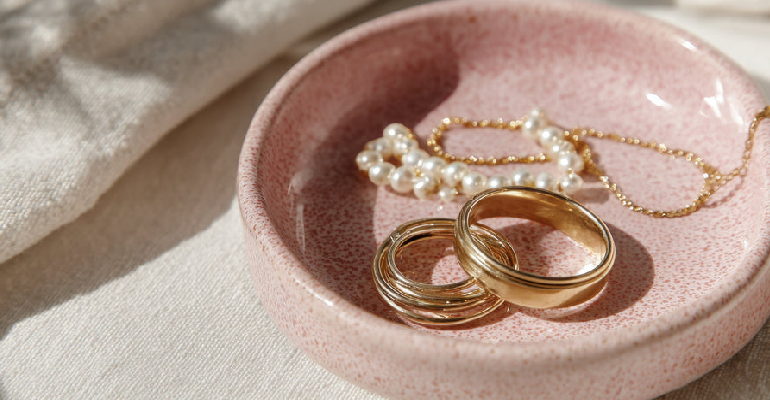
Most jewelry deteriorates faster than it needs to. The tarnishing, the plating wear, the chain kinks, the stone settings that loosen — most of these failures are either preventable or significantly delayable with appropriate care habits. The jewelry that’s passed down through generations was cared for. The jewelry that tarnishes within six months was either poor quality to begin with or not cared for appropriately. The enemies of jewelry — what causes deterioration Chlorine is the most damaging environmental factor for most metals. Pool water and hot tubs contain chlorine concentrations that react with metals — including gold alloys — and degrade them chemically. Remove all jewelry before swimming in chlorinated water, without exception. This single habit extends jewelry life dramatically. Sweat contains salts and acids that react with metals and accelerate tarnishing. For silver specifically, sweat is a significant tarnishing accelerator. Removing fine jewelry before exercise and wiping pieces with a soft cloth after any significant sweat exposure extends life considerably. Perfume, hairspray, and lotion applied directly to jewelry — or to skin immediately before putting on jewelry — leaves residue that builds up and accelerates degradation of both metals and stones. The sequence: apply all products first, let them dry or absorb, then put on jewelry. “Last on, first off” is the rule most frequently cited in jewelry care contexts. Ultrasonic cleaners clean effectively but are not appropriate for all jewelry. Stones with inclusions (emeralds, opals, turquoise), glued settings, plated pieces, and pearls can all be damaged by ultrasonic cleaning. Save ultrasonic cleaning for solid gold and diamond jewelry specifically. Cleaning by material Silver: a silver polishing cloth (anti-tarnish treated cloth, $5-10) is the easiest maintenance. For heavier tarnish: a paste of baking soda and water applied with a soft toothbrush, rinsed thoroughly, and dried immediately. Do not use baking soda on silver with stones — it can damage certain stone surfaces. Gold: warm water, a drop of dish soap, a soft toothbrush for any detail work, rinsed and dried. Solid gold doesn’t tarnish but accumulates soap residue, skin oils, and product buildup that dulls the appearance. Monthly cleaning maintains the shine. Pearls: a soft damp cloth only. No soap, no chemicals, no ultrasonic cleaner. Pearls are organic and porous — they absorb chemicals and are damaged by most cleaning products. Store pearls separately because the surface is soft enough to be scratched by contact with metal jewelry. Gold-plated and gold-fill: clean with a soft damp cloth only, no soaps, no chemicals that could wear the plating faster. The goal is to remove surface residue without adding any chemical action that reduces the plating thickness. Storage — the easy maintenance that most people skip Individual storage is the most impactful storage change for most jewelry collections. Jewelry stored together — in a tangled pile, in a shared box — scratches itself, kinks chains, and loses earring backings. Each piece or each pair stored separately, in a small pouch, a compartmentalized box, or hanging on a hook, prevents most of the physical damage that comes from jewelry being stored in contact with other jewelry. Airtight storage for silver specifically reduces the rate of tarnishing significantly because tarnishing is an oxidization process — reducing oxygen exposure slows it. Anti-tarnish strips (available in bulk, $10-15 for a large supply) placed in silver storage containers absorb the sulfur compounds that cause tarnishing. Humidity accelerates tarnishing in silver and can damage certain stones (opals particularly are sensitive to humidity changes). Storing jewelry away from bathrooms and high-humidity areas extends its life.
Blazers For Women Right Now — Honest Picks That Work For Every Occasion
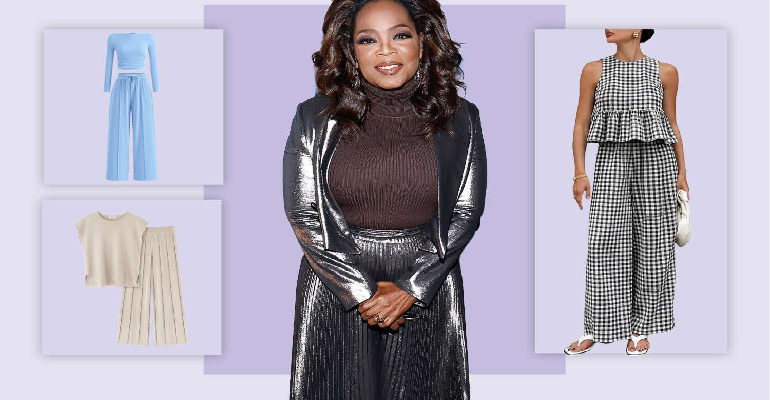
The blazer is the piece that does the most work per square inch of fabric in a wardrobe. A blazer thrown over jeans and a t-shirt turns a casual outfit into something that reads as intentional. A blazer over a dress elevates it for an office context. A blazer worn on its own as the top half of an outfit — open, with a simple bottom — is a complete look with essentially no effort. The challenge is that blazers require fit precision that other garments don’t. A well-fitted blazer looks expensive regardless of what it costs. A poorly fitted blazer looks cheap regardless of what you paid for it. The shoulder — where the seam meets the arm — is the single most critical fit point in the entire garment. A shoulder seam that sits correctly at the edge of the shoulder is the difference between a blazer that looks tailored and one that looks borrowed. What Makes A Blazer Worth Buying The shoulder construction. The shoulder seam must sit exactly at the edge of the natural shoulder. Half an inch too wide and the jacket looks like it belongs to someone else. The shoulder padding (if any) should be subtle enough to create clean shoulder structure without the obviously padded look of older blazer constructions. The lapel. The lapels should lie flat against the chest. If they gap or roll away from the body, the blazer’s interfacing is too light for the fabric. The lapel’s roll (the curve where it folds back) should be consistent from left to right. The front closure. A blazer that closes correctly should lie flat across the chest without pulling when the button is fastened. If the button pulls the fabric across the chest or creates diagonal drag lines, the blazer is too small. If it buttons but creates folds of excess fabric, it’s too large. The sleeve length. Blazer sleeves should end at the wrist bone, allowing approximately one quarter inch of shirt or top to show below the sleeve when wearing a layer underneath. The Best Blazers To Buy Right Now Cos Oversized Single Breasted Blazer — The Accessible Quality Reference Buy Now The Cos oversized blazer is the single most consistently recommended quality blazer at an accessible price point and the recommendation has been consistent for several years because the quality justifies it rather than the recommendation creating it. The construction uses a properly woven fabric — typically a wool or wool-blend mix depending on the season — with appropriate internal structure that holds the blazer’s shape across multiple wearings between steam-pressing. The oversized cut is deliberate and specifically calibrated — the shoulders are slightly dropped, the body is slightly relaxed, but the overall silhouette retains enough structure to read as a blazer rather than an unstructured jacket. This is the specific distinction that separates well-designed oversized blazers from simply large blazers. The proportions are designed; the relaxation is intentional. The color range is consistently excellent at Cos — the neutrals they select (camel, ecru, grey, oatmeal, dark navy) are specific and considered tones rather than generic versions of the same colors. The camel blazer in particular is one of the best single pieces in the quiet luxury aesthetic at any price. Pair with straight-leg jeans and simple flats for the most versatile casual version. Pair with tailored trousers and a fitted top for a professional context. Pair with nothing underneath and a wide-leg trouser for an interesting fashion-forward interpretation. Price: $175-230Available at: Cos stores and online (cos.com)Best for: Those who want a genuinely well-made oversized blazer at an accessible price. Zara Structured Blazer With Padded Shoulders — For Current Fashion Direction Buy Now Zara’s blazers occupy a different position from Cos in the quality hierarchy but a useful one for people who want the most current fashion-forward silhouette at a price that matches the temporal nature of trend purchases. The brand’s design team moves quickly enough that the blazer silhouette that’s appearing in editorial right now appears in Zara’s range within weeks, and the construction on their better blazers is solid enough for two to three years of regular wear. The structured blazer with padded shoulders is the specific Zara piece worth highlighting for 2026 — the structured shoulder has reasserted itself in contemporary fashion direction after years of the soft, deconstructed shoulder dominating. A clean, padded-shoulder blazer in ivory, black, or camel reads as deliberately contemporary in a way that the decade of soft-shoulder blazers doesn’t. The quality advice for Zara blazers specifically: the lined versions are consistently better constructed than the unlined. The lining adds structure and the manufacturing process of a lined blazer is more careful than an unlined one. Always choose the lined option when both exist. Price: $70-120Available at: Zara stores and onlineBest for: Those who want fashion-forward silhouettes at accessible prices. Mango Suit Blazer — The Best Value In Classic Professional Tailoring Buy Now Mango’s suit blazer range is where the brand’s Mediterranean heritage in tailoring produces its clearest results. The blazers are constructed with more care than the price would predict — the lapels lie flat, the internal interfacing holds the front of the jacket properly, and the sleeve construction allows natural arm movement without the pull across the back that cheap blazers produce. The Mango suit blazer works specifically well for professional contexts because the design is deliberately conventional — this is not a fashion-forward oversized blazer or a deconstructed jacket, it’s a properly constructed blazer in a classic fit that reads as professional in any context where that’s the requirement. Available in the suit-matching version (coordinating blazer and trouser from the same fabric) which, when worn together, creates a genuinely polished suit look at a price far below what a suit from a tailoring brand would cost. Worn separately, the blazer works with jeans and the trousers work with casual tops in the mixing-casual-and-tailored approach that contemporary dressing uses. Price: $100-140Available at: Mango stores and online (mango.com)Best for: Those
Watches for Women — What to Buy at Every Budget
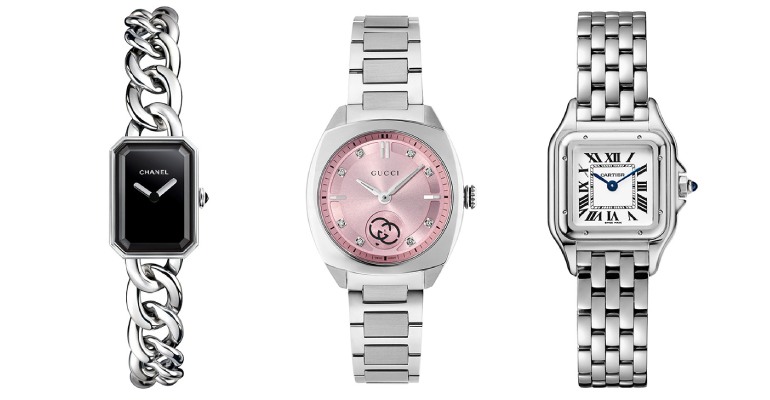
A quality watch is the single accessory that works hardest across the widest range of occasions. It reads as professional in formal contexts, considered in casual ones, and appropriate in evening settings in a way that most other accessories don’t manage simultaneously. It also doesn’t require replacing seasonally — the right watch purchased thoughtfully is a piece you wear for decades. Here is the honest guide across price points. Seiko Essentials collection Seiko’s position in the watch market is specific and underappreciated in fashion conversations that focus on Swiss brands: they produce watches with in-house movements at prices that Swiss brands at the same tier cannot match because Swiss manufacturing costs are significantly higher. The Seiko SUR range (ladies’ collection, quartz movement, $100-200) provides quality construction and reliable movement at prices that don’t require deliberation. The Seiko Solar range (powered by light, no battery replacement required) is the recommendation for people who want the lowest long-term maintenance watch in the accessible price bracket. Tissot Lovely The Tissot Lovely ($350-450) is the Swiss watch reference for women at accessible pricing. LVMH’s Swiss manufacturing standards apply to Tissot despite the accessible price point, and the ETA quartz movement (Swiss-made, accurate, reliable, easily serviced) provides the quality that Swiss movement reputation is based on. The design of the Lovely is genuinely elegant without being trend-sensitive — it reads as a proper watch rather than a fashion watch, which is the distinction that matters for longevity. Cartier Tank Française The Cartier Tank Française ($4,000-6,000 new, $2,500-4,000 secondhand) is the classic women’s watch that has genuine investment characteristics: it maintains resale value, it looks as contemporary now as when it launched in 1996, and the Cartier name and quality represent genuine provenance in the watch market. For someone making a significant watch investment: the Tank Française secondhand through a reputable dealer (Watches of Switzerland, Bucherer, or the Cartier boutique secondhand program) provides the reference piece at 30-40% of new retail.
Hoop Earrings — Size, Material, and Brand Honest Guide
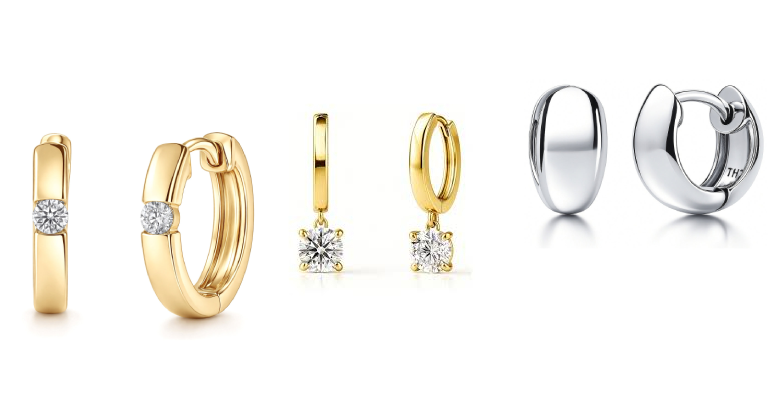
Hoop earrings are the most versatile earring category in most wardrobes — they work across aesthetics from casual to formal, add presence to an outfit without requiring matching other jewelry, and suit most face shapes in some size variation. The questions worth addressing before buying: which size for which occasion, which material for daily wear, and which brands produce hoops that hold their shape and don’t tarnish. The size conversation — what works for different occasions Small hoops (10-20mm diameter) are the everyday choice — they’re light enough to wear comfortably for long periods, don’t snag on hair or clothing in the way larger hoops do, and provide presence without statement. For office wear, most athletic contexts where earrings are appropriate, and casual daily use: small hoops. Medium hoops (25-40mm diameter) cross between everyday and occasion wear. They’re the versatile middle size that works for dinner, events, and anything where you want more visual presence than a small hoop without the commitment of a large statement earring. The 30mm hoop is the single size that serves the widest range of contexts. Large hoops (50mm and above) are statement earrings. They photograph beautifully, add significant visual impact, and require appropriate outfit context — they can overwhelm more casual or minimal looks. For fashion content, events, and intentional styling: large hoops. For daily wear: less practical. Material for daily wear — what holds up For sensitive ears: sterling silver or solid gold only. Plated metals, brass, and base metal hoops with thin plating cause reactions in most people with sensitive ears because the plating wears through at the post, which is the piece in contact with the piercing. For durability without sensitivity: solid gold is the best daily wear material. Sterling silver tarnishes with daily wear but polishes easily. Gold-fill holds up well through regular wear and is the best accessible option for people who want the appearance of gold without the solid gold price. The Mejuri Bold Hoop in 14k gold ($150-180 depending on size) is the daily wear solid gold hoop reference. The Maria Black Gold Bar Hoop in gold-fill ($80-100) is the accessible alternative that holds up genuinely well through daily wear. The specific hoops worth buying For small everyday hoops: the Mejuri Gold-Fill Huggie Hoops ($50-60) are consistently recommended for everyday wear — light, close to the ear, appropriate for most professional and casual contexts. For medium statement hoops: the Missoma Mini Aura Hoop ($70-80) provides visual interest through a slightly sculptured form without the weight and swing of a large hoop. For large occasion hoops: the ASOS premium leather hoop collection provides genuinely striking large hoops at accessible prices — the leather material reduces the weight of large hoops significantly compared to metal, making them more comfortable for extended wear.
How to Stack Rings Without It Looking Cluttered — The Honest Guide
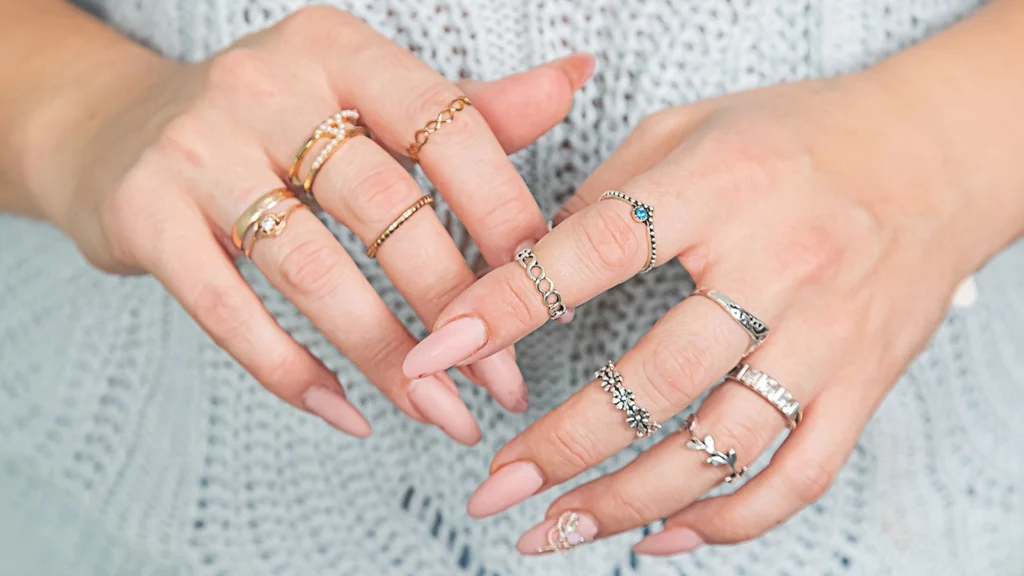
Ring stacking has the same fundamental tension as necklace layering: the difference between “curated and effortless” and “I put on every ring I own” is specific and learnable, but most guides either don’t articulate it clearly or oversimplify it to the point of being useless. The finger distribution that works Spreading rings across multiple fingers consistently produces a more balanced and intentional effect than concentrating rings on one or two fingers with others bare. The eye reads concentration as heaviness and distribution as considered. The most versatile distribution: two or three rings on the dominant hand’s ring and middle fingers, one or two on the index finger, and perhaps one simple band on the non-dominant hand. This produces visual interest without concentration and allows the individual rings to be seen rather than reading as a mass. Mixing textures, not just metals The ring stacks that look most interesting have variation in texture and dimension, not just in color. A flat band, a twisted band, a ring with a small stone or raised detail, and a wider statement band together produce visual rhythm. Four flat bands in the same style but different metals produce less visual interest than the same number of differently textured bands in a single metal. The sizing approach for intentional stacking Rings worn above the knuckle (midi rings) add interest to the top of the finger without requiring stacking on the base knuckle. Mixing base knuckle rings with midi rings on the same or adjacent fingers adds dimension without requiring large numbers of rings. Slightly different sizes of similar rings on the same finger — thin bands deliberately chosen to fit at different positions on the finger — is an approach that looks more intentional than accidentally wearing a ring that doesn’t fit quite right. The metals conversation for rings specifically Rings mix metals most naturally when the mixing is intentional at the hand level rather than the finger level. A gold band on the ring finger, a silver ring on the middle finger, and a rose gold ring on the index finger reads as mixed. The same three metals deliberately placed on adjacent fingers in a deliberate order reads as a choice. The rule that produces the most consistent results: commit to one metal per hand if you want a cohesive look, or mix metals deliberately across both hands to make the mixing clearly intentional rather than possibly accidental.