HOME | Fashion | Beauty | Home Furnishing | Comparison | Top Reviews |
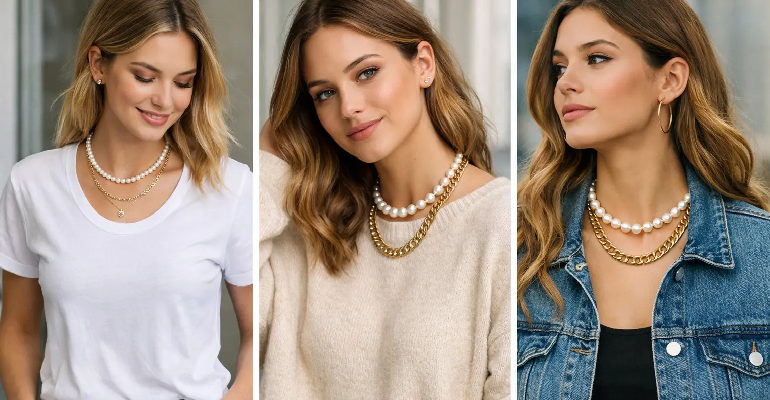
Pearl jewelry carries an aesthetic history that makes it feel formal and traditional in a way that doesn’t match how pearls are actually worn in 2026. The pearl-as-grandmother’s-jewelry association is genuinely outdated — contemporary pearl styling has moved significantly toward a different use case, and the brands producing modern pearl jewelry are making pieces that work in casual contexts, with streetwear, and in the kind of everyday styling where a traditional pearl strand would look incongruous.
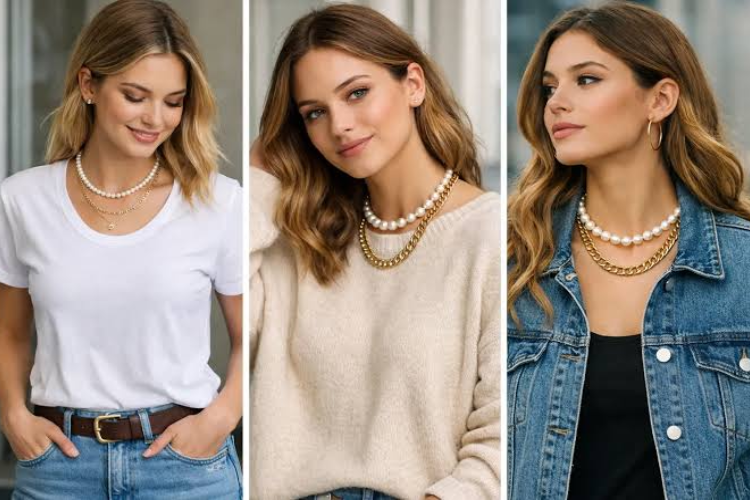
The traditional pearl styling — full strand worn with formal or business attire — is one application of pearl jewelry. Contemporary pearl styling tends toward: single baroque pearls as pendants on thin gold chains, mixed into necklace layers with non-pearl pieces, small pearl studs with casual outfits, and the deliberate casual-formal contrast of wearing a pearl piece with jeans and a t-shirt where the softness of the pearl against the casual context produces an interesting tension rather than looking overdressed.
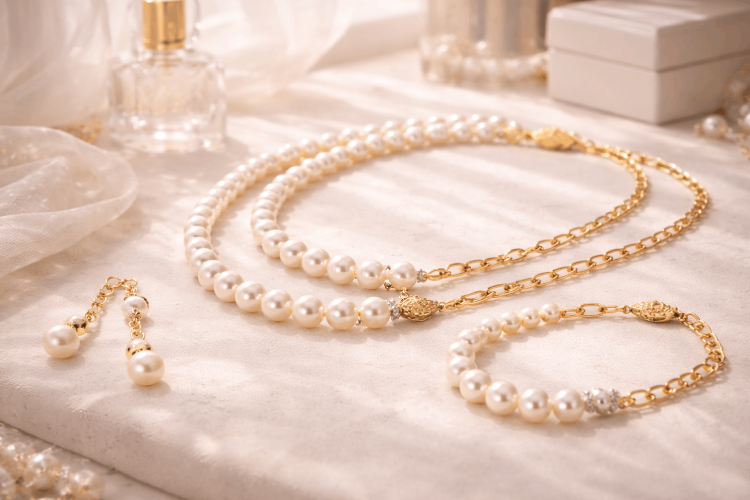
The pairing that’s appeared most frequently in editorial and street style: a single baroque pearl pendant necklace layered with one or two thin gold chains, worn with casual or minimal clothing. The organic, irregular shape of a baroque pearl reads as more casual and contemporary than a classic round pearl, and the contrast of something traditionally formal with casual clothing creates the specific interest that drives the pairing.
Freshwater pearls are cultured in freshwater mussels, primarily in China, and are the most accessible pearl type. The range of shapes is wide — freshwater pearls include the perfectly round, the baroque (irregularly shaped), the rice grain, and the coin shape. The quality range is also wide — from very affordable freshwater pearls with visible blemishes and poor luster to high-quality freshwater pearls that compete with more expensive types.
Akoya pearls are saltwater pearls cultured in Japan and China, typically round, with the classic high luster and white-pink overtone most people associate with a “good pearl.” The most commonly used for fine pearl jewelry. Higher price than freshwater, consistent quality range.
South Sea pearls (from Australia, the Philippines, Indonesia) and Tahitian pearls (from French Polynesia) are the highest-tier pearl types — large, deeply lustrous, and significantly more expensive than freshwater or Akoya.
For contemporary styling: freshwater baroque pearls offer the most visual interest at the most accessible price, making them the natural choice for the trend-responsive pearl jewelry that’s being worn now. For investment-level pearl jewelry: Akoya or South Sea pearls in classic settings.
Completedworks (London) is the brand most associated with sophisticated, contemporary pearl jewelry — irregular forms, unusual settings, and a design approach that treats pearls as interesting materials rather than formal ones. The prices are in the accessible luxury range ($150-400 for most pieces).
Matisse Jewelry produces more accessible contemporary pearl pieces ($50-150) — the organic pendant necklaces, the mixed baroque pearl and chain earrings — that work in the everyday casual-with-pearls context.
Etsy for individual baroque pearl pieces: independent jewelers on Etsy produce high-quality freshwater baroque pearl pieces at prices that reflect the actual material cost rather than brand premium. Searching for “baroque pearl pendant gold” or “freshwater pearl chain necklace” produces genuine craft jewelry at very accessible prices.