HOME | Fashion | Beauty | Home Furnishing | Comparison | Top Reviews |

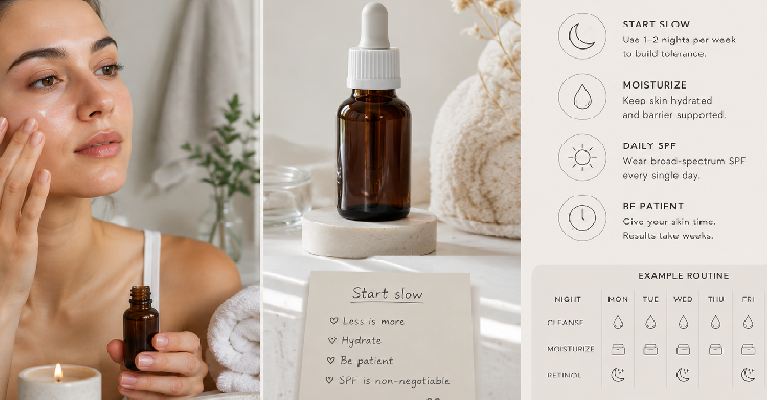
Retinol has the best evidence base of any over-the-counter skincare ingredient for the things most people want skincare to do: reduce fine lines, improve skin texture, minimize pores, fade hyperpigmentation, and increase cell turnover. The research is consistent and spans decades. The problem is that starting retinol incorrectly produces the specific experience of red, peeling, irritated skin that causes most people to either give up or conclude their skin doesn’t tolerate it.
Most skin tolerates retinol fine with a proper introduction. Most retinol failures are not retinol failures — they’re starting-too-fast failures.
Retinol is a form of Vitamin A that the skin converts to retinoic acid — the active form that produces the effects retinol is known for. This conversion process is why over-the-counter retinol (which converts to retinoic acid in the skin) is gentler than prescription tretinoin (which is already retinoic acid and therefore more immediately active).
Retinoic acid accelerates cell turnover — the rate at which the skin produces new cells and sheds old ones. Faster cell turnover produces fresher skin at the surface, reduces the appearance of fine lines (because surface skin cells are newer), helps fade hyperpigmentation (because the pigmented cells are shed faster), and unclogs pores (because dead cell buildup, one of the primary causes of pore enlargement, is reduced).
The irritation associated with starting retinol is a direct consequence of this accelerated cell turnover in skin that hasn’t adapted to the pace. The redness, peeling, and sensitivity are the skin’s response to a rate of cell turnover faster than it’s accustomed to. Introducing retinol slowly gives the skin time to adapt — the irritation phase is shorter and milder, and the long-term benefits are the same.
Start at the lowest available percentage. For over-the-counter retinol, 0.025% to 0.1% is the starting range. There is no benefit to starting at a higher percentage as a beginner because the skin can’t use the higher concentration more effectively — it just produces more irritation. The Ordinary Retinol 0.2% in Squalane ($10-12) is the most recommended starting product because the 0.2% is appropriate for beginners and the squalane base provides hydration that counteracts dryness.
Use it once a week for the first two weeks. One application per week. Not every night — once per week, in the evening after cleansing and before moisturizer. This allows the skin to show you how it responds before increasing frequency.
Weeks three and four: twice per week if no significant irritation occurred during the first two weeks. If irritation occurred, stay at once per week for another two weeks before increasing.
Month two and beyond: increase frequency gradually toward every other night, then every night, over the course of several months. The final goal for most people is every-night use, but arriving there over months rather than weeks is what prevents the irritation that causes people to abandon the process.
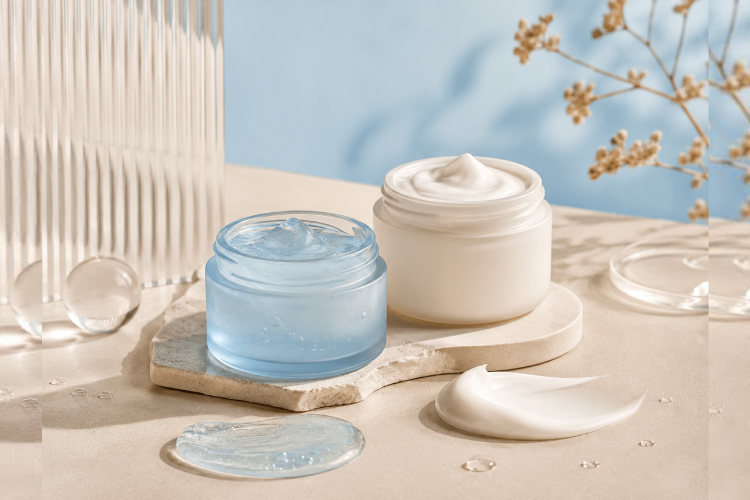
The moisturizer-first method (sometimes called “buffering”): applying moisturizer to the skin before retinol rather than after is an approach that reduces irritation further by creating a diluting layer between the retinol and the skin surface. Less efficient for delivering retinol but significantly more comfortable during the introduction phase.
Using retinol every night immediately. The most common mistake. The skin’s tolerance for retinol has to be built over time and starting at the frequency you’ll eventually reach produces the full irritation response on unprepared skin.
Using retinol around the eyes without specific care. The skin around the eyes is significantly thinner than the rest of the face and retinol causes more irritation there as a result. Starting with a small distance from the eye area and moving closer as tolerance builds is more sensible than applying directly under the eye from the first use.
Using retinol with other active ingredients before tolerance is established. Vitamin C, AHAs, BHAs, and niacinamide are all fine to use alongside retinol once tolerance is established. Starting retinol while also using AHAs regularly produces cumulative irritation that’s more than the sum of either part. Introduce retinol into a simple routine — cleanser, moisturizer, SPF — before adding additional actives.
Skipping SPF. Retinol increases photosensitivity — the skin is more sensitive to UV damage during retinol use. Daily SPF is not optional alongside retinol. It’s non-negotiable.
The Ordinary Retinol 0.2% in Squalane ($10-12): the starting point for most people. Low percentage, non-irritating base, accessible price that makes the cost of a new tube irrelevant if your skin reacts and you need to pause.
Paula’s Choice 1% Retinol Treatment ($60): the product to graduate to after establishing tolerance for lower percentages. The 1% is at the upper end of what over-the-counter retinol offers and produces results equivalent to some prescription formulations at lower percentages.
RoC Retinol Correxion Line Smoothing Cream ($25): the drugstore recommendation that occupies a useful middle position — higher than The Ordinary’s lowest percentage, accessible price, available everywhere.
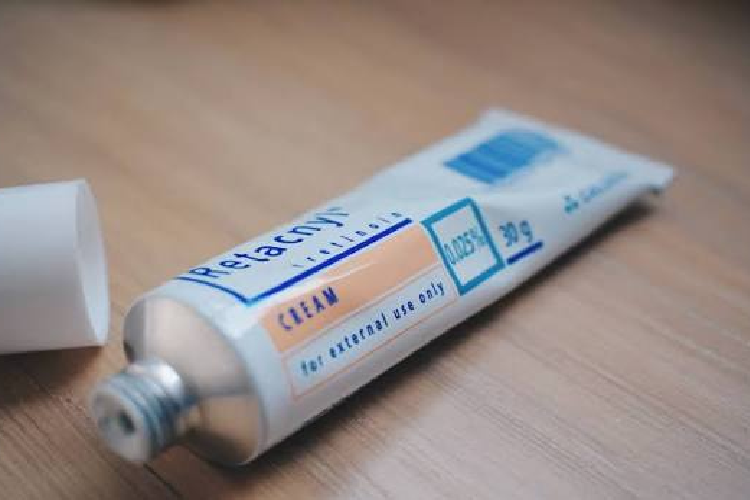
The prescription option worth knowing about: Tretinoin (prescription-only in most markets, available through dermatologists and some online services) is the most effective form of topical retinoid and produces results faster than any OTC retinol. For people who’ve established OTC retinol tolerance and want to progress to prescription strength, a consultation with a dermatologist is the appropriate path.