
Drunk Elephant vs The Ordinary — Years of Testing Both. Here’s the Honest Answer.
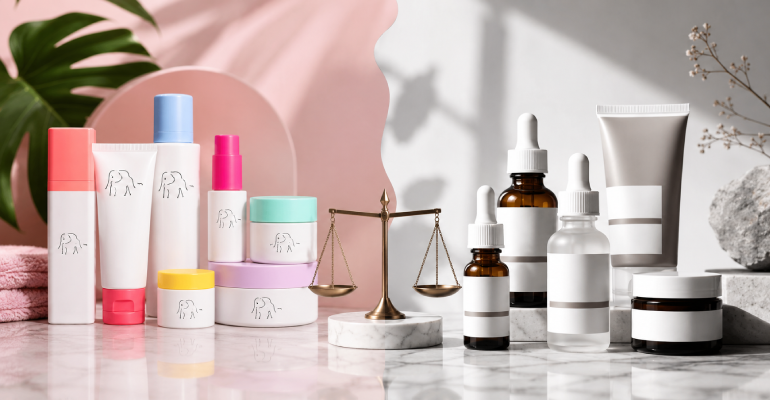
There’s a version of the skincare world where you have to pick a side: either spend serious money on prestige formulations or go budget and accept some limitations. Drunk Elephant vs The Ordinary gets framed this way constantly, as if the brands are in direct competition and choosing one means abandoning the other. They’re not in direct competition. They’re doing different things and they’re each genuinely good at some of those things and less good at others. I have spent more money on skincare than I am comfortable admitting. I have also spent very little money on skincare during periods when I couldn’t spend more. I know which things from each brand actually changed my skin and which things were purchases I felt good about making without results to justify them. Here’s what I actually know. The backstory, because it matters The Ordinary launched in 2016 under the DECIEM umbrella. The founder, Brandon Truaxe, had a specific mission that was genuinely unusual in the beauty industry: price products according to actual production cost rather than brand positioning. Niacinamide costs very little to produce. Hyaluronic acid costs very little to produce. A 30ml bottle of 10% niacinamide serum should not cost £30 when the ingredients cost pennies. The result was a product range priced at £4-15 for most items, with clinical packaging (the products look like they came from a laboratory, not a spa), and names that are the actual chemical compound names rather than invented product names. The Ordinary’s 10% Niacinamide + 1% Zinc is exactly those ingredients at exactly those concentrations. Nothing is obscured. Drunk Elephant launched the same year, 2016, with an entirely different approach. The founder, Tiffany Masterson, was interested in clean formulations — avoiding what the brand calls “The Suspicious 6” ingredients — and in creating products that work together as a cohesive system. The packaging is colorful and proprietary-feeling. The product names are invented. The prices are prestige. These two brands becoming the comparison point for the “budget vs luxury skincare” debate makes sense but it also flattens something important: they’re not equivalent product-for-product replacements. The Ordinary makes excellent single-ingredient actives at extraordinary value. Drunk Elephant makes complex formulations where the interaction between ingredients is part of what you’re paying for. Where The Ordinary genuinely wins and shouldn’t be replaced by anything more expensive Niacinamide 10% + Zinc 1%. This is the product that made The Ordinary famous and it deserved to. Niacinamide at 10% concentration is well-researched for pore minimization, skin tone evening, and general skin health improvement. The formulation is stable. The price (around £5-6) is absurd in the best possible sense. I have tried niacinamide serums from brands charging ten times this amount and the results were not ten times better. Some were marginally different. Most were not. If niacinamide is the primary active you need, buy The Ordinary’s version. There is no meaningful reason to pay more. The AHA 30% + BHA 2% Peeling Solution. The red mask. The cult product. At around £8 it delivers chemical exfoliation that requires real care (this is a potent product with real activity and real potential for irritation if misused) but produces real results. Skin texture improvement, the softening of old acne marks, brightening — these effects are consistent with what AHA/BHA exfoliation is supposed to do and The Ordinary delivers them at a price that removes the barrier to regular use. Hyaluronic Acid 2% + B5. Simple, effective hydration. At £7, this is the correct amount of money to spend on a hyaluronic acid serum. Retinol products. The Ordinary offers retinol at multiple concentrations (0.2%, 0.5%, 1%) in different formulations, which is genuinely useful for someone building up a retinol routine incrementally. The prices make it sensible to test lower concentrations before committing to higher ones. The formulations are not as elegant as some prestige retinol options but the active ingredient is real and the results are real. Where Drunk Elephant justifies its price and The Ordinary doesn’t quite compete The C-Firma Fresh Day Serum. This is the product where Drunk Elephant’s formulation investment is most visible and most meaningful. Topical vitamin C is genuinely tricky chemistry. L-ascorbic acid, the form of vitamin C that’s most proven in skincare research, oxidizes quickly and loses efficacy. The stabilization of vitamin C formulations is one of the harder problems in skincare science. Drunk Elephant’s C-Firma contains 15% L-ascorbic acid with ferulic acid and phloretin — a combination that both stabilizes the vitamin C and enhances its efficacy. The product performs. It’s expensive (around £85) and it’s worth it if vitamin C is a priority in your routine. The Ordinary has vitamin C options but they’re either less stable forms (ascorbic acid derivatives that don’t have the same research backing) or they require mixing yourself (the vitamin C powder), which is accurate but inconvenient and has its own stability concerns. The Lala Retro Whipped Cream. Drunk Elephant’s moisturizer is considerably more sophisticated than their vitamin C gets credit for. The formulation includes multiple ceramides, fatty acids, and plant oils in a way that genuinely feels different on the skin from a simple moisturizer. For dry skin specifically, the richness and the way it sits on the skin is meaningful. The Ordinary’s moisturizer options are less impressive than their actives — this is one category where spending more is genuinely justified. The Protini Polypeptide Cream. Peptide skincare is a category where formulation complexity matters considerably and where The Ordinary’s offerings (their Buffet serum being the primary peptide product) are functional but don’t quite have the same breadth of peptide types that Drunk Elephant’s Protini includes. The products from each brand that I wouldn’t recommend The Ordinary’s foundation and concealer range: not what the brand does best. The coverage and the finish are both mediocre. Buy skincare from The Ordinary, not makeup. Drunk Elephant’s F-Balm Electrolyte Waterfacial: an overnight mask at around £52 that I found genuinely underwhelming relative to the price. The results didn’t justify the
Zara vs Mango — The European Fashion Comparison That Actually Matters
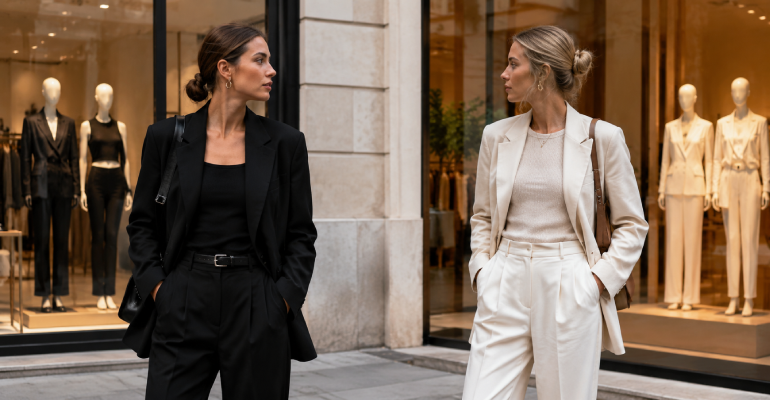
Something that doesn’t get said enough in fashion comparisons: the right question isn’t which brand is better. The right question is which brand is better for what you’re specifically trying to buy. I’ve been shopping both Zara and Mango for over a decade. I’ve had experiences with both that made me feel like I got genuine value and experiences that made me feel like I wasted money. The pattern that emerged from all of those purchases took a while to see clearly, but once I saw it I couldn’t unsee it. Here it is simply: Zara is better for trend-specific pieces you’re buying for a season. Mango is better for foundation pieces you want to last. Shopping both without this understanding is how you end up with a wardrobe full of things that don’t work together. The brands, honestly Zara is the most successful fashion retailer in the world by revenue. This is not incidental. The business model — identify what’s happening on runways and in street style, reproduce it quickly at accessible price points, put it on shelves in weeks rather than months — is genuinely brilliant as a commercial operation. The clothes look current because they’re designed to be current. The trade-off embedded in this model is that “current” has a built-in expiration date, and the production speed required means quality is sometimes sacrificed at the altar of timing. Mango is the quieter story. Spanish, like Zara, founded in Barcelona in 1984, considerably smaller. Mango has never chased Zara’s trend velocity. Instead they’ve spent the last decade repositioning themselves as something more elevated — better fabrics, slower design cycles, a more coherent aesthetic identity. The Mango you’re shopping now is not the Mango that existed in 2015. The brand quality has genuinely improved in ways that aren’t always acknowledged. Quality — what it actually means in practice When people say “quality” about fashion they usually mean a vague combination of fabric feel, construction precision, and how long the thing looks good. All three matter. None of them are simple. Zara’s quality is inconsistent in a way that requires you to develop a skill: knowing which product categories to trust and which to approach carefully. Their tailoring — blazers, structured trousers, coats — is frequently better than you’d expect. The construction on a Zara blazer from their Studio line is often genuinely impressive for the price. Their floaty summer dresses, the thin jersey tops, the pieces clearly designed to be bought for one summer and not worried about beyond that — these reflect the price more honestly. The fabric composition label is your most useful tool at Zara. A piece that’s 80% viscose and 20% polyester is going to behave differently than a piece that’s 70% linen and 30% cotton. The same silhouette in different fabrics from the same collection will have completely different longevity. Reading the label before buying takes thirty seconds and will save you more disappointment than any other single habit. Mango’s quality is more consistent partly because the range is narrower. They’re not trying to make everything for everyone in the way that Zara is. The linen category at Mango is genuinely good — the fabric weight is appropriate, the construction doesn’t cut corners, the pieces wash well and hold their shape across multiple seasons. The knitwear has gotten meaningfully better in recent years. The tailored pieces — specifically the blazers and the structured trousers — are where Mango competes most directly with brands that charge significantly more and doesn’t embarrass itself in the comparison. Style and aesthetic Zara’s aesthetic philosophy, if you can call it that, is to have no fixed aesthetic philosophy. They’re a mirror of the cultural moment. When quiet luxury was everywhere in 2022 and 2023, Zara was doing quiet luxury. When the Miu Miu micro-skirt was the cultural reference point, Zara had a version. When ballet flats came back (and they came back again in 2026, they keep coming back), Zara had thirty options within two months of the trend appearing in street style documentation. This is either exactly what you want from a fashion retailer or it’s completely exhausting, depending on your relationship with trends. For someone who loves following what’s happening and wants to participate at accessible price points, Zara’s trend responsiveness is a service. For someone who wants to build a wardrobe with longevity and coherence, buying specifically into trends at Zara means regular obsolescence. Mango’s aesthetic is more fixed and more identifiable. Mediterranean European minimalism is probably the most accurate description — clean silhouettes, materials that drape rather than structure, a palette that runs toward warm neutrals and occasional saturated tones that feel considered rather than reactive. You can usually tell a Mango piece by its silhouette even without the label. This is a design achievement that Zara, almost by definition, can’t replicate because Zara’s identity is built on not having one. Sizing — a real conversation Both brands have historically been sized for a narrow range of body types and both have faced legitimate criticism for this. Zara’s sizing varies notoriously within collections. You might be a medium in a trouser and a large in a blouse from the same seasonal drop. This isn’t laziness — it’s a consequence of working with multiple manufacturers across multiple countries on tight timelines where standardization suffers. It means trying things on at Zara is not optional, it’s necessary. Buying online from Zara requires knowing which specific product categories run large or small from prior experience. Mango’s sizing is more consistent particularly in the tailored categories. The trousers and blazers run relatively predictably. Where Mango sizing gets complicated is in the more relaxed categories — the linen pieces and the oversized styles where the intended fit is specifically ambiguous and getting it right requires knowing your own preferences precisely. Both brands have expanded their size ranges in the last few years. Neither has fully resolved the original criticism. If size inclusivity is a primary consideration, both brands have
Sephora vs Ulta — I’ve Belonged to Both Loyalty Programs for Years. Here’s What I Actually Think.
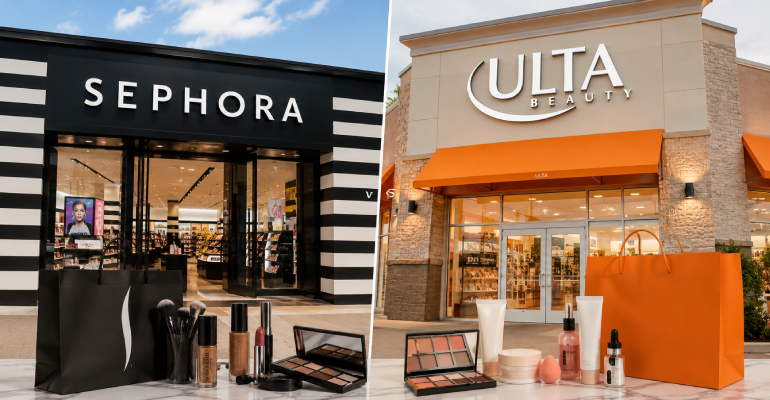
There’s a specific frustration that comes with belonging to two loyalty programs simultaneously and watching points accumulate in both places without ever quite reaching the redemption level that makes them feel worthwhile. I did this for about two years before I sat down and actually worked out what my spending was doing for me in each program. That exercise changed how I shop. Not dramatically. But meaningfully enough that I think most people who split their beauty spending between Sephora and Ulta without a deliberate strategy are leaving something on the table. This comparison isn’t going to tell you one store is better. They serve genuinely different purposes and there are real reasons to use both. But it’s going to tell you how to get the most out of each one, and which to prioritize if you have to pick. What these stores are actually trying to be Sephora opened in France in 1970 and came to the United States in 1998. The model was innovative for its time: a beauty specialty retailer where you could pick up and test products freely, staffed by people with specific beauty expertise rather than cosmetic counter reps whose loyalty was to a single brand. The black and white aesthetic, the open floor plan, the sampling culture — all of it was deliberate and all of it communicated a specific thing: this is where beauty enthusiasts come, not where people come to reluctantly buy something they need. The brand mix at Sephora has always leaned prestige. Charlotte Tilbury, Tatcha, Drunk Elephant, Rare Beauty, Fenty Beauty — these are the brands Sephora either had first or has most completely. The drugstore tier is essentially absent. You go to Sephora for mid-range to high-end beauty and nothing else. Ulta Beauty launched in 1990 in Illinois and made a different bet entirely. The format — prestige brands and drugstore brands under one roof, with a salon in the back — shouldn’t have worked as coherently as it does. The conventional wisdom in retail was that prestige beauty needed its own environment, that putting La Mer next to L’Oreal would cheapen both. Ulta proved that wrong. The customer didn’t care about the theoretical hierarchy of the beauty retail world. They cared about getting everything in one trip and collecting points on all of it. The loyalty programs — this is where you should spend the most time thinking Sephora’s Beauty Insider runs on a three-tier system. Free to join as Insider, VIB requires $350 in annual spending, Rouge requires $1,000. The points rate is one point per dollar at all tiers. The redemption is where things get complicated. Points can be used for sample kits (which have gotten smaller and less compelling over time), for rewards during the bi-annual sales, or toward product redemptions that rarely land at good value per point. The most useful thing about being Rouge is the 20% discount during the annual Rouge sale event, which for someone spending $1,000+ per year represents genuinely significant savings. For people who don’t hit $1,000, the program is more about access (early access to launches, invitations to events) than about cash value. Ulta’s Ultamate Rewards is simpler and more immediately tangible. One point per dollar at the base, 1.25 points at Platinum ($500 annual spend), 1.5 points at Diamond ($1,200). Every 100 points is $3 off a future purchase. There is nothing confusing about this. You spend money, you get points, points become dollars. The math is easy, the value is consistent. The 21 Days of Beauty sale — where Ulta offers a different prestige product at 50% off each day for twenty-one days — is the single best beauty deal event that runs annually. Products from brands like Too Faced, Urban Decay, and IT Cosmetics at genuine half-price for twenty-four hours. It requires planning and some shopping-day-of energy, but for someone who buys prestige cosmetics regularly, this event alone can justify the loyalty. Brand selection — what you can only get where This is the practical question that overrides loyalty program math for many shoppers. Charlotte Tilbury is exclusive to Sephora in the US. If Charlotte Tilbury is in your regular rotation — and the Flawless Filter and the Beautiful Skin Foundation have earned their reputations — this ends a portion of the comparison. You’re going to Sephora for Charlotte Tilbury regardless of points calculations. Rare Beauty (Selena Gomez) is Sephora-exclusive in retail. So is Fenty Beauty for the core range. So is Drunk Elephant. Ulta carries brands that Sephora doesn’t — Morphe has a stronger presence at Ulta, as do some of the mid-tier brands that sit between drugstore and prestige. The drugstore coverage at Ulta is complete: L’Oreal, Maybelline, NYX, e.l.f., Neutrogena, CeraVe — all available, all points-eligible. If any portion of your beauty spending goes toward drugstore products (and most people’s does, even people who primarily buy prestige), Ulta is capturing value that Sephora isn’t. The Kylie Cosmetics and ColourPop presence at Ulta has also been significant. The brand that defined independent DTC cosmetics in the mid-2010s has a retail home at Ulta, not Sephora. The in-store experience — which one actually feels better to be in This is subjective and I know it, but it matters for how much you enjoy shopping. Sephora is better for discovery. The store layout encourages browsing. The staff are trained specifically on the products in the store rather than on a single brand’s products. If you walk in without knowing exactly what you want and you’re open to being educated or redirected, Sephora’s environment is more suited to that experience. The sampling culture is also genuinely better at Sephora — more extensive, more encouraged, more available. Ulta is better for efficiency. You know what you want, you get it, you get points on everything including the CeraVe you grabbed from the drugstore end, maybe you get a blowout in the salon. The one-stop shop quality is a genuine practical advantage for people who buy across
Lululemon vs Alo Yoga — I’ve Spent Real Money on Both. Here’s the Honest Truth.
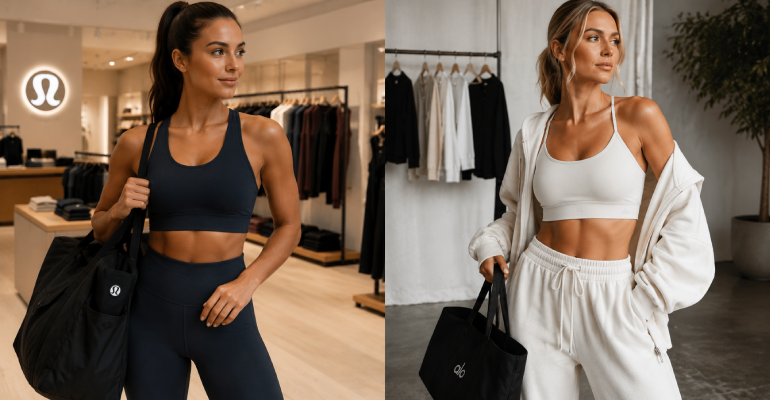
Let me tell you something that took me an embarrassingly long time to figure out. The reason people argue about Lululemon versus Alo Yoga so intensely online is that both sides are right and both sides are also wrong, and the actual answer depends on something nobody wants to admit: what you’re doing in the clothes. I have Lululemon pieces I’ve owned for four years. I have Alo pieces I bought eighteen months ago. I’ve worn both to actual workouts, to grocery stores, to sitting on my couch watching television. I’ve washed them on wrong settings. I’ve forgotten things in gym bags for longer than I should have. I know what holds up and what doesn’t. This isn’t the comparison that’s going to tell you one brand is objectively superior. But it’s the one that’s going to tell you which one you should actually buy. How these two brands ended up competing in the first place Lululemon launched in 1998 in Vancouver and spent about a decade being the brand that yoga instructors wore before it became the brand that everyone wore. The Align legging didn’t exist until 2015 and it changed everything — not just for Lululemon but for the whole category. Before the Align, activewear fabric was either compressive and structured or it was cheap and baggy. The Nulu fabric split the difference in a way nobody had quite managed, and suddenly everyone wanted to be in that space. Alo launched in 2007 in Los Angeles and positioned itself differently from the beginning. Where Lululemon was Canadian and sensible and about performance-meets-comfort, Alo was LA and aspirational and about looking like you’d just come from a boutique studio session even when you hadn’t. The brand made a deliberate choice to be more fashion-forward, and it worked. Slowly, then very suddenly, Alo became the brand you saw on everyone whose Instagram made you feel vaguely inadequate about your own wellness routine. By 2020 they were unambiguously competing for the same customer. That customer — willing to spend $100+ on a pair of leggings, interested in both performance and aesthetics, buying for an active lifestyle that probably includes some actual workouts and quite a bit of looking active — had to pick, or split their spending between both. The fabric situation, which is where this really lives I want to spend real time here because this is the thing most comparisons rush past to get to the price table. Lululemon’s Nulu fabric is hard to describe accurately to someone who hasn’t touched it. Saying it’s soft doesn’t capture it. It’s soft in a specific way that feels almost weightless — like if you put something on your skin that was barely there but still doing its job. The Align legging in Nulu has essentially no compression. It holds its shape, it moves with you, it doesn’t dig or shift or bunch, but it’s not squeezing anything. For yoga, for Pilates, for stretching and recovery, for any movement that doesn’t require you to be held together forcefully, it’s the best fabric I’ve encountered at any price point. The problem with Nulu is that it’s delicate in a way that isn’t immediately obvious. It pills. Not immediately, not dramatically, but after enough washes and enough friction, small pills appear at the inner thighs and wherever the fabric rubs against itself consistently. This is a known issue. Lululemon doesn’t advertise it. Long-term owners know about it and factor it into how they wash and store the leggings, but a first-time buyer isn’t warned. Alo’s Airbrush fabric is doing something different. It has real compression — not aggressive compression, not the kind that makes you feel like you’ve been vacuum-sealed, but you feel it. The fabric is thicker, more structured, slightly shiny in a way that reads expensive in photos and in person. It holds its shape during movement in a way that Nulu doesn’t because Nulu isn’t trying to. For a spin class, for HIIT, for anything where you’re moving fast and you want things to stay exactly where you put them, the Airbrush performs better than the Align. The Airbrush doesn’t have Nulu’s pillow-like softness against the skin. In exchange it has better durability in my experience — after eighteen months the Airbrush leggings look essentially the same as they did when I bought them. The compression hasn’t sagged, the sheen hasn’t dulled significantly, the waistband hasn’t stretched out. So here’s the thing: you can’t call one fabric better than the other without knowing what you need the fabric to do. For gentle movement and maximum comfort: Nulu wins clearly. For performance and longevity: Airbrush has an edge. What Lululemon actually gets right besides the Align Everyone focuses on the Align because it’s the famous one but Lululemon’s range is considerably broader and some of the other pieces are genuinely where the brand is strongest. The Wunder Train tight is the legging for actual athletic activity. More compression than the Align, different fabric (Everlux, not Nulu), designed to handle sweat and intensity in a way the Align doesn’t really claim to. If you’re buying Lululemon for running or HIIT specifically and you’re buying the Align, you’re buying the wrong thing. The Define jacket is one of the most reliably flattering pieces of clothing I own. It’s not particularly revolutionary — a fitted athletic jacket — but the construction is precise in a way that feels considered, and it has held its shape through more washes than I can count. The Wunder Puff jacket does something that sounds impossible: looks fashionable enough to wear outside the gym context while being actually functional insulation. I’ve worn mine in temperatures where I should have been wearing a proper winter coat and been genuinely warm. The quality control problem that’s real: Lululemon pieces from five years ago feel more substantial than pieces from recent years. The brand has scaled significantly and something has shifted in consistency. Not dramatically, not catastrophically, but if you’ve had a