
Best Gifts for People Who Have Everything — A Specific, Honest List
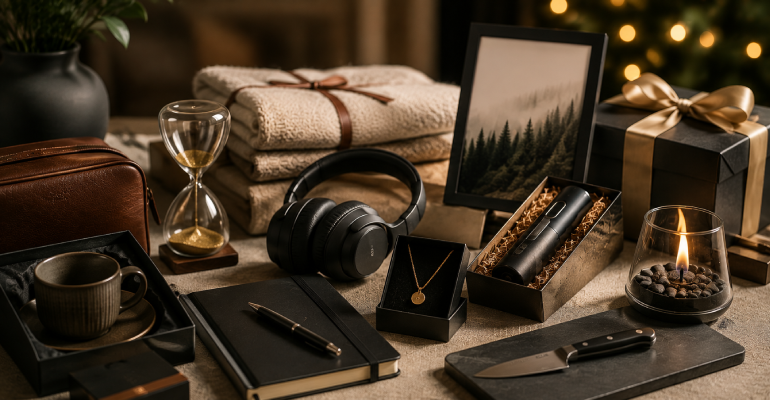
The hardest person to buy for is the person who buys what they want when they want it — the person whose response to “what do you want for your birthday” is a genuine shrug rather than strategic politeness. They’re not being difficult. They literally don’t have a waiting list of things they haven’t bought yet. The gifts that work for this person fall into specific categories: experiences they wouldn’t buy for themselves, consumables at a quality level above what they’d choose day-to-day, and the kind of specific, personal gesture that no amount of money can shortcut. Experiences over objects — the category that reliably works The research on experiential versus material gifts is consistent: experiences produce more lasting happiness than objects, are more uniquely personal, and become stories rather than things. A cooking class, a weekend away, a theatre booking, a sporting experience — these are gifts that neither the giver nor the recipient could easily go out and buy in the generic way that most gifts work. The specific appeal of experiential gifts for people who already have things: they add to life rather than to a collection. There’s no storage problem, no duplication of something they already own, no question of whether they’ll use it. The experience happens or it doesn’t. The practical consideration: experiential gifts require either flexibility (a class or event the recipient chooses from a selection) or specific knowledge of their actual interests and schedule. A cooking class in a cuisine they don’t cook is not a good gift. A cooking class in the specific regional cuisine they’ve been wanting to explore is excellent. Consumables at an upgraded quality level The category of things people use regularly but don’t upgrade for themselves is the sweet spot for consumables as gifts. The good olive oil — genuinely excellent extra virgin olive oil from a specific producer that costs £30-40 for a bottle rather than the £8 oil they buy weekly. The coffee subscriptions from specialty roasters at a quality level above what they’d justify as a regular purchase. The quality candle in a fragrance they wouldn’t buy themselves. The cashmere bed socks they’d find frivolous as a self-purchase. The principle: something they use regularly, at a quality level they’d appreciate but wouldn’t justify for themselves. The gift elevates a daily habit for the duration of the consumable, which is a different and more sustained pleasure than a single object. Specific options worth knowing: a subscription to a specialty coffee roaster (Hasbean, Square Mile, or Onyx Coffee Lab are the reference roasters in the UK and US markets), a quality olive oil from a recognized producer (Brightland or Graza in the US; Seggiano or Waitrose LOVE Life premium in the UK), or a selection of excellent chocolate from a bean-to-bar maker (Pump Street, Raaka, or Dandelion Chocolate). The personal gesture that can’t be bought generically The gifts that are remembered longest are the ones that demonstrate specific knowledge of the recipient rather than general quality or cost. The book on the subject they mentioned once that you remembered. The photo from a specific trip, framed properly. The small object that references an inside joke or a shared experience. The letter that says something true. None of these require money. All of them require attention — paying close enough attention over time to know what would be specific rather than generic. This is the gift that the person who has everything can’t buy for themselves and that can’t be replaced by a more expensive version of the same thing. The photo book produced with Chatbooks, Artifact Uprising, or Printique — specific images from a shared experience or a year together, compiled thoughtfully and printed in a quality format — is the consumable gift with the most personal resonance available at most price points.
How to Create a Home You Actually Want to Come Home To

There’s a version of this topic that’s about aesthetics — the right rug, the right plants, the right lighting. And aesthetics matter, genuinely, in ways that are not superficial. But the home environment that genuinely supports wellbeing and produces the specific feeling of wanting to come back to it operates on several levels simultaneously, some of which are aesthetic and some of which are not. The home that functions as a refuge rather than just as shelter has specific qualities that are reproducible regardless of the size, location, or budget of the space. Order — the single most impactful wellbeing factor in a home The research on domestic environment and stress is consistent: visual clutter produces cognitive load and elevated cortisol (stress hormone) levels. The brain processes every visible object as a potential task or decision, and a visually cluttered environment produces a continuous low-level cognitive demand that depletes mental energy over time. This is why hotels feel different from most people’s homes: the visual field is clear, surfaces are free of accumulated objects, and the environment makes no demands beyond the very simple demands of existing in it. Reproducing this in a personal space doesn’t require minimalism — it requires a system for dealing with the objects that accumulate and a consistent practice of returning them to their places. The practical implementation: twenty minutes of tidying before sleep, returning everything to its designated place, produces a morning in which the environment is clear before the day’s accumulation begins. The twenty minutes before sleep is less costly than the morning experience of starting the day in a disordered space. Scent — the most direct route to emotional state change The olfactory system has a more direct neural connection to the emotional and memory centers of the brain than any other sense. This is why smell is the most powerful sense for triggering memory and why scent is one of the fastest routes to changing how a space feels emotionally. A consistent home scent — a reed diffuser, a regularly burned candle in a consistent fragrance, a room spray used at specific times — becomes associated with the home environment through repetition and eventually triggers the emotional state of being home through association. This is what high-end hotels are doing with their signature scents and why it works. The scents that tend to produce calm and reduced stress according to both anecdotal evidence and modest research: lavender (the most extensively studied), cedarwood, sandalwood, vetiver, and vanilla. These are not universal — individual scent associations vary based on personal history — but they’re the starting point for most people. Designated spaces for different activities — why it matters The home that doesn’t have functional separation between work, rest, and leisure blurs the psychological boundaries between these states in ways that make rest harder to access. Working from a laptop on the sofa makes the sofa a work space; the body and brain begin to associate the sofa with the cognitive demands of work rather than the physiological state of rest. This is the specific mechanism behind why people who work from home report difficulty relaxing in their own homes. Creating physical separation between work and rest — even a dedicated desk that’s specifically work space, distinct from where you eat, relax, and sleep — preserves the boundary between these states. At the end of the work day, leaving the work space physically and not returning to it until the next work day is the behavioral practice that reinforces the psychological boundary. In very small spaces where physical separation isn’t possible, ritual separation serves the same function: packing away the work laptop at the end of the day, changing clothes, a consistent “end of work” activity that signals the transition from work mode to home mode. The sensory details that accumulate into atmosphere Natural light matters more than any artificial lighting decision. Maximizing natural light in a space — clean windows, light-colored walls that reflect rather than absorb, furniture arranged to not block window areas — produces measurable effects on mood and circadian rhythm regulation. The winter light limitation in higher latitudes is real and a SAD (Seasonal Affective Disorder) light therapy lamp (10,000 lux, used for twenty to thirty minutes each morning) is one of the most evidence-supported mood interventions available for people who experience winter low mood. Sound is consistently underconsidered in domestic environments. The specific quality of sound in a room — how it absorbs or reflects, whether background noise is present and of what type — affects stress levels and concentration. Soft furnishings (rugs, curtains, upholstered furniture) absorb sound and reduce the slightly anxious acoustic quality of hard surfaces in empty rooms. White noise or nature sounds (rain, birdsong) at low volume mask irregular intrusive noise that produces more stress than continuous background sound. Sound is consistently underconsidered in domestic environments. The specific quality of sound in a room — how it absorbs or reflects, whether background noise is present and of what type — affects stress levels and concentration. Soft furnishings (rugs, curtains, upholstered furniture) absorb sound and reduce the slightly anxious acoustic quality of hard surfaces in empty rooms. White noise or nature sounds (rain, birdsong) at low volume mask irregular intrusive noise that produces more stress than continuous background sound.
Best Fitness Trackers — Which Ones Actually Change Your Behavior
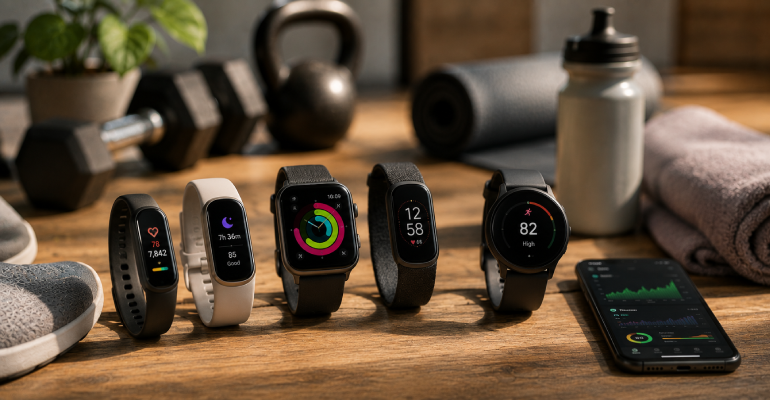
Fitness trackers have a specific and consistently underexamined problem: the research on whether they produce sustained behavior change is considerably more mixed than the marketing suggests. The step counter that motivates you for the first three months and becomes invisible jewelry by month six. The sleep tracker that tells you every morning that you slept badly without giving you information that changes how you sleep. The calorie tracker that produces anxiety without producing fitness. The fitness tracker worth buying is the one whose specific data output you will use to make specific decisions that improve your health. The one whose data you’ll check and act on rather than passively accumulate. Apple Watch Series 10 — the most complete package for most people The Apple Watch Series 10 costs $399 and is the correct recommendation for anyone already using an iPhone who wants the most complete combination of health tracking, smartwatch functionality, and ecosystem integration available. The health sensors — ECG, blood oxygen, irregular heart rhythm notification, crash detection — provide genuine health monitoring that has clinical validation behind it in ways that step counts alone don’t. The activity rings (Move, Exercise, Stand) are the behavior change mechanism that has the most evidence behind it in Apple’s specific implementation. Closing all three rings requires deliberate activity throughout the day that produces movement even in sedentary work schedules. The gamification is modest enough to be sustainable rather than producing the burn-out that more aggressive gamification approaches do. The sleep tracking provides useful data about sleep duration and sleep stages — not actionable in the minute-to-minute way that some sleep trackers imply, but genuinely useful for understanding patterns across weeks of tracking. The limitation: battery life. The Series 10 battery lasts 18-36 hours depending on usage, which means daily (often twice-daily) charging. This is a genuine inconvenience for sleep tracking because the watch needs to charge at some point during the 24-hour cycle. Garmin Forerunner 265 — for serious athletes The Garmin Forerunner 265 costs $450 and is the recommendation for people who do structured training — running, cycling, swimming, triathlon — and want the tracking data that optimizes performance rather than just recording it. The training load analysis, recovery time recommendations, and workout structure features provide genuine insight into training variables that the Apple Watch’s less specialized approach doesn’t. The battery life (13 days in smartwatch mode, less with GPS) removes the daily charging friction and makes it practical for overnight sleep tracking and multi-day tracking without interruption. For athletes doing multi-hour training sessions, the GPS accuracy and battery life are genuinely meaningful advantages. The trade-off versus Apple Watch: less smart watch functionality (notifications, apps, payment), less elegant design for everyday wear, and ecosystem integration that requires Garmin Connect rather than the Apple Health ecosystem that most people are already in. Whoop 4.0 — for sleep and recovery specifically Whoop costs $30/month (subscription-only model, no hardware cost) and is the recommendation for people whose primary interest is sleep quality and recovery optimization rather than activity tracking. The wrist-worn sensor is worn continuously including during sleep and produces detailed data about heart rate variability, respiratory rate, and sleep staging that’s more detailed than Apple Watch’s implementation. The Strain and Recovery scores are the features that produce the most behavioral change for Whoop users: the Recovery score (based on overnight sleep data) tells you how ready your body is for stress, and the Strain score tracks how much cardiovascular stress you’ve accumulated in a day. For people making genuine decisions about training load, stress management, and sleep prioritization based on data, these scores provide actionable information. The honest limitation: the subscription cost accumulates to $360 per year, which is a significant ongoing cost for a device whose value depends entirely on how actively you use the data it produces.
How to Save Money Without Feeling Deprived — The Honest Approach

Money saving advice generally falls into two useless categories. The category that tells you to stop buying coffee because your latte habit is why you’re not financially secure (it isn’t — your latte habit costs you $1,500 a year; your housing, transport, and food costs dwarf that). And the category that tells you to track every penny, create detailed budget spreadsheets, and optimize every category of spending (which most people maintain for three weeks before abandoning because it takes more effort than the savings justify). What actually works is more specific and less dramatic than either of these approaches. It targets the spending that produces the least satisfaction per pound spent, reduces friction on the saving side rather than adding friction to the spending side, and doesn’t require you to feel bad about spending money on things that genuinely matter to you. The distinction that changes everything — intentional versus unconscious spending The goal is not to spend less on everything. The goal is to spend less on things you don’t care about so you can spend more (or save more) on things you do. This requires being honest about which spending is which. Unconscious spending is the category to target. The subscriptions you’re paying for and not using. The food that gets bought and thrown away. The convenience spending that solves problems you could solve differently. The habitual purchases that happen automatically rather than as the result of a deliberate choice. This spending doesn’t produce satisfaction because it happens without attention — it’s not being enjoyed, it’s being consumed. Intentional spending — the restaurant that you actually love, the holiday you genuinely wanted, the quality item you considered carefully and bought deliberately — produces proportionally more satisfaction per pound spent because attention is part of what makes spending feel good. You actually notice the experience because you chose it. The subscriptions audit — the highest-return thirty minutes you can spend Most people are paying for subscriptions they’ve forgotten about. A thirty-minute audit of bank and credit card statements for recurring charges typically surfaces one to three subscriptions that are either unused or duplicates of something else you’re already paying for. The specific process: search your email for “receipt” from the last twelve months, cross-reference with bank statements for recurring charges, identify everything you’re paying for regularly, and cancel everything where the honest answer to “did I use this last month” is no. The recurring charge that was trivial to start accumulates to a non-trivial amount over a year. Automating savings before spending — the behavioral change that works The brain is much better at spending whatever is available than it is at deliberately setting aside money from what’s available. Automated savings transfers that move money out of the current account on payday — before it’s spent on anything — produce more consistent saving than any budgeting system that requires restraint. The amount matters less than the habit. Ten pounds per week automated to savings is more effective than the intention to save fifty pounds per week managed manually, because the ten pounds actually happens every week and the fifty pounds doesn’t. Salary sacrifice pension contributions (where relevant) are the most efficient form of automated saving because the money is removed before income tax is calculated, producing an effective saving rate that’s higher than the nominal contribution rate. The high-satisfaction, low-cost alternatives to expensive habits Most expensive habits have a cheaper alternative that provides 80% of the satisfaction at 20-30% of the cost. The gym membership that costs £80/month when a £25/month alternative has the same equipment you actually use. The expensive coffee shop habit that a good home coffee setup (paid back in weeks) replaces for most daily use while keeping the genuine café experience for the times it’s actually about the place rather than the coffee. The distinction between reducing spending and removing something you actually enjoy is important. Removing the expensive coffee shop trip you genuinely look forward to costs you something real. Replacing the expensive coffee shop trip you make out of habit rather than enjoyment costs you very little.
Best Productivity Apps That Actually Work — Honest Reviews
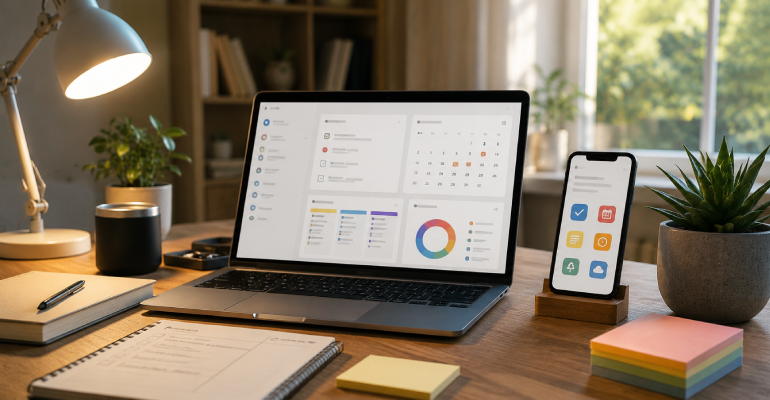
The productivity app category has a fundamental irony that nobody in it acknowledges directly: the most complex productivity systems are usually owned by people who spend significant time managing their productivity system rather than doing productive work. The perfectly organized Notion workspace with custom databases, linked views, and automated workflows represents dozens of hours of setup and maintenance that could have been spent on the actual work the system is supposed to support. The apps worth using are the ones that reduce friction rather than adding it. The ones whose interface disappears into the work rather than becoming work themselves. For task management — Things 3 (Apple) or Todoist (any platform) Things 3 costs $50 (one-time purchase, Apple only) and is the task management application I’d recommend without qualification to anyone on Apple devices. The design is elegant in the specific way that means the interface produces almost no friction between “I need to remember to do this” and the task being captured. The three-level hierarchy (Areas, Projects, Tasks) maps naturally to how most people actually think about their responsibilities. The Today view provides a single reliable place to see what needs to happen. Todoist costs $4/month or $36/year and is the cross-platform alternative — available on every device and browser, synced reliably, and powerful enough to implement any task management philosophy from simple lists to complex project management. The natural language processing (type “call dentist Friday at 2pm” and it creates a task with the correct due date and time) reduces the friction of capturing tasks significantly. Both of these applications disappear into use in a way that complex tools like Notion don’t. They’re for people who need to manage tasks, not for people who want to design a system for managing tasks. For notes — Apple Notes or Obsidian Apple Notes is underrated to the point of absurdity. It syncs instantly across Apple devices, supports images, documents, links, checklists, and handwritten notes, has a reliable search, and costs nothing. For the majority of note-taking needs the majority of people have, it is a complete solution. The reason people look for alternatives is usually that they’ve been persuaded they need features that Apple Notes doesn’t have, rather than that Apple Notes is failing a genuine need they’ve identified. Obsidian is the recommendation for people who take notes seriously in a way that Apple Notes doesn’t support. The concept of “linked notes” — the ability to create connections between notes that build a personal knowledge graph over time — is genuinely useful for research-heavy work, writing projects, and anyone who processes large amounts of information and wants to see connections across it. The files are stored locally in Markdown format, which means they’re portable to any future application and not dependent on Obsidian remaining operational or affordable. Notion is powerful and popular and requires significant investment in setup and maintenance. For most people who adopt it enthusiastically, it becomes either a genuinely useful workspace that justifies the investment or an elaborate second job of maintaining a system rather than using it. Knowing which outcome is likely for you before adopting Notion saves significant time. For focus — a timer, not an app The productivity app category is full of focus apps — Forest, Focus@Will, Session, Be Focused — that provide various versions of the same function: a timer that creates a structure for focused work periods. The most evidence-supported focus technique (the Pomodoro Technique: 25 minutes of focused work, 5-minute break, repeat) requires only a timer to implement. A physical kitchen timer, the Clock app on any phone, or any of the named focus apps implement the same underlying approach. The app that adds genuine value in this space beyond a basic timer: Freedom ($40/year) blocks distracting websites and apps across all your devices simultaneously. For people who find themselves habitually opening social media, news sites, or other distractions during work periods, removing access through a blocker is meaningfully more effective than relying on willpower. The calendar — the productivity tool most people underuse Every productivity system works better when built around a calendar that’s used accurately. Accurate means: every commitment — not just meetings, but work blocks, personal obligations, travel time between locations — is on the calendar. This produces a realistic picture of available time rather than the optimistic picture that produces consistently missed deadlines and overcommitted schedules. Time blocking — scheduling specific blocks for specific types of work rather than arriving at each day with a task list and available hours — is the calendar practice with the most consistent evidence for improved output. The block provides commitment and context; arriving at a “write section of report” block rather than an undefined “work time” block reduces the decision overhead that depletes focus.
Workout Shorts for Women — Which Ones Actually Stay Put

Workout shorts have one primary functional requirement beyond the obvious: they have to stay in place during the activity they’re designed for. The shorts that ride up during lunges, the bike shorts that roll down at the waistband during a deadlift, the running shorts that create an inner thigh situation by mile two — these are the failures that workout short reviews rarely document because they’re not visible in a static fitting room assessment. Testing during actual workouts is the only way to know which shorts actually work. Lululemon Pace Breaker Shorts — for running specifically The Lululemon Pace Breaker ($68) is the gold standard for running shorts and has been for multiple years. The liner (built-in underwear shorts) stays in position through the full range of running motion, the outer short doesn’t bunch, and the length (5-inch is the most versatile) covers adequately without restricting stride. The fabric manages sweat without becoming heavy or clinging in the way that cheaper fabrics do in humid conditions. The pocket configuration (side pocket and rear zippered pocket) carries a phone and key without bouncing or becoming unbalanced. Lululemon Invigorate HR 4-inch — for gym training The Invigorate ($58-68) is the gym training short that doesn’t compromise between coverage and mobility. The 4-inch length is short enough not to restrict movement in squats and lunges, long enough not to create exposure concerns in any standard gym exercise. The waistband is the defining feature — it doesn’t roll down under the weight belt or during hip hinge movements in a way that many waistbands do. Girlfriend Collective Bike Short — the sustainable option The Girlfriend Collective Bike Short ($38-48) is the recommended short for any activity where coverage is the priority — cycling, rowing, most gym machines, and studio classes. The compression fabric holds position during movement without rolling at either the waist or the leg opening, the length (typically 7-inch or longer) provides full coverage during any movement, and the recycled fabric construction doesn’t sacrifice compression for sustainability. At $38-48, this is also significantly more accessible than Lululemon’s equivalent products without the quality compromise that the price gap might suggest.
How to Sleep Better — What the Evidence Actually Says
Sleep optimization has become a content category that produces more anxiety than better sleep for many of the people it’s aimed at. The sleep tracker that tells you every morning exactly how poorly you slept and assigns it a score. The supplement stack that costs $80 a month. The blackout blinds and white noise machines and cooling mattress toppers. Each of these products suggests that sleep is a problem requiring a solution purchase, which is both an effective marketing approach and not how sleep actually works for most people. The evidence base for sleep improvement is clearer and simpler than the sleep wellness industry would prefer it to be. The most impactful interventions are behavioral rather than product-based, and most of them cost nothing. The most evidence-backed sleep improvement — consistent timing The single most evidence-supported recommendation for sleep quality is going to bed and waking up at the same time every day including weekends. The circadian rhythm — the biological clock that governs sleep-wake cycles — is regulated primarily by light exposure and consistent timing. Shifting the wake time significantly between weekdays and weekends (the pattern researchers call “social jetlag”) disrupts this regulation and produces the specific sluggishness of Monday mornings that’s often mistakenly attributed to work rather than to weekend timing shifts. The practical difficulty: most people use weekends to recover sleep debt from weekdays, which means sleeping later on weekends feels biologically necessary. The solution to this is addressing the weekday sleep deficit rather than accepting it and compensating at weekends. Going to bed earlier on weekdays is more impactful for sleep quality than sleeping later on weekends. Light exposure — the environmental variable that matters most Morning light exposure within thirty to sixty minutes of waking regulates the circadian rhythm more powerfully than any supplement. Getting outside in the morning — even on cloudy days, natural outdoor light is significantly brighter than indoor artificial light — tells your biological clock precisely when morning is and calibrates the entire day’s sleep-wake cycle accordingly. Evening light exposure in the blue spectrum (the kind produced by phones, laptops, and most LED lighting) delays the circadian signal that it’s time to sleep by suppressing melatonin production. Reducing screen brightness in the evening, using warm-light settings (Night Shift on iOS, Night Mode on Android, f.lux for computers), or reducing screen time in the two hours before bed all reduce this effect. Blackout curtains are a genuine recommendation for people whose bedrooms receive morning light before their desired wake time, or light pollution from street lights overnight. Light entering during sleep maintains a shallow sleep state that reduces restorative sleep quality. Temperature — the underrated variable Core body temperature drops naturally in the sleep onset process and low ambient bedroom temperature supports this process. The optimal sleep temperature research consistently points to 60-67°F (15-19°C) — cooler than most people keep their bedrooms. This is achievable without purchasing equipment: slightly open window in cooler months, fan directed away from the body (to cool the room without direct airflow), and lighter bedding than might be expected. The Eight Sleep and ChiliPad temperature-controlled mattress systems are genuine performance improvements for people with significant temperature-regulation issues during sleep, but most people achieve adequate sleep temperature through simpler environmental adjustments. The cognitive component — what to do with a busy mind at bedtime The racing mind that prevents sleep onset is often reported as the primary sleep problem and it’s the one least addressed by environmental changes. Evidence-based approaches: The worry journal: writing down everything on your mind before bed — not processing it, just transferring it from internal to external — reduces the cognitive load that produces racing thoughts. The act of writing acknowledges the concerns without requiring you to solve them, which is what the brain is trying to do when it keeps cycling through them. The body scan: systematically directing attention from feet to head, noting physical sensations without evaluation, redirects attention from thought content to physical experience and interrupts the cognitive spiral. Cognitive Behavioral Therapy for Insomnia (CBT-I) is the most evidence-supported intervention for chronic sleep problems and is now available through apps (Sleepio and Somryst are the most clinically validated) without requiring in-person therapy. For persistent sleep problems that aren’t resolved by sleep hygiene changes, CBT-I has better long-term outcomes than sleep medication.
Gymshark Honest Review — After Over a Year of Wearing Their Pieces
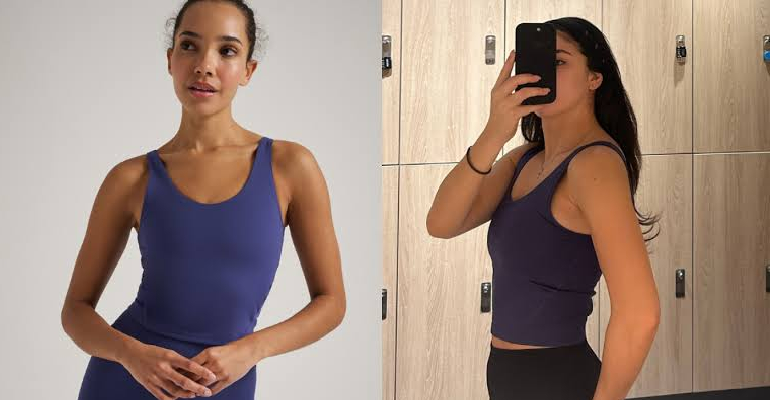
Gymshark has grown from a screen-printing operation out of a Birmingham garage to one of the most recognized activewear brands in the world. The growth trajectory is genuinely impressive and the brand’s marketing — built primarily through fitness influencer partnerships before influencer marketing was mainstream — is well-studied in business schools. What the marketing success tells you nothing about is whether the products are good. Here’s what a year of wearing them actually produces as an assessment. The fabric quality — where Gymshark actually is in the market Gymshark occupies the space between fast fashion activewear and premium activewear. Their fabrics are meaningfully better than H&M Sport or ASOS Activewear equivalents — more structured, better-constructed, more resistant to pilling — and meaningfully less premium than Lululemon or Alo equivalents. This positioning is reflected in their pricing ($35-65 for most pieces) and it’s accurate positioning. The Seamless range is their strongest product category. The Vital Seamless, Energy Seamless, and newer iterations use a knitted construction without seams in high-friction areas that reduces the chafing and pressure point issues that badly placed seams in cut-and-sew construction create. The seamless construction also produces a second-skin fit that’s flattering in most body types. The Adapt collection uses a different construction — a printed pattern on an engineered mesh that mimics the visual complexity of marbling — that photographs extremely well and performs adequately for gym use. It’s more of an aesthetic product than a performance product. Durability — what happens after a year After twelve months of regular wearing and washing (cold, inside out, no dryer — standard activewear care), the Seamless pieces show slight pilling at the inner thigh — less than I’d expect from H&M equivalents, more than I’d expect from Lululemon or Girlfriend Collective equivalents. The waistbands have maintained their position and haven’t stretched out significantly, which is a more important durability metric than most reviews address — a waistband that relaxes within six months is a functional failure regardless of how the fabric otherwise holds up. The colors have held through washing without significant fading, which is not universal in mid-market activewear. Sizing — the honest guide Gymshark sizing runs slightly smaller than some brands, particularly in the leggings. Reviews consistently note that the Seamless pieces benefit from sizing up if you’re between sizes. The High Waisted leggings run true to size but the Core leggings run small. The size guide on their website is accurate for most people — using the measurements rather than the size labels is the correct approach.
Best Travel Bags for Carry-On Only Travel — How to Never Check a Bag Again
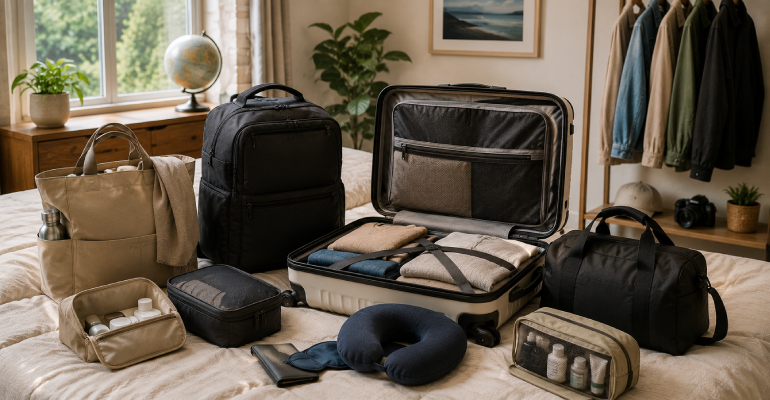
Checking a bag is a tax. Not primarily a financial tax, though the fees are real — a time tax, an energy tax, a uncertainty tax. Waiting at baggage claim after a long flight when you could already be in a taxi. The specific anxiety of watching a carousel turn for fifteen minutes wondering if your bag made the connection. The occasional reality of it not having made the connection. Carry-on only travel solves all of this and is achievable for trips of most lengths with the right approach and the right equipment. The approach matters as much as the bag, which is why this review covers both. The carry-on bag that justifies its price — Away Carry-On The Away Carry-On costs $295 and has become the reference standard for carry-on luggage in the direct-to-consumer market for genuine reasons. The polycarbonate hard shell flexes rather than cracking under the compression of overhead bin storage. The four-wheel spinner system is the smoothest in its price range — the difference between wheels that roll effortlessly and wheels that stick or vibrate is one of those travel differences that sounds minor and is experienced as significant across hours of transit. The interior compression system — a built-in divider that compresses the clothing side of the case — genuinely helps fit more in the bag than the volume would suggest. The laundry bag (packaged in the compression panel) is a useful organizational tool for separating clean from worn. The Away’s ejectable battery option (available in some models, check compliance before traveling as regulations have changed) has been more controversial than useful for most travelers. The non-battery version is the simpler choice. The lifetime warranty on the shell and wheels is backed by a customer service team that has a reputation for honoring it. Bags that develop cracks or wheel issues get replaced. This changes the long-term value calculation significantly. The personal item bag — the second bag that doubles your packing capacity Airlines allow one carry-on and one personal item. The personal item — which must fit under the seat in front of you — is typically 18x14x8 inches or similar depending on the airline. This is significant volume that most travelers underuse. The Aer City Pack Pro ($189) and the Cotopaxi Allpa 28L ($180) are the two personal item bags most consistently recommended by people who travel frequently and have thought carefully about this problem. Both are structured enough to hold their shape when packed, have clamshell opening for easy access, and are sized to maximize personal item allowance across most airlines. A well-chosen personal item bag effectively doubles the packing capacity of carry-on only travel. Laptop, camera, day bag essentials in the personal item; clothing and toiletries in the carry-on. Two-week trips become genuinely achievable without checking. The packing approach that makes carry-on only work for any length trip The formula that works: plan seven days of outfits, pack for seven days, do laundry once if the trip is longer. Most hotels have laundry service. Most Airbnbs have a washing machine. Most destinations have a laundromat. The mental barrier to doing laundry mid-trip is usually larger than the practical barrier. The clothing selection for carry-on only travel: every item must work with at least three other items in the bag. Pieces that only work with one specific other piece — the statement blazer that only goes with the specific trousers — don’t earn their space. Every clothing item in a carry-on should be a versatile piece in a working mini-wardrobe. Merino wool is the fabric most recommended by people who travel carry-on only seriously. It resists odor, meaning it can be worn multiple times between washings without performance degradation, it packs without wrinkling, and it regulates temperature across a range of conditions. A merino t-shirt worn twice before washing takes up half the space of two cotton t-shirts worn once each. Rolling versus folding: rolling is more space-efficient for most garments. Structured pieces (blazers, shirts with structured collars) pack better folded flat. Compression cubes add meaningful structure to a soft bag and allow compression of clothing that would otherwise expand into irregularly shaped space.
How to Declutter Without Regretting It Later

Decluttering advice tends toward the extreme. Either the Marie Kondo approach — hold every object, ask if it sparks joy, discard everything that doesn’t — which produces genuinely useful clarity for some people and anxiety-driven mass disposal that leaves others buying back things they regret giving away. Or the “if you haven’t used it in a year, get rid of it” rule, which would eliminate a significant portion of most people’s functional possessions including seasonal items, sentimental objects, and things used infrequently but genuinely needed when used. The decluttering approach that produces lasting results with minimal regret is more nuanced and less dramatic than either of these prescriptions. The question that works better than “does this spark joy” The “spark joy” framework fails for objects whose purpose is function rather than feeling. A hammer doesn’t spark joy. A spare set of batteries doesn’t spark joy. A backup power bank doesn’t spark joy. None of these should be discarded on the grounds that they fail an emotional test they were never designed to pass. The question that works across both functional and non-functional categories: “Would I buy this again today?” This question cuts through the sunk cost feeling that makes decluttering difficult — the sense that having paid for something obligates you to keep it regardless of whether it’s serving you. If the honest answer to “would I buy this today” is no, the object is costing you space and mental attention without providing equivalent value in return. The one-in-one-out principle that prevents re-accumulation Decluttering produces a clean state. Without a principle for maintaining that clean state, the accumulation process resumes and you’re back to the same situation within a year. The one-in-one-out principle — for every new object that enters a space, one existing object leaves — prevents net accumulation without requiring constant reassessment. Applied to clothing specifically: every new clothing purchase triggers the removal of one existing item. This produces both a consideration effect (you think harder about new purchases when they have a concrete cost in existing wardrobe space) and a continuous editing function (the least-useful pieces leave regularly rather than accumulating indefinitely). What to do with sentimental items — the hardest category Sentimental objects resist every decluttering framework because they’re not kept for function or for everyday use — they’re kept for what they represent. The letter from a person no longer in your life. The object from a place with specific significance. The thing that belonged to someone who has died. The honest position: these objects deserve different treatment than functional clutter. The question isn’t whether to keep them — you probably should if they’re meaningful — but whether they’re displayed and appreciated or stored and forgotten. A meaningful object in a box in a storage unit is neither being kept nor being released. It’s occupying a middle state that serves neither you nor the object. Creating deliberate space for meaningful objects — a memory box with intentional selection of what goes in it, rather than accumulated storage — produces a relationship with sentimental items that’s clearer and more sustainable than either keeping everything or attempting to release things that aren’t ready to be released. The room-by-room approach that prevents overwhelm Decluttering the entire home in a weekend is the approach that produces exhaustion, poor decisions under time pressure, and either regret about what was discarded or retreat from the project before it’s complete. The room-by-room approach — one room, one session, one category — produces more considered decisions and sustainable momentum. Kitchen first, for most people, because the kitchen contains the highest proportion of duplicates, unused items, and “in case” objects that take up space without serving a genuine function. Most kitchens contain at least one set of duplicate items (the rarely-used mug collection, the appliance replaced but never discarded) and multiple impulse purchases that seemed useful and weren’t. Clothes second because the volume is high, the categories are clear (keep, donate, discard), and the post-declutter clarity is immediately visible in a wardrobe that’s easier to use. Books, papers, and sentimental items last, because they require the most consideration and are most likely to produce decision fatigue if approached when energy is already depleted.