HOME | Fashion | Beauty | Home Furnishing | Comparison | Top Reviews |

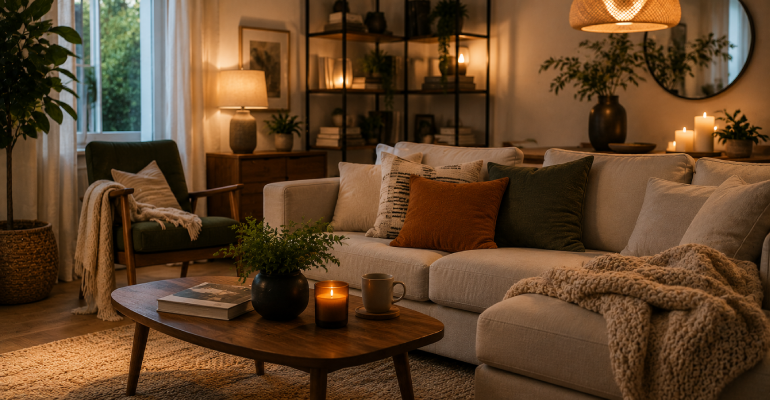
There’s a version of this topic that’s about aesthetics — the right rug, the right plants, the right lighting. And aesthetics matter, genuinely, in ways that are not superficial. But the home environment that genuinely supports wellbeing and produces the specific feeling of wanting to come back to it operates on several levels simultaneously, some of which are aesthetic and some of which are not.
The home that functions as a refuge rather than just as shelter has specific qualities that are reproducible regardless of the size, location, or budget of the space.
The research on domestic environment and stress is consistent: visual clutter produces cognitive load and elevated cortisol (stress hormone) levels. The brain processes every visible object as a potential task or decision, and a visually cluttered environment produces a continuous low-level cognitive demand that depletes mental energy over time.
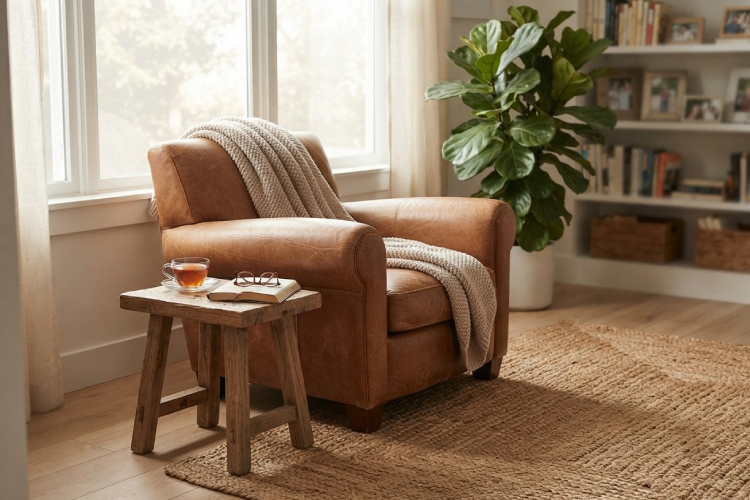
This is why hotels feel different from most people’s homes: the visual field is clear, surfaces are free of accumulated objects, and the environment makes no demands beyond the very simple demands of existing in it. Reproducing this in a personal space doesn’t require minimalism — it requires a system for dealing with the objects that accumulate and a consistent practice of returning them to their places.
The practical implementation: twenty minutes of tidying before sleep, returning everything to its designated place, produces a morning in which the environment is clear before the day’s accumulation begins. The twenty minutes before sleep is less costly than the morning experience of starting the day in a disordered space.
The olfactory system has a more direct neural connection to the emotional and memory centers of the brain than any other sense. This is why smell is the most powerful sense for triggering memory and why scent is one of the fastest routes to changing how a space feels emotionally.
A consistent home scent — a reed diffuser, a regularly burned candle in a consistent fragrance, a room spray used at specific times — becomes associated with the home environment through repetition and eventually triggers the emotional state of being home through association. This is what high-end hotels are doing with their signature scents and why it works.
The scents that tend to produce calm and reduced stress according to both anecdotal evidence and modest research: lavender (the most extensively studied), cedarwood, sandalwood, vetiver, and vanilla. These are not universal — individual scent associations vary based on personal history — but they’re the starting point for most people.
The home that doesn’t have functional separation between work, rest, and leisure blurs the psychological boundaries between these states in ways that make rest harder to access. Working from a laptop on the sofa makes the sofa a work space; the body and brain begin to associate the sofa with the cognitive demands of work rather than the physiological state of rest. This is the specific mechanism behind why people who work from home report difficulty relaxing in their own homes.
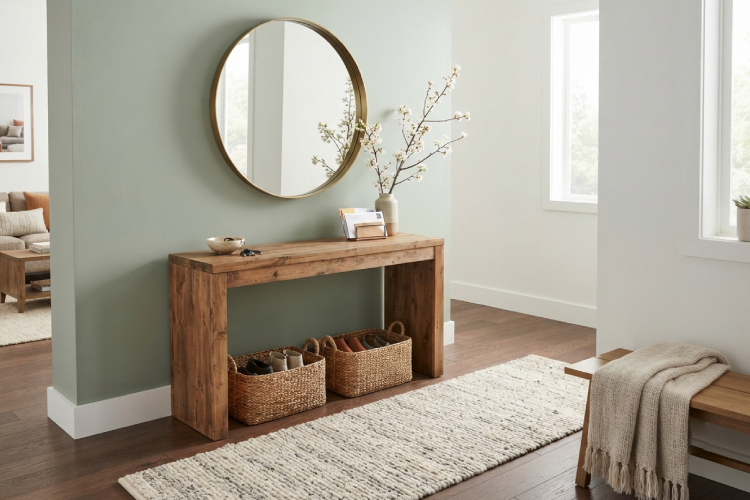
Creating physical separation between work and rest — even a dedicated desk that’s specifically work space, distinct from where you eat, relax, and sleep — preserves the boundary between these states. At the end of the work day, leaving the work space physically and not returning to it until the next work day is the behavioral practice that reinforces the psychological boundary.
In very small spaces where physical separation isn’t possible, ritual separation serves the same function: packing away the work laptop at the end of the day, changing clothes, a consistent “end of work” activity that signals the transition from work mode to home mode.
Natural light matters more than any artificial lighting decision. Maximizing natural light in a space — clean windows, light-colored walls that reflect rather than absorb, furniture arranged to not block window areas — produces measurable effects on mood and circadian rhythm regulation. The winter light limitation in higher latitudes is real and a SAD (Seasonal Affective Disorder) light therapy lamp (10,000 lux, used for twenty to thirty minutes each morning) is one of the most evidence-supported mood interventions available for people who experience winter low mood.
Sound is consistently underconsidered in domestic environments. The specific quality of sound in a room — how it absorbs or reflects, whether background noise is present and of what type — affects stress levels and concentration. Soft furnishings (rugs, curtains, upholstered furniture) absorb sound and reduce the slightly anxious acoustic quality of hard surfaces in empty rooms. White noise or nature sounds (rain, birdsong) at low volume mask irregular intrusive noise that produces more stress than continuous background sound.
Sound is consistently underconsidered in domestic environments. The specific quality of sound in a room — how it absorbs or reflects, whether background noise is present and of what type — affects stress levels and concentration. Soft furnishings (rugs, curtains, upholstered furniture) absorb sound and reduce the slightly anxious acoustic quality of hard surfaces in empty rooms. White noise or nature sounds (rain, birdsong) at low volume mask irregular intrusive noise that produces more stress than continuous background sound.