HOME | Fashion | Beauty | Home Furnishing | Comparison | Top Reviews |
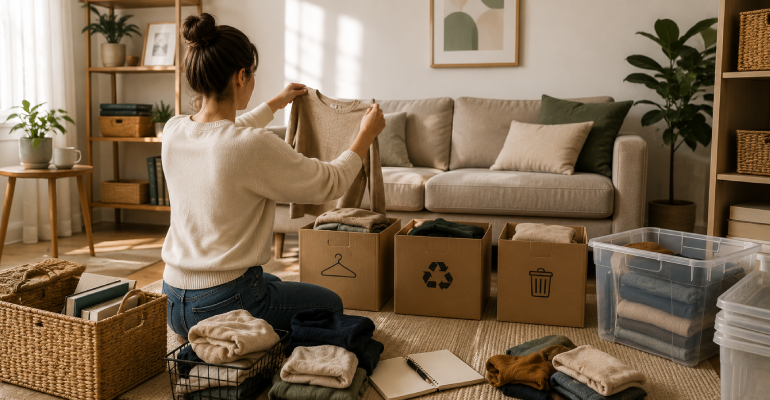
Decluttering advice tends toward the extreme. Either the Marie Kondo approach — hold every object, ask if it sparks joy, discard everything that doesn’t — which produces genuinely useful clarity for some people and anxiety-driven mass disposal that leaves others buying back things they regret giving away. Or the “if you haven’t used it in a year, get rid of it” rule, which would eliminate a significant portion of most people’s functional possessions including seasonal items, sentimental objects, and things used infrequently but genuinely needed when used.
The decluttering approach that produces lasting results with minimal regret is more nuanced and less dramatic than either of these prescriptions.
The “spark joy” framework fails for objects whose purpose is function rather than feeling. A hammer doesn’t spark joy. A spare set of batteries doesn’t spark joy. A backup power bank doesn’t spark joy. None of these should be discarded on the grounds that they fail an emotional test they were never designed to pass.
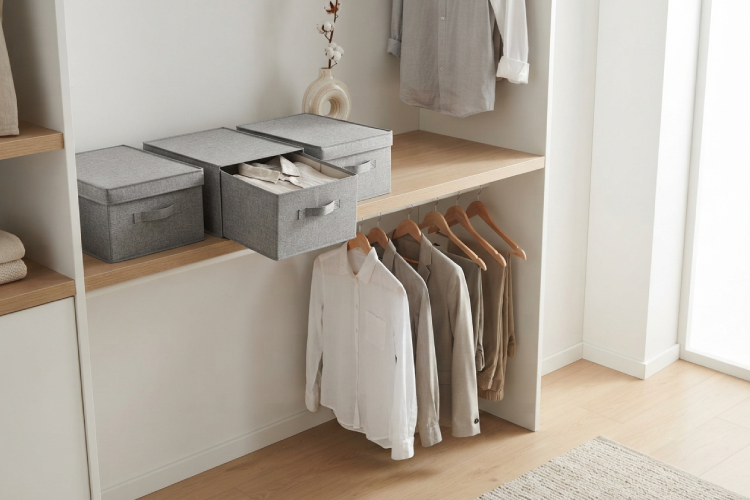
The question that works across both functional and non-functional categories: “Would I buy this again today?” This question cuts through the sunk cost feeling that makes decluttering difficult — the sense that having paid for something obligates you to keep it regardless of whether it’s serving you. If the honest answer to “would I buy this today” is no, the object is costing you space and mental attention without providing equivalent value in return.
Decluttering produces a clean state. Without a principle for maintaining that clean state, the accumulation process resumes and you’re back to the same situation within a year. The one-in-one-out principle — for every new object that enters a space, one existing object leaves — prevents net accumulation without requiring constant reassessment.
Applied to clothing specifically: every new clothing purchase triggers the removal of one existing item. This produces both a consideration effect (you think harder about new purchases when they have a concrete cost in existing wardrobe space) and a continuous editing function (the least-useful pieces leave regularly rather than accumulating indefinitely).
Sentimental objects resist every decluttering framework because they’re not kept for function or for everyday use — they’re kept for what they represent. The letter from a person no longer in your life. The object from a place with specific significance. The thing that belonged to someone who has died.
The honest position: these objects deserve different treatment than functional clutter. The question isn’t whether to keep them — you probably should if they’re meaningful — but whether they’re displayed and appreciated or stored and forgotten. A meaningful object in a box in a storage unit is neither being kept nor being released. It’s occupying a middle state that serves neither you nor the object.
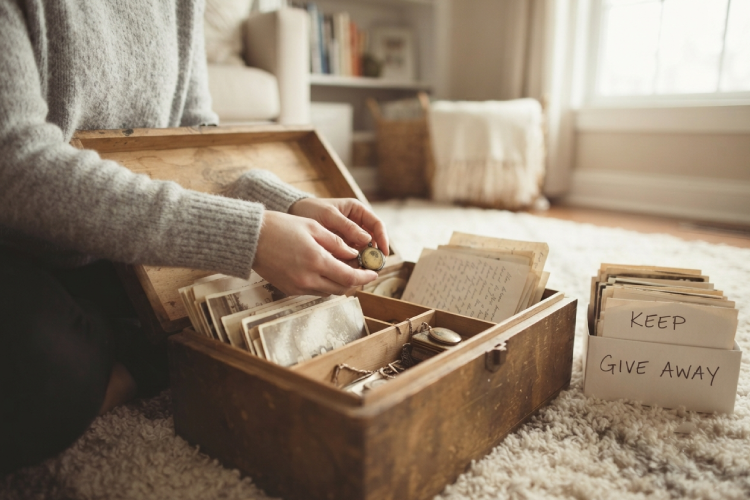
Creating deliberate space for meaningful objects — a memory box with intentional selection of what goes in it, rather than accumulated storage — produces a relationship with sentimental items that’s clearer and more sustainable than either keeping everything or attempting to release things that aren’t ready to be released.
Decluttering the entire home in a weekend is the approach that produces exhaustion, poor decisions under time pressure, and either regret about what was discarded or retreat from the project before it’s complete. The room-by-room approach — one room, one session, one category — produces more considered decisions and sustainable momentum.
Kitchen first, for most people, because the kitchen contains the highest proportion of duplicates, unused items, and “in case” objects that take up space without serving a genuine function. Most kitchens contain at least one set of duplicate items (the rarely-used mug collection, the appliance replaced but never discarded) and multiple impulse purchases that seemed useful and weren’t.
Clothes second because the volume is high, the categories are clear (keep, donate, discard), and the post-declutter clarity is immediately visible in a wardrobe that’s easier to use.
Books, papers, and sentimental items last, because they require the most consideration and are most likely to produce decision fatigue if approached when energy is already depleted.