HOME | Fashion | Beauty | Home Furnishing | Comparison | Top Reviews |

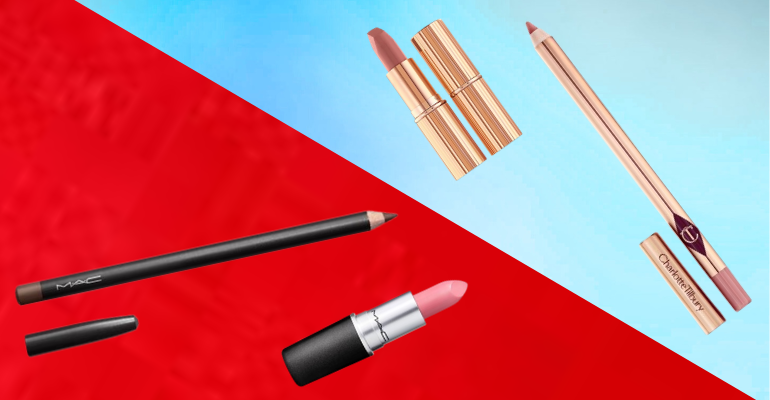
I’ve been wearing makeup long enough to have gone through phases with both of these brands. The MAC phase in my early twenties when a Studio Fix foundation was the answer to every skin question I had. The Charlotte Tilbury phase that started when someone handed me a sample of Flawless Filter and I immediately understood what the fuss was about.
They’re both professional-quality brands. They’re both expensive. They’re both genuinely good at what they do. But they’re designed for different people with different relationships with makeup, and choosing the wrong one for your priorities is how you end up with a beautiful product that sits in a drawer.
MAC was founded in Toronto in 1984 by Frank Toskan and Frank Angelo. The brand’s origin was professional — it was created for photographers and makeup artists who needed products that performed under lights and cameras. The professional heritage is embedded in the product philosophy: formulations designed for maximum performance, wide shade ranges that cover genuine skin diversity, and a product line structured around the technical requirements of makeup artistry rather than the aspirational lifestyle marketing that most beauty brands lead with.
Charlotte Tilbury launched in 2013 after its founder had spent decades as a celebrity makeup artist whose client list was as impressive as anyone in the industry. The brand philosophy is overtly glamorous — every product is named after a look or an idea, the packaging is a specific shade of rose gold that’s immediately identifiable, and the whole experience is built around the aspiration of looking like someone who knows the secrets that a high-end makeup artist knows. Charlotte Tilbury’s marketing is some of the best in beauty because Tilbury herself is a genuinely charismatic presence who communicates not just what the products do but how they’re supposed to make you feel.
These different origins produce genuinely different products.
MAC’s Studio Fix line is one of the most reliably reviewed foundations in professional makeup. The coverage is buildable from medium to full, the shade range is one of the most comprehensive available, and the formula holds up under conditions — photography, events, long days — in a way that reflects the professional origin. The finish is matte, which is right for some skin types and wrong for others, and there are enough variations within the MAC foundation range (Face and Body for sheerer coverage, Pro Longwear for maximum durability, Studio Radiance for more glow) that most skin types find a version that works.
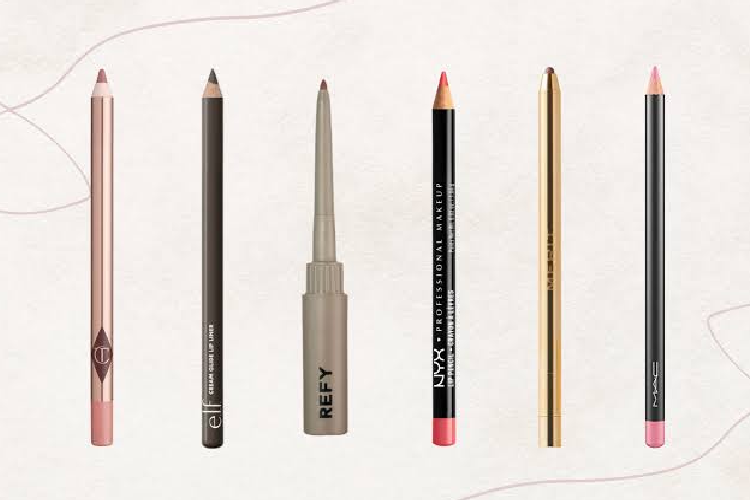
Charlotte Tilbury’s Beautiful Skin Foundation is a different product doing a different thing. The coverage is lighter — medium buildable, not full coverage without layering. The finish is radiant in a way that reads as skin rather than makeup, which is the specific effect Charlotte Tilbury has spent her career creating for clients. The shade range has improved significantly since launch but is still narrower than MAC’s.
The honest comparison: MAC for full coverage performance, durability under challenging conditions, and the widest shade range. Charlotte Tilbury for a luminous, skin-like finish that looks like very good skin rather than very good coverage.
Charlotte Tilbury’s Flawless Filter is the product that most clearly represents what the brand does that MAC doesn’t. It’s a primer, filter, and light coverage product that can be worn alone or under foundation. The effect is a specific kind of radiance — a lit-from-within glow that doesn’t read as shimmer or highlight but as skin that’s genuinely healthy and rested.
There is no direct MAC equivalent to Flawless Filter. MAC makes excellent primers and highlighters but they’re not trying to do what Flawless Filter does. For the specific effect of looking like you’ve slept well and have good skin even when you haven’t and don’t, Flawless Filter is the product. This is not a comparison where MAC wins on the same terms — they’re not trying for the same result.
MAC’s lipstick range is legendary and deservedly so. The Matte collection covers an enormous range of shades with a formula that’s consistent across colors and delivers the coverage and staying power that the professional heritage suggests. MAC’s Ruby Woo remains one of the most reliably perfect blue-red matte lipsticks available despite being decades old.
Charlotte Tilbury’s Matte Revolution lipstick is genuinely excellent in a different way — the formula is more comfortable on the lips than MAC’s matte, trading some of the maximum coverage for wearability, and the shade selection is curated rather than comprehensive. The Pillow Talk family of shades has become iconic in a way that’s genuinely earned — it photographs beautifully on an extraordinary range of skin tones and lip shapes.
MAC is slightly more accessible than Charlotte Tilbury across comparable products. Foundation at MAC runs £27-35. Charlotte Tilbury runs £34-42. Lipstick at MAC: £19-22. Charlotte Tilbury: £27-32.
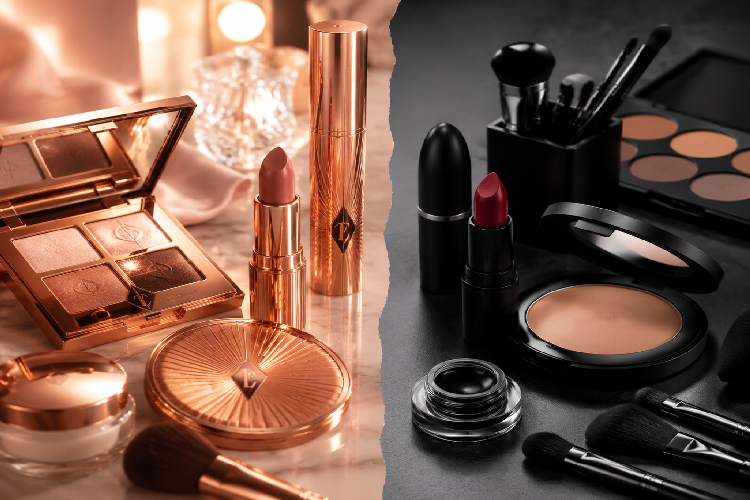
Both brands are genuinely premium. Neither is cheap. But if budget within the premium tier is a consideration, MAC typically offers slightly more product for the money.
Buy MAC if: shade range is a priority (particularly for darker skin tones where Charlotte Tilbury’s range, though improved, is still not MAC’s equal), you want maximum performance and coverage, you’re interested in professional makeup techniques, or you want the widest possible selection within a category.
Buy Charlotte Tilbury if: the luminous skin-like finish is the effect you want, you specifically want the Flawless Filter experience, you prioritize the overall brand experience and aesthetic, or you’re shopping for something that will photograph particularly beautifully.
Use both: MAC for workhorse products where performance is the primary requirement, Charlotte Tilbury for the specific products it does better than anyone else.