
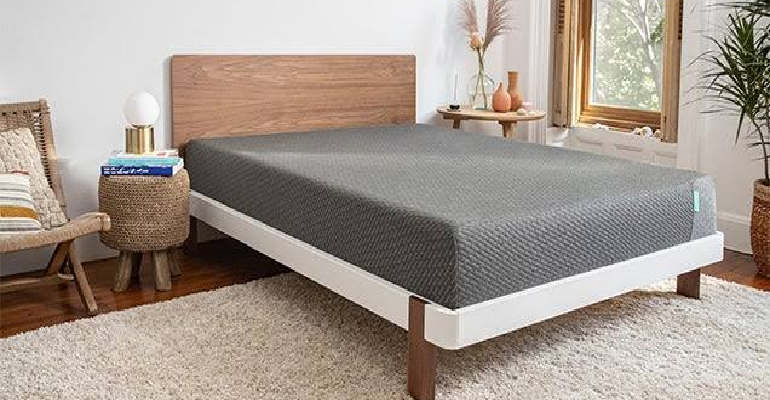
In 2012, when Tuft & Needle launched with a single foam mattress sold directly to consumers at $350 for a Queen, it was doing something that the mattress industry had structured itself to prevent: removing every intermediary between the manufacturer and the buyer and charging only for what the mattress actually cost to make and ship. The result was not a cheap mattress. It was an honest one — a foam product whose comfort, pressure relief, and durability were documented as competitive with conventional mattresses at two and three times the price, delivered in a box to your door with a 100-night trial before the concept was standard practice in the industry.
Twelve years later, Tuft & Needle is owned by Serta Simmons Bedding — one of the largest conventional mattress manufacturers in the world — and the DTC mattress category it helped create has produced dozens of competitors, most of whom have adopted the direct-to-consumer model, the bed-in-a-box delivery, and the free trial period that Tuft & Needle established as category norms. The honest 2026 question is not whether Tuft & Needle is a good mattress. It is whether it remains a distinctive one, and what specifically justifies choosing it over the Nectar, Casper, and Helix alternatives that the category it pioneered has produced.
The most important positive evidence in 2026 is specific: Consumer Reports’ 2025 mattress owner satisfaction survey placed the Tuft & Needle Original in its top three for value-for-money among foam mattresses — a survey-based finding from actual owners that documents the mattress as delivering genuine satisfaction relative to its price point, which at $695 for a Queen remains among the most competitive in the DTC foam category. The most important negative evidence is equally specific: a documented pattern in multiple 2025 Trustpilot and Reddit accounts of body impressions developing in the T&N Adaptive foam within two to three years of daily use — not catastrophic sagging, but visible indentations at regular sleeping positions that multiple buyers describe as beginning to affect their sleep quality and that are documented at a frequency suggesting a foam durability timeline shorter than buyers at this price point expect.
✅ Consumer Reports 2025 top three for value-for-money among foam mattresses — a survey-based finding from actual owners documenting genuine satisfaction relative to the $695 Queen price point, not a first-impression marketing claim
✅ T&N Adaptive foam independently documented as providing better pressure relief than standard memory foam at temperature — multiple accounts of buyers who ran hot on memory foam alternatives describing T&N Adaptive as meaningfully cooler without sacrificing the pressure relief that made memory foam attractive
✅ 100-night trial confirmed as operational and genuinely frictionless — multiple accounts of full refund processing within 7–10 business days after trial period return initiation, without disputes or retention attempts
✅ 10-year warranty confirmed as active and responsive — accounts of Tuft & Needle proactively addressing sagging claims that meet their documented criteria without requiring buyers to navigate complex claims processes
✅ Price at $695 for a Queen is among the most competitive in the DTC foam mattress category — Casper Original at $1,095 and Purple at $1,299 are the most directly comparable alternatives at meaningfully higher prices
✅ Tuft & Needle Mint layer adds graphite and cooling gel to the T&N Adaptive base, specifically praised for hot sleeper performance in multiple independent accounts
✅ Available at Target, Amazon, and Home Depot alongside direct purchase — a retail availability breadth that allows in-store inspection before online ordering, a specific advantage over DTC-only alternatives
❌ Body impression pattern documented in multiple 2025 owner accounts at two to three years of daily use — visible indentations at regular sleeping positions that some owners describe as beginning to affect sleep quality before the 10-year warranty’s sagging threshold is officially met
❌ The 10-year warranty’s sagging threshold is documented at 1.5 inches of visible indentation — a threshold that multiple owners describe as higher than the level at which sleep quality begins to be affected, meaning real-world sleep disruption from body impressions can precede the warranty’s actionable threshold
❌ The T&N Original at $695 is now priced competitively with Nectar at $699 and within $100 of DreamCloud at $899 — both of which carry hybrid construction options that provide better edge support and motion isolation than the T&N foam at comparable price points
❌ Edge support documented as weak in multiple accounts — buyers who sit on the mattress edge or sleep near the edge describe significant compression that is a category-wide foam characteristic but is more pronounced in the T&N than in hybrid alternatives at comparable prices
❌ Motion isolation is good but not exceptional — buyers whose primary concern is motion transfer from a partner specifically note that dedicated motion-isolation memory foam alternatives perform better at the same price tier
❌ Tuft & Needle’s Serta Simmons ownership is documented as a concern among buyers who valued the brand’s original independent ethos — not a product quality concern but a brand identity shift that matters to a specific buyer demographic
This review draws on Consumer Reports’ 2025 mattress owner satisfaction survey, Trustpilot’s Tuft & Needle review record, Reddit’s r/Mattress community (the most active independent mattress evaluation forum), Sleep Foundation’s 2025 mattress category review, and Tuft & Needle’s own published foam specifications, warranty documentation, and trial terms. No commercial relationship with Tuft & Needle or Serta Simmons Bedding. No affiliate link influences any rating or conclusion in this review.
Tuft & Needle was founded in 2012 in Phoenix, Arizona by JT Marino and Daehee Park, two software engineers who bought a mattress together on a $500 budget, found the retail experience dishonest and the product disappointing, and built a company to solve the problem. The original Tuft & Needle mattress — a two-layer foam mattress using the brand’s proprietary T&N Adaptive foam — launched at $350 for a Queen and established the company as the most visible early example of the DTC mattress category. The brand was acquired by Serta Simmons Bedding in 2018, a transaction that has been noted in coverage since as changing the brand’s independent status while leaving its product line largely intact.
The current product range covers the T&N Original (two-layer foam, $595–$695 for Queen depending on current pricing), the T&N Mint (three-layer foam with graphite and gel additions, $895–$995), and the T&N Hybrid (foam plus pocketed coil construction, $1,295–$1,495). All three ship directly to consumers in a compressed box with a 100-night trial and a 10-year warranty.
T&N Adaptive foam is Tuft & Needle’s proprietary formulation, and the specific properties it was engineered to address are worth documenting precisely because they explain both the product’s appeal and its limitations. Standard memory foam responds to heat and pressure — it softens under body warmth and conforms to body shape, providing excellent pressure relief but also tending to retain heat and to create the “stuck” feeling that hot sleepers and active sleepers specifically dislike. T&N Adaptive foam was formulated to provide pressure relief comparable to memory foam while being more temperature-neutral and more responsive to movement — it springs back more quickly when position changes, and it does not warm and soften in the way that heat-activated memory foam does.
The documented outcome of this formulation in buyer accounts is specific: buyers who had slept hot on memory foam alternatives describe the T&N as meaningfully cooler without sacrificing the pressure relief that had made memory foam attractive in the first place. This is a real engineering achievement rather than a marketing distinction, and the Consumer Reports top three value ranking in the owner satisfaction survey reflects buyers who received this specific benefit at the $695 price point.
The Mint version adds a graphite-infused layer and a gel pod layer to the T&N Adaptive base — both of which are documented as enhancing the temperature-neutral performance further. Multiple hot sleeper accounts specifically credit the Mint’s three-layer construction with producing a cooler sleeping surface than the Original, and Sleep Foundation’s 2025 category review specifically mentioned the Mint as the most temperature-neutral foam option in the under-$1,000 price range.
The body impression pattern documented in multiple 2025 owner accounts requires direct, honest treatment because it is the most consequential evidence for buyers making a long-term sleep investment rather than a short-term purchase decision. The documented pattern is this: buyers who purchased T&N Original mattresses in 2021 and 2022 — four and five years into their ownership at the time of writing — describe visible body impressions at their regular sleeping positions that they specifically note are affecting their sleep quality. The impressions are not at the 1.5-inch threshold that Tuft & Needle’s warranty requires for a sagging claim — they are at a shallower depth that is nonetheless visible and that multiple buyers describe as producing the pressure point and support issues that motivated their original mattress purchase.
This is the specific limitation that the T&N warranty’s 1.5-inch sagging threshold creates: real-world sleep quality degradation from body impressions can precede the threshold at which the warranty becomes actionable. Buyers whose mattress develops body impressions at 0.5–0.8 inches — visible to the eye and felt in sleep but below the 1.5-inch threshold — are not covered by the warranty while also not receiving the sleep quality they purchased. This is documented in owner accounts as a source of genuine frustration, and it is an honest limitation of foam mattresses at this density level that buyers should understand before committing to a 10-year ownership expectation.
The practical implication for buyers is specific: T&N mattresses are well-documented for three to four years of quality sleep. The evidence for five-to-ten-year performance is more mixed, and buyers who are specifically purchasing for long-term value should compare the T&N’s documented durability trajectory against hybrid alternatives — Helix Midnight at $999, DreamCloud at $899 — whose coil construction provides a different and potentially more durable long-term support profile.
Tuft & Needle’s original value proposition was specific and dramatic: better sleep for less money than the retail mattress market could provide, delivered directly to consumers who had been paying for showrooms, commission salespeople, and multi-level distribution margins. That proposition was genuinely transformative in 2012 because it was genuinely unique. In 2026, it is the category standard rather than a competitive advantage. Every significant DTC mattress brand offers direct-to-consumer delivery, a generous trial period, and competitive pricing. The question for Tuft & Needle in 2026 is not whether it is better than the conventional retail alternatives it was founded to disrupt — it is whether it is better than Nectar, DreamCloud, Helix, and Saatva, all of whom are competing in the same direct-to-consumer space at overlapping price points.
Consumer Reports’ top three value ranking is the most useful single piece of evidence for this comparison, and it suggests that the T&N Original continues to deliver genuine satisfaction at its price point. But the $695 price is now within $4 of Nectar’s Queen price, and Nectar offers a longer trial period (365 nights versus 100), the same lifetime warranty category but at higher stated coverage, and a comparable foam construction. The T&N Original’s specific advantages over Nectar are the T&N Adaptive foam’s temperature-neutral properties and Tuft & Needle’s longer brand track record. These are real advantages but they are narrower than the advantages that made Tuft & Needle’s 2012 launch distinctive.
The edge support weakness in the T&N Original and Mint is a foam category characteristic rather than a Tuft & Needle-specific fault, but it is documented with enough frequency in buyer accounts to note as a genuine limitation rather than a minor inconvenience. Buyers who sit on the edge of the mattress or who sleep near the edge describe significant compression that reduces the effective sleeping surface relative to the mattress’s dimensions. For a couple who sleeps toward the edges of their bed — or for a single sleeper who stretches across the full width — this is a real daily use constraint that hybrid alternatives with perimeter coil reinforcement address more effectively.
Motion isolation is documented as good rather than exceptional — better than innerspring alternatives and comparable to other foam options in the price range, but not the dedicated motion-isolation performance that deeper memory foam achieves. Buyers whose primary concern is motion transfer from a partner specifically note this in accounts comparing the T&N to Nectar, where the deeper and softer memory foam layer produces noticeably better motion dampening.
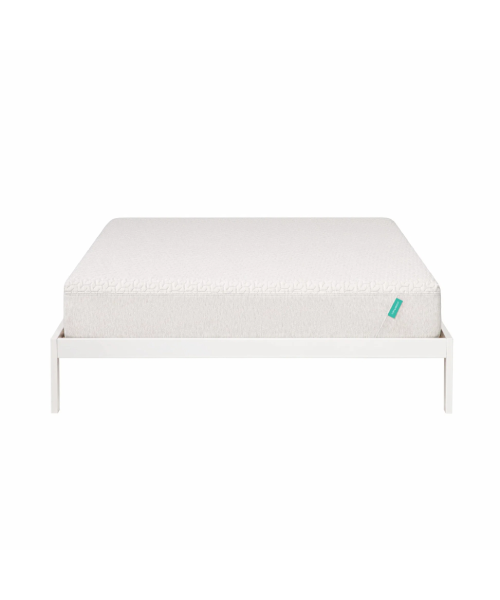
The Original is the foundational recommendation and the product with the deepest and most longitudinally extensive owner evidence. The two-layer T&N Adaptive foam construction, the temperature-neutral properties, and the 100-night trial all make this a reasonable purchase for buyers whose primary criteria are foam pressure relief, temperature neutrality, and price competitiveness in the DTC category. The honest caveats at purchase: the body impression evidence at three to four years of daily use is documented and real, edge support is limited, and the competitive landscape has narrowed the Original’s advantages relative to 2012. Buy it knowing the long-term durability context and with the 100-night trial actively used — sleep on it for 90 nights before making a final decision rather than committing on the first week.
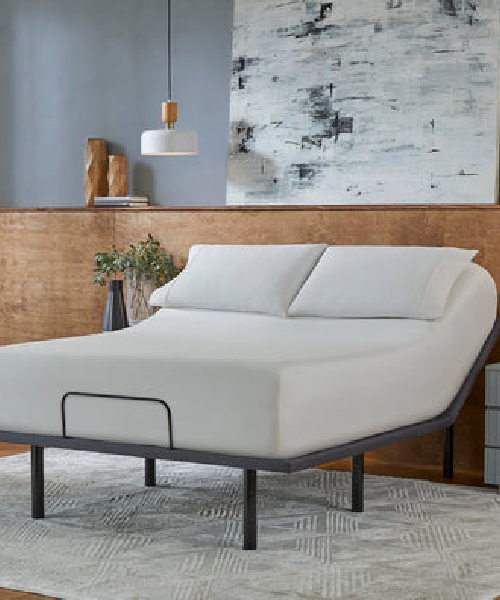
The Mint is the recommendation specifically for hot sleepers who want T&N’s documented pressure relief performance with enhanced temperature management. The three-layer construction — T&N Adaptive base plus graphite layer plus gel pod layer — produces the most temperature-neutral sleeping surface in the T&N range and is documented in multiple hot sleeper accounts as delivering materially cooler sleep than the Original. At $300 more than the Original, the Mint premium is specifically justified by the temperature management enhancement for hot sleepers; for buyers who do not run hot or who have not experienced heat retention as a sleep quality issue, the Original’s $695 price point is the better-value choice.
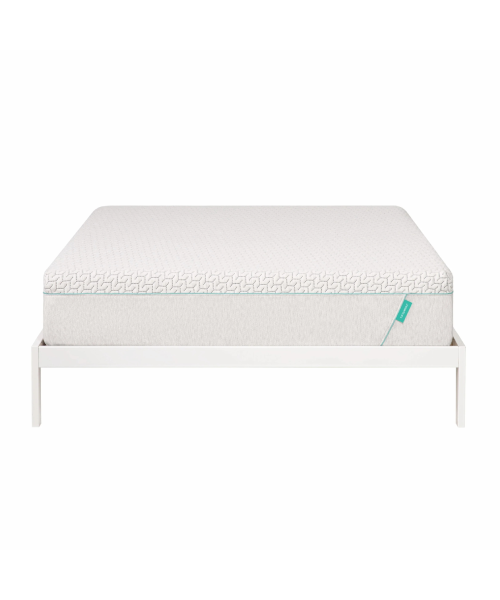
The Hybrid adds a pocketed coil layer beneath the T&N Adaptive foam, addressing the two most documented limitations of the foam-only models: edge support and long-term durability. The coil construction provides perimeter edge support that the foam-only versions lack, and the steel coil layer’s structural integrity is documented as more durable than foam alone over a five-to-ten-year ownership period. At $1,295, the Hybrid is priced above Helix Midnight at $999 and within range of DreamCloud at $899 — a price tier where the comparison should be made directly before choosing Hybrid over these alternatives. The T&N Hybrid’s advantage is T&N Adaptive foam’s temperature-neutral properties applied to a hybrid construction; its disadvantage is that it is the most expensive T&N product in a price tier where well-reviewed alternatives are available at lower cost.
A Consumer Reports survey participant whose account was included in the brand’s 2025 mattress value assessment described purchasing a T&N Original in 2021, sleeping on it for four years, and describing it as “the best sleep-per-dollar product I’ve bought — not the most luxurious mattress I’ve ever slept on, but the mattress that most improved my sleep relative to what I paid for it.”
A buyer writing on Reddit’s r/Mattress in February 2026 described their T&N Original purchased in 2022 — now in its fourth year — with visible body impressions at both sleeping positions that they described as “not deep enough to claim under warranty but definitely there, and definitely affecting how I feel in the morning. I expected more from a mattress I paid $700 for.” They described being advised by Tuft & Needle that the impressions needed to reach 1.5 inches for a warranty claim and expressing frustration that the threshold was higher than their experienced sleep quality degradation.
A buyer writing on Trustpilot in March 2026 described a 100-night trial return initiated at night 87 — specifically praising the return process as the most frictionless large-item return they had experienced, with the mattress pickup scheduled within five days of the return request and the refund processed within eight business days of pickup.
A hot sleeper writing on Trustpilot in January 2026 described switching from a memory foam alternative to the T&N Mint and describing the temperature difference as “the first night I’ve slept through without waking up overheated in two years — not subtle, genuinely significant, and I noticed it the first night.”
A buyer writing on Reddit’s r/Mattress in November 2025 described the T&N Original’s edge support as “the thing that surprised me most negatively — I knew foam mattresses had edge support limitations but the T&N drops off more than I expected at the perimeter and that affects where I can comfortably sit and sleep on the mattress.”
A long-term owner writing on Trustpilot in April 2026 described their T&N Original purchased in 2019 — now in its seventh year — as “still functional and still comfortable enough” but noting that they had added a two-inch topper in year five to supplement what they described as “noticeably reduced support at the hip and shoulder positions where I’ve always slept.” They described this as an additional cost they had not anticipated and would factor into any future mattress purchase decision.
For buyers who want foam pressure relief with better temperature neutrality than standard memory foam, at the most competitive price in the DTC category, with a genuinely frictionless 100-night trial: yes — the Consumer Reports value ranking and the T&N Adaptive foam’s temperature-neutral documentation support the purchase for the right buyer at the right price.
For buyers who are making a five-to-ten year investment and whose primary criterion is long-term durability: the body impression evidence at three to four years of daily use is documented specifically enough to recommend comparing the T&N Original against the T&N Hybrid or against Helix Midnight and DreamCloud, both of which offer hybrid construction at comparable or lower prices with a coil layer that provides a different and potentially more durable long-term support profile.
For buyers who are comparing T&N Original against Nectar at essentially the same price: the comparison should be made specifically. Nectar offers a longer trial (365 nights versus 100), deeper memory foam for buyers who prioritise motion isolation, and comparable construction at the same price. T&N Adaptive foam offers better temperature neutrality and a longer brand track record. The decision depends on which specific property matters more.
For buyers considering the T&N Hybrid as a premium tier purchase: compare directly against Helix Midnight at $999 before committing at $1,295. Helix offers comparable hybrid construction, a more extensive independent review base, and stronger edge support documentation at $300 less.
T&N Original | T&N Mint | Casper Original | Nectar | DreamCloud | Helix Midnight | |
Type | Foam (2-layer) | Foam (3-layer, cooling) | Foam + zoned support | Memory foam | Hybrid | Hybrid |
Queen price | $695 | $995 | $1,095 | $699 | $899 | $999 |
Trial period | 100 nights | 100 nights | 100 nights | 365 nights | 365 nights | 100 nights |
Warranty | 10 years | 10 years | 10 years | Lifetime | Lifetime | 10 years |
CR 2025 value ranking | ✅ Top 3 foam | — | — | Good | Good | ✅ Strong |
Temperature neutrality | ✅ Better than memory foam | ✅ Best in T&N range | Good | ❌ Runs warmer | Good | ✅ Good |
Body impression evidence (3–4yr) | ❌ Documented pattern | Similar | Similar | Similar | Less documented | ✅ Better (hybrid) |
Edge support | ❌ Weak (foam) | ❌ Weak (foam) | Moderate | ❌ Weak | ✅ Better (hybrid) | ✅ Good (hybrid) |
Motion isolation | Good | Good | ✅ Strong | ✅ Strong | ✅ Good | Good |
Best for | Value foam, temp neutral | Hot sleepers | Zoned pressure relief | Value + long trial | Value hybrid | Hybrid quality |
tuftandneedle.com — direct, with the 100-night trial and 10-year warranty. Also available at Target, Amazon, and Home Depot for buyers who want to see the mattress in person before purchasing — specifically useful for buyers who want to assess the firmness level before committing, as the T&N Original’s medium firmness is documented as feeling firmer than average initially and softening slightly over the first 30–60 days of use.
The 100-night trial is the most important consumer protection to use actively rather than passively — sleep on the mattress for at least 60 nights before making a final assessment, as multiple accounts describe the first few weeks of impression as different from the settled experience at two months.
For buyers in the comparison-shopping phase: the r/Mattress community’s recommendation algorithm and the Consumer Reports mattress category tool are both documented as useful for structured comparison between T&N and the hybrid alternatives at comparable prices before a decision is made.
Yes — Consumer Reports’ 2025 top three value ranking for foam mattresses documents genuine owner satisfaction at the price point. The body impression evidence at three to four years of daily use is the honest long-term qualification on that positive finding.
Owner accounts document three to four years of consistently good sleep, with body impressions beginning to develop at this point in daily-use accounts. The 10-year warranty threshold of 1.5-inch sagging means warranty claims are available for severe sagging, but real-world sleep quality degradation from body impressions can precede that threshold.
The T&N Adaptive foam’s pressure relief is specifically documented as beneficial for side sleepers at the shoulder and hip — the two pressure points most affected by insufficient contouring in firmer mattresses. The body impression documentation concentrates at these same points, which is the honest long-term durability context for this specific sleeping position.
T&N Original at $695 versus Casper Original at $1,095 — a $400 price difference at comparable foam construction quality. Consumer Reports’ value ranking suggests T&N delivers competitive satisfaction at its lower price. Casper’s zoned support layer provides targeted pressure relief that T&N’s uniform foam does not, a specific advantage for buyers whose pressure point profile benefits from zoned construction.
The T&N Original is documented as more temperature-neutral than standard memory foam — a specific advantage for buyers who have run hot on memory foam alternatives. The T&N Mint enhances this further with graphite and gel additions. For the most demanding hot sleeper needs, the Mint’s documented temperature performance is the specific T&N recommendation.
100-night trial with free mattress removal — documented as genuinely frictionless in multiple accounts. Initiate the return before night 100 and confirm the pickup scheduling process for your area.
No — acquired by Serta Simmons Bedding in 2018. The product line has been maintained largely intact since the acquisition, but the brand is no longer the independent company it was at founding.
Tuft & Needle made a specific, genuine contribution to how consumers buy and experience mattresses — and the product that made that contribution, the T&N Original, continues to deliver documented value at a competitive price in a category it helped create. The Consumer Reports value ranking is honest evidence of genuine owner satisfaction. The T&N Adaptive foam’s temperature-neutral properties are a real and specific quality differentiator from standard memory foam.
The honest 2026 assessment requires acknowledging that the competitive landscape has caught up significantly, that the body impression evidence at three to four years is documented specifically enough to be a genuine long-term durability consideration, and that buyers comparing T&N at $695 against Nectar at $699 or DreamCloud at $899 are making a comparison between much more equal alternatives than any comparison the original 2012 Tuft & Needle faced.
Buy the T&N Original if temperature-neutral foam at the most competitive DTC price with a genuine trial period is what you specifically want. Buy the Mint if you specifically run hot. Consider the Hybrid if long-term durability is the primary criterion — and compare it directly against Helix Midnight at $300 less before committing. Use the 100-night trial actively. And approach the 10-year warranty’s sagging threshold with realistic expectations about what it covers relative to what you might experience.
Category | Score |
Foam Pressure Relief | 8.5 / 10 |
Temperature Neutrality (Original) | 8.0 / 10 |
Temperature Neutrality (Mint) | 9.0 / 10 |
Body Impression Durability (3–4yr) | 6.0 / 10 |
Edge Support | 5.5 / 10 |
Motion Isolation | 7.5 / 10 |
100-Night Trial Experience | 9.5 / 10 |
Value at $695 | 8.5 / 10 |
Overall | 7.8 / 10 |