Those who tried to find good outdoor clothing have definitely encountered Patagonia. The brand gained its reputation by producing technical outdoor equipment, quality clothing, concern for the environment, and pragmatic design.
However, one has to raise another very natural question after that: is Patagonia worth the money?
Patagonia items are never sold as the cheapest one. You can spend several times more on a fleece than you can spend on a regular one. Similarly, insulated and waterproof jackets may cost hundreds of dollars. Therefore, one might think that he or she pays not for the quality, but just for the name.
We also paid special attention to some of Patagonia’s well-known products, such as the Better Sweater Fleece Jacket, Nano Puff Jacket, Torrentshell 3L Rain Jacket, and Down Sweater Hoody.
Our verdict can be considered quite obvious – Patagonia is a legitimate brand and produces quality products, although not all items from Patagonia are necessarily of equal value. In general, the brand is most suitable if one needs a product for extensive usage and would like to pay extra for materials, durability, and overall lifetime of the product.
Patagonia holds an interesting place in the world of outdoor clothing brands. It does not manufacture specialized equipment for climbers, but at the same time, it stands far apart from conventional clothing.
Indeed, despite the fact that Patagonia products were initially designed for outdoor use, they have become commonplace clothing nowadays. Indeed, the same Patagonia jacket may be used both when hiking up a mountain and during work or travel on the following day. The same goes for products such as Nano Puff or Better Sweater.
Versatility is one of Patagonia’s main advantages.
However, Patagonia is also famous for another feature, which sets it aside from other outdoor clothing manufacturers – Patagonia’s commitment to environmental issues. Patagonia claims that its business philosophy was influenced by environmental concerns for decades, and in 2022, founder Yvon Chouinard transferred his company’s ownership to a new organization which was supposed to spend profits not invested back into business on environmental protection.
But it does not necessarily mean that every Patagonia garment is an example of perfect environmental performance. First of all, any outdoor clothing involves the use of raw materials, production processes, delivery and later discarding. The company claims that its environmental footprint is still considerable and it continues to try to reduce it.
Therefore, instead of relying on its good name only, we decided to analyze the products.
The history of Patagonia is linked to the activity of climbing, not fashion.
The founder of Patagonia Yvon Chouinard discovered the passion for climbing during his teenage years. By the 1950s, he started producing climbing gear himself after buying a used forge and other blacksmithing equipment. He produced climbing pitons that he sold to other climbers.
In 1965, Yvon Chouinard established the company “Chouinard Equipment” together with Tom Frost. Gradually the business was growing stronger selling climbing gear, but its own products became a threat to the environment in the future.
The traditional pitons were hammered into rocks and pulled off again damaging the climbing routes. Therefore, the founders of the company switched to producing reusable aluminum chocks that did not need hammering. It was a commercial risk but it expressed the philosophy of Patagonia, according to which product design has to take into account its impact on the environment.
Patagonia itself was created in 1973, developing from the business related to climbing equipment. According to the official company’s history, it started as a small company based on climbing equipment, quality of goods, and connection with nature.
In the course of time, however, the company developed and became known as a manufacturer of outdoor clothes.
The next important step was taken in 1996, when the company decided to go over to 100% organic cotton, which was reached by the end of the year.
Nowadays Patagonia produces various items of outdoor clothing: fleece jackets, insulated jackets, rain shells, pants, shirts, technical clothing, packs, and other outdoor accessories.
The interesting thing is that the initial philosophy of the company is rather evident in the products of today. Patagonia pays attention to durability of the products, their repairability, recycling and production of clothing, not just replacing it with new seasonal clothes.
1. Real Outdoor History
The biggest benefit that Patagonia has is that it actually originated in the field of outdoor performance.
Its products have been built on issues such as insulation, weather resistance, packing, moisture management, and mobility.
It is precisely this reason why Patagonia attracts many hikers, travelers, climbers, campers and people who spend much time outdoors.
2. Durability of Products
Patagonia focuses on durability of its products.
The company supports this through repair and exchange programs. For example, Patagonia tries to encourage people to fix their products instead of replacing them, as well as its program Worn Wear, which allows exchanging eligible used clothing and packs for credit.
3. Recycled and Reduced Impact Materials
A wide range of Patagonia products incorporate recycled materials.
For instance, the current Better Sweater product incorporates 100% recycled polyester, whereas Nano Puff has recycled polyester both in its shell and lining and in its recycled synthetic insulation.
The Torrentshell 3L product, on the other hand, has a recycled waterproof breathable face fabric and is free of added PFAS in its fabric, membrane, and DWR finish.
4. Fair Trade Manufacturing
Patagonia recognizes Fair Trade Certified factories across many of its products.
This does not imply that all processes in the supply chain of any particular product are inherently flawless, but it is definitely a part of the company’s overall supply chain approach.
5. Post-Purchase Service and Guarantee Support
One of the greatest selling points of Patagonia lies in what comes after purchasing one of its products.

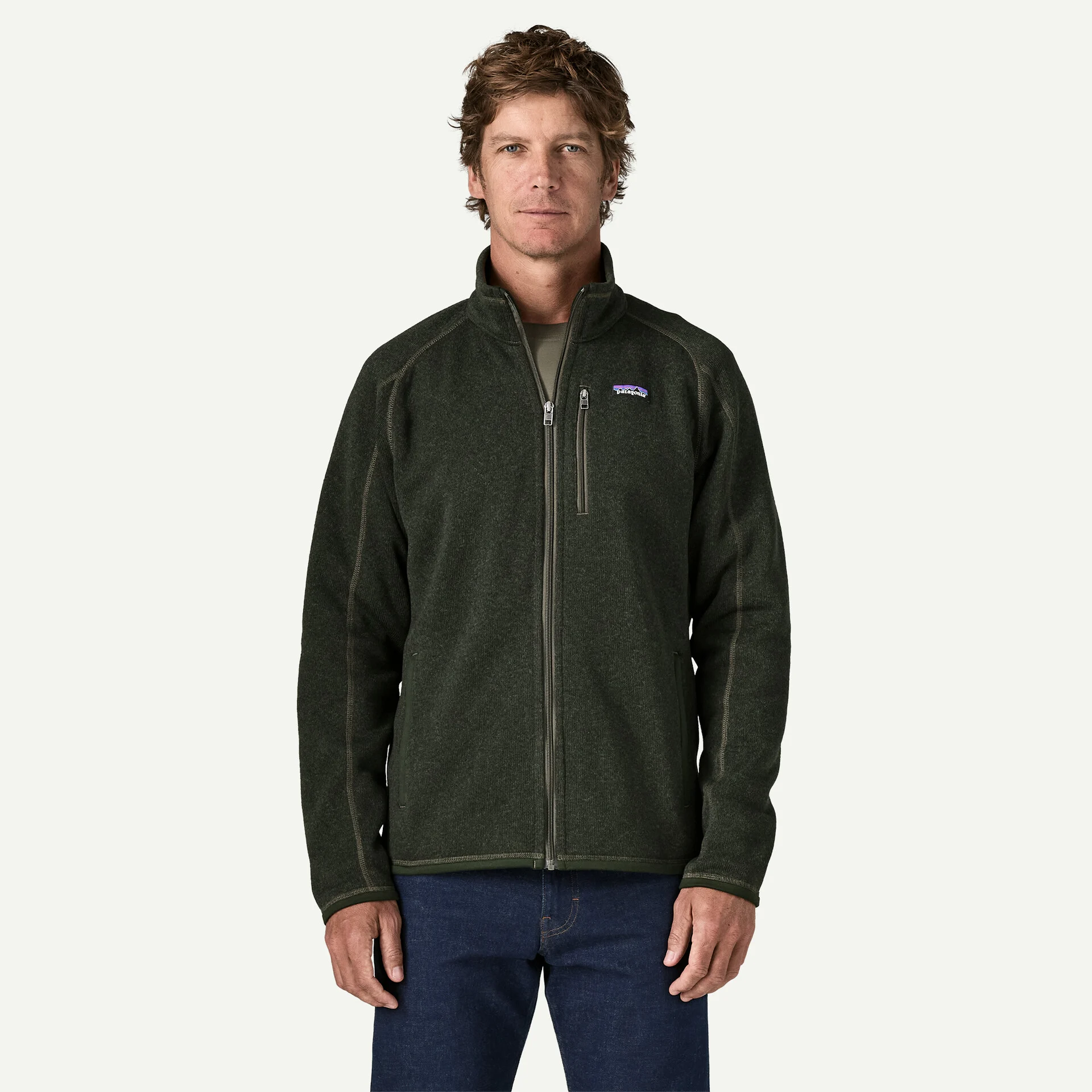
This is possibly one of the most identifiable fleece products from Patagonia.
At first sight, it certainly does not have the appearance of an extremely technical outdoor jacket. The jacket looks like a sweater with fleece material. This is one of its strong points since it can be used as outdoor gear without appearing extremely technical.
The men’s version currently available is made from 100% recycled polyester sweater-knit fleece. It has a full zip, a stand-up collar, handwarmer zippered pockets, and a security chest pocket.
Better Sweater is geared towards warmth and functionality in day-to-day wear.
It has a soft and comfy feeling of a fleece inside and a more sophisticated look of a sweater knit outside.
It is the right choice for casual wear and outdoor activities.
It offers great mid-layer insulation, but it must not be mistaken for an extremely insulated winter jacket.
If it’s cold outside, then the Better Sweater will definitely come in handy when worn under a shell or insulated outerwear.
Durability is one of the major advantages of the product. According to the manufacturer, the fleece is highly durable and was created to withstand numerous uses.
The Better Sweater is somewhat heavy in comparison to lightweight technical fleece. The Better Sweater may not be the best choice for those looking for something light and packable.
The price tag can also be tough to justify if all you’re after is an ordinary fleece for everyday use.
Rating: 4.5/5
If you would like a good compromise between your outdoor needs and fashion, you should definitely consider the Better Sweater. It is especially suitable for traveling or if you expect to wear it often.
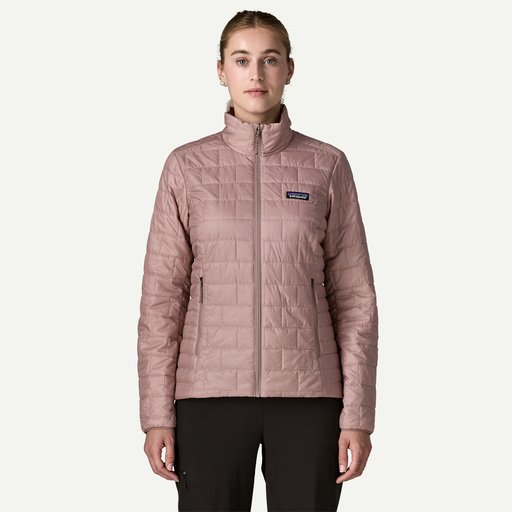
The Nano Puff is among the most popular insulated jackets from Patagonia.
Unlike the regular down jacket, the Nano Puff has been made using PrimaLoft Gold Insulation Eco, which is a synthetic material. The latest design of the Nano Puff has insulation and a shell made from 100% post-consumer recycled polyester.
Nano Puff is meant to be used as an insulation jacket.
Since it features synthetic insulation, it can come in handy when one is faced with wet conditions, since synthetic insulation does not work like down insulation in such situations.
This makes it a good choice for hiking or traveling.
Packability is yet another strength point.
This item is easy to pack, which is very convenient for people who like to travel and hike and need an insulating layer that will stay in their backpack.
The Nano Puff is water-resistant and not a replacement for a waterproof rain jacket.
It has a recycled polyester exterior that features a DWR finish to repel light moisture.
However, for heavy rains, you will need a waterproof jacket over it.
Being quite lightweight, it must be considered technical clothing, not some kind of bombproof shell.
The most appropriate application is that it is warm, lightweight, and packable.
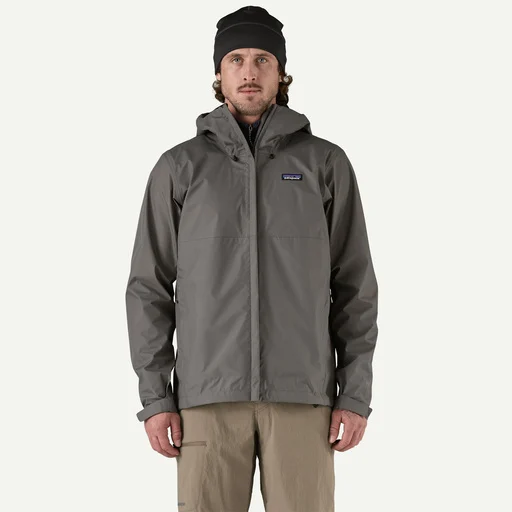
The Torrentshell 3L is intended for those who want real protection from the rain rather than just water repellence.
The current iteration from Patagonia features a three-layer H2No Performance Standard waterproof-breathable shell. Patagonia states that the fabric, membrane, and DWR treatment are made without any PFAS chemicals added.
Waterproofing is the main purpose of the Torrentshell.
Unlike an insulated jacket that only offers water repellency, this one is designed to be a true rain jacket.
Waterproof clothing presents an inherent compromise between keeping rain outside and letting internal moisture out.
This is the idea behind the design of the Torrentshell with its three-layer design while retaining waterproof durability.
The Torrentshell isn’t only used for serious hikes.
It also works well for commuting, travels, and everyday rain, especially for those who would like to have a jacket to use for years to come.
It should be noted that Patagonia has made efforts to keep the design relatively simple. It is not a fashion-oriented but rather functional jacket.
In this way, it can easily go with insulation layers underneath.
Currently, the men's Torrentshell has a rating of 4.4/5 with over 400 customer reviews at the Patagonia website, while the women's jacket is also rated well.
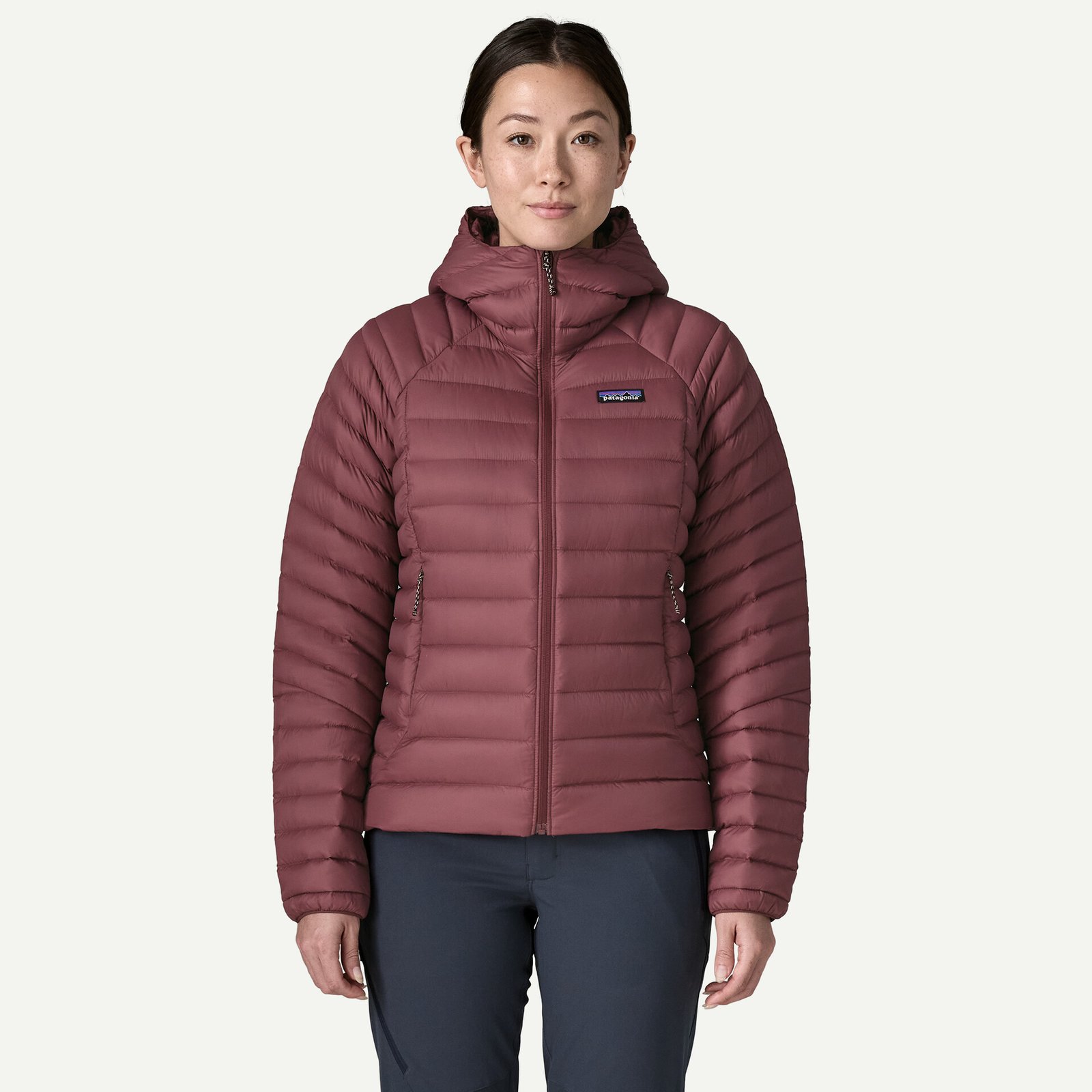
The Down Sweater Hoody falls towards the top end of the Patagonia line of everyday insulated jackets.
It currently employs 800-fill-power Responsible Down Standard down with a NetPlus 100% postconsumer recycled nylon ripstop outer material. The product is designated by Patagonia as Fair Trade Certified and bluesign approved.
There is only one major reason to buy a down jacket; that is its excellent ratio of warmth to weight.
This particular down jacket delivers warmth without having the weight of a standard winter coat.
It is also fairly easy to compress and pack, which makes it appealing for traveling and outdoor use.
This garment is meant to withstand wind and small amounts of moisture; however, this is, after all, a down jacket, and not a waterproof shell.
Therefore, in case of heavy rain and/or wet snow, you should be better off wearing a water-repellent garment.
Current customer feedback proves a vital point – even top rated high-end products have some drawbacks.
One recent verified user said how warm and high-performing this jacket is at high altitude, but another customer complained about down shedding. One customer liked this light product but was unhappy with the hood and neckline size.
This variety of customer feedback should be taken into account before purchasing.
A proper brand review must not be just a repetition of the company’s marketing promises.
The following were among the factors that we used for reviewing Patagonia:
In addition to the positive customer ratings, we considered the negative ratings too.
For instance, current Patagonia reviews have complaints about fit, hood construction, and material change/durability along with praise for the comfort and performance.
Yes, Patagonia is a legitimate brand.
Patagonia is a reputable outdoor company that was established in 1973 with a lot of history in climbing and outdoor gear. Their products are available on their own website and through their store network.
Also, there are some other features that distinguish Patagonia from suspicious online stores.
The company has information about the technical characteristics of their products, customer review system, customer support services, return/exchange policy and repair/trade-ins.
Their website also contains information about legal terms and a Privacy Notice with details of how customers’ information is handled.
However, this doesn’t mean that every customer will get all the necessary features. The availability of products, sizes, delivery, return and product effectiveness may differ.
This is where the answer depends more on the individual person.
Yes, it is for the right consumer.
If you are looking for cheap clothes, then maybe not.
You can always find cheaper fleece jackets, rain jackets and insulated parkas in various brands.
However, if you consider the following aspects:
Then Patagonia makes more sense.
A more realistic way of evaluating Patagonia prices is the cost of use.
A fleece jacket at $169 that will become your go-to jacket for a few years might actually prove more economical than cheaper fleeces that will get replaced more often.
The official website of Patagonia offers reviews by verified buyers and other users, so potential customers can read about the quality of particular items.
In general, highly popular items get positive scores.
For instance, the current men’s Better Sweater got 4.4/5 score with more than 1,100 reviews, while the men’s Nano Puff got approximately 4.6/5 score with more than 2,000 reviews. Men’s Torrentshell 3L got a 4.4/5 score with more than 400 reviews.
The feedback is not completely positive, and it is helpful in the evaluation of the brand.
Customer Preferences
The following are some popular features that customers love:
Possible Problems
Some complaints may vary from one product to another; however, they might include:
The shipping policy at Patagonia varies according to the country or regional website being used, and customers have to check the relevant shipping policies before making any purchases.
For instance, the UK Patagonia site states that orders worth over £90 qualify for free delivery service and that orders will be shipped within 1–2 business days.
In addition, Patagonia advises that customers choose standard shipping options to minimize their environmental impact.
There are different shipping rates, delivery times, carriers and other related details that are different according to the specific destination of your order.
For customers purchasing products from places other than the primary market locations of Patagonia, it is especially vital to verify the information on the regional website and during checkout prior to making a purchase.
The policy also says that the products are delivered by independent carriers and the risk of loss transfers to the customer when Patagonia delivers the goods to the carrier.
Patagonia offers a comprehensive privacy notice on how it gathers and uses any personal data.
From the privacy notice of Patagonia currently, it is evident that the kind of information gathered includes such as your name, email address, phone number, billing and shipping addresses, order information, payment information, reviews and customer service communication.
Such information can be used for such purposes as:
Patagonia also offers various options that customers have in regard to marketing emails, physical mail marketing and text messaging.
It is also important to note that from the privacy notice of Patagonia, it is stated that according to applicable law, it “sells” information like names, mailing address and purchase history to Epsilon for marketing mail purposes. It also offers an option for opting out.
The return policy of Patagonia is one of its best customer service strategies.
Patagonia’s present returns page not only enables the customers to return but also gives customers the ability to exchange, repair and trade the products. Patagonia claims that you can return products either online or take the product to one of the Patagonia stores owned by the brand.
Exchanges are also provided by Patagonia in case you order the wrong size or color; however, the applicable process provides free two-way shipping under the exchange process.
There could be additional procedures available depending upon the Patagonia regional websites. For instance, the information regarding Patagonia UK/EU claims that there are no time limitations on the return and will accept current and previous season products, as per the applicable policy.
Repairing
The repair services are one of the most important parts of Patagonia’s after-sale strategy.
Instead of asking customers to replace their damaged clothing, the company offers repair services to the customers.
Trade-In
The eligible used Patagonia clothing and backpacks can also be returned in trade for credits in Patagonia’s trade-in program.
Yes. Patagonia is generally regarded as a premium brand of outdoor products in categories such as fleece, insulated outerwear, rain gear, and technical outerwear.
It could very well be worth the money if you are someone who will use the product regularly and needs durability.
Yes. Patagonia is an established brand of outdoor gear that was founded in 1973 and has a robust retail presence with excellent service and review system.
Several factors influence the pricing of their product such as materials used in the making of the products, construction of the product, manufacturing standards and initiatives. But higher prices do not necessarily imply that all the products from Patagonia are the best options available for everyone.
In most cases, yes. Durable clothing is one of the key characteristics of Patagonia, which provides services related to repairs and re-use through its repair program and Worn Wear.
Certainly, Patagonia has made environmental sustainability one of the core elements of its business philosophy and uses recycled materials in most of its products. No apparel company can have zero environmental impact. Patagonia even recognizes the problem of its environmental footprint as a continuing issue.
Yes, Patagonia claims that everything it manufactures comes with a guarantee, giving customers the choice between repair, replacement or money back if the products fail to meet the requirements of its users.
Yes, because Patagonia gives customers an opportunity to make returns and also exchange their products. Terms may differ depending on the country.
Patagonia is especially famous for their fleece jackets, insulated jackets, rain shells, outdoor wear and environmental campaigning.
It's hard to say that there is one best jacket made by Patagonia which suits everybody. Nano Puff is good all-rounder, Torrentshell 3L is good in rainy weather, and Down Sweater Hoody is a good choice when you need a lightweight down insulation.
Taking into account the history of Patagonia, its products, the feedback from customers, materials used, policy and overall attitude, we believe that the answer is yes – with one condition.
Patagonia can be taken into consideration if you need outdoor clothing that is supposed to be worn many times without the need to purchase new one regularly.
What the best products of this company have in common is that they combine excellent performance and everyday use. For instance, the Better Sweater provides you with fleece insulation and comfort in wearing, whereas Nano Puff is focused on lightness and packability. Torrentshell is more specialized in providing you with waterproof protection, while the Down Sweater Hoody provides you with down insulation.
The main challenge here is price.
Simply put, if you just need a fleece jacket for some occasional use, buying Patagonia products at such prices would make no economic sense. There are numerous alternatives to those that will work fine.
However, if you go hiking, traveling, camping, commuting outdoors, or want to buy fewer yet higher-quality products, then the higher price tag from Patagonia will become quite reasonable.