
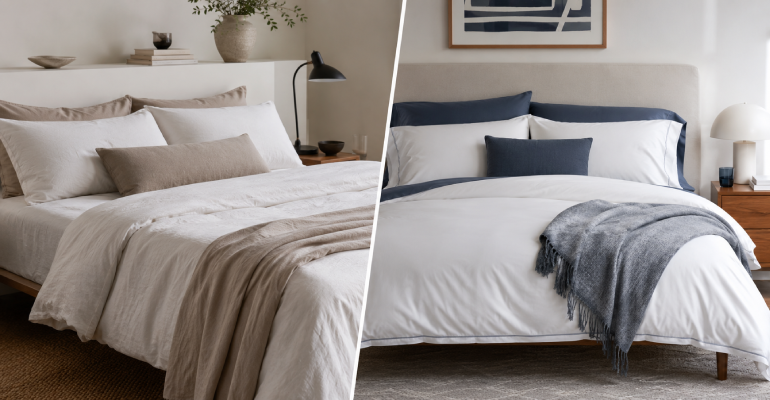
When I decided to upgrade my bedding I did what most people do. I looked at reviews online, found that every review mentioned the same two brands, and spent the next three hours going back and forth between the two websites trying to figure out which one to actually buy. I ended up buying both — not out of indecision, out of curiosity — and I’ve been sleeping on them in rotation for long enough now to know things that two hours of website comparison wouldn’t have told me.
The conclusion I’ll give you upfront, before the detail: both are genuinely good. But they’re genuinely good in different ways and the wrong choice for your specific sleeping habits is the wrong choice. This is the comparison that actually helps you figure out which is right for you.
Parachute makes a focused range of bedding built around a specific aesthetic philosophy — the kind of relaxed European linen-and-percale vibe that makes a bedroom feel effortlessly comfortable rather than precisely designed. The brand was founded in 2014 by Ariel Kaye specifically because she couldn’t find bedding she loved at a price that made sense. The origin story is relevant because it explains the product: she didn’t want to compromise on materials or markup through traditional retail, so she went direct-to-consumer and priced accordingly.
The core Parachute product is their percale sheet set. Percale is a specific weave — a simple one-over-one-under pattern that produces a fabric that’s crisp when new and softens with washing into something distinctly comfortable. It has a matte finish. It breathes well. It’s the weave that a lot of hotel sheets use because it has longevity.
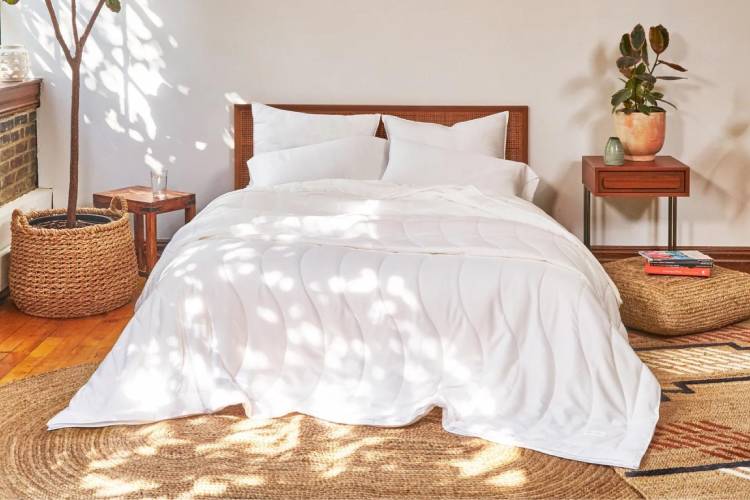
Brooklinen was founded in 2014 as well, also direct-to-consumer, also motivated by frustration with department store bedding prices. Where Brooklinen made a different bet is in range. Instead of building a focused product around one or two materials, Brooklinen built a broad range covering percale, sateen, linen, and various weights and constructions within each. The Classic Core sheets are their entry-level percale. The Luxe Core is sateen. The Linen Core is Belgian linen. There are options within each. The catalogue is wider than Parachute’s.
This difference — focused versus broad — is the most important structural difference between the brands and it affects how you should shop both of them.
Parachute’s Venice Percale has a specific quality that took me a while to describe accurately. When you first put them on the bed they feel very slightly rough — not unpleasant, but noticeably different from sateen, which is slippery-smooth right away. Within about three washes, the Venice percale begins to soften. By the sixth or seventh wash, it’s genuinely soft in a way that no longer resembles the just-purchased state. This is a fabric that improves.
I want to say this more directly: some fabrics from brands at this price point feel best new and gradually get less impressive. Parachute’s percale does the opposite. The 8-month-old sheets on my bed right now feel better than they did when I unboxed them. Not dramatically. But genuinely, noticeably, they’ve improved.
Brooklinen’s Classic Core percale is also genuinely good. The thread count (270) is lower than some brands’ flagship offerings, which sounds like a warning but isn’t — thread count stopped being a useful quality indicator a long time ago and Brooklinen’s weave construction is what actually matters. The Classic Core softens with washing as well, though in my experience slightly faster to soften and slightly less impressively at peak softness than the Parachute Venice sheets.
The Brooklinen Luxe Core — their sateen option — is a different product doing a different thing. Sateen has a silky, smooth surface texture that some people specifically want and other people find too slick. It’s shinier than percale, it drapes more heavily, and it doesn’t breathe as well because the weave is denser. If you’ve ever slept in a high-end hotel and loved the smooth silky feeling of the sheets, that’s likely sateen. The Luxe Core does sateen well at a price that’s reasonable for the quality.
This matters more than most bedding comparisons acknowledge.
Percale breathes better than sateen. This is a simple consequence of the weave — the looser construction of percale allows more air circulation through the fabric. For hot sleepers or anyone sleeping in a warm climate without consistent air conditioning, percale is meaningfully more comfortable than sateen.
Both Parachute and Brooklinen’s percale options breathe well. If you’re comparing the Parachute Venice percale to the Brooklinen Classic Core percale on pure breathability, they’re close enough that personal preference in feel matters more than any measurable temperature difference.
Where this comparison gets more useful is if you’re looking at Brooklinen’s Luxe sateen — that sheet is notably warmer than either percale option and genuinely not ideal for hot sleepers. It’s a great sheet for people who sleep cool, for winter, or for climates where warmth from bedding is welcome.
Brooklinen’s Linen Core brings linen into the picture, and linen is the warmth-neutral choice — it breathes even better than percale, handles temperature fluctuation well, and has a lived-in texture that either appeals to you immediately or doesn’t. Parachute makes linen too, and their linen is excellent, but it’s a separate product category from their core percale offering.
This is where long-term ownership produces insights that no initial review can.
Parachute’s Venice percale is holding up extremely well after eight months of regular washing. No pilling. The color hasn’t faded noticeably even through machine washing on cold with standard detergent. The hem stitching on the fitted sheet has remained intact — this is the area that typically shows stress first, and Parachute’s construction is holding.
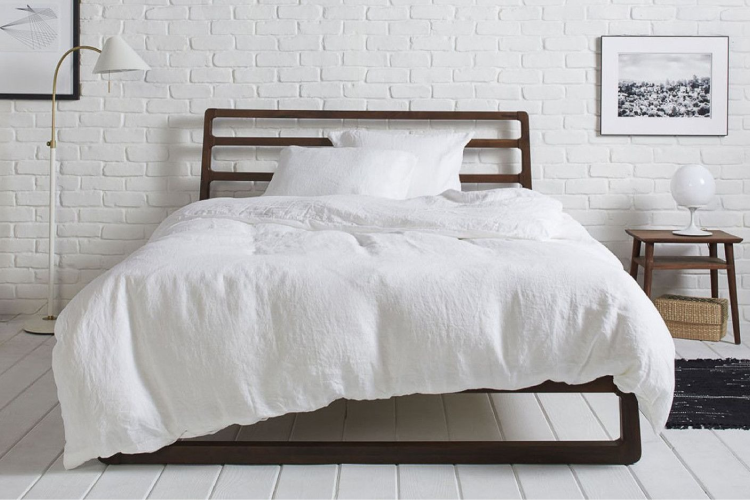
Brooklinen’s Classic Core after a comparable period is also holding up well, though I’ve noticed very slight pilling on the flat sheet along the areas of most friction. Not extensive. Not visually dramatic. But present in a way that the Parachute sheets haven’t shown. This could be specific to my washing machine, my detergent, my habits. It’s worth noting without overstating.
Parachute doesn’t do much in the way of loyalty or regular sale events. Their prices are what they are. They do seasonal promotions but not the kind of structured sale events that drive purchasing decisions.
Brooklinen does something called Loyalty that earns credits on purchases. More practically, they run fairly regular promotions and their sale events are genuine discounts on items that were reasonably priced to begin with. If you’re comparing two products at similar prices, the Brooklinen sale timing can make the decision for you.
Buy Parachute if: you want a focused, high-quality percale that gets better with washing, you sleep warm, you want the simplest version of the “upgrade your bedding” experience without navigating a large catalogue, and you’re happy paying slightly more for a flagship product from a brand that has stayed focused on doing one thing well.
Buy Brooklinen if: you want more options — different weaves, different weights, different feels at different price points. If you want the sateen experience. If you’re shopping for a gift and want more choices within a trusted brand. If you want a good percale at a lower entry price point than Parachute’s Venice.
The honest summary is that Parachute is the clearer recommendation for most people specifically because it requires fewer decisions and delivers consistently. Brooklinen is better for people who know what they want from bedding and want to find the specific construction that matches their specific preference.