There's a version of this review that ends with "it depends on your travel frequency" and leaves it there. That's technically accurate and practically useless. Here's the more honest version with actual conclusions.
What Nobl Travel Is Actually Selling
Nobl Travel is selling a different relationship with luggage. Not a better-looking version of what you already have — a different category of ownership experience.
Most luggage is designed to look good when you buy it and perform adequately for a few years. The business model depends on replacement cycles. A bag that fails in three years is a customer who buys another bag in three years. Durability is not in the interest of most luggage brands.
Nobl's business model requires the opposite. They're charging a premium on the promise that the bag holds up significantly better than the alternatives over a realistic ownership period. If it doesn't — if a Nobl bag ages at the same rate as a $295 Away bag — the price premium is unjustifiable and customers don't come back.
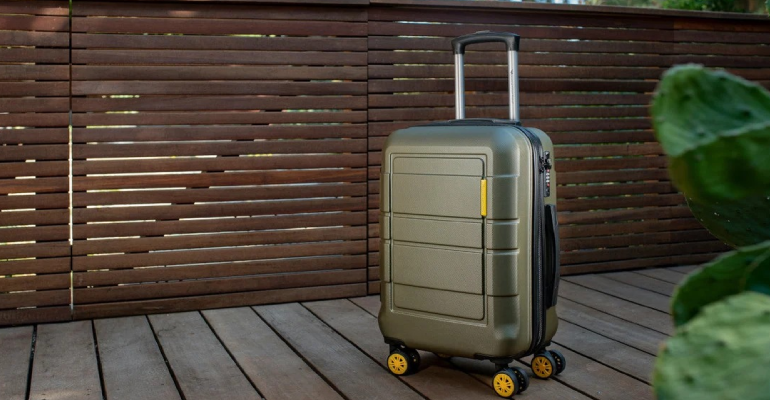
The materials choices they've made — ballistic nylon, aluminum frame, Hinomoto wheels — are not marketing language. They're construction decisions with real performance implications that show up with use. These materials cost more to source and work with than polycarbonate and standard wheel systems. The premium pricing reflects real cost of goods rather than purely brand markup.

The Honest Assessment of Who It's For
Frequent travelers — people taking 30 or more flights per year — are the clear target and the clear beneficiaries. At that volume, luggage quality compounds. A bag that shows no meaningful wear at year three of heavy use versus a bag that looks well-traveled at year three — that's a real difference in the ownership experience. The cost-per-trip math at high volume often makes Nobl comparable to or cheaper than cycling through polycarbonate alternatives.
Business travelers who care about how their luggage looks in professional contexts — the difference between arriving with a bag that looks composed versus a bag that reads as used matters in some professional contexts. A bag you're taking to client meetings doesn't just carry your clothes; it's part of how you present. The aesthetic aging difference between ballistic nylon and polycarbonate matters here.
People who've been on the luggage replacement cycle and are tired of it — who've bought the mid-range bag, watched it degrade in two to three years, bought another one, and are doing the math on what that costs over ten years. One Nobl bag over ten years at heavy use is a different economic proposition than three polycarbonate bags over the same period.
The Honest Assessment of Who It's Not For
Casual travelers taking four to eight trips per year who want a good-looking bag that performs well — Away and Monos are genuinely good products for this use case. They look great, they perform well at low to moderate volume, and the replacement cycle economics aren't painful enough to justify the Nobl premium.
Travelers whose primary concern is weight — on international carriers with strict carry-on weight limits, Nobl's ballistic nylon and aluminum frame adds weight that a polycarbonate alternative doesn't. If you're regularly bumping against weight limits, a lighter bag gives you more packing flexibility.
Travelers who need something available immediately — Nobl's online-only model with standard shipping means you can't buy one and have it next day for a trip this week. If your luggage just died and you're traveling Friday, Nobl isn't the answer this time.
The Price Question — Final Honest Take
Nobl is more expensive than Away and Monos. That's a fact. Whether it's worth more depends entirely on your travel behavior.
The framing that makes sense: don't compare the purchase price. Compare the ten-year cost of ownership across realistic replacement cycles for your travel volume. A traveler taking 50 flights per year who replaces a $350 polycarbonate bag every three years spends roughly $1,167 on luggage over ten years and owns three bags in that period. One Nobl bag over the same ten years, at higher price but with no replacement, is cheaper and involves no replacement disruption.
The crossover point — where Nobl becomes the cheaper option on a total cost basis — varies by travel frequency and how long each alternative realistically lasts. For frequent travelers, the crossover often happens within the first five years. For casual travelers, it might not happen within the realistic life of either product.
The Things That Don't Get Said in Most Reviews
The hub noise of the Pod 5 gets covered in every Eight Sleep review. The luggage equivalent — things about Nobl that most reviews skip — are worth saying.
The bag smells like ballistic nylon when new.
It's not unpleasant but it's noticeable. It fades within a few weeks of use.
The bag is slightly harder to lift into overhead bins than a lighter polycarbonate alternative when fully packed.
Not dramatically, but noticeable if you're used to a lighter bag. At 6+ pounds empty plus 20+ pounds of contents, the bag is heavy. This is a feature — the weight is the materials — but it's worth knowing if you have any overhead bin lifting limitations.
The ballistic nylon exterior picks up lint from being set against carpet or fabric surfaces.
It shakes or brushes off easily but the nylon has more lint-attraction than a smooth polycarbonate shell.
The bag's soft-sided construction means it doesn't stack as cleanly as hard shells in situations where you're stacking bags — on the floor at a hotel or in a storage area.
It holds its shape well but it's not stackable the way two hard shells are.
The Bottom Line
Nobl Travel makes a genuinely better-constructed piece of luggage than most of what's available at any price point under $500. The ballistic nylon ages better than polycarbonate. The Hinomoto wheels last longer than alternatives. The aluminum frame maintains structural integrity under conditions that flex polycarbonate.
Whether that better construction is worth the price is a question that depends on your travel volume. For frequent travelers — buy it. For casual travelers — a good polycarbonate bag serves the use case and the economics don't compel the upgrade.
The only people who will regret buying Nobl are people who travel casually and expected the premium to deliver something beyond durability — some transformative travel experience that a better bag provides. A bag is a bag. Nobl makes a very good one. Whether very good is worth the price over good is a volume calculation, not a quality debate.