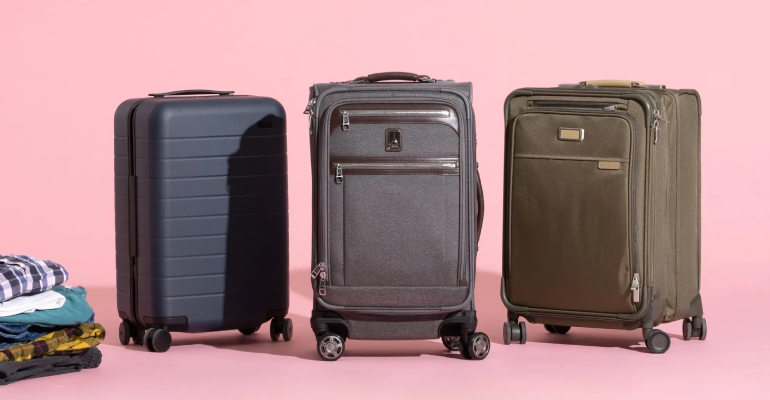
The carry-on luggage market has a specific problem. Everything in the $200 to $350 range looks the same, promises the same things, and performs similarly for the first eighteen months. Then one person’s wheels start wobbling and another person’s zipper starts catching and it becomes clear that the similar-looking products were not actually built similarly.
Nobl Travel’s carry-on costs more than most of what’s in that range. The question worth asking honestly is whether the price difference is justified by real construction differences or whether it’s brand premium on a product that performs the same.
The Nobl carry-on is a soft-sided bag — ballistic nylon exterior on an aluminum frame. That combination is worth unpacking because it determines everything about how the bag performs and ages.
Ballistic nylon is a specific type of nylon originally developed for military use. It’s heavier than standard nylon and significantly more abrasion-resistant. The weave is tight and the material maintains its structure under stress in a way that thinner nylon doesn’t. It doesn’t scratch the way polycarbonate hard shells scratch. Surface contact that would leave permanent marks on a hard shell leaves ballistic nylon largely unchanged — the material bounces back from abrasion rather than recording it.
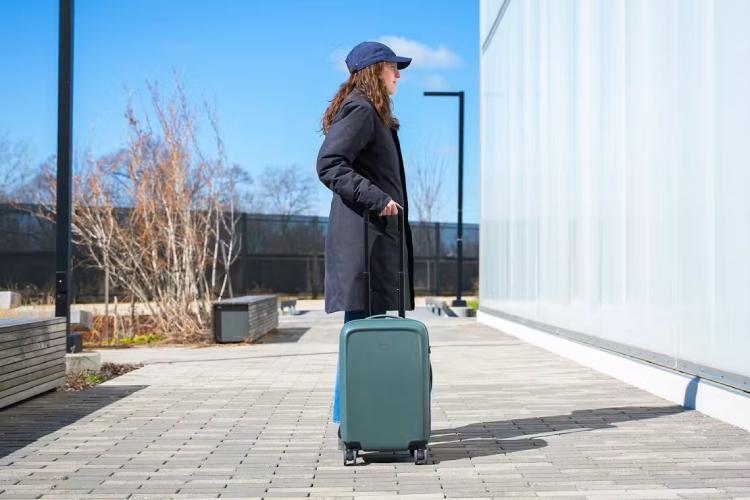
The aluminum frame gives the bag structure without the weight of a full hard shell. The carry-on holds its shape — you can pack it at three-quarter capacity and it doesn’t sag or warp in the overhead bin. But it also has the flexibility advantage of soft-sided bags — you can fit it into overhead bins that a rigid hard shell sometimes doesn’t quite fit, and you can compress it slightly if needed.
The Hinomoto spinner wheels are Japanese-made and the quality shows immediately in how the bag rolls. Most carry-on wheels roll smoothly on flat surfaces and reveal their limitations on textured surfaces — airport tile, cobblestones, uneven pavement outside hotels. The Hinomoto wheels handle all of these without the dragging or catching that cheaper wheels show on anything other than smooth floors.
This is the most practical question for any carry-on and the answer for Nobl’s carry-on is yes — with some caveats worth knowing.
Nobl’s carry-on fits the overhead bins of major US carriers — Delta, United, American — in standard economy. It fits international mainline carriers. Where it gets interesting is regional jets.
Regional jets — the CRJ-700, CRJ-900, and Embraer 175 and 190 that operate most short-haul routes — have smaller overhead bins than mainline aircraft. The Nobl carry-on fits most of these but not all. On the smallest regional configurations — some CRJ-700 setups — the bag is at the edge of what fits. This is not a Nobl-specific problem; it’s a regional jet problem that affects almost every full-size carry-on. But it’s worth knowing that on small regional jets, gate-checking is sometimes unavoidable regardless of what bag you have.
For international travelers and people primarily on mainline aircraft, the Nobl carry-on fits without problems.
The main compartment has a full-width divider with compression straps on one side — a panel with a zippered mesh pocket on the other. The compression straps actually work. At full capacity, they compact the contents enough to close the bag without forcing it. At partial capacity, they keep things from shifting around in the overhead bin.
The front pocket has actual structure — not a single open cavity but a dedicated organization panel with slots for a passport, a pen, a charging cable, and a few cards. It’s not elaborate but it’s thoughtful. The pockets reflect choices made by someone who travels rather than someone who decided where pockets should go based on what pockets look like.
The TSA-approved combination lock is integrated cleanly into the zipper pull — it doesn’t add bulk and it works one-handed, which matters when you’re moving through security with your hands full.
The Nobl carry-on is not the lightest carry-on in its class. Ballistic nylon and aluminum are heavier than polycarbonate. Depending on size, the Nobl carry-on weighs approximately 6 to 7 pounds empty.
For most travelers on most domestic routes, this is irrelevant. Domestic US carriers don’t weigh carry-ons and the extra pound or two compared to a lighter polycarbonate bag doesn’t matter practically.
For international travelers on carriers that enforce carry-on weight limits — many European and Asian carriers have carry-on weight limits of 7 to 10 kilograms — the starting weight of the bag matters because it comes out of that allowance. A 6-pound bag with an 11-pound limit leaves you 5 pounds of contents before you’re at the limit. A 4-pound bag leaves you 7 pounds. That difference is real and worth calculating before buying if you frequently travel on carriers with strict carry-on weight enforcement.
Away’s carry-on uses polycarbonate shell construction. It looks good out of the box, rolls well initially, and holds up reasonably for three to four years of regular use. The battery option is polarizing — useful for some, flagged by some airlines, and a source of returns for others. At $295 for the aluminum version, it’s the established benchmark in the category.
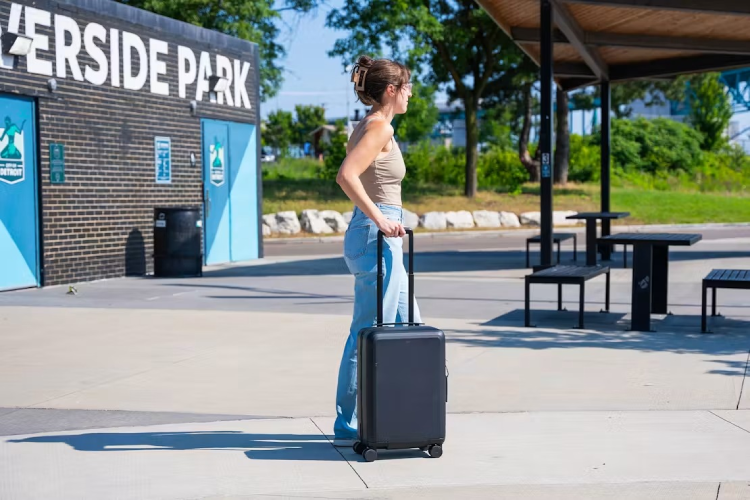
Monos is the Away alternative for people who want cleaner aesthetics and slightly more refined execution. Polycarbonate construction, good quality at the price, no battery option. Their carry-on runs around $250 to $295. A step up from Away in feel without a dramatic step up in price.
Nobl costs more than both. The construction is genuinely different — ballistic nylon versus polycarbonate, Hinomoto wheels versus house-brand wheels, aluminum frame that doesn’t flex versus polycarbonate that flexes under load. Whether those differences matter to you over a five-year ownership period is the actual decision.
For someone who travels twice a month and will put a carry-on through 120 flights over five years — the construction difference shows up in how the bag looks and functions at flight 80 versus flight 20. For someone who travels four times a year and will put the bag through 20 flights over five years — a well-maintained Away probably holds up fine and the Nobl premium is harder to justify.
The Nobl carry-on is a well-made bag that justifies its price for frequent travelers. The ballistic nylon construction ages better than polycarbonate. The Hinomoto wheels hold up longer than alternatives. The aluminum frame maintains the bag’s structure over years of overhead bin compression.
For someone who uses a carry-on constantly and has been cycling through mid-range bags every three to four years, one Nobl carry-on over seven to ten years is financially comparable to two or three Away bags over the same period with a meaningfully better ownership experience throughout.
For someone who travels occasionally and is fine replacing a $295 bag every several years, the Nobl premium is harder to justify on pure economics even if the quality is genuinely better.