HOME | Fashion | Beauty | Home Furnishing | Comparison | Top Reviews |
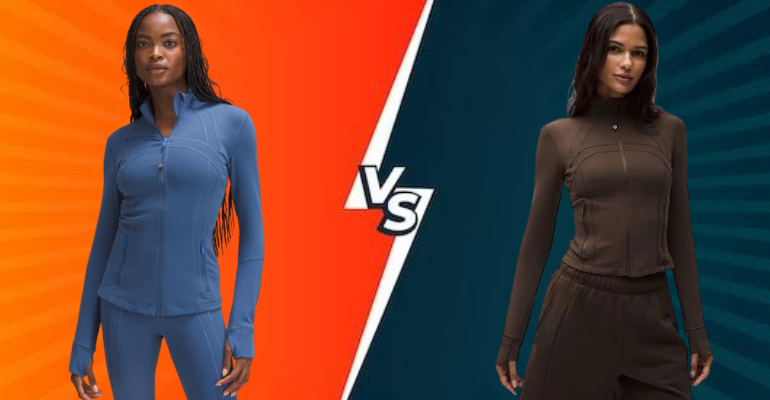
Two brands occupy the premium tier of women’s activewear with enough conviction that choosing between them genuinely matters — not just for the budget involved, but for the daily experience of training, moving, and wearing what’s purchased. Lululemon and Alo Yoga are not the same product at different prices or different aesthetics pointing at the same quality. They are distinct design philosophies producing distinctly different garments, and understanding which serves a specific wardrobe and training life better is the purpose of this comparison.
Lululemon launched in 1998 in Vancouver with a founding focus on yoga. It has since expanded into running, training, golf, and lifestyle wear, but yoga remains the brand’s philosophical and design core. The proprietary fabrics — Nulu, Everlux, Warpstreme — are developed specifically for defined movement contexts and have no direct equivalent in any competing brand.
Alo Yoga launched in 2007 in Los Angeles with an explicit lifestyle-and-studio positioning. The brand’s social media strategy — a roster of the most followed fitness and lifestyle influencers globally — has produced extraordinary cultural visibility. But the product quality is genuine enough that the visibility is not the only reason people buy and rebuy. The Airlift fabric and the specific aesthetic of Alo’s colour development and garment silhouettes earn sustained loyalty from customers who could afford any alternative.
Lululemon Nulu (Align Legging fabric): The material closest to a genuinely distinctive competitive advantage in activewear. The barefoot-like quality of Nulu — the term comes from “naked feeling” — has not been replicated by any competitor at any price point. It feels like wearing nothing during yoga practice and provides the opaque coverage that makes a yoga legging functional. The limitation is deliberate: Nulu is a studio fabric. It pills on rough surfaces and is not appropriate for activities involving abrasion or sustained sweat.
Lululemon Everlux (Wunder Train fabric): The gym and high-sweat alternative. Denser than Nulu, abrasion-resistant, moisture-wicking without the plasticky feeling that some performance fabrics produce. The combination of these two fabrics for distinct use cases is Lululemon’s most intelligent product strategy — the right fabric for the right context.
Alo Yoga Airbrush and Airlift fabrics: Alo’s performance fabrics operate in the territory between Lululemon’s Nulu and Everlux. The Airbrush provides medium compression and a matte finish. The Airlift provides high compression with smoothing properties. Both are well-made and perform appropriately. Neither has the barefoot quality of Nulu for yoga specifically, nor the specific abrasion resistance profile of Everlux for heavy gym use. Alo’s fabrics are excellent; they are versatile rather than optimised for specific contexts.
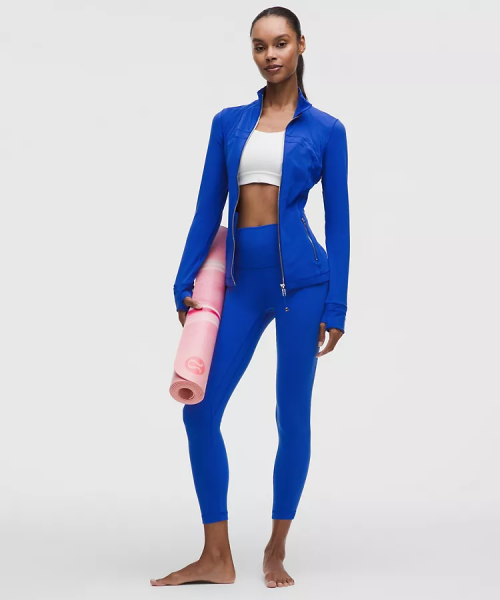
The Align is the most discussed yoga legging in the market and the discussion is warranted. For yoga specifically, there is no equal. The waistband maintains position through inversions. The opacity holds through the deepest forward fold. The fabric’s lightness produces a sensation during practice that studio users consistently describe as transformative relative to heavier alternatives.
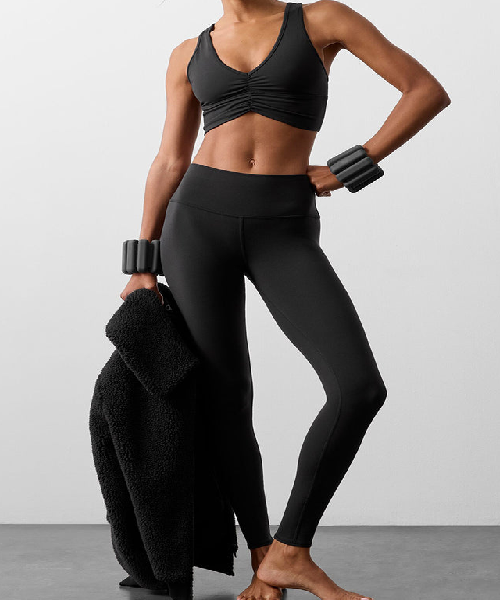
The Airbrush Legging has strong performance credentials for yoga and studio work. The fabric is genuinely good. The high waistband is flattering and maintains position during practice. Where Alo wins clearly over Lululemon is in the colour and design direction — the Airbrush is available in colourways and finishes that Lululemon’s more conservative aesthetic doesn’t offer, and the overall aesthetic reads more deliberately fashion-forward.
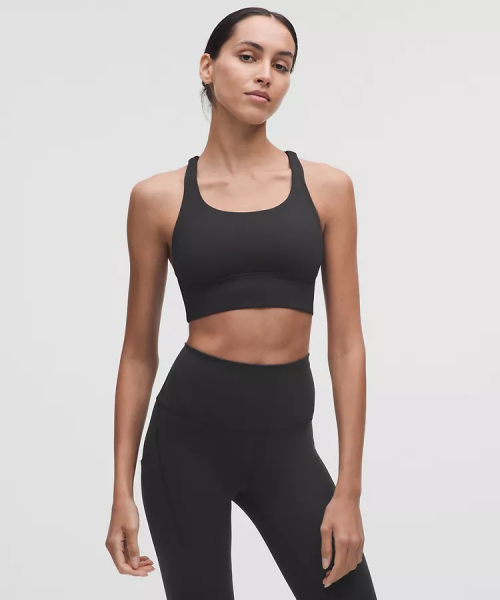
The Energy Bra uses Nulu, matching the Align in fabric quality. The removable cups allow support customisation. Medium-high support appropriate for yoga flows and barre.
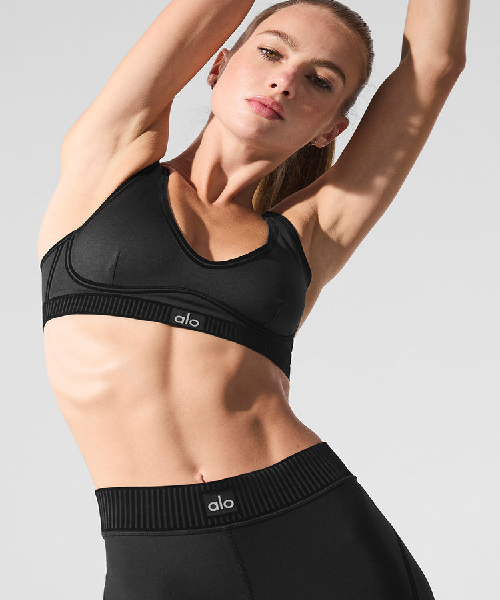
The Airlift Bra provides stronger compression than the Lululemon Energy, which makes it more appropriate for higher-intensity studio and light running. The design is more distinctive — the racerback and strap details have a specific fashion quality that the Lululemon bra doesn’t attempt.
Lululemon and Alo sit at comparable price points. Both represent genuinely premium investments rather than mid-market purchases with premium marketing.
The value argument for Lululemon: the Nulu fabric is genuinely unique, the Align Pant has no direct equivalent for yoga-specific use, and the longevity of both the Align and the Wunder Train across years of consistent use justifies the price in cost-per-wear terms.
The value argument for Alo: the fashion dimension adds wardrobe versatility that Lululemon’s more functional aesthetic doesn’t provide. An Alo legging worn to the studio, the coffee shop, and dinner is serving more outfit contexts than a Lululemon Align taken out of the studio environment. If lifestyle versatility matters alongside training performance, Alo’s aesthetic provides it more consistently.
For yoga specifically: Lululemon. The Nulu fabric for the Align Pant has no equal for studio practice, and building a yoga-specific wardrobe around Lululemon’s fabric technologies produces the best daily practice experience available in consumer activewear.
For lifestyle-and-studio crossover: Alo. The brand’s fashion investment makes its pieces work more convincingly across contexts, and the Airlift fabric performs well enough for the range of studio and light training activities that most buyers actually do.
For a wardrobe that serves both purposes: buy one Align Pant from Lululemon for dedicated yoga practice and build the lifestyle studio wardrobe from Alo. The two brands serve different briefs well enough that the best solution may be both rather than either.