

Eight Sleep Pod 5 Review — What Three Months of Sleeping on It Actually Taught Me

Eight Sleep Pod 5 Review — What Three Months of Sleeping on It Actually Taught Me

I want to start with something most Eight Sleep reviews skip entirely: I almost didn’t buy it.

Not because I couldn’t find enough information — there’s no shortage of reviews, Reddit threads, and YouTube teardowns on the Pod. The problem was the opposite. Every review I read either felt like it was written by someone who had slept on it for two weeks and couldn’t separate novelty from genuine improvement, or by someone whose financial interest in your purchase was obvious from the first paragraph. Neither helped me make a decision about dropping three thousand dollars on what is, technically, a mattress cover.

So I waited. I read the negative reviews more carefully than the positive ones. I tracked down people who’d owned it for a year or more and asked them the specific question nobody else seemed to ask: not whether it worked in the first month, but whether they’d buy it again knowing what they know now.

Then I bought it. Here’s what three months of actual use taught me.

Products

Eight Sleep Pod 5 Core Cover

Eight Sleep Pod 5 Core Cover

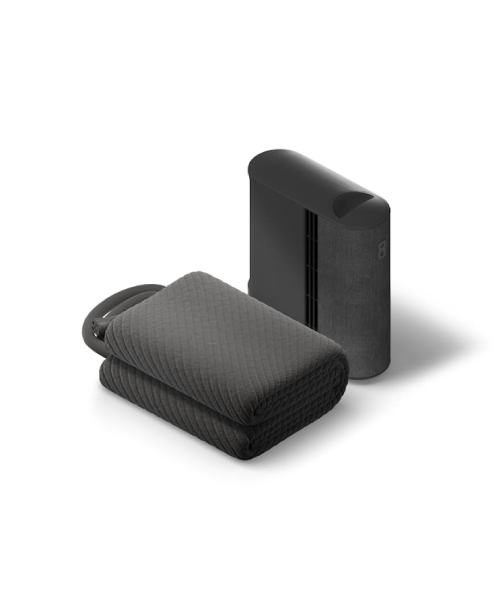
The Pod 5 Core is the entry point into the current Eight Sleep range — the mattress cover with the hub, the dual-zone temperature control, the sleep tracking, and the Autopilot system that adjusts your side of the bed through the night without you touching anything. The Pod 5 iteration is meaningfully quieter than the Pod 4 — the pump noise that was a genuine complaint among Pod 4 owners has been substantially reduced, to the point where it stopped registering as something I noticed after the first week. The cover itself is the most comfortable fabric Eight Sleep has used — it doesn’t feel technical or medical-adjacent the way earlier versions sometimes did.

Price: From $2,349 for the Core (Queen) — check eightsleep.com for current pricing

Available at: Eight Sleep (eightsleep.com)

Best for: Hot sleepers, couples with different temperature preferences, anyone whose sleep has been consistently disrupted by temperature and who has already ruled out simpler fixes
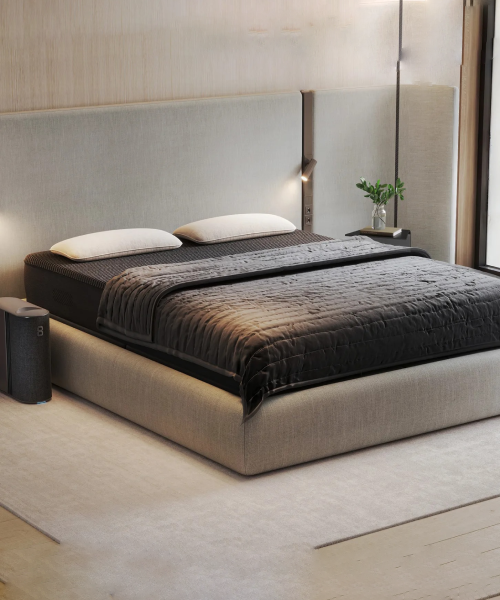
  • Dual-zone temperature control
  • Sleep tracking and personalized insights
  • Autopilot temperature adjustments throughout the night
  • Quieter operation compared with the Pod 4
  • Designed for couples with different temperature preferences
Eight Sleep Pod 5 Ultra

Eight Sleep Pod 5 Ultra

The Ultra adds the adjustable base — a motorised bed frame that integrates with the Pod system to elevate the head position for snoring detection and mitigation. If you don’t already have a bed frame you love, the Ultra makes sense as a combined investment. If you have a specific bed frame you’re attached to or one that can’t be replaced, the Core cover on your existing mattress achieves the same temperature regulation without the base.

Price: From $4,299 for the Ultra (Queen)

Available at: Eight Sleep (eightsleep.com)

Best for: Those replacing a bed frame alongside the temperature system, or those for whom the anti-snore elevation feature is specifically relevant
Eight Sleep Autopilot Membership

Eight Sleep Autopilot Membership

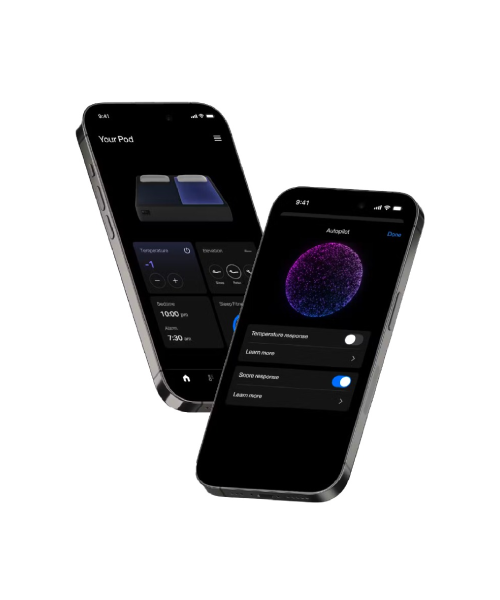
This is the subscription that unlocks what makes the Pod genuinely smart rather than just a fancy electric blanket. Autopilot adjusts your side’s temperature through the night based on your sleep stage data — cooling more in deep sleep, warming slightly before the alarm. The sleep health reports, HRV tracking, vibration alarm, and scheduled heating and cooling are all behind this subscription. Without it, you have manual temperature control only.

Price: $199/year (approximately $16.60/month) — first year bundled at checkout

Available at: Eight Sleep (eightsleep.com)

Best for: Anyone buying the Pod who wants the intelligent automation that justifies the purchase — the subscription is not really optional if you want what the Pod is actually designed to do
Eight Sleep Thermo Pillow Cover

Eight Sleep Thermo Pillow Cover

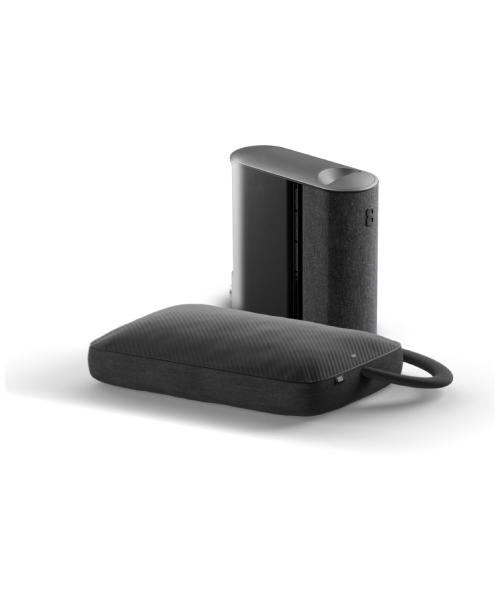
The pillow cover extends the water-cooling system to the pillow surface — the area most relevant for hot sleepers who find their pillow warm within the first hour of sleep. It connects to the same hub as the mattress cover and uses the same app controls. An optional addition, but a meaningful one for those whose temperature disruption is specifically at the head and neck.

Price: From $399 for a set

Available at: Eight Sleep (eightsleep.com)

Best for: Hot sleepers whose primary temperature complaint is pillow warmth — the pillow cover addresses what the mattress cover alone can’t reach

What the Pod 5 Actually Does — Without the Marketing Language

Here is the physical mechanism, as plainly as I can describe it.

The hub sits on the floor next to your bed. It holds water, heats or cools that water using a refrigerant system, and circulates it through a network of micro-tubes woven into the mattress cover. The water moves continuously through those tubes, maintaining whatever temperature you’ve set or whatever temperature Autopilot has decided is right for your current sleep stage. The cover sits over your mattress like a fitted sheet. The hub connects to your home’s Wi-Fi. The app on your phone controls everything.

Each side of the bed is independent. My side can be set to 65°F while the other side runs at 72°F. Neither side affects the other. The temperature range is approximately 55°F to 110°F, which is wider than you’ll ever actually use — most people settle into a range between 62°F and 76°F depending on season and personal preference.

The sleep tracking works through sensors built into the cover — it detects heart rate, HRV, respiratory rate, sleep stages, and movement without anything on your body. The accuracy compared to a wrist tracker like a Garmin or Oura Ring is not identical, but it’s close enough to be genuinely useful rather than decorative.

The Subscription Question — The Honest Math

I’m going to spend more time on this than most reviews do, because it’s the part that matters most for your long-term cost calculation and the part that most reviews handle dishonestly.

The Autopilot subscription is $199 per year, or approximately $16.60 per month. The first year is bundled into your checkout price, so you’re paying for year one whether you want to or not. After year one, you can cancel — but cancelling means losing Autopilot temperature adjustment, sleep health reports, HRV tracking, the vibration alarm, and scheduled heating and cooling. What you retain is manual temperature control.

Manual temperature control means: you open the app, set a temperature, and the Pod maintains it. That’s the equivalent of a programmable electric blanket. It’s not nothing, but it’s not what you bought the Pod for.

The realistic calculation for most buyers: you will keep the subscription. Over five years, that’s $955 in membership fees on top of the hardware. On a Pod 5 Core Queen at $2,349, your five-year total sits at approximately $3,304. On the Ultra, you’re looking at significantly more.

Is that worth it? For the right person, genuinely yes. For the wrong person, genuinely no. The right person is a hot sleeper or half of a couple with mismatched temperature preferences who has been waking up in the early hours for years and hasn’t solved it with any of the more affordable alternatives. For that person, the Pod is not a luxury — it’s a solution to a problem that has been costing them in sleep quality, mood, and daily functioning for as long as the problem has existed.

The wrong person is someone who sleeps fine, is attracted to the technology, and wants the biometric data. That person will enjoy the Pod and find it interesting. Whether the five-year total is the right investment for the use case is a different conversation.

Month One vs Month Three — The Honest Progression

Month one was what I expected based on the positive reviews: the thermostat battle in our bedroom ended immediately. I sleep warm. The person I share a bed with sleeps cold. We had been negotiating bedroom temperature for years, never finding a setting that worked for both of us simultaneously. The Pod ended this conversation on night one and has not required us to have it since.

The sleep tracking data in month one was interesting rather than immediately actionable. I was still figuring out which metrics to pay attention to, learning what my baseline looked like, and adjusting the Autopilot temperature settings based on the nightly readouts.

Month three is where the genuine assessment becomes possible. The novelty has completely worn off — I no longer think about the Pod as a new purchase or check the app out of curiosity. I check it because the data is useful. I’ve identified specific patterns: my sleep quality drops measurably on nights after significant alcohol consumption, improves on days with 7,000+ steps, and is most disrupted not by temperature (now solved) but by the specific type of work stress that doesn’t resolve before bed.

The Pod didn’t tell me everything about my sleep. It told me which variables I could control and which I couldn’t. That’s a more honest and more useful thing to know.

What the Pod Doesn't Fix

I want to be specific about this because the marketing is not.

The Pod fixes temperature. It does this extremely well. If temperature is your primary sleep disruption, the improvement will be immediate and significant.

The Pod does not fix: anxiety that prevents sleep onset, the middle-of-the-night waking that comes from stress rather than temperature, inconsistent sleep schedules, the specific sleep disruption of young children in the house, caffeine timing problems, or any other sleep variable that isn’t temperature-related. These require different interventions.

The sleep data the Pod provides can help identify which category your disruptions fall into — which is genuinely valuable. But the data is informational. Acting on it requires you to actually change something, which the Pod cannot do for you.

The Setup — Simpler Than Expected

Setup took approximately 70 minutes from opening the box to first use. The hub connects to power and to a water supply — or, in our case, we filled the reservoir manually, which requires doing so once every few weeks. The cover goes on the mattress like a fitted sheet with one additional step: connecting the hose from the cover to the hub. The app setup walked through the process without any moments of genuine confusion.

The hub is approximately the size of a large bedside water pitcher. It’s not invisible, but it’s designed to sit on the floor beside the bed frame rather than on the nightstand, which means it’s not in your eyeline from the bed. The noise level, which was a genuine concern based on Pod 4 feedback, is not noticeable in a quiet room once you’re used to it — somewhere between a small white noise machine and a refrigerator’s hum.

Would I Buy It Again?

Yes. Without hesitation, for the specific reason I bought it: the temperature problem in our bedroom was real, had been present for years, and had not responded to any of the more affordable interventions we tried before the Pod. The Pod solved it on night one and has maintained that solution every night since.

If my sleep disruption was primarily from something other than temperature, I would not buy it again. The data would be interesting. The temperature regulation would be pleasant. But I wouldn’t have a core problem that the product specifically solved, and the five-year cost would be hard to justify for interesting-and-pleasant rather than genuinely-transformative.

That’s the honest calculus. Know which category you’re in before you buy.