HOME | Fashion | Beauty | Home Furnishing | Comparison | Top Reviews |
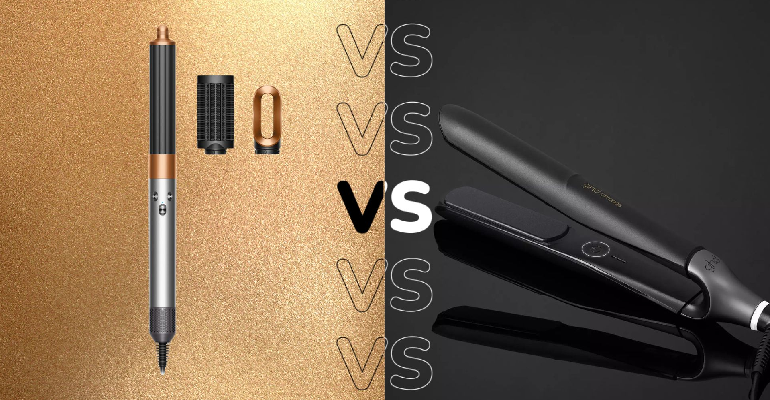
Both Dyson and GHD produce premium hair tools that dominate the professional and home high-performance market. The comparison is genuinely useful because both brands approach hair tool design with distinctive engineering philosophies that produce different experiences — not just for different hair types, but for different relationships with the heat styling process itself.
Dyson entered the hair tools category from a consumer electronics engineering background. The Supersonic hair dryer and the Airwrap apply the same engineering disciplines — precise airflow management, digital motor technology, intelligent heat sensing — that Dyson applies across its vacuum and fan products. The hair is the problem to be solved with engineering tools.
GHD (Good Hair Day) was founded in 2001 with a specific focus on hair styling performance. The brand’s development history is specifically rooted in understanding hair — the protein structure, the thermal properties, the specific conditions that produce results rather than damage. The Helios hair dryer and the Chronos straightener represent the most sophisticated tools from a brand whose entire business is understanding heat styling.
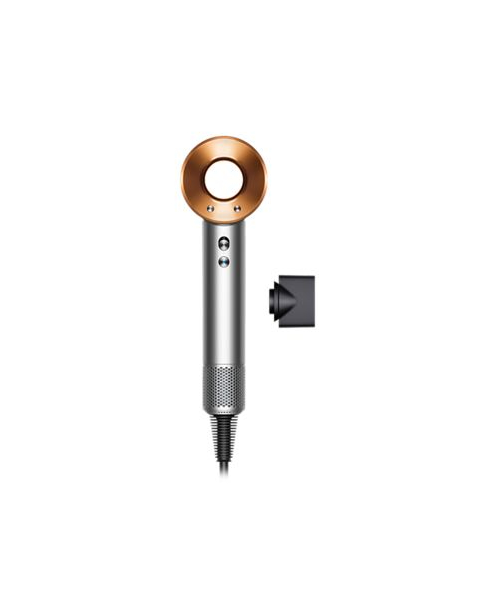
The Supersonic’s engineering advantages — the digital motor in the handle rather than the head, the intelligent heat control that measures temperature 40 times per second, the magnetic attachments that allow quick tool changes — produce a hair dryer experience that is distinctively better than conventional alternatives in specific ways.
The motor placement in the handle changes the balance point of the dryer, reducing wrist and arm fatigue during extended drying sessions. For anyone who dries medium to thick hair and spends 20+ minutes blow drying daily, this balance difference is felt cumulatively.
The heat control is the most measurable advantage. Conventional hair dryers have heating elements that cycle between maximum and minimum, producing temperature spikes that can exceed the threshold where protein denaturation begins. The Supersonic’s continuous measurement and adjustment maintains a consistent temperature that reduces this spike damage. For hair that shows heat damage, this is the engineering advantage most directly linked to improved hair health over time.
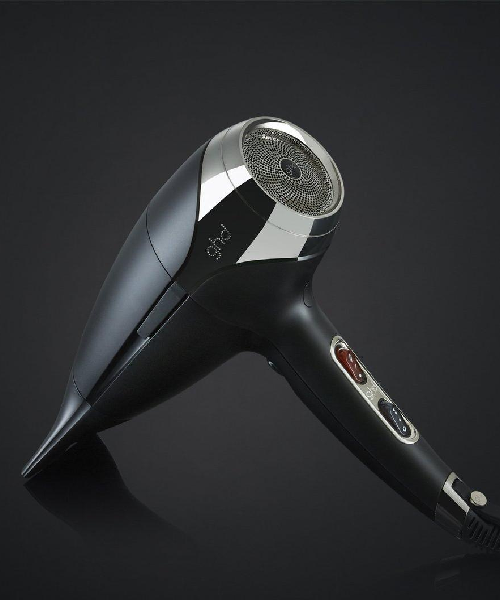
The GHD Helios is the Supersonic alternative for those who want professional hair dryer quality without the Dyson price premium. The Helios uses a DC motor that produces fast drying with consistent airflow, an ionic generator that reduces static and frizz during drying, and a professional-grade construction appropriate for daily use.
The honest comparison: the Helios lacks the Supersonic’s intelligent heat control and motor positioning advantages. The drying speed is comparable or faster than the Supersonic in some user comparisons. The finish quality for blowouts is excellent. The price at £189 versus £329.99 is the most compelling factor for buyers who want professional quality without the full Dyson investment.
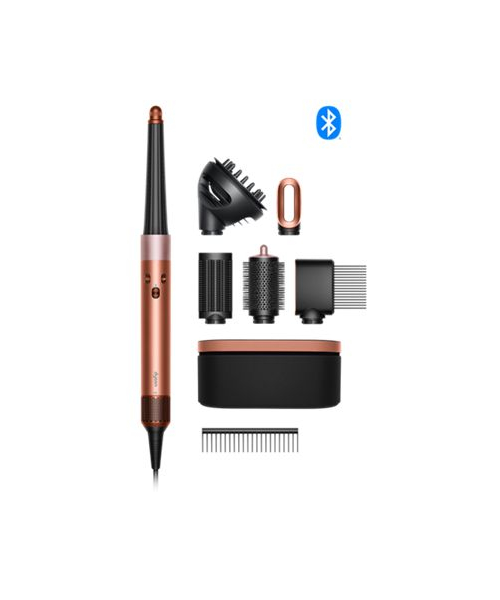
The Airwrap uses the Coanda effect — the fluid dynamics phenomenon where air pressure causes a material to follow a surface — to wrap hair around a barrel without the barrel needing to be at the extreme temperatures of a conventional curling iron. The result is styling with lower heat than direct heat alternatives, which reduces the thermal damage that accumulates over regular styling.
The learning curve is real — the technique for getting consistent results from the Airwrap takes approximately two to three weeks of daily use before becoming intuitive. The early-use experience of inconsistent results is the most common negative review component, and it resolves with sustained use.
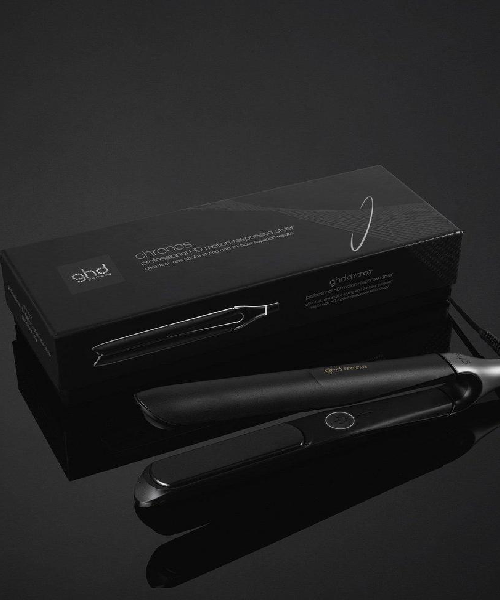
The GHD Chronos represents GHD’s most advanced straightener — predictive zone technology that responds to the speed of the pass through hair, adjusting heat delivery to maintain consistent temperature regardless of stylist speed. For those who use a straightener daily for straightening, waves, or curls, the Chronos is the precision tool available from the brand that has spent its entire existence perfecting flat iron design.
Hair dryers: GHD Helios provides the most professional-quality drying at an accessible premium price. Dyson Supersonic provides the most engineering-sophisticated drying with heat control advantages particularly relevant for heat-damaged hair. The right choice depends on whether the priority is maximum drying performance (GHD) or minimum heat damage across daily use (Dyson).
Curling and waving: Dyson Airwrap is the premium option for those who want reduced-heat styling. No GHD equivalent uses the same Coanda effect mechanism — GHD’s curling tools are conventional barrel curlers. The Airwrap is genuinely distinctive in this category.
Straightening: GHD Chronos is the professional flat iron reference. Dyson does not produce a flat iron — the category is exclusively GHD’s in this comparison.
For a complete styling kit: Dyson Supersonic + Dyson Airwrap = £809.98. GHD Helios + GHD Chronos = £438. The GHD combination provides a dryer and a straightener/curler at roughly half the Dyson price. Whether the Dyson’s specific engineering advantages — heat control, motor placement, Coanda styling — justify the price premium depends on whether those specific advantages address the buyer’s specific needs.
For daily blow drying with minimum heat damage as the priority: Dyson Supersonic.
For professional drying performance at a more accessible price: GHD Helios.
For reduced-heat curling and waving: Dyson Airwrap with no direct GHD competitor.
For straightening: GHD Chronos with no direct Dyson competitor.
For complete styling toolkit value: GHD’s combination at £438 versus Dyson’s £809.98 for their equivalents.