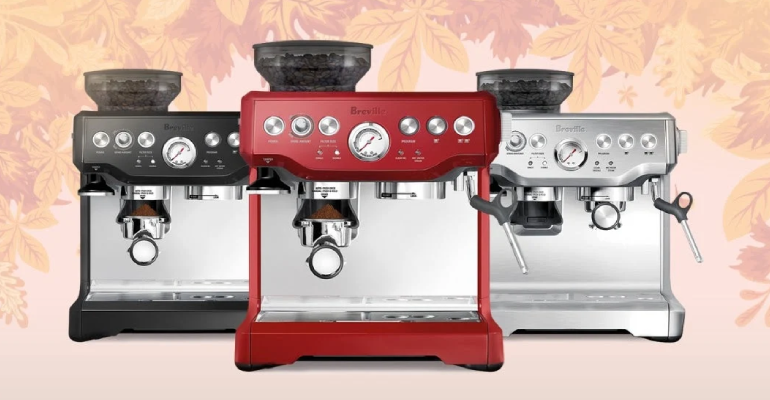
Breville — known as Sage in the UK and Europe — is the Australian company that has quietly become the gold standard for home coffee machines under $2,000. The brand’s reputation is built on three specific engineering advantages that most cheaper brands do not replicate: built-in conical burr grinders included with most espresso machines (saving $200–$400 on a separate grinder while ensuring perfectly fresh grinding seconds before brewing), PID temperature control that maintains brewing temperature within ±1°F across multiple shots versus the ±10°F swings of entry-level machines, and serious build quality at sub-prosumer prices that produces the reliability documentation Breville’s buyer community is known for.
The most important positive evidence is specific: a Western Living reviewer writing in April 2026 who spent time with three Breville models — the Touch Impress, Oracle Jet, and Double Boiler — documented that none of them had any technical issues across over a year of use with the first two machines, and that Breville delivers café-quality shots if you learn about extraction and put in a little time — an eight-year immersion blender ownership account from a Thingtesting buyer adds the most specific multi-year durability confirmation available. The most important negative evidence is equally specific: everything above the Barista Pro enters diminishing-returns territory where you are paying for automation, not better coffee — per Spanish Clout’s April 2026 assessment — a specific model hierarchy insight that prevents buyers from over-investing in automation features they may not need or use.
✅ Breville Barista Express at approximately $550 — the documented sweet spot for most buyers — with integrated grinder, proven extraction quality, and a learning curve that rewards buyers who engage with it rather than punishing those who do not
✅ Built-in conical burr grinder included with most espresso machines — a specific, documented $200–$400 saving over purchasing a separate grinder, with the additional advantage of grinding seconds before brewing for maximum freshness
✅ PID temperature control maintains brewing temperature within ±1°F across multiple shots — the single feature that most accounts for the quality difference between Breville and entry-level espresso machines at lower price points
✅ Breville Bambino Plus at $500 — the documented recommendation for buyers who value simplicity and speed over customisation, with ThermoJet 3-second heat-up and a compact footprint
✅ Oracle Jet — the mid-range high-end recommendation for buyers who want near-automatic café results without the Double Boiler’s $3,000 price point — documented across over a year of use without technical issues
✅ Thingtesting buyer documented an 8-year immersion blender ownership with parts still available through Breville support — the most specific multi-year durability account for the brand
✅ Breville’s ecosystem makes maintenance realistic — descaling reminders, swappable parts, and clear manuals documented as functional across years of ownership, with easy customer service access for part replacement
❌ Model range is extensive enough to confuse buyers — the number of models (Bambino, Bambino Plus, Barista Express, Barista Express Impress, Barista Pro, Barista Touch, Oracle, Oracle Jet, Oracle Touch, Double Boiler) requires research before purchasing to avoid over-buying automation or under-buying capability
❌ Learning curve is real for the semi-automatic range — buyers who want immediate café-quality results without engaging with grind size, dose, and extraction time will find the Barista Express unsatisfying until they invest the learning time
❌ Everything above the Barista Pro is diminishing returns for coffee quality — the automation features of the Oracle and Oracle Touch are genuine conveniences but do not produce better espresso than the Barista Express for an engaged home barista
❌ Black Friday and Prime Day sales are documented at 15–25% below list price — buyers who pay full price in non-sale periods are leaving specific documented savings on the table
❌ Scale build-up requires regular descaling in hard water areas — the machines include descaling reminders, but buyers who ignore them document shortened machine lifespan
This review draws on Western Living’s April 2026 three-model espresso comparison, Spanish Clout’s April 2026 honest Breville guide, One Hundred Coffee’s 2026 tested model guide, Mastering Coffee’s 2026 comprehensive model comparison, Thingtesting’s Breville aggregated buyer reviews, and Breville’s own published product specifications. No commercial relationship with Breville. No affiliate link influences any rating or conclusion.
Breville is an Australian kitchen appliance brand founded in 1932, producing a comprehensive range of home appliances including espresso machines, blenders, food processors, toaster ovens, and juicers. The espresso machine range — the brand’s most culturally prominent product category — spans from the Bambino at $249.95 through to the Double Boiler at approximately $2,999. Breville is sold under the Sage brand in the UK, Europe, and other international markets. The brand sells through its own website, Best Buy, Williams Sonoma, Amazon, and major kitchen appliance retailers.
Breville’s consistent market position as the gold standard for home espresso machines under $2,000 is grounded in three specific engineering commitments that the brand maintains across its range. The built-in grinder is the most practically significant — most Breville espresso machines include a conical burr grinder that eliminates the need for a separate grinder purchase, saves $200–$400, and ensures coffee is ground seconds before brewing rather than days or weeks before. Pre-ground coffee loses volatile compounds that produce espresso flavour; fresh grinding is the single most impactful variable in home espresso quality.
The PID temperature control is the most technically specific advantage. Breville machines maintain brewing temperature within ±1°F across multiple shots — a precision standard that entry-level machines at lower prices cannot consistently achieve. The ±10°F temperature swings of cheaper machines produce different extraction profiles shot to shot, making consistent café-quality espresso practically unachievable regardless of the buyer’s technique. Breville’s temperature precision is the reason buyers who learn extraction technique achieve genuinely consistent café-quality results.
The build quality documentation across multiple years and multiple product categories — one Thingtesting buyer’s 8-year immersion blender, a reviewer’s year-plus no-issues track record across three espresso machine models — is the durability evidence that makes the Breville price premium defensible against lower-cost alternatives whose multi-year documentation does not exist at the same volume.
The Breville model range is extensive enough to confuse buyers, and choosing the wrong model produces either underperformance (buying the Bambino when you want the Barista Express’s grinder and capacity) or over-investment (buying the Oracle Touch when the Barista Express would produce comparable coffee quality at half the price).
The honest 2026 model hierarchy: the Bambino Plus at $500 is the right pick for buyers who value simplicity and speed over customisation — 3-second heat-up, compact footprint, and automatic milk texturing. The Barista Express at approximately $550 is the sweet spot for most buyers — integrated grinder, proven extraction, and a learning curve that rewards engagement. The Barista Express Impress at a modest premium adds a guided tamping system that reduces one of the most common beginner mistakes. Everything above the Barista Pro — the Oracle, Oracle Jet, Oracle Touch, and Double Boiler — enters diminishing-returns territory where buyers are paying for automation, not better coffee.
The Double Boiler at approximately $2,999 is Breville’s highest-end consumer machine — two separate boilers enabling simultaneous espresso extraction and milk steaming at commercial quality. For buyers who seriously pursue home barista skills and want a machine that will grow with their technique for a decade, the Double Boiler is the documented top-end recommendation. For everyone else, the Barista Express provides 90% of the coffee quality at approximately 18% of the price.
The semi-automatic machines — Barista Express, Barista Pro, Barista Touch — require engagement with grind size, dose, and extraction time to produce consistent results. Buyers who want to press a button and receive café-quality espresso without learning these variables will find the semi-automatic machines unsatisfying until they invest the learning time. The Western Living reviewer specifically documented learning about extraction from YouTube videos and describing the experience of dialling in as rewarding once understood — a positive account that acknowledges the learning requirement honestly.
For buyers who specifically do not want a learning curve: the Oracle Touch and Barista Touch provide automatic grinding, dosing, and milk texturing that produce consistent results without manual adjustment. These machines are more expensive and do not produce better coffee for an engaged home barista — but they produce consistent results immediately for buyers who want that outcome.
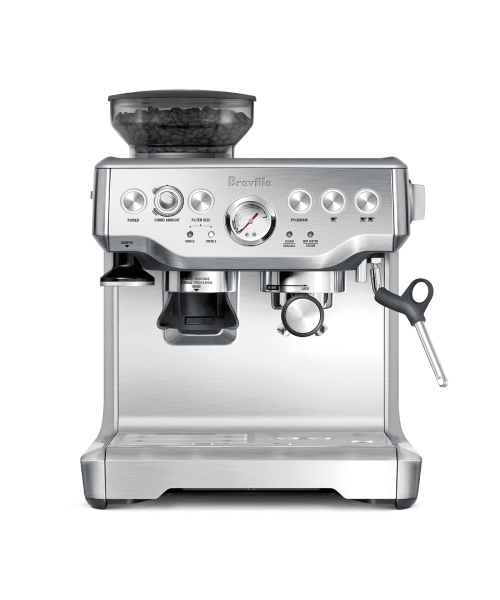
The documented sweet spot for most buyers — integrated conical burr grinder, PID temperature control, dose control grinding, digital temperature management, and a steam wand for microfoam. The brushed stainless steel build offers solid durability for everyday conditions. One Hundred Coffee’s 2026 testing describes it as honest, proven, and excellent — the machine most consistently recommended across independent reviews for buyers who are willing to learn extraction basics. Buy at Black Friday or Prime Day sales where 15–25% reductions are documented.
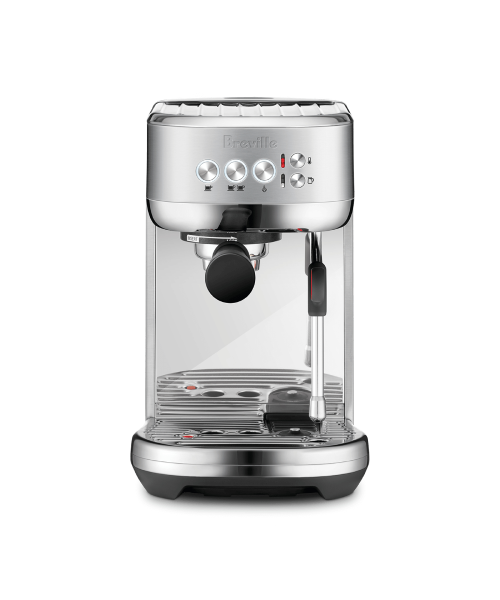
The documented recommendation for buyers who value simplicity and speed over customisation — 3-second ThermoJet heat-up, automatic milk texturing, compact footprint. Described by One Hundred Coffee as the best small-but-serious entry into real espresso. Available at $249.95 for the standard Bambino at Best Buy in documented sale events — the most accessible entry into the Breville range.
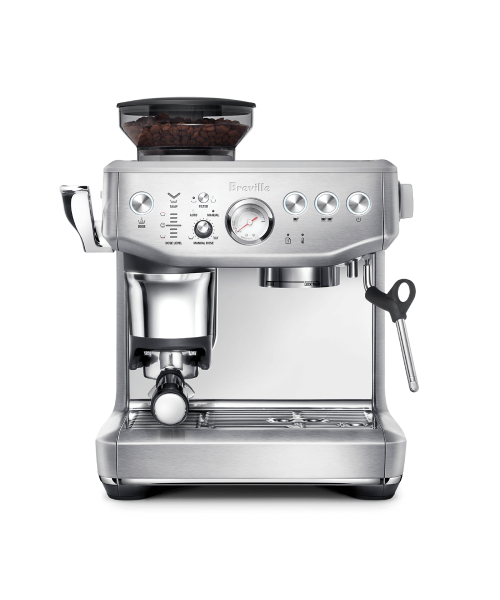
The Barista Express with a guided tamping system that assists with consistent tamping pressure — one of the most common beginner errors that causes channelling and inconsistent extraction. For first-time home espresso buyers who want the Barista Express’s integrated grinder with a specific assist for the most technically demanding manual step, the Impress is the documented upgrade.
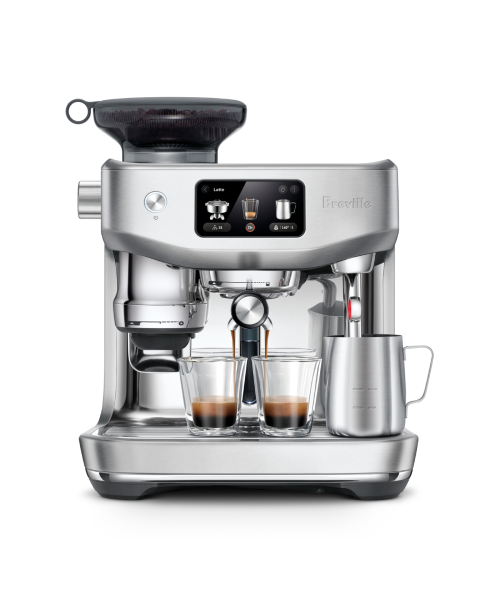
The mid-range high-end recommendation for buyers who want near-automatic café results — documented by the Western Living reviewer as in use by his wife for over a year without technical issues, producing café-quality results described as genuinely impressive for a home machine. The Oracle Jet is the appropriate recommendation for buyers who specifically want automatic-level convenience without the Double Boiler’s price point.
A Western Living reviewer writing in April 2026 described spending time with three Breville models — Touch Impress, Oracle Jet, and Double Boiler — and documenting that none had any technical issues across over a year of use with the first two machines. He described learning about extraction from YouTube videos and being blown away by café-quality results once dialled in.
A Thingtesting buyer described using Breville products across toaster oven, immersion blender, and espresso machine — all working for several years, with the immersion blender at year eight. She described easy customer service access for part replacement — a basket on her espresso machine was clogged and a piece broke on the immersion blender — both resolved through phone support or parts purchase.
A Thingtesting buyer described a Breville as making his favourite espresso machine — the perfect mix of home-friendly and pro-level, delivering café-quality shots without needing a barista degree once dialled in. He described it as ruining coffee shops for him in the best way and delivering consistently every morning.
A Spanish Clout reviewer writing in April 2026 described the Barista Express at approximately $550 as the sweet spot for most buyers — and specifically noted that everything above the Barista Pro enters diminishing-returns territory where buyers pay for automation, not better coffee.
For buyers who want café-quality home espresso and are willing to invest in the learning curve for the semi-automatic range: yes — the Barista Express is the documented sweet spot, the engineering advantages are specific and verified, and the multi-year durability accounts support the investment. Buy at Black Friday or Prime Day sales for 15–25% documented reductions.
For buyers who want consistent espresso without a learning curve: the Bambino Plus or the Oracle Touch are the documented automation-first recommendations at their respective price tiers.
For buyers who are primarily drip coffee drinkers: Breville’s Precision Brewer is the brand’s documented drip coffee recommendation — the same engineering quality applied to filter coffee without the espresso machine price point or learning curve.
Breville Barista Express | DeLonghi La Specialista | Gaggia Classic Pro | Jura E8 | Nespresso Vertuo Next | |
Price | ~$550 | $700 | $450 | $1,300 | $200 |
Built-in grinder | ✅ Conical burr | ✅ | ❌ | ✅ | ❌ (capsule) |
PID temperature control | ✅ ±1°F | ✅ | Limited | ✅ | N/A |
Learning curve | Moderate | Similar | ❌ Steeper | ✅ Minimal | ✅ None |
Steam wand | ✅ Manual | ✅ | ✅ | Auto | ❌ |
Compact footprint | Moderate | Large | ✅ Compact | Large | ✅ Compact |
Multi-year durability documented | ✅ 8yr+ accounts | Limited | ✅ Strong | Good | Limited |
UK/Europe name | Sage | DeLonghi | Gaggia | Jura | Nespresso |
Best for | Sweet spot all-rounder | Manual precision | Tinkerers + mods | Auto convenience | No learning curve |
breville.com — direct, with the full model range. Also at Best Buy, Williams Sonoma, Amazon, and Williams Sonoma outlet. Black Friday and Prime Day sales documented at 15–25% below list price — the Bambino at $249.95 (16% off $300) is a recent documented Best Buy example. For the Barista Express: buy at sale pricing and plan the break-in and learning period before expecting consistent results.
For most buyers: the Barista Express at approximately $550 — the documented sweet spot with integrated grinder and proven extraction. For simplicity and speed: the Bambino Plus. For near-automatic café results: the Oracle Jet. For serious home barista investment: the Double Boiler.
For most buyers: Breville’s integrated grinder and PID temperature control at comparable price points provide a more complete home espresso setup than DeLonghi alternatives without a built-in grinder. For buyers who prefer DeLonghi’s automatic features: the La Specialista is the documented competing recommendation.
Yes — 15–25% below list price during Black Friday and Prime Day. The Bambino at $249.95 at Best Buy is a recent documented example. Buy at sale pricing when possible.
The semi-automatic machines require learning grind size, dose, and extraction time for consistent results. YouTube tutorials are specifically recommended by multiple buyers as the fastest path to dialled-in espresso. The Oracle Touch eliminates this learning curve at higher price.
Multi-year documented accounts are common — an 8-year Thingtesting immersion blender account and over a year without technical issues on three espresso machines across a single reviewer’s household. Regular descaling per the machine’s reminders is the most documented maintenance requirement for longevity.
Breville makes the most comprehensively documented premium home espresso machine range in the sub-$2,000 category — the built-in grinder advantage, PID temperature control, and multi-year durability accounts all support the brand’s gold standard positioning. The Barista Express at approximately $550 is the documented sweet spot for most buyers: integrated grinder, proven extraction quality, and a learning curve that converts into genuinely café-quality home espresso for buyers who engage with it.
The model selection is the most important pre-purchase decision — above the Barista Pro enters diminishing-returns territory for coffee quality, and the most appropriate model is determined by how much learning investment you are willing to make, not by how much money you want to spend. Buy at sale pricing.
Category | Score |
Barista Express (sweet spot) | 9.0 / 10 |
Bambino Plus (simplicity) | 8.5 / 10 |
Oracle Jet (automation) | 9.0 / 10 |
Built-in Grinder Value | 9.5 / 10 |
PID Temperature Control | 9.5 / 10 |
Learning Curve (semi-auto) | 6.5 / 10 |
Multi-Year Durability | 9.0 / 10 |
Full-Price Value | 8.0 / 10 |
Overall | 8.6 / 10 |