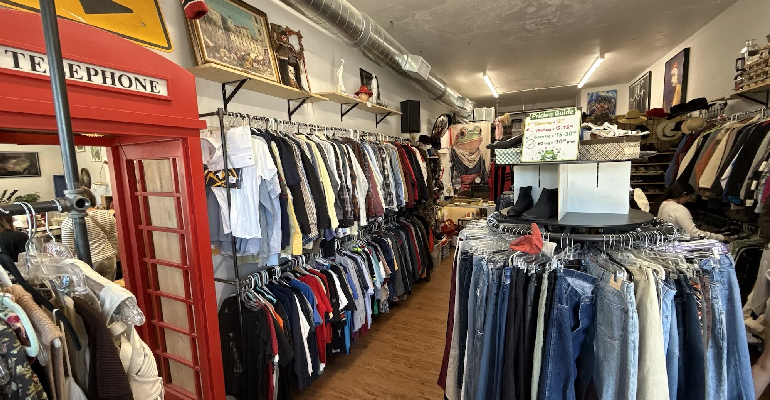
Vintage and secondhand shopping has undergone a transformation in the past decade that has moved it from the margins of fashion into its mainstream. What was once the territory of dedicated thrift store visitors, charity shop regulars, and specialist vintage dealers is now served by platforms reaching hundreds of millions of users, staffed professional vintage curators, and a secondary market infrastructure that processes branded clothing more efficiently than ever before.
The transformation has also made the category more competitive and — in some segments — more expensive. The Depop effect: the visible secondhand clothing market has priced in its own desirability, meaning that the vintage Levi’s that cost £8 in a charity shop is now being sold at £65 on Depop because the seller understood the brand value. The charity shop still exists; finding the underpriced pieces requires more knowledge and more effort than it did a decade ago.
The tips below are what turn vintage shopping from an unreliable hunt into a more consistently productive activity.
Depop is the most curated of the major secondhand platforms, with a strong bias toward younger sellers curating fashionable vintage and contemporary secondhand. Prices are the highest of the accessible platforms because the sellers are sophisticated about value. Best for: specific pieces, designer secondhand, recognisable brands at prices below retail.
eBay remains the most comprehensive secondhand marketplace. The depth of inventory is unmatched — eBay has more vintage clothing than any other platform. Best for: specific searches for specific pieces, vintage sportswear, vintage denim, vintage outerwear. The search functionality is more powerful than Depop’s for those who know what they’re looking for.
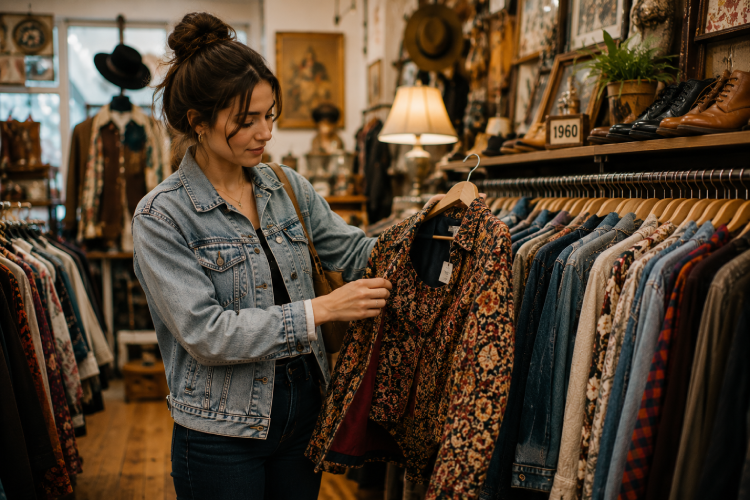
Vinted is the fastest-growing secondhand platform in Europe and the most accessible for sellers and buyers new to the category. Lower prices than Depop on average because sellers are less commercially sophisticated. Best for: contemporary secondhand at accessible prices, brand-name basics, recent season pieces.
Vestiaire Collective is the luxury secondhand platform with authentication services for designer pieces. Best for: verified luxury bags, designer clothing, authenticated fine jewellery.
ASOS Marketplace hosts independent vintage sellers in a curated environment. Best for: those who want the Depop curation with a more structured buying experience.
Physical vintage markets in the UK provide the most direct access to dealer knowledge and the opportunity to handle pieces before buying — the specific advantage that online platforms can’t replicate.
Portobello Road Market, London (Saturdays) — The most established of London’s vintage markets, with dealers ranging from budget rails to specialist collectors with significant pieces.
Brick Lane Market and Box Park area, London (Sundays) — Concentrates more youth-oriented vintage and contemporary secondhand. Lower price points than Portobello, more trend-specific.
Manchester Afflecks — The permanent vintage and independent retail space that serves as the North of England’s equivalent to Portobello. Vintage clothing dealers across multiple floors.
Edinburgh Grassmarket — Specialist vintage dealers in Edinburgh’s most concentrated vintage retail area.
Check the seams first. The seams carry the stress of the garment and show the quality of original construction and any repairs. Seam separation, thin seam allowances, and fraying indicate either poor original quality or end-of-life condition.
Check the armpits. Underarm staining and the characteristic yellowing of white fabrics around the armhole is the most common damage in vintage clothing. Check in natural light before buying. Some staining can be treated; severe discolouration typically can’t.
Check the buttons. Buttons on quality vintage pieces are replaced when they crack or are lost — checking that all buttons are present and matching indicates a well-maintained piece. A missing or non-matching button indicates a piece that needs the time investment of button sourcing and replacement.
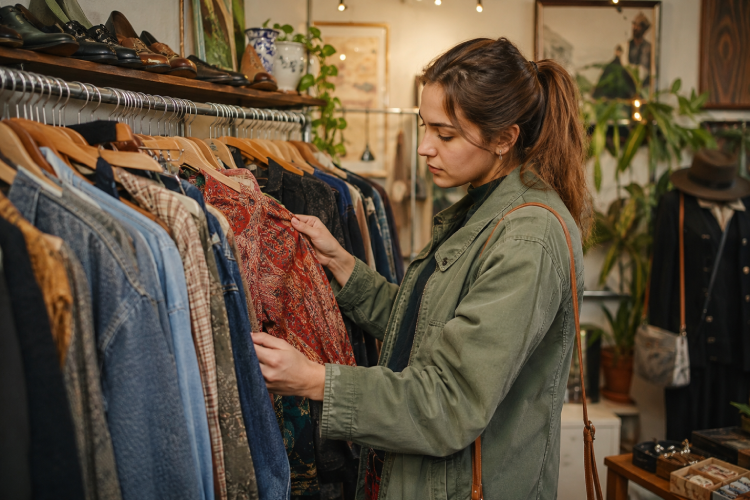
Check for moth damage. On wool pieces specifically, check for the characteristic small holes that moth larvae produce. A few small holes can be invisibly repaired by a professional seamstress; widespread moth damage cannot.
Try the zip. Vintage zips are the most common point of functional failure. A stiff or catching zip on a piece you love is worth the cost of a zip replacement by a tailor; a broken zip adds to the total cost of the piece.
Vintage outerwear. The wool overcoats and leather jackets of the 1960s–1980s were constructed to higher standards than most contemporary alternatives at equivalent retail prices. A vintage Crombie overcoat or a vintage leather motorcycle jacket provides construction quality that new alternatives in the mid-market can rarely match.
Vintage denim. Pre-1990s Levi’s and Lee denim is made from cotton of a quality and construction that the contemporary versions don’t replicate. Vintage selvedge denim in good condition appreciates rather than depreciates. The value is genuine for those who wear their denim and care about how it fades.
Vintage silk. Vintage silk scarves, blouses, and dresses — particularly from the 1960s–1980s — use silk weights and construction quality that contemporary fast fashion can’t access at accessible prices.
Vintage shopping rewards knowledge, patience, and the development of the specific inspection habits that prevent poor purchases. Depop for curated fashionable vintage at competitive prices. eBay for comprehensive search across the full inventory of secondhand. Vinted for accessible contemporary secondhand. Vestiaire Collective for authenticated luxury secondhand. And physical markets for the handling and dealer access that online platforms can’t provide. Check seams, armpits, buttons, moth damage, and zips before buying. Focus on vintage outerwear, denim, and silk for the categories where vintage quality most consistently exceeds the contemporary equivalent. And build the shopping habit gradually — the eye for quality at a price develops through repetition more than research.