HOME | Fashion | Beauty | Home Furnishing | Comparison | Top Reviews |
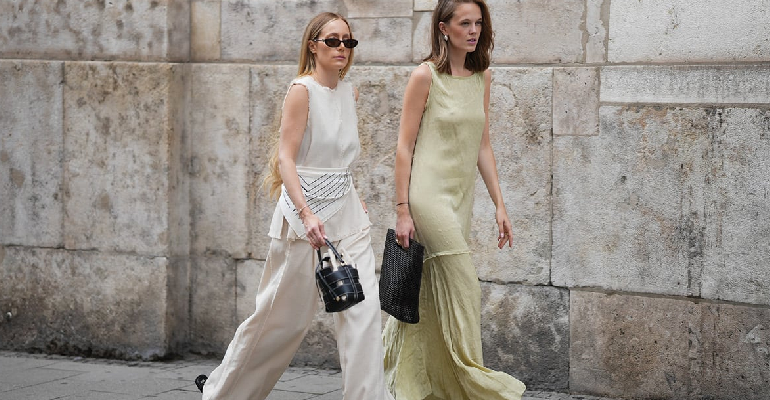
Linen is having the decade that cotton had in the 1990s. The specific combination of qualities that linen possesses — breathability that synthetic fabrics cannot match at high temperatures, a characteristic drape that improves with washing, a texture that reads as considered without being precious, and a natural fibre origin that satisfies the growing consumer preference for material transparency — has moved linen from a niche natural fabric into the mainstream wardrobe conversation.
The challenge with linen as a category is quality variation. The difference between a well-made linen shirt in a quality stonewashed or enzyme-washed European linen and a cheap linen-blend shirt that wrinkles unevenly, pills at the seams, and goes limp after six washes is significant. Understanding what distinguishes quality linen from the linen-adjacent is what makes the difference between a summer staple that gets better every year and a disappointing purchase.
Linen weight and weave. Heavier linen (above 180gsm) drapes better, holds its shape more confidently, and tends to wrinkle in the specific structured way that reads as intentional rather than neglected. Lighter linen washes well but can appear thin and lacks the drape quality that makes the material distinctive.
European linen specifically. Belgian linen and Irish linen have specific reputations for quality that reflect genuine differences in flax cultivation and processing. Brands that specify European flax sourcing are making a distinction worth paying for.
Stonewashing or enzyme washing. Raw linen has a stiffness that diminishes significantly with washing but starts as scratchy and uncomfortable. Pre-washed linen — stonewashed, garment-washed, or enzyme-washed — starts soft and comfortable, making it immediately wearable rather than requiring several washes to become pleasant against the skin.
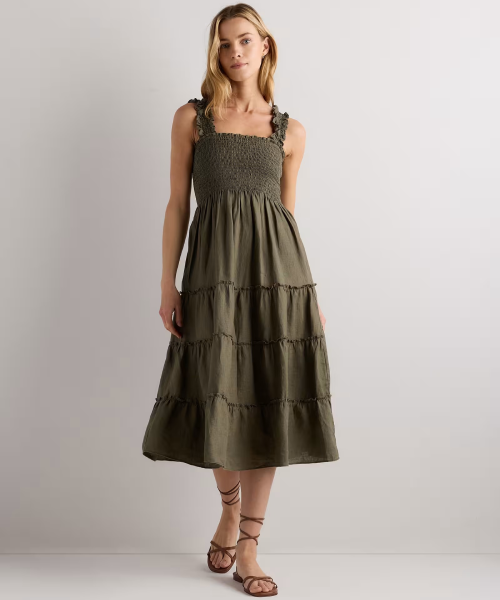
Available at: Quince (onequince.com)
Best for: Those who want quality European linen at the most accessible price available without compromising on material specification.
Quince’s European linen pieces are the starting point for anyone exploring quality linen without significant investment. The Belgian linen specification, the garment-washed finish that starts soft, and the clean minimal silhouettes produce a linen shirt, trouser, or dress that competes with brands charging three to four times as much for the material.
The cut is the area where Quince makes the most concessions to accessible pricing — the silhouettes are clean but not particularly distinctive. For those who want quality linen in classic proportions, this limitation is entirely acceptable. For those who want strong design as well as material quality, other brands serve better.
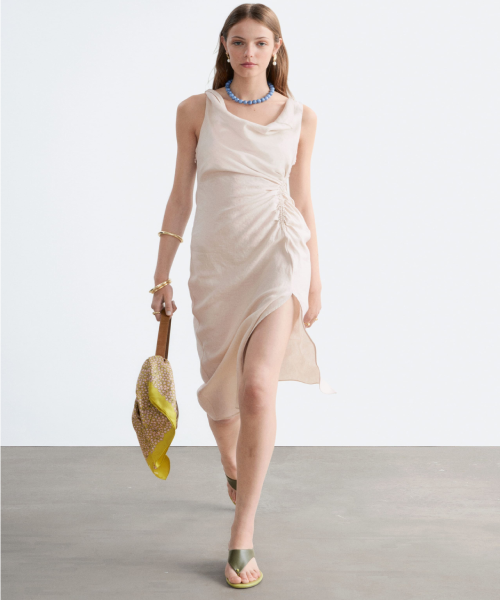
Available at: & Other Stories (stories.com), in stores
Best for: Those who want linen clothing that has design consideration alongside material quality at a mid-range price.
& Other Stories consistently produces linen pieces that achieve the specific relaxed-but-considered quality that makes linen work as an aesthetic choice rather than just a practical one. The proportions — slightly oversized shirts, wide-leg trousers, smocked midi dresses — are genuinely thought through rather than generic. The linen weight and finish are above what the price suggests.
The seasonal availability means pieces sell out; checking the new-in section at the start of the linen season (March–April in the UK) provides the best selection.
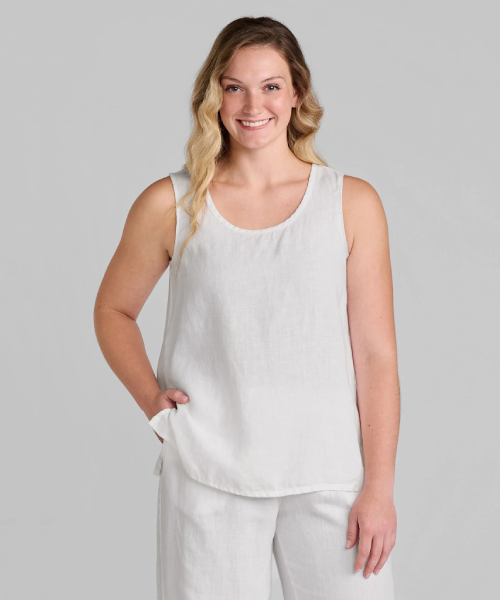
Available at: Flax London (flaxlondon.com)
Best for: Those who want British-designed linen clothing with a strong design identity and above-average construction.
Flax London designs around linen specifically — it’s the brand’s singular material focus, which produces the kind of depth of product development that generalist brands can’t match in a single material category. The smocked details, the specific proportions of their wide-leg trousers, and the dye colours they achieve in linen are all the result of a brand that thinks about one material constantly.
At £95–250, Flax London is a considered purchase. For those who love linen and want a brand that shares that love, this is the brand worth knowing.
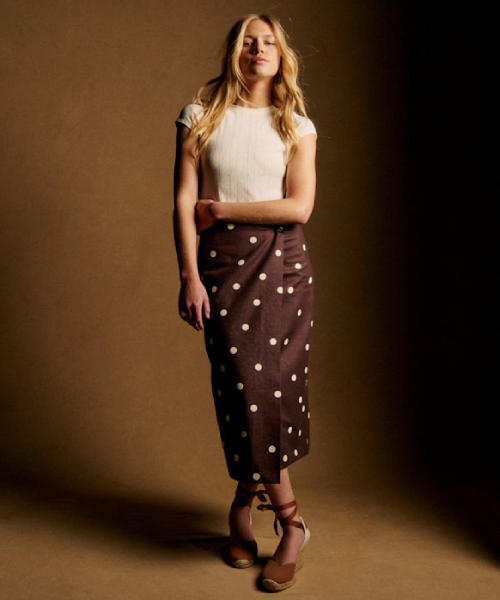
Available at: Sézane (sezane.com), in Sézane stores
Best for: Those who want linen clothing with a specifically French-influenced aesthetic — slightly undone, feminine, effortless.
Sézane’s linen pieces consistently achieve the specific combination of relaxed and polished that the French lifestyle aesthetic promises and delivers inconsistently across brands. The linen weight is appropriate, the colours are seasonal and considered, and the construction is above fast fashion standards. The aesthetic is specific enough that it either appeals immediately or doesn’t — those who love Sézane’s world tend to love these pieces specifically.
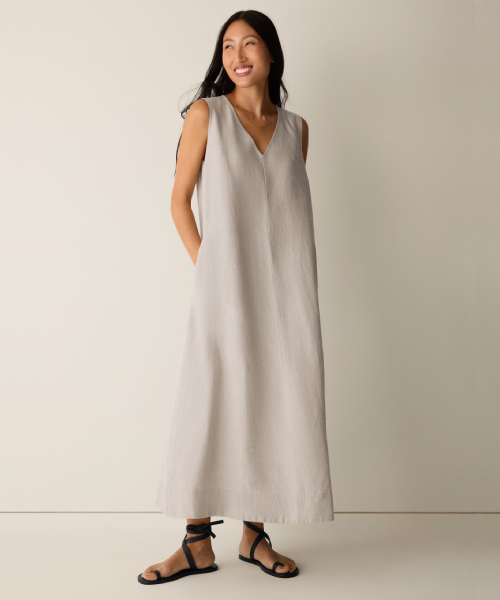
Available at: Eileen Fisher (eileenfisher.com)
Best for: Those who want investment-quality linen with an emphasis on clean silhouettes, ethical sourcing, and long garment life.
Eileen Fisher uses organic linen and prioritises construction quality and garment longevity in a way that justifies the significant price premium over mid-range alternatives. The silhouettes are minimal and deliberately classic — designed to remain relevant rather than trend-specific. The brand’s take-back programme (they resell and recycle worn garments) is one of the most functional circular fashion schemes in operation.
For those who want to buy once and keep for a decade, Eileen Fisher’s linen is the investment that supports that intention.
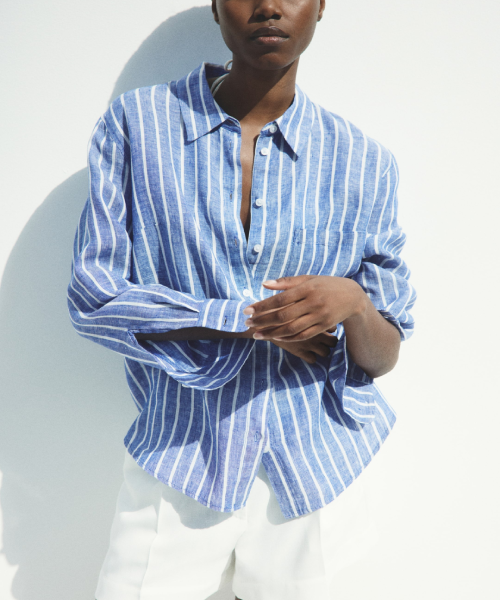
Available at: H&M (hm.com), in stores
Best for: Those who want to try linen at the lowest price point before committing to quality investment pieces.
H&M’s Premium Quality linen range uses genuine linen (the label confirms the fibre content) at prices that make experimentation uncomplicated. The quality is the floor of the category rather than a benchmark — the linen weight is lighter, the construction is simpler, and the durability is below the quality brands. But for someone who has never owned a linen shirt and isn’t certain they’ll enjoy the fabric’s characteristic wrinkle behaviour, starting at £19.99 before committing to a £95 Flax London piece is sensible.
Linen improves with every wash — this is the material’s specific quality that distinguishes it from most other fabrics. Machine wash on a cool cycle, remove promptly after washing to prevent deep creasing, and line dry or tumble dry on low. Iron while still slightly damp if you want a pressed look; embrace the natural creasing if you prefer the relaxed linen aesthetic.
Do not dry clean linen unless specifically indicated. The heat required for dry cleaning can damage linen fibres and the chemicals can dull the natural lustre that makes quality linen distinctive.
Linen clothing rewards investment in material quality more than most fabric categories because the gap between cheap linen and quality linen is visible, tactile, and durability-relevant. Quince for the accessible European linen entry point. & Other Stories for the design-forward mid-tier. Flax London for the British specialist with genuine depth of linen knowledge. Sézane for the Parisian aesthetic. Eileen Fisher for investment-grade ethical linen. And H&M Premium for the first linen experiment before committing further. Whatever you buy — look for the linen weight and fibre specification on the label, wash before wearing for the initial softening, and embrace the wrinkle as the material’s character rather than its flaw.