HOME | Fashion | Beauty | Home Furnishing | Comparison | Top Reviews |

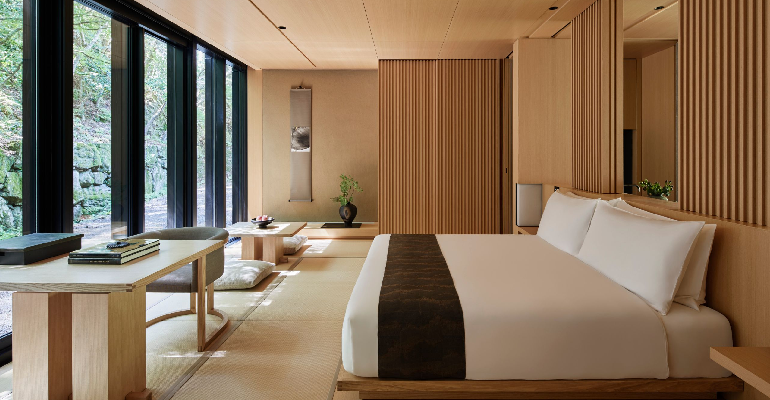
There is a specific feeling that happens in a genuinely good hotel room. The bed is somehow both firmer and more comfortable than your bed at home. The pillows are exactly the right number. The lighting is warm and controllable in ways your bedroom light switch doesn’t allow. The whole room feels quiet and curated and like it exists specifically to help you sleep, which is an experience so different from most people’s actual bedrooms that it can feel almost therapeutic.
Most of that feeling is replicable at home for considerably less than what the hotel charges per night. It requires understanding what’s actually producing the experience — which parts are hotel-specific and which parts are design and product decisions you can make in your own space.
Hotel beds feel different primarily because of three things: mattress quality, pillow quantity and arrangement, and the specific feel of quality bedding. Let’s deal with each separately.
Mattress quality is a longer-term investment than most people want to address in a bedroom refresh, but it’s worth naming because no amount of beautiful bedding produces the sleeping experience of a genuinely good mattress versus a poor one. The Saatva Classic, the Purple Hybrid Premier, and the Tempur-Pedic ProAdapt are three mattresses at different price points and construction types that hotel groups specifically purchase for their premium properties. If a mattress replacement is on the horizon, researching what actual hospitality buyers choose tells you more about what produces good sleep than consumer review sites optimized for affiliate clicks.
Pillow arrangement in a hotel is almost always more pillows than you think you need. The standard king hotel bed has: two king sleeping pillows (what you actually put your head on), two king Euro shams (the large square pillows that stand up at the back — these are decorative and structural), two standard sleeping pillows in shams positioned in front, and one or two accent pillows. This arrangement looks abundant and intentional because it is both. The Euro shams specifically are what most people’s home beds are missing — they create the layered, hotel-like backdrop that makes even modest bedding look considered.
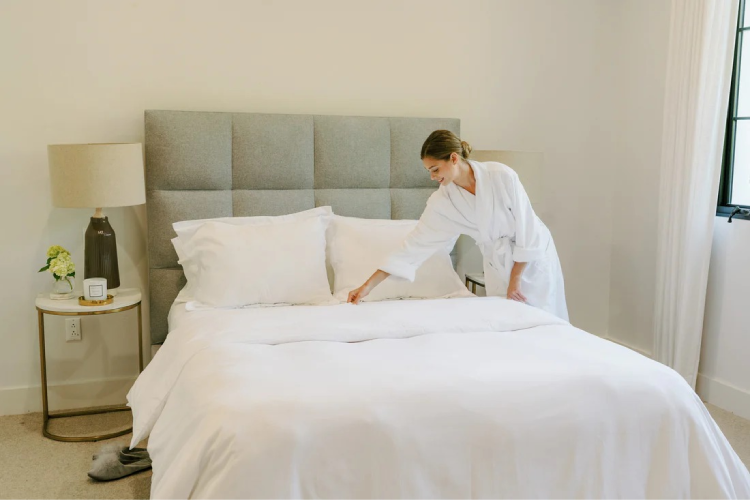
Quality bedding is the single most impactful and accessible change for most people. Hotel chains buy their bedding specifically and the brands they use are available to consumers. The Marriott uses Standard Textile and their own branded bedding line; the Four Seasons uses Frette; the Westin partnered with Pottery Barn for their Heavenly Bed concept. What these brands have in common: high-thread-count percale or sateen cotton, white or neutral color, and quality that holds up to industrial laundering — which means it certainly holds up to home washing.
For consumers: Parachute percale sheets ($150-200 for a queen set), Brooklinen Classic Core ($100-150), or if budget is the concern, the Threshold Performance Sheet Set from Target ($45-60) receives surprisingly strong reviews for a mass-market product. White or light neutral bedding looks more hotel-like than patterned because it reads as clean, curated, and consistent with the entire “everything is intentional here” impression that good hotel rooms produce.
Down or down-alternative pillows produce the softness associated with good hotels. Synthetic fiberfill pillows go flat faster and don’t have the same give and recovery. The Pacific Coast Feather Company makes hotel-supply pillows and sells them direct to consumers — the same pillows in many Hilton and Marriott properties cost around $50-80 per pillow.
The pillow protector underneath the pillowcase is something most people don’t use and most hotel rooms have. It’s a thin, protective case that goes directly over the pillow before the pillowcase goes on. It protects the pillow from oils and sweat (extending its useful life significantly) and adds a slightly smoother surface between the pillow and the pillowcase. This is a $15-20 investment that produces a noticeable tactile difference in how bedding feels and significantly extends the life of quality pillows.
The duvet or comforter should be oversized. Most people buy a comforter in the size of their bed — queen for a queen bed. Hotels typically use a comforter or duvet one size larger than the bed to produce the draped-over-the-sides, abundantly full look that photographs well and feels enveloping when you’re under it. A king comforter on a queen bed is the specific adjustment that produces this effect.
Overhead bedroom lighting — a single ceiling light controlled by one switch — is the primary cause of bedrooms that feel like bedrooms rather than like places designed specifically for rest. Good lighting in a bedroom involves multiple sources at different heights with warm color temperatures and ideally dimmer control.
Bedside table lamps are the baseline — one on each side of the bed, at a height where the bottom of the shade is roughly at shoulder height when sitting in bed. The specific proportion that most people get wrong: bedside lamps too small for the table and too short relative to the headboard. A lamp that’s dwarfed by the bedside table it sits on looks like an afterthought.
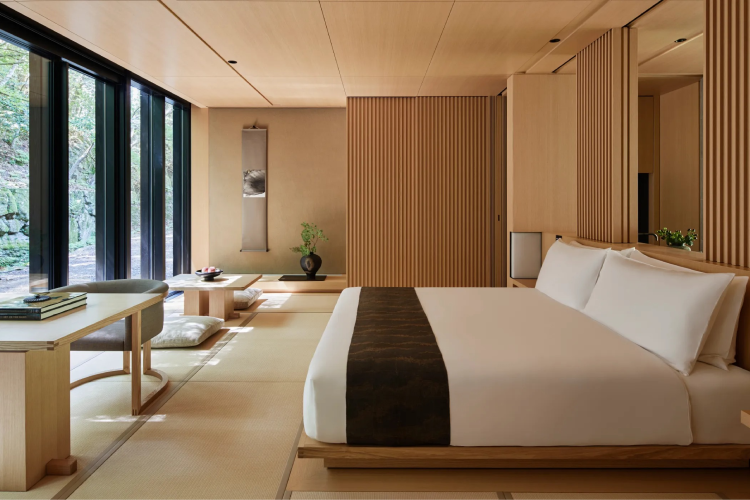
Color temperature matters enormously in bedrooms. Everything in your bedroom should be 2700K — the warmest available for most LED bulbs — or even 2400K if you can find it. Warm light in the evening signals to your body that nighttime is approaching in a way that cooler light actively disrupts. This is not just aesthetics — the lighting temperature in your bedroom in the evening has a measurable effect on sleep quality through its effect on melatonin production.
Blackout curtains or blackout liners are the sleeping quality improvement that most people who haven’t tried them genuinely underestimate. Light entering a room during sleep — streetlights, car headlights, early morning sun — affects sleep quality at a physiological level even when you’re not consciously aware of it. The Nicetown blackout curtains on Amazon cost around $25-35 per panel and are the most reliably reviewed budget option. Adding blackout lining to existing curtains you already like is also possible through clip-on blackout lining products.
The specific smell of a well-run hotel is not an accident. Major hotel chains invest significantly in signature scents that are diffused through the HVAC system or in individual spaces. The W Hotel fragrance, the Westin White Tea, the Four Seasons’ specific scent profile — these are deliberate brand decisions that produce the feeling of arriving somewhere intentional.
At home: a quality reed diffuser in a scent you associate with calm and sleep (lavender, sandalwood, cedarwood, or clean linen notes) placed in the bedroom produces a subtle ambient scent that contributes to the overall hotel-like experience. Diptyque, Aesop, and Boy Smells all make excellent room diffusers. The NEST New York Reed Diffuser is widely available and has strong reviews for longevity and projection. A more affordable option: the Mrs. Meyer’s Reed Diffuser around $10-12, which performs above its price.
The overnight experience that hotel rooms create is partly about eliminating distraction — no visible mess, no piles of laundry, no work intrusions — and partly about positive sensory details that signal intentionality. The scent is the least visible element but often the first thing that registers when you walk into a space, which is why hotels have invested so heavily in it.
Hotels have no visible clutter. Not because hotel guests don’t have stuff, but because hotel design provides concealed storage for everything and guests travel with less than they keep at home. The specific feeling of visual calm in a good hotel room is primarily the absence of visible disorder rather than the presence of beautiful objects.
Bedrooms that feel calm and restful tend to have: surfaces clear of everything except intentional objects, no visible cables or charging equipment (or charging stations designed to look neat), clothing completely concealed in wardrobe storage, and a single or small number of carefully chosen decorative objects rather than accumulations of things that arrived on surfaces and never left.
The most impactful change many bedrooms can make is removing or concealing objects rather than adding anything. The bedside table that has seven things on it — phone, lamp, three books, a glass, a phone charger, something that arrived there three weeks ago — can become a lamp and one book and a small plant and immediately the table, the lamp, and the book all look more intentional because they’re not competing with everything else.