HOME | Fashion | Beauty | Home Furnishing | Comparison | Top Reviews |

Comparing ASOS and Nordstrom is a bit like comparing a street market to a department store. Both sell clothes. Both can get things to your door in a few days. The experience of navigating each, the quality of what you find, the returns process, the reason you’d go to one versus the other — almost nothing about them is actually comparable except the most surface-level fact that both are places where you can buy clothes on the internet.
Understanding what each one is for is more useful than the comparison, so let me start there.
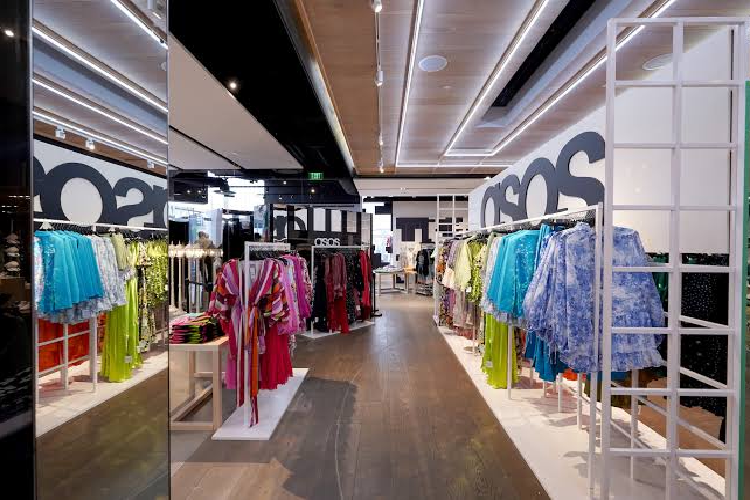
ASOS is a British online retailer that sells an enormous range of fashion at primarily accessible price points. The range includes ASOS’s own label (their cheapest and most trend-responsive products), mid-tier brands (Topshop, which is now an ASOS-owned brand, various contemporary labels), and some premium brands at their real prices. The whole thing exists on a platform that is genuinely well-designed for browsing — the filtering is excellent, the size and fit guidance has improved significantly, and the range is wide enough that you can usually find something in whatever specific combination of style and price you’re looking for.
The appeal of ASOS is breadth and speed. They move fast. When a trend appears, ASOS versions of it are available quickly and at prices that don’t require careful consideration. For fashion that you want now, in whatever size you are, ASOS is often the fastest path to something wearable.
The limitation of ASOS is quality consistency. The own-label products vary considerably. Something that costs £25 at ASOS costs £25 for a reason, and while some pieces genuinely exceed expectations for the price, others disappoint in ways that a higher price point would predict more reliably. The brand mix on the platform is also uneven — some of the third-party brands sold on ASOS are excellent and some are not, and navigating which is which requires familiarity with the brands rather than trust in ASOS as a curator.
Nordstrom is an American department store with a significant online presence. The product mix spans accessible (BP. their house brand, various mid-tier contemporary labels) to genuinely premium (Theory, Vince, many luxury brands). The curation is more intentional than ASOS’s — Nordstrom makes decisions about which brands to carry and how to present them rather than attempting to carry everything.
The thing Nordstrom is genuinely famous for — and has been for decades — is customer service. Free shipping. Free returns. No time limit on returns for most items. The return experience is as frictionless as it gets in retail. This matters for online fashion specifically because fit uncertainty is the primary barrier to buying clothing without trying it on. Nordstrom’s returns policy removes that barrier almost completely.
The buying experience at Nordstrom skews toward investment pieces rather than trend pieces. The prices are higher than ASOS across equivalent categories. But what you’re paying for is partly quality and partly the confidence that if it doesn’t work out, the return process won’t be a source of additional frustration.
I want to spend time here because for online clothing purchases, the returns experience is arguably more important than the purchase experience.
ASOS has a returns process that works but requires engagement. You initiate the return online, print a label or drop off at a collection point, wait for the refund to process. The returns are technically free in many markets. The window is 45 days. It functions, and most people who use ASOS regularly have figured out their local drop-off options and manage it without major frustration. But it’s not invisible the way the best returns processes are.
Nordstrom’s returns are different in a way that actually changes how you shop. When returns are genuinely free, genuinely hassle-free, and genuinely no-questions-asked, you buy with more confidence. You order two sizes and return the one that doesn’t fit. You buy something speculative and return it if the color isn’t right in your actual lighting. The returns policy is not just a logistics feature — it’s a shopping freedom feature, and it changes what you’re willing to order.
At equivalent price points, Nordstrom’s own-label pieces (Nordstrom Signature, BP., Caslon) generally outperform ASOS’s own-label pieces in fabric quality and construction. This is a generalization with exceptions — ASOS has pieces that exceed expectations and Nordstrom has pieces that disappoint — but as a general pattern it holds.
Where this comparison becomes more complex is in the third-party brand overlap. Both platforms carry some of the same brands — Levi’s, Free People, various contemporary labels. For those brands, you’re buying the same product either way and the decision between ASOS and Nordstrom comes down to price (ASOS sometimes runs better promotions) and returns (Nordstrom is easier).
ASOS wins clearly on size inclusivity. Their extended size range is one of the most comprehensive in online fashion retail and it’s been a core brand commitment rather than a belated addition. From the smallest to the largest sizes available, ASOS’s range is genuinely broad and the fashion across the size range is equivalent rather than relegated.
Nordstrom has improved on size inclusivity but it’s not their historical strength. The extended size range exists but the fashion across sizes is less consistent.
Use ASOS for: trend pieces at accessible prices, extended size range shopping, ASOS own-label basics that you’re not planning to keep for years, and fast-fashion purchases where the price makes the lower quality threshold acceptable.
Use ASOS for: trend pieces at accessible prices, extended size range shopping, ASOS own-label basics that you’re not planning to keep for years, and fast-fashion purchases where the price makes the lower quality threshold acceptable.
Use both: for the brands they share, compare prices. For sizes Nordstrom doesn’t cover well, ASOS. For the best returns experience when spending real money, Nordstrom.