HOME | Fashion | Beauty | Home Furnishing | Comparison | Top Reviews |

Here’s how I ended up down a water filter rabbit hole at 11pm on a Tuesday.
I typed my zip code into the Environmental Working Group’s tap water database — something a friend had been telling me to do for months, and I kept putting off because I suspected I wouldn’t like what I found. She was right. My local water had detectable levels of PFAS compounds, chloramines, and nitrates sitting above the EWG’s health guidelines, even if they technically cleared the EPA’s legal limits. None of it was going to land me in the hospital. But drinking it every day for the next twenty years? Less comfortable with that than I was ten minutes earlier.
I’d been using a Brita for years. That night I learned Brita doesn’t touch PFAS. Doesn’t touch fluoride. Doesn’t touch most of what I’d just read about.
So I started looking at reverse osmosis systems — the kind that actually pull dissolved chemicals out at a molecular level. Most of them required drilling under the sink and hiring a plumber. I rent. That wasn’t happening. And then I found AquaTru.
I’ve now been using it long enough to have opinions that go beyond the unboxing experience. Here’s what I actually think.
Best for: Anyone serious about water quality who rents and can’t modify plumbing, people in areas with documented tap water issues, households tired of buying bottled water, and anyone whose Brita pitcher has been quietly not doing what they thought it was.
I’ve used AquaTru products directly and spent time analyzing independent lab test results, NSF certification documentation, and hundreds of verified buyer reviews across Home Depot, Trustpilot, and the BBB. My evaluation criteria are simple: does the filtration do what it claims, what is the realistic daily experience, what does it cost over time, and what happens when something goes wrong. No commercial arrangement with AquaTru here.
AquaTru is made by a California company called Ideal Living — the same outfit behind AirDoctor air purifiers. The pitch is deceptively simple: under-sink reverse osmosis is the gold standard for home water purification, but it costs hundreds of dollars to install professionally and you can’t do it if you rent. AquaTru built an RO system that sits on your counter, fills manually, plugs into a regular outlet, and needs zero plumbing.
That was a genuinely novel thing to do when they launched it, and it still is. Nobody in the countertop RO category has come close to matching AquaTru’s certification depth.
Erin Brockovich — the actual Erin Brockovich, not a lookalike — publicly endorses AquaTru and has spoken about the US drinking water contamination crisis at length. That matters more than a standard celebrity deal. She has spent her career on water contamination cases and doesn’t attach her name to things lightly. The brand has also partnered with the Environmental Working Group to build a tap water safety checker on their website that pulls from 48,000+ municipal water supplies nationwide. That’s the kind of institutional partnership that takes actual credibility to secure.
The brand is part of the broader conversation about PFAS contamination in US water supplies — something that’s moved from niche health concern to mainstream news story over the past few years. AquaTru was positioned to benefit from that shift before it arrived, which either reflects smart foresight or excellent timing. Probably both.
Who actually buys this? Renters who can’t touch their plumbing. Families who’ve looked up their local water quality and felt uneasy. People who’ve been spending $50–$80 a month on bottled water and are doing the math on how fast this thing pays for itself. Health-conscious households where the topic of what’s in the water has come up more than once.
What’s Actually Going on Inside the Machine
Reverse osmosis is not a marketing term. It’s a physical process where water gets forced through a semi-permeable membrane at the molecular level — the holes in that membrane are smaller than most dissolved contaminants, so they can’t pass through. It’s how desalination plants make ocean water drinkable. In a home context, it’s the most thorough water purification technology available that doesn’t require industrial equipment.
AquaTru runs a four-stage process. Stage one catches the big stuff — sediment, rust, visible particles. Stage two is a carbon filter that removes chlorine and chloramines, which protects the membrane downstream and improves taste. Stage three is the actual RO membrane, which is where lead, arsenic, chromium-6, fluoride, nitrates, microplastics, and heavy metals get blocked. Stage four is a coconut shell carbon block that catches whatever made it past the membrane — primarily PFAS compounds, prescription drug residues, and VOCs.
The result is water with 84 contaminants removed. Not claimed removed. Certified removed — by IAPMO, to five separate NSF/ANSI standards: 41, 53, 58, 401, and P473. That P473 certification specifically covers PFAS reduction, which is the one most people are worried about and the one that’s hardest to earn. No other countertop RO system currently holds all five of those certifications.
For context, a standard Brita pitcher is certified to NSF 42 and 53, which covers taste, odor, and some chlorine reduction. That’s fine for what it does. But it doesn’t remove fluoride, doesn’t touch PFAS, doesn’t touch nitrates. The gap between a Brita and AquaTru isn’t small.
One thing worth knowing before you buy: RO removes everything dissolved in water, including the calcium and magnesium that give good spring water its character. Standard RO water tastes very clean but sometimes flat or almost hollow. A lot of people love it. Some find it off-putting. AquaTru sells alkaline versions of both the Classic and Carafe that add minerals back in post-filtration — worth considering if you’ve tried RO water before and found it lacking.
Setup genuinely takes ten minutes. There’s no plumber to schedule, no cabinet to empty, no hole to drill. You take the tanks out, seat the filters, run a flush cycle three or four times to condition the system, and you’re making clean water. The instructions are clear. I did it without reading them first, which probably tells you something about the complexity level.
Day to day: you fill the tap water tank at the back of the unit, the system runs its filtration cycle, and clean water accumulates in the front tank or carafe. When you want a drink, you pour from the front. That’s it.
Where it requires some adjustment is the wastewater situation, and nobody explains this well in advance. RO systems produce concentrate — water with the removed contaminants — as a byproduct of filtration. In AquaTru’s design, this accumulates in the tap water tank after a filtration cycle. You need to dump it before refilling. New users regularly forget, and occasionally drink from the wrong side. Not dangerous — it’s just concentrated tap water — but alarming until you understand what happened. Dump the tap water tank before every refill. Write it on a sticky note for the first two weeks.
The Classic’s clean water tank holds about 0.75 gallons. The tap water tank holds about one gallon. If you’re a household of three or four people drinking primarily from this unit, you’ll be filling it multiple times a day. Some people find that perfectly manageable. Others find it relentless. If high refill frequency sounds like it would drive you crazy, either factor that in or look at the Under Sink model.
The Classic is big. Bigger than it looks in product photos, which is a common complaint. It’s roughly the footprint and height of a large drip coffee maker — maybe slightly larger. In a spacious kitchen, not an issue. In a small apartment galley kitchen where every inch of counter space is contested territory, you will feel it.
The Carafe is noticeably more compact, and for a lot of buyers it’s the right choice for exactly this reason. Same filtration, smaller footprint, glass carafe instead of plastic tanks. If you’re comparing the two and counter space matters, go with the Carafe.
The Filter Cost Reality
This trips people up more than anything else. The machine costs $375–$475. That feels like the full cost of ownership. It isn’t.
Filters need replacing on schedule — Stage 1 every 6 to 12 months, Stages 2 and 4 every year or 600 gallons, Stage 3 every two years or 1,200 gallons. Running total: roughly $100 to $120 per year. Over five years, you’re looking at $875 to $1,075 all-in for the Classic, including the machine.
Compare that to bottled water. A household spending $50 a month on bottled water spends $600 a year. AquaTru becomes cheaper than bottled water within two years and keeps getting more economical after that. It’s not a cheap purchase. Over any meaningful time horizon it is a financially rational one.
What AquaTru claims — and this isn’t puffery, the math checks out — is that a filter set replaces around 4,500 plastic water bottles. That’s the environmental side of the calculation, and it’s real.
The water quality shift is real and most people notice it immediately. The taste goes from whatever your tap water tastes like — chlorine-y, flat, or fine — to very clean and neutral. If you make coffee or tea with it, the improvement is genuinely noticeable. Multiple people across review platforms mention the coffee specifically, which is a good proxy for water quality because coffee is extremely sensitive to mineral content and dissolved compounds.
The no-plumbing design is the brand’s biggest practical win. Renters can buy and use this without any conversation with a landlord. You don’t have to own your home. You don’t need any tools or any technical knowledge. That makes a certification-verified RO system accessible to people who previously had no path to one.
The Carafe’s glass design is a genuine quality detail. Plastic tanks work fine and AquaTru’s plastic is BPA and BPS free, but for buyers who care about what their clean water sits in, glass is a meaningful step up.
The customer service situation is the most significant caveat and worth being direct about. The filtration works. The machines themselves are solid for most buyers. But when something does go wrong — a unit fails, a warranty claim is needed — the experience described across independent reviews is inconsistent in a way that’s hard to ignore on a $400+ purchase.
Some buyers describe smooth, fast resolutions. Others have experienced weeks of missed follow-ups, expired return labels, and closed support tickets. One documented account on Trustpilot describes a safety-critical leak that took over a month to resolve and required initiating a bank dispute before the company acted. That’s not the majority experience, but it’s documented enough to be a real pattern rather than an outlier.
The one-year warranty is also on the shorter side for a $475 appliance. And the reports of pump failures around the 12–14 month mark — conveniently just outside warranty coverage for some buyers — show up with enough frequency to be worth knowing about.
None of this changes the filtration performance. But it does mean you should factor post-purchase support into your decision, not just the specifications.
Based on AquaTru’s official product catalog and featured items on their website.
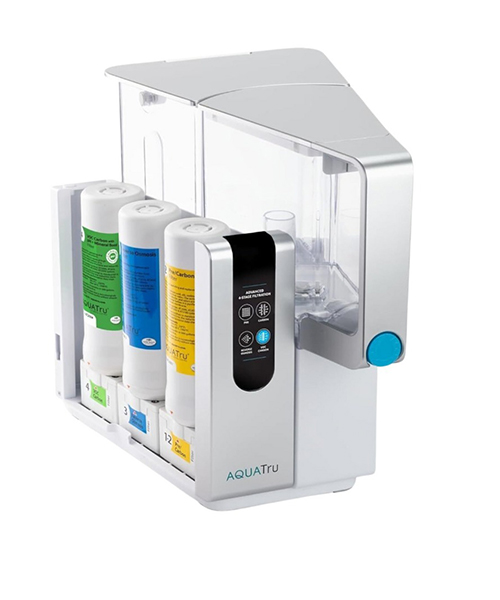
Best for: Households that want the most capable countertop RO system available and have the counter real estate to house it.
Top Features:
One Honest Drawback: The footprint is large. In a tight kitchen this becomes a daily annoyance rather than a minor inconvenience. Measure your available counter space before ordering.
Verdict: The benchmark product in the countertop RO category. If you want the highest level of certified contaminant removal without hiring a plumber, this is the one. The price is real, the performance is real.
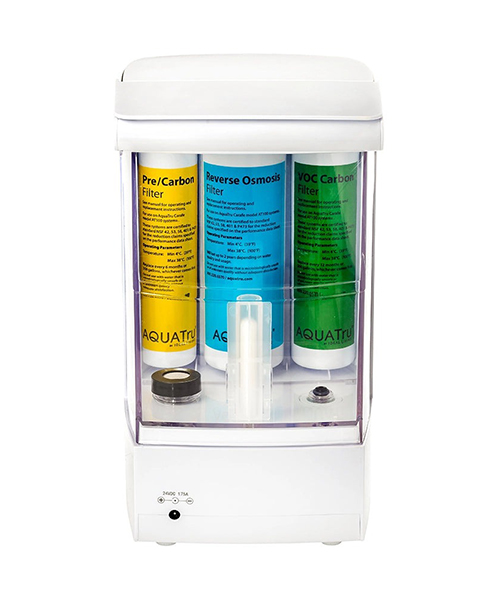
Best for: Smaller households, buyers who care about glass versus plastic, and anyone for whom the Classic’s size is a genuine problem.
Top Features:
One Honest Drawback: Smaller capacity means more frequent refills for larger households — processing a full feed tank takes 12–15 minutes for around 8 cups of clean water.
Verdict: For one or two people, this is the sweet spot — lower price, smaller footprint, glass carafe, same filtration. The only reason to go Classic over Carafe is if you need the higher daily output.
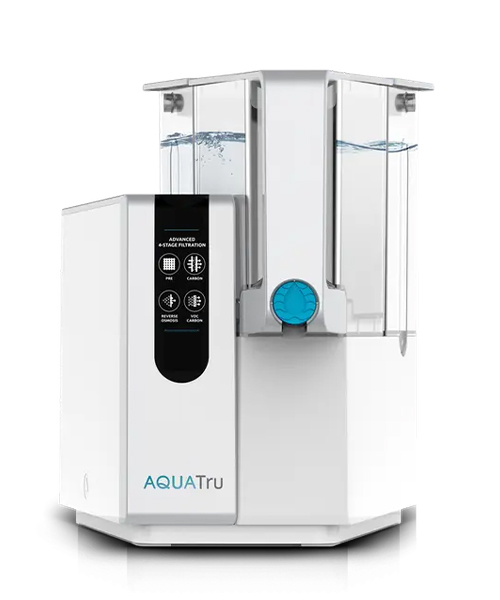
Best for: People who want app-based monitoring of filter life, TDS readings, and water consumption — or who simply tend to forget when they last changed a filter.
Top Features:
One Honest Drawback: The app has had connectivity issues reported on both iOS and Android — connection drops, filter-life reset failures, and occasional crashes. The unit filters fine without the app running, but if the app experience is unreliable it removes much of the reason to pay the premium.
Verdict: Worth it if you genuinely want the data. Skip it if you’d rather not depend on another app working correctly.
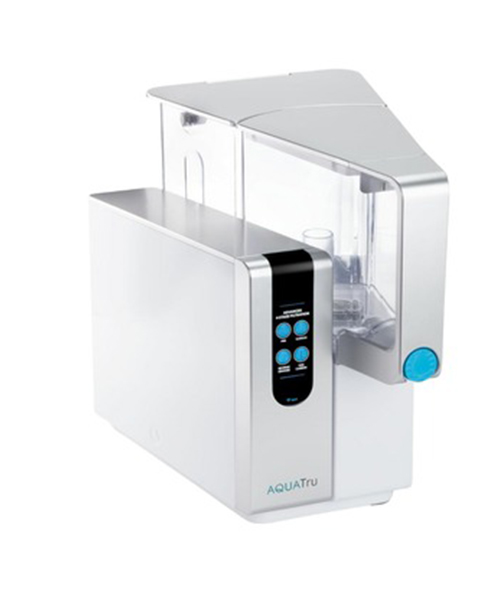
Best for: Anyone who has tried RO water before and found it tastes flat, or who specifically wants the remineralization benefits of alkaline water alongside contaminant removal.
Top Features:
One Honest Drawback: The alkaline remineralization filter costs slightly more to replace than the standard VOC filter, adding a small increment to the annual running cost.
Verdict: If standard RO water’s flat taste is a dealbreaker, buy this version. If you’ve never had RO water and aren’t sure, buy the standard first — you might not notice or care about the mineral content at all.
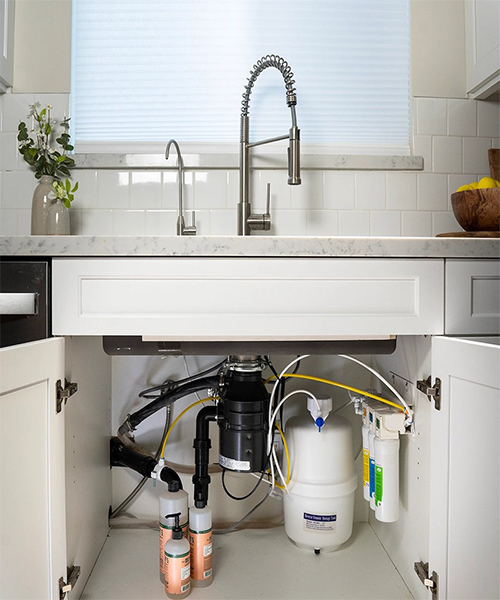
Best for: Homeowners ready to commit to permanent RO filtration and want clean water directly from the tap without any countertop footprint.
Top Features:
One Honest Drawback: Still requires basic plumbing work — connecting to supply lines and drilling a hole for the dedicated faucet. Not a job for everyone, and not an option for renters.
Verdict: The natural upgrade path for Classic owners who move into a home they own and want to stop filling tanks manually. Same trusted filtration, permanent installation, nothing on the counter.
Reading through AquaTru reviews across independent platforms, a clear split emerges pretty quickly. The water quality story is almost universally positive. The post-purchase experience, when something goes wrong, is where the frustration concentrates.
Here’s what stands out:
Almost everyone notices the water immediately. Not in a vague “it seems cleaner” way — in a specific, concrete way. The chlorine smell disappears. The taste is noticeably different. People mention making better coffee. A few describe drinking more water overall because it’s more enjoyable. That’s a consistent signal across reviews from people who clearly have no incentive to embellish.
The refilling and maintenance learning curve is real. The wastewater tank confusion catches a lot of first-time owners off guard. Weekly tank cleaning is required. Some buyers describe the refill frequency as tedious. None of these are dealbreakers, but they’re worth knowing before you commit to an appliance at this price.
Customer service is the wildcard. When it works, it works well and people say so. When it doesn’t, it really doesn’t — weeks of delays, closed tickets, expired return labels. The inconsistency is the problem. You can’t predict which experience you’ll have.
Here’s what real buyers have said, paraphrased from verified reviews:
Yes — the filtration performance is independently verified, full stop. IAPMO is a real third-party standards laboratory and NSF/ANSI certifications aren’t purchased — they’re earned through standardized testing. The fact that AquaTru holds five separate certifications, including the P473 standard specifically for PFAS reduction, means those claims about what gets removed have been tested by people with no financial stake in the outcome.
The nuance: product performance and customer service quality are different things, and AquaTru’s filtration credibility outpaces its after-sales consistency. The water purification is verifiably real. Whether your warranty claim gets handled smoothly is less certain.
The brand is sold at Home Depot, Walmart, and major retailers. It’s been independently reviewed and awarded by major consumer publications. Erin Brockovich’s endorsement, given her specific background, carries real weight. This is a legitimate product from a legitimate company with a real certification record.
Depends on where you’re starting from.
Coming from bottled water, the math is straightforward. AquaTru costs more upfront, then becomes cheaper than bottled water within about two years, while also producing no single-use plastic and delivering measurably cleaner water than most bottled brands. That’s a clean win over any medium-term horizon.
Coming from a Brita, the decision is less automatic. If your tap water is genuinely clean and the Brita is doing enough for taste, spending $375–$475 to remove things that may not be significantly present in your water is harder to justify. But if your local water has documented PFAS, lead, nitrates, or fluoride that concerns you — and a lot of American municipal water does — a Brita won’t touch those things. AquaTru will.
Coming from nothing, with serious water quality concerns: worth it without much hesitation. The no-plumbing design makes RO-level purification accessible to renters in a way that nothing else in the category does.
Where it’s a harder sell: very small kitchens where the Classic’s footprint is genuinely disruptive, households with budget constraints where $475 plus $120/year is a real stretch, and buyers who need absolute confidence in post-purchase support given the inconsistent service track record.
Most people comparing AquaTru to a Brita are doing it on price, which is an understandable instinct and a slightly wrong frame. They’re not really doing the same job.
AquaTru Classic | Brita Standard Pitcher | |
Filtration method | 4-stage Reverse Osmosis | Activated Carbon |
Contaminants removed | 84 (independently certified) | ~30 |
Removes PFAS | ✅ Yes — NSF P473 certified | ❌ No |
Removes lead | ✅ Yes (99%+) | Partial — some Brita models |
Removes fluoride | ✅ Yes | ❌ No |
Removes microplastics | ✅ Yes | ❌ No |
Removes nitrates | ✅ Yes | ❌ No |
NSF certifications | 5 (41, 53, 58, 401, P473) | 1–2 (42, 53) |
Needs electricity | Yes | No |
Upfront cost | $475 | ~$35 |
Annual filter cost | ~$100–$120 | ~$40–$80 |
Counter/fridge space | Large countertop unit | Standard pitcher, fits in fridge |
Best for | Real contaminant removal | Taste and basic chlorine reduction |
A Brita is not a bad product. For someone whose only concern is chlorine taste and who has genuinely clean tap water, a Brita is perfectly reasonable and a lot cheaper. But the moment your concern is PFAS, lead, fluoride, or dissolved heavy metals — the things that public health researchers actually worry about — a Brita doesn’t have a meaningful answer. AquaTru does.
AquaTru runs promotions regularly enough that buying at full price without checking first isn’t necessary.
Email signup discount — subscribing to the AquaTru mailing list before your first purchase typically yields a first-order discount. Worth doing before checkout.
Discount codes — the brand shares 20–40% off codes through partner channels and promotional periods. Running a quick search before buying often surfaces an active code.
Filter subscription pricing — AquaTru’s subscription model for replacement filters is cheaper per filter than buying individually. If you know you’ll use the system long-term, the subscription math makes sense.
Major sale events — Black Friday and holiday periods bring the deepest annual discounts on the machines themselves, sometimes 30–40% off. If you’re not in a rush, waiting for one of these windows on a $375–$475 purchase is worth it.
Bundle deals — buying a machine with an extra filter set included is typically cheaper per filter than buying the same filters separately. Useful if you’re committing for the long term.
The official website is aquatruwater.com and is where you’ll find the full product range, current promotions, bundles, and the best chance of applying a discount code. Customer support is accessible by phone at 800-220-6570 and through their online support portal.
AquaTru is also available at Home Depot, Walmart, and Amazon. Pricing is broadly consistent across channels. Promotional bundles and discount codes are usually exclusive to the official site.
The brand ships across the United States. Products available at major retailers are typically in stock for standard delivery.
Yes. PFAS reduction is certified under NSF/ANSI P473, which is the specific standard for testing PFOA and PFOS reduction. Third-party lab verified, not just claimed on the packaging.
Yes, at 93.5%+ per NSF/ANSI P473 certification. This is a meaningful differentiator since most pitcher-style filters including Brita do not touch fluoride at all.
No. You fill the tap water tank manually. It sits on the counter and plugs into a standard 120V outlet. No installation, no drilling, no landlord conversation needed. This is the primary reason renters specifically choose it.
Same filtration performance and identical NSF certifications — the water quality coming out is the same. The Carafe is more compact, uses a glass pitcher for clean water storage, and costs $100 less. The Classic has larger tank capacity, which matters more for bigger households. For one or two people, the Carafe is usually the better choice.
Stage 1 every 6–12 months. Stages 2 and 4 every 12 months or 600 gallons. Stage 3 (the RO membrane) every 24 months or 1,200 gallons. Annual cost runs approximately $100–$120.
RO water has very low total dissolved solids, which some people experience as flat or hollow-tasting. Others love it. If you’ve had RO water before and didn’t like the taste, the Alkaline model adds minerals back in post-filtration and makes a noticeable difference.
It’s specifically designed for this situation. No plumbing modification required, nothing permanent, nothing that requires landlord permission. Just counter space and a standard outlet.
Roughly 12 inches wide by 12 inches deep by 15 inches tall — comparable to a large drip coffee maker. In a big kitchen, fine. In a small apartment kitchen, it’s a real footprint consideration. The Carafe is meaningfully more compact.
One year from purchase. Given the price point, this is on the shorter end for the category. Post-warranty customer service has been inconsistent based on documented reviews — something worth being aware of.
AquaTru uses reverse osmosis; Berkey uses gravity-based carbon filtration. AquaTru removes more dissolved inorganic contaminants, including fluoride and PFAS, and has stronger independent certifications. Berkey has larger tank capacity, works without electricity, and retains beneficial minerals. Berkey’s certification situation has faced some regulatory challenges in the US recently — worth researching current status before buying.
Yes. The clean water carafe or tank is portable and fridge-sized. A lot of users keep a second clean water tank in the fridge so there’s always cold water available — AquaTru sells additional tanks for exactly this purpose.
Yes — and this is the number people most often fail to factor in when comparing purchase prices. Filters are genuinely needed on the stated schedule to maintain filtration performance. Running expired filters produces water that isn’t being properly purified.
Berkey — the most established gravity-based purification system. Works without electricity, great for emergencies and off-grid situations, retains beneficial minerals, and has strong overall performance. The caveat is Berkey’s NSF certification status has been complicated by regulatory issues in the US market in recent years. Worth researching the current situation before buying.
iSpring RCC7 — a traditional under-sink RO system with excellent performance and lower annual filter costs than AquaTru once installation is done. Requires professional or advanced DIY installation, which makes it unavailable to renters. For homeowners who want the best long-term cost-per-gallon on RO water, it’s a legitimate competitor.
Waterdrop G3 — a tankless under-sink RO system that’s gained traction as a cleaner, more modern alternative to traditional under-sink systems. Faster filtration speed, smart filter monitoring, and a more aesthetically refined design. Requires installation but more DIY-accessible than traditional systems. Worth comparing if you own your home and want permanent installation.
ZeroWater pitcher — a step up from Brita in the pitcher category, with a five-stage system and a well-known TDS meter. Meaningfully cheaper than AquaTru. The limitation is that zero TDS doesn’t equal zero contaminants — specifically for PFAS and certain heavy metals, the TDS reading is misleading. Worth knowing before treating ZeroWater as an RO equivalent.
LifeStraw Home — a credible, well-certified gravity pitcher for buyers who want a meaningful step up from Brita without the AquaTru price commitment. Doesn’t use RO technology, so it won’t match AquaTru on dissolved inorganics, but the NSF certifications are solid and the price is much more accessible.
Here’s where I landed after putting real time into this.
AquaTru does what it says it does, and the proof isn’t the brand’s own marketing — it’s third-party laboratory certification across five separate NSF/ANSI standards. No other countertop RO system has that depth of independent verification. The water quality improvement is real and most people notice it within hours of setup.
The practical experience has rough edges. The counter space is real. The refill frequency is a legitimate adjustment for high-consumption households. The flat taste of standard RO water catches some buyers off guard. And the customer service situation — while not every buyer’s experience — is documented well enough across independent platforms that it deserves acknowledgment rather than dismissal.
Whether it’s worth it comes down to a simple question: what’s in your water, and how much does it matter to you? Look up your zip code in the EWG tap water database. If what you find is benign, a good pitcher filter handles your needs at a fraction of the cost. If you find PFAS, lead, nitrates, or fluoride sitting above health guidelines — and a lot of people do — AquaTru is the best-certified countertop tool available to address it without calling a plumber.
For the right household, it’s not just worth it. It’s one of those purchases where you wonder why you waited.
Overall Rating: 8.2 / 10
Category | Score |
Filtration Performance & Certifications | 9.5 / 10 |
Ease of Setup | 9 / 10 |
Daily Use Experience | 7.5 / 10 |
Water Taste Improvement | 9 / 10 |
Value for Money (long-term) | 8 / 10 |
Design & Counter Footprint | 6.5 / 10 |
Filter Replacement Cost & Access | 7.5 / 10 |
Customer Service Reliability | 6 / 10 |
Overall | 8.2 / 10 |