HOME | Fashion | Beauty | Home Furnishing | Comparison | Top Reviews |

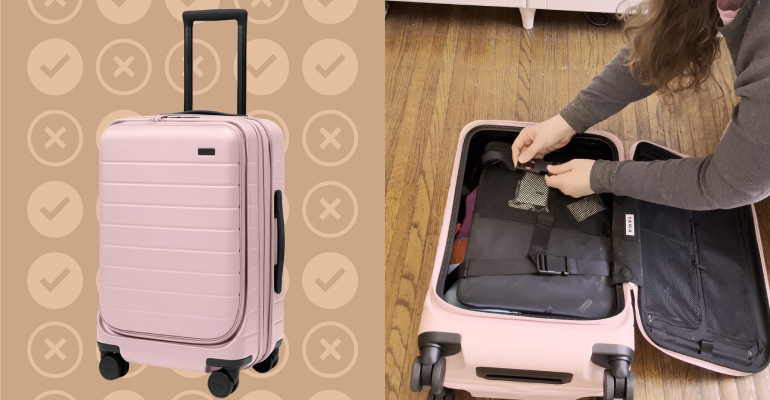
Most packing advice is written by people who have a lot of opinions about packing cubes and not much else to say. This guide is about what actually works for getting the most out of a carry-on on real trips — specifically the Nobl Travel carry-on, which has a specific set of dimensions and organizational features that reward certain packing approaches over others.
The goal: one week in a carry-on, checking no bags, arriving with everything you need and nothing you don’t.
Most people approach carry-on packing as a volume problem — how much can I fit? The more useful frame for carry-on-only travel is weight. A bag that’s packed to capacity but under the weight threshold for airlines that weigh carry-ons is fine. A bag that’s packed lightly but is overweight is a problem on some international carriers.
Nobl’s carry-on itself weighs approximately 6 to 6.5 pounds empty. On carriers with a 7-kilogram (15.4 pound) carry-on limit — common on European carriers — that leaves you about 9 pounds of content before you hit the limit. On carriers with a 10-kilogram limit, you have about 16 pounds. Know your routes and your carrier policies before you start packing.
For US domestic travel, carry-on weight limits are rarely enforced in practice. Pack for volume and comfort rather than weight on domestic routes.
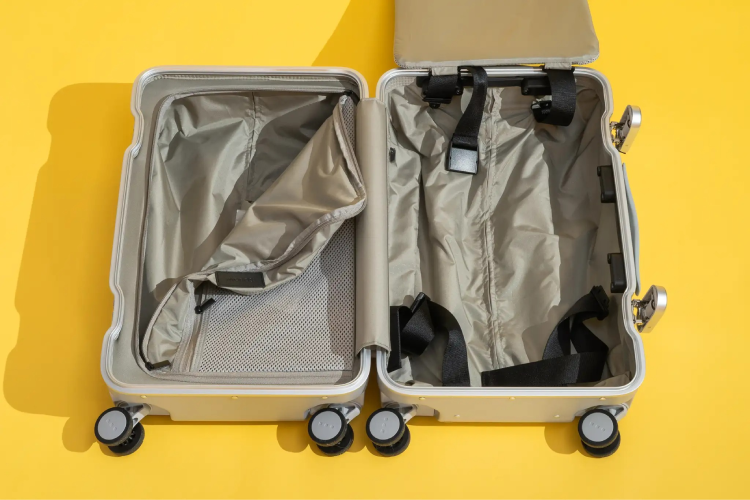
The Nobl carry-on’s main compartment has a divider down the middle — compression straps on one side, mesh panel on the other. The compression straps are functional, not decorative. They actually compress the contents enough to close the bag at full capacity and prevent shifting in the overhead bin.
The practical packing approach: put your heaviest items against the bag’s back panel — the side that rests against the overhead bin when loaded. Shoes, toiletries bag, any hard items. This puts the weight against the structural part of the bag and prevents the heavier items from shifting and compressing the clothing.
Clothing goes in the main cavity. The compression straps hold it in place. You don’t need packing cubes if you fold consistently — roll method for casual clothes, ranger roll for items that crease easily, flat stack for dress shirts or trousers that need to arrive unwrinkled.
The front pocket is for items you need access to during travel, not for packing capacity. Passport, boarding pass, phone charger, a pen, earbuds. Keep this pocket functioning as intended rather than treating it as overflow space.
This is the framework that works for most professional travelers doing one-week carry-on-only travel.
Seven pairs of underwear and socks — non-negotiable. Don’t try to re-wear these or count on laundry.
Three to four bottoms — two pairs of trousers or pants plus one pair of jeans or casual pants. Most people overestimate how many bottoms they need. Bottoms don’t need daily changing unless you’re in a situation that demands it.
Five to six tops — three professional and two or three casual, depending on the trip type. Shirts take up more space than trousers but weigh less. The balance point for most travelers is fewer bottoms and more tops rather than the reverse.
One layer — a jacket, blazer, or cardigan depending on the season. Wear this on the plane rather than packing it. Worn-on layers don’t count against carry-on volume.
One pair of shoes beyond what you’re wearing — pack shoes that work for more than one occasion. A clean white sneaker or a simple leather shoe that works for both dinner and day use. Two shoes for two contexts is the maximum that works in a carry-on.
Toiletries in TSA-compliant containers in the dedicated toiletries section. If you’re staying at hotels, you don’t need to bring full-size product — use the hotel toiletries for most things and pack only the products the hotel won’t have.
The instinct to pack for every possible scenario is the enemy of carry-on travel. Challenge every item with: how likely am I to actually need this, and what’s the cost if I’m wrong?
“Just in case” items — the extra pair of shoes, the additional jacket, the formal outfit for an event that’s not confirmed — are the things that turn a carry-on trip into a checked bag trip. The cost of being wrong is almost always manageable. You can buy a cheap umbrella at your destination if it rains. You can go to a pharmacy for anything you forgot. You can wear what you have to an event that called for something slightly different and be fine.
Guidebooks, heavy books, full-size electronics that can be substituted by phone or tablet — these are the weight items that eat into your carry-on weight budget without proportional value. A Kindle weighs less than one paperback.
The Nobl carry-on is sized for overhead bin compliance on mainline carriers. The strategy for getting overhead bin space consistently:
Board early if you have the option. Overhead bins fill from the front and empty first at the front. Business and premium economy travelers board early and overhead space near the front fills quickly. If you’re in economy on a full flight and you board in the last group, the overhead bins near your seat are often full and the bag ends up two or three rows behind you.
If you’re on a regional jet where the bag might not fit — and the gate agent is taking bags to gate-check — put it in the overhead bin yourself before the gate agent can preemptively tag it. Most regional jet overhead bins that look too small are actually fine if you load the bag wheel-first and on its side.
Never check the Nobl voluntarily if you can avoid it. The point of the carry-on investment is arriving with your bag at the carousel instead of waiting for it.