
Most reviews answer this question wrong.
They either say yes, unconditionally, because they have a financial interest in your purchase, or they say no because the price is objectively high and they’re performing fiscal responsibility on your behalf. Neither is actually useful.
The honest answer is conditional. Eight Sleep is absolutely worth it for a specific type of person and absolutely not worth it for another. The entire value of this review is in helping you figure out which one you are — before you spend somewhere between three thousand and six thousand dollars on a mattress cover with a monthly subscription.
The question you need to answer before anything else: is temperature the primary reason your sleep is disrupted?
If yes, keep reading. If no, I’ll save you the time.

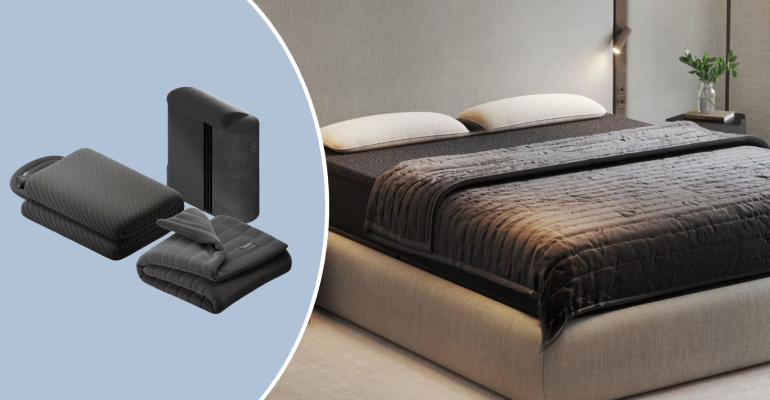
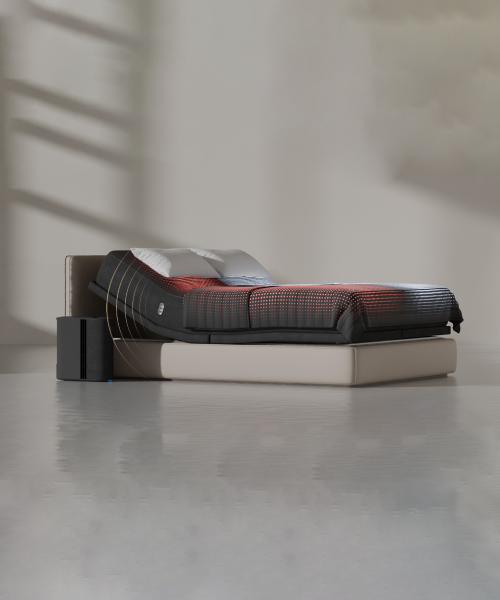
The Pod 5 is the current Eight Sleep flagship. It’s a smart mattress cover that actively cools and heats each side of the bed independently and tracks your sleep without a wearable. The current flagship is the Pod 5 with the Pod 4 remaining available as the more affordable option. The hub circulates water through micro-tubes in the cover, maintaining whatever temperature Autopilot has determined is optimal for your current sleep stage.
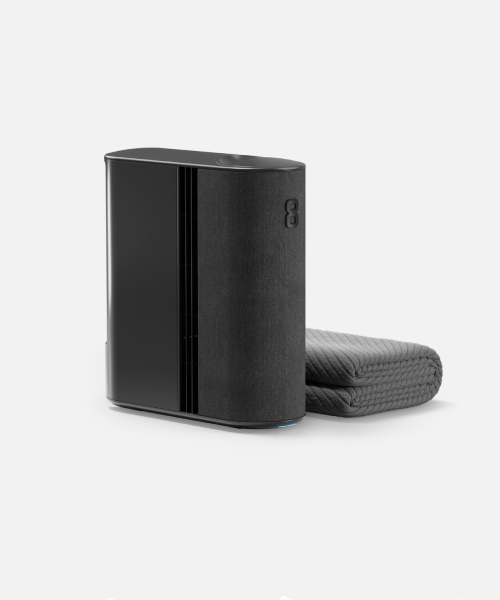
The Pod 4 achieves the same core temperature regulation as the Pod 5 at a lower price. The meaningful differences are pump noise (Pod 5 is quieter) and sensor accuracy (Pod 5 is better). For those whose primary need is temperature regulation and who aren’t noise-sensitive, the Pod 4 remains fully capable.
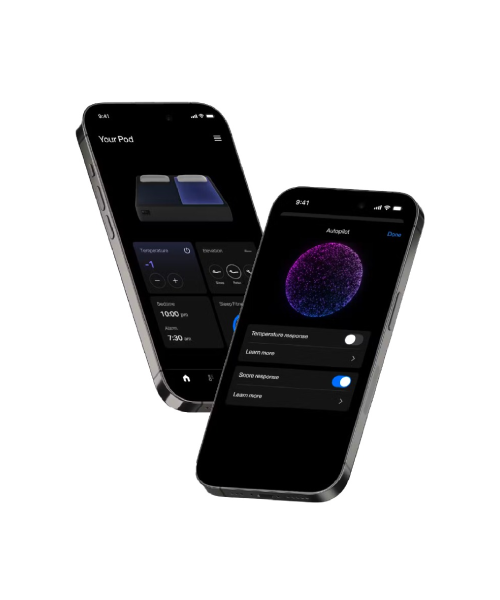
Full functionality requires an Eight Sleep membership at $19/month or $189/year. The subscription unlocks Autopilot, sleep health reports, HRV tracking, smart alarms, and extended warranty protection. The hardware works in basic manual-temperature mode without a subscription, but this is not why most people buy Eight Sleep.
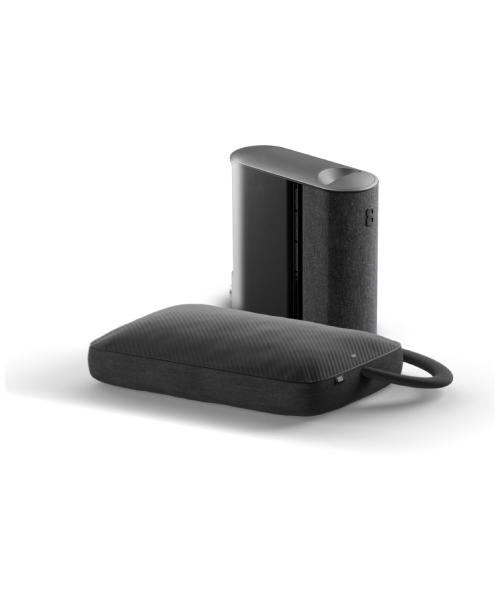
The pillow cover extension that brings water-based temperature regulation to the pillow surface — the area that hot sleepers often identify as secondary to the mattress surface in terms of temperature disruption. Same hub, same controls, meaningful addition for those whose head temperature is specifically the problem.
The hot sleeper who has tried everything else. You’ve kicked off the duvet, bought a bamboo sheet set, tried cooling gel toppers, positioned the fan strategically, kept the window open through winter. None of it solved the problem of waking up at 2am overheated and struggling to get back to sleep. This is the person Eight Sleep was designed for. The Pod’s active cooling addresses the temperature variable directly — not by creating a cooler environment around you, which is what everything else attempts, but by maintaining a cooler sleep surface in contact with your body throughout the night. For this person the improvement is not incremental. It’s immediate and substantial.
Couples with different temperature preferences. If you and your partner fight over the thermostat — or you wake up at 3am kicking the covers off — the Eight Sleep Pod is built for exactly that argument. The dual-zone independence means each side runs at whatever temperature the person sleeping on it needs. This is the specific capability no other solution provides — not a cooler room, not different duvets, not the window open on one side. Independent temperature control, simultaneously, for two people in the same bed.
Athletes and performance-focused sleepers. The relationship between sleep quality and athletic recovery is well-established, and the Pod’s sleep data provides the specific metrics — HRV, deep sleep percentage, recovery readiness — that athletes use to inform training load decisions. The temperature regulation also supports the specific deep sleep conditions that produce the most effective physical recovery.
Perimenopausal and menopausal women. The Pod 5 includes a Hot Flash Mode specifically designed for the temperature disruption of hot flashes — the ability to drop the sleep surface temperature rapidly and recover to the set temperature once the hot flash passes. For this demographic, the Pod addresses a specific and medically documented sleep disruption with a purpose-built response.
Those who sleep fine. If your sleep disruption is mild, occasional, or primarily caused by non-temperature factors, the Pod will be pleasant and interesting rather than transformative. The five-year total ownership often lands between $4,000 and $6,000 once you include the subscription, maintenance, and the mattress underneath that the cover requires. That’s a significant investment for interesting-and-pleasant.
Single people in temperature-controlled environments. If you’re single and could control your bedroom’s temperature, you’d save $4,000 and keep a window AC at its lowest setting in summer or use minimal heat in winter. Most people have slept well this way most of their lives. The dual-zone capability, which is Eight Sleep’s most powerful differentiator, is irrelevant for solo sleepers who can simply set the room temperature to their preference.
Those whose primary disruption is non-temperature. Stress, anxiety, inconsistent sleep schedules, caffeine timing, alcohol, young children, noise — none of these are addressed by temperature regulation. If you can’t clearly identify temperature as a primary disruption factor, the Pod’s core capability is not solving your core problem.
Those for whom the subscription model creates stress. The subscription runs around $19 per month or $189 to $399 per year. Eight Sleep currently bundles the first 12 months into checkout. If the idea of a recurring annual cost on top of a large upfront hardware investment is going to create ongoing financial stress, that stress itself is a sleep disruption that the Pod will not help with.
I want to address the subscription issue directly because it generates more heat in the Eight Sleep conversation than almost anything else.
The subscription is not a trick. It’s a genuine ongoing cost that you should factor into the purchase decision honestly and completely. Over five years it adds approximately $945–$1,995 to the total cost of the hardware depending on the tier you maintain. That is real money.
It is also, for the right buyer, the right model. The Autopilot temperature adjustment that the subscription enables is not a feature that Eight Sleep built and then arbitrarily put behind a paywall — it’s a feature that requires ongoing server infrastructure, algorithm updates, and the data processing that makes the system learn your sleep patterns over time. The subscription funds that infrastructure. If you use Autopilot, you are getting ongoing functional value from the subscription. If you don’t use Autopilot, you should cancel after year one and accept the limitation of manual temperature control.
The honest advice: don’t buy Eight Sleep if the subscription bothers you philosophically. There are other temperature regulation options — the Chilipad Dock Pro is the most commonly compared alternative, with no subscription and a lower upfront cost, though with manual-only temperature control and no sleep tracking. If the subscription model is the sticking point, the Chilipad solves the temperature problem without it.
If you’re buying Eight Sleep, buy it for the complete system including Autopilot, factor the subscription into your five-year cost calculation, and make your decision based on the honest total number.
The Pod does not make you a better sleeper. It removes one specific barrier to better sleep if that barrier is temperature. The distinction matters because buying it with the expectation that it will fix your sleep without any behaviour change on your part is setting up for disappointment.
What it will do, if temperature is your problem: give you back the sleep you were losing to a specific, solvable problem. For some people that’s a modest improvement. For others — the hot sleeper who has been waking up twice a night for three years — it is a significant and immediate quality-of-life change. Know which one you are. The rest of the decision follows from that.