HOME | Fashion | Beauty | Home Furnishing | Comparison | Top Reviews |
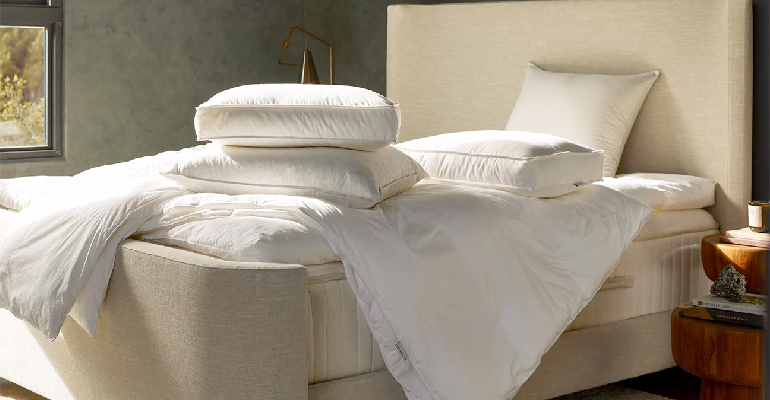
Premium bedding has become a crowded category. Brooklinen, Boll & Branch, Cozy Earth, Buffy — a new brand shows up every few months with beautiful photography and language about thread counts and long-staple cotton and the transformative power of a good night’s sleep. Most of them are selling the same thing at similar price points with varying degrees of actual quality difference.
Parachute is not new to this. They launched in 2014 as one of the first direct-to-consumer bedding brands and they’ve built a following that’s held through a decade of increasing competition. The question worth asking honestly is whether they’ve earned that following through actual product quality or whether they’re coasting on early mover advantage and good marketing.
The honest answer: the product quality is real, it’s not uniform across all their categories, and knowing which specific products justify the price changes how you shop the brand.
Parachute started with one product — a percale sheet set — and built from there. They now cover the full home textile category: sheets in multiple fabric types, duvet covers, pillowcases, towels, bath robes, blankets, and a growing home decor category.
The brand’s core commitment is to natural materials — long-staple cotton, European linen, Tencel, down, and wool. They don’t use synthetic fill in their primary bedding products and the natural fiber commitment runs through the catalog rather than appearing only in premium tiers.
They manufacture primarily in Portugal, which is relevant context. Portuguese textile manufacturing has a reputation for quality that’s distinct from the bulk manufacturing that produces most of the bedding sold in department stores. The production standards in Portuguese mills produce a different result than what you get from high-volume manufacturing in lower-cost countries, and the difference is tangible in how Parachute products feel and hold up.
The percale sheet set is where most people start with Parachute and it remains one of the strongest products in the catalog. Percale is a plain weave cotton — one thread over, one thread under — that produces a crisp, cool hand that softens with washing without going limp. It’s the opposite of the heavy, warm sateen weaves that dominate hotel bedding.
Parachute’s percale uses long-staple cotton, which matters for durability. Long-staple cotton fibers are longer than standard cotton fibers, which means fewer fiber ends in the yarn, which means less pilling over time. The sheets that pill after a year of washing are almost always made from short-staple or blended cotton where the fiber ends work their way to the surface.
The percale set includes a flat sheet, fitted sheet, and two pillowcases. The fitted sheet has deep pockets — up to 16 inches — and a full elastic band rather than just corner elastics. The full elastic band keeps the fitted sheet on the mattress through the night in a way that corner-elastic versions don’t, particularly on thicker mattresses.
After washing, Parachute’s percale softens but maintains its crispness — the quality that makes percale feel cool and clean rather than soft and warm. It’s not a cozy-in-winter sheet. It’s a year-round sheet that performs best for people who sleep warm or who prefer the sensation of clean, structured bedding over the softness of flannel or heavyweight sateen.
Price runs approximately $160 to $250 for a set depending on size. For sheets that will hold up for three to five years of regular use without significant degradation, that’s reasonable.
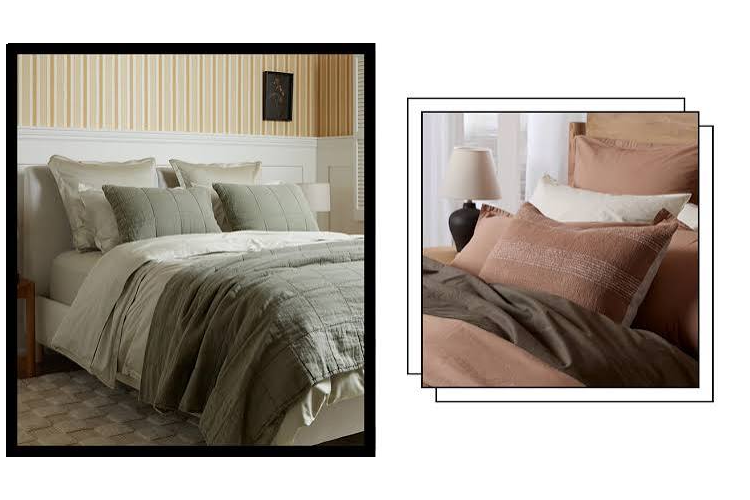
The linen sheet set is Parachute’s most popular product and probably their best one. European linen — flax grown and woven in Portugal — with a hand that starts textured and slightly stiff and softens beautifully over the first dozen or so washes.
New Parachute linen sheets feel substantially different from washed Parachute linen sheets. If you buy them and sleep on them the first night, you’re experiencing a product that hasn’t become what it’s going to be yet. The sheets need five to ten washes before they fully soften and the texture settles into what makes linen bedding beloved — a casual, slightly irregular texture with a coolness to the touch that’s distinct from the clinical coolness of high thread count cotton.
Linen is naturally temperature-regulating — it keeps you cooler in summer and doesn’t make you cold in winter. It’s also naturally moisture-wicking, which is meaningful for people who sleep hot or who live in humid climates. These aren’t marketing claims in linen’s case — the fiber’s structure genuinely has these properties.
The linen set is the right choice for warm-weather climates, for hot sleepers, and for people who want bedding that looks casually beautiful rather than formally crisp. The worn-in quality of well-washed linen is the aesthetic that’s dominated home photography for good reason — it looks lived-in in the most appealing way possible.
Price runs approximately $189 to $299 for a set depending on size. Worth it without hesitation for the right sleeper.
Sateen is the third main sheet offering and the one most different from the other two. Where percale is crisp and linen is textured, sateen is soft and has a subtle sheen from the four-over-one-under weave that exposes more thread surface.
Parachute’s sateen is warmer than their percale — appropriate for winter or for people who sleep cold. The softness is immediate rather than requiring washing to develop. The sheen reads as slightly more formal than percale or linen — hotel-adjacent in a way that some people love and others find slightly cold aesthetically.
The trade-off with any sateen is durability relative to percale. The exposed thread structure that creates sateen’s characteristic softness is also more susceptible to snagging and pilling over time compared to the tighter percale weave. Parachute’s long-staple cotton mitigates this significantly relative to budget sateen, but it’s worth knowing.
Price similar to percale — approximately $160 to $250 depending on size.
A Parachute sheet set paired with a Parachute linen duvet cover is the combination that most consistently produces the look and feel that made the brand famous.
The linen duvet cover has the same softening quality as the sheets — stiff-ish new, beautiful after multiple washes. The natural color variation in linen means no two duvet covers are exactly the same shade, which gives it the organic quality that photographs so well and that no synthetic material can replicate.
The corner ties inside the cover keep the insert from shifting and bunching, which is one of the small construction details that separates quality duvet covers from cheaper versions where the insert migrates to one end by morning. The closure is a button closure rather than a zipper — more durable over repeated washing and easier to operate than a long zipper that can catch on the fabric.
Price runs approximately $129 to $199 depending on size.
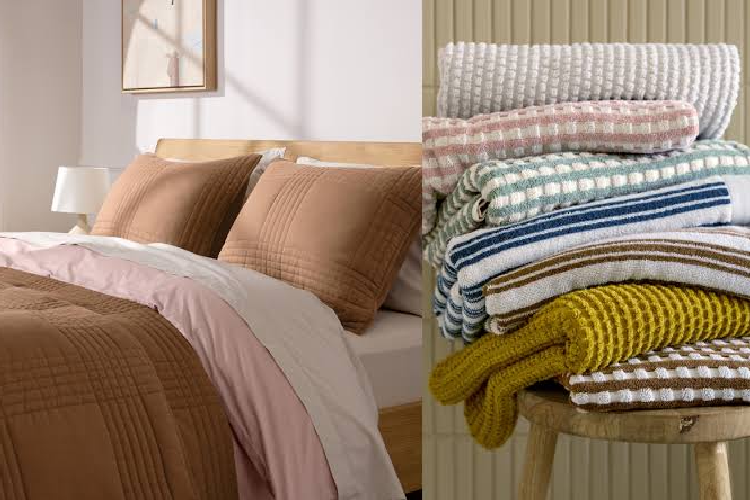
Parachute’s Classic Turkish Towel is the best-known product outside their bedding and it’s genuinely good — long-staple Turkish cotton, substantial weight, softens with washing. Not the thickest towel you can buy but the quality of the cotton means it’s more absorbent and more durable than thicker towels made from inferior fiber.
The honest caveat: in the towel category specifically, Parachute faces more competition from brands that have specialized in towels longer. Brooklinen’s towels and a few other specialty brands produce comparable quality at similar price points. The Parachute towels are not the clear category winner the way their linen sheets are.
Where Parachute towels are the right choice: if you’re building a full Parachute bathroom — towels, robes, bath mat — and want the aesthetic coherence of one brand. The visual language of Parachute’s towel collection works with their bedding in a way that mixing brands sometimes doesn’t.
The natural material commitment is consistent throughout the catalog — not a marketing claim that applies only to certain products. The manufacturing in Portugal is a real quality differentiator. The linen products in particular are among the best available in the direct-to-consumer space.
Customer service is solid. The company stands behind the products and the return policy is workable. For a product category where fit and feel are subjective, a reasonable return window matters.
The aesthetic coherence across the catalog is well-maintained. Products from different categories within Parachute work together visually in a way that reflects genuine curation rather than a catalog that’s grown without design direction.
Not every category is equally strong. The towels, as noted, face stronger competition than the sheets. Some of the home decor pieces — candles, small objects — feel like catalog filler rather than meaningful products.
The linen products specifically require patience. People who buy Parachute linen and judge it after one or two washes often leave negative reviews that don’t reflect what the product becomes. The brand doesn’t do enough to set this expectation clearly.
Price is real. Parachute is not cheap and not every product justifies the premium equally. Knowing which products are worth the price — linen sheets and duvet covers, percale sheets, quality down inserts — and which are more commodity-adjacent is useful before shopping.
For the linen products — yes, without significant reservation. The quality is among the best in the direct-to-consumer space and the linen holds up through years of regular washing in a way that lower-quality linen doesn’t.
For the percale — yes, particularly for people who sleep warm and want durable, cool sheets that last.
For the towels and home decor category — evaluate the specific product rather than buying on brand trust. The core bedding products earn that trust. The periphery of the catalog is more variable.