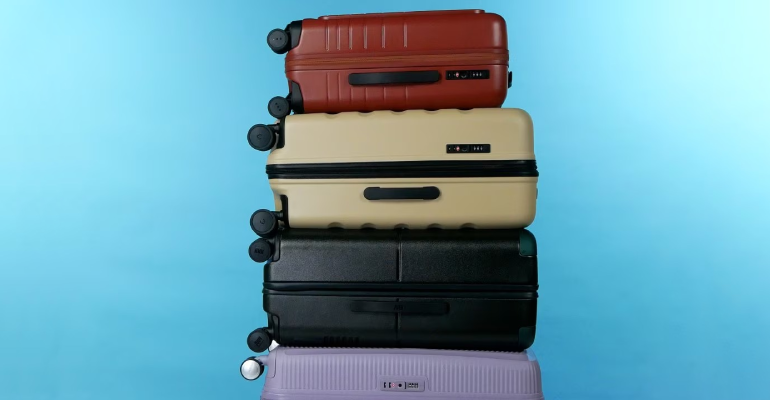
Three brands, three different answers to the same question: what does premium direct-to-consumer luggage actually look like? They all market themselves to the same traveler — someone who’s tired of cheap luggage and wants to buy once. They’re not all making the same product.
Here’s the honest comparison without brand favoritism.
Away and Monos both use polycarbonate shells. This is worth understanding before comparing prices.
Polycarbonate is a lightweight thermoplastic that’s impact-resistant and flexible — it bounces back after hits rather than cracking. It’s a good material for luggage. It’s also the standard material used by most luggage brands at most price points because it’s relatively inexpensive to manufacture and forms easily into the shapes luggage requires.
The limitation of polycarbonate is surface durability over time. Polycarbonate scratches. After significant use, a polycarbonate shell develops visible surface marks — not structural damage, but cosmetic aging that compounds with use. Most people who own Away bags for three or four years of regular travel have bags that look used in a way that’s not reversible.
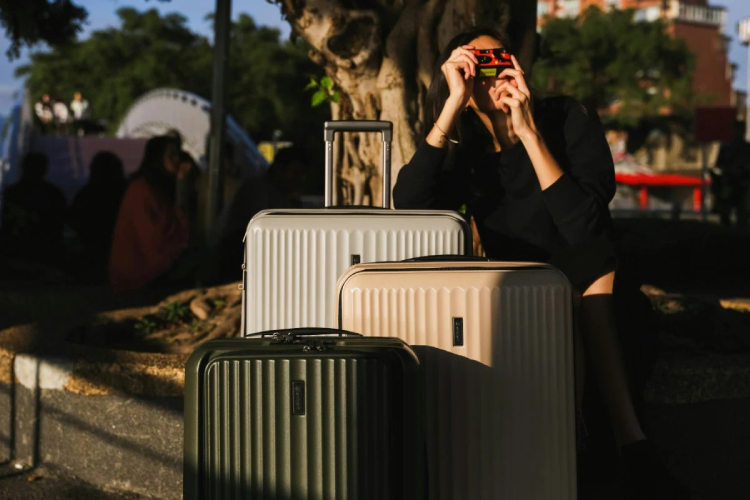
Nobl uses ballistic nylon on an aluminum frame. Ballistic nylon is heavier and more expensive than polycarbonate. It’s also significantly more abrasion-resistant. The surface marks that accumulate on polycarbonate leave ballistic nylon largely unchanged — the material absorbs abrasion without recording it the same way. Over time, a Nobl bag in ballistic nylon ages differently from a polycarbonate bag — it patinas in a way that reads as worn-in rather than beaten-up.
The aluminum frame on Nobl is structural rather than purely aesthetic. It maintains the bag’s shape under compression — overhead bin loads, stacking in cargo — in a way that pure polycarbonate construction doesn’t. The bag holds its form at partial packing capacity rather than softening and losing shape.
Most luggage reviews spend more time on organizational pockets than on wheels. This is backwards. The wheels are the component that determines day-to-day luggage experience more than any other single element.
Away and Monos both use spinner wheel systems from competent manufacturers. They roll well when new. They hold up for several years of regular use. After extended heavy use, both have had user feedback about wheel wobble and uneven rolling — the kind of degradation that starts as a minor annoyance and becomes progressively more noticeable.
Nobl uses Japanese Hinomoto spinner wheels. Hinomoto wheels have a reputation in luggage circles that goes beyond marketing — they’re the wheels used in high-end luggage across multiple brands because of their rolling quality and durability. The smoothness on varied surfaces — polished airport floors, outdoor pavement, the uneven flooring of older European airport terminals — is noticeably better than most alternatives. And the durability over extended use is one of the clearest differentiators between Nobl and the polycarbonate alternatives.
Away carry-on: $295 to $395 depending on version (Aluminum version higher)
Monos carry-on: $250 to $295
Nobl carry-on: Higher than both — check current pricing at nobltravelco.com
Away checked bag: $345 to $445
Monos checked bag: $295 to $345
Nobl checked bag: Higher — check current pricing
The price gap is real. Nobl is more expensive than both Away and Monos. The question is whether the construction difference — ballistic nylon versus polycarbonate, Hinomoto wheels versus alternatives — justifies the price gap over a realistic ownership period.
For a traveler taking 50+ flights per year: the construction difference compounds over time. A Nobl bag at year three looks significantly better and performs significantly better than a polycarbonate alternative at year three. The total cost of ownership over five years — one Nobl bag versus one or two replacements of a cheaper alternative — often closes the gap considerably.
For a traveler taking 10 to 15 flights per year: a well-maintained Away or Monos bag lasts several years and looks acceptable throughout. The Nobl premium is harder to justify purely on economics.
Away: Well-organized interior with a compression system, ejectable battery (polarizing — useful for some travelers, flagged by some airlines), built-in combination lock. Clean design.
Monos: Clean interior organization, no battery option, built-in combination lock, slightly more refined aesthetic than Away. Good quality across the board.
Nobl: Functional interior organization without being elaborate, no battery, built-in TSA combination lock. The organization is sensible rather than feature-heavy — clearly designed by travelers rather than product designers working from a feature checklist.
Away’s battery is the one differentiating feature in this comparison. If you find yourself regularly in airports with long connections and insufficient outlets — or if you travel internationally where outlet access varies — the built-in battery is genuinely useful. Some airlines have become increasingly strict about lithium battery policies, which has complicated Away’s battery feature for some travelers. Know your airlines before making this a deciding factor.
Away: Lifetime warranty. Customer service has had mixed reviews over the years — adequate rather than exceptional.
Monos: Lifetime warranty. Customer service generally well-reviewed.
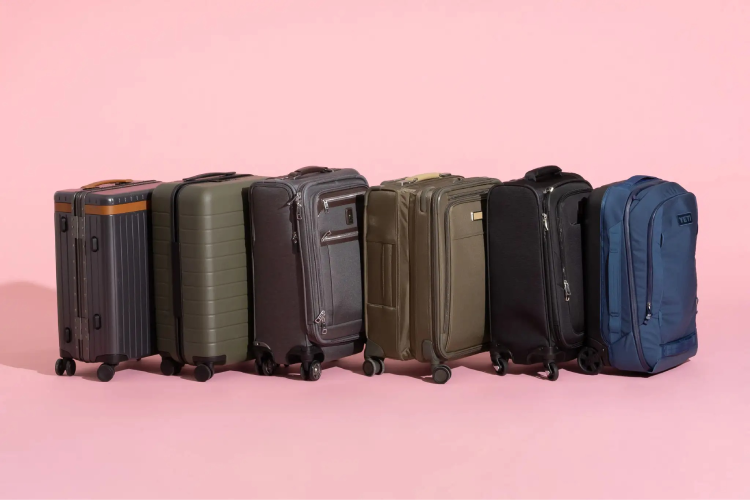
Nobl: Warranty covers manufacturing defects and some damage scenarios — check current warranty terms at their site. For a newer brand, their customer service responsiveness has been a consistent positive in buyer reviews.
Away makes sense for: travelers who want a proven product with good name recognition, who value the battery feature, who travel regularly but not heavily, and who are comfortable with polycarbonate construction lasting several years.
Monos makes sense for: travelers who want slightly more refined execution than Away at a similar price, who don’t want the battery complication, and who care about clean aesthetics.
Nobl makes sense for: frequent travelers who put luggage through real stress, who want a bag that ages well rather than just ages, who value Hinomoto wheel quality specifically, and who are making a longer-term investment rather than a two-to-three year replacement cycle purchase.
None of these is the wrong answer for the traveler it’s designed for.