
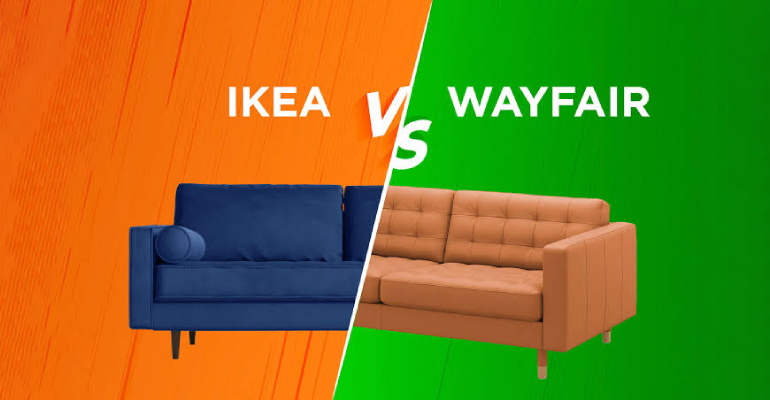
These two brands serve more home furnishing needs than any other two retailers in the English-speaking market, and the choice between them is one that almost every household making a furniture decision will encounter. They are genuinely different companies with genuinely different strengths and limitations, and understanding which serves which furniture need produces better purchasing decisions than defaulting to brand loyalty or price alone.
IKEA is a manufacturer that sells its own products. Every piece in the IKEA catalogue was designed and engineered by IKEA, manufactured to IKEA’s specifications, and quality-controlled at the manufacturing level before reaching stores. This model produces consistent quality within product lines — the KALLAX bookshelf that performed well is manufactured identically to the next KALLAX bookshelf from the same range.
Wayfair is a marketplace. It doesn’t manufacture furniture — it hosts thousands of suppliers, mostly manufacturing in China, Vietnam, and Eastern Europe, who sell under Wayfair’s house brands (Andover Mills, Kelly Clarkson Home, Three Posts, and dozens more). The same physical item can appear under multiple brand names at slightly different prices. Quality between products varies enormously because no two products necessarily come from the same manufacturer.
This structural difference explains most of what differentiates the experience of buying from each.
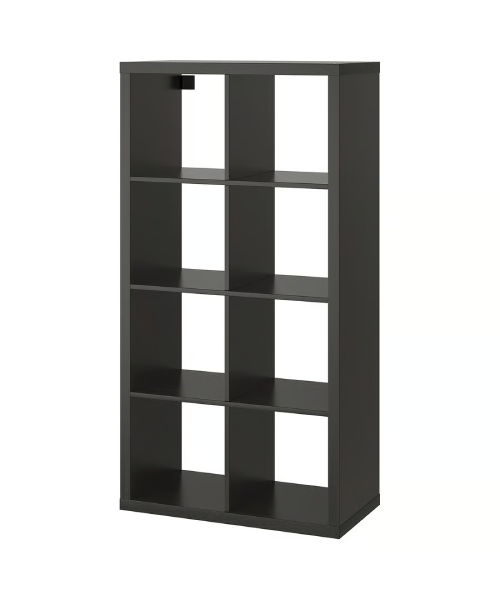
The KALLAX is arguably IKEA’s most successful product because the modular logic — the consistent 33cm cube that can be configured into any shape and supplemented with inserts, baskets, and doors — allows it to serve genuinely different storage needs in the same format. The construction quality is consistent. The assembly is manageable. The longevity over years of regular use is documented by millions of owners.
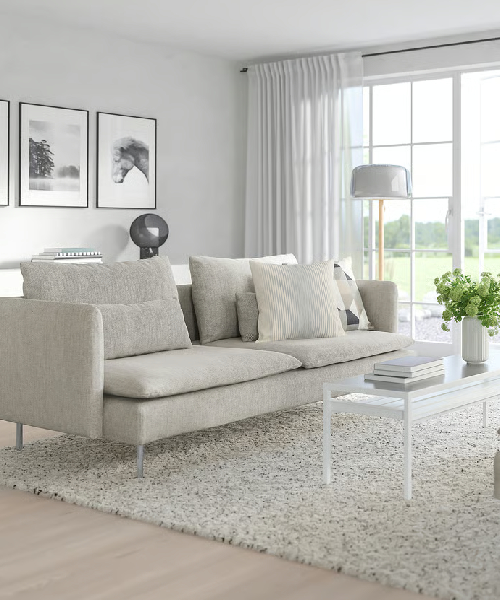
The SÖDERHAMN represents IKEA’s approach to sofas — modular, configurable, with washable cover options, and at a price that reflects the efficiency of IKEA’s manufacturing scale. The SÖDERHAMN is not a luxury sofa. It’s a well-designed, correctly-priced sofa for those whose needs it serves.
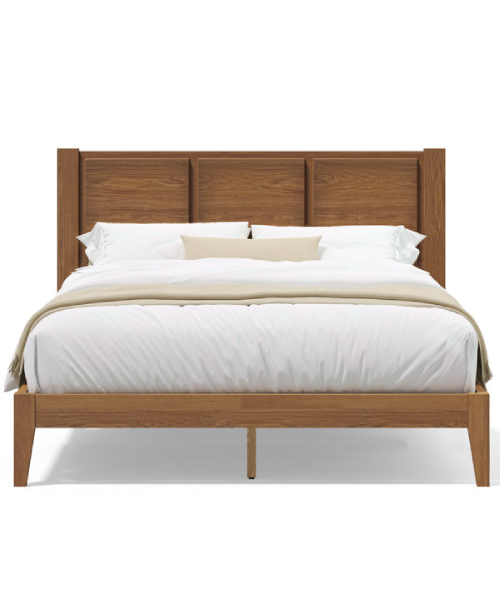
Where Wayfair wins over IKEA consistently is in the breadth of style options. The storage bed range at Wayfair covers aesthetic directions — upholstered headboards, specific finishes, specific dimensions — that IKEA’s catalogue doesn’t offer. For buyers who need a specific size or style that IKEA’s standard range doesn’t include, Wayfair provides the options.
The quality research required: the Wayfair storage bed recommendation must be preceded by checking customer reviews specifically for photos uploaded by customers, not product photography. The customer photos reveal the actual finish quality and assembly experience that product photography doesn’t represent accurately.
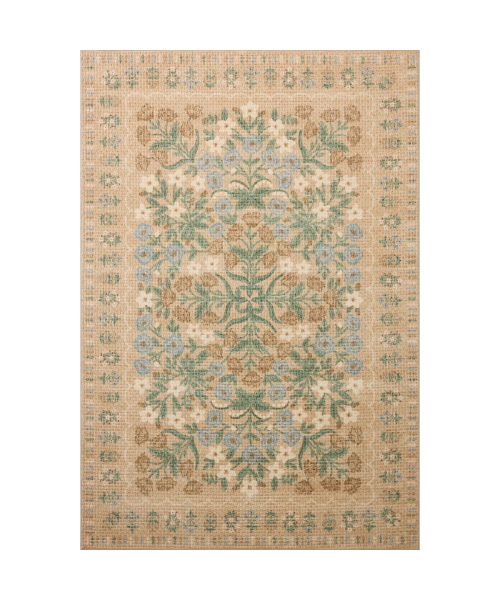
Rug selection is Wayfair’s strongest category against IKEA. The depth of rug options — size range, style range, pile height range, price range — available at Wayfair exceeds what IKEA offers by such a significant margin that for rug purchasing specifically, Wayfair is the right starting point. The customer review photos are particularly useful for rugs because colour accuracy in product photography is notoriously unreliable for textiles.
Living room sofa: IKEA for specific configurations in the EKTORP or SÖDERHAMN range; Wayfair for any aesthetic direction or size not covered by IKEA’s catalogue.
Shelving and storage: IKEA is the stronger choice — the PAX wardrobe system and KALLAX range provide modular flexibility and construction consistency that Wayfair’s equivalent products don’t match at comparable prices.
Beds and bedroom furniture: Wayfair for aesthetic variety, IKEA for reliable construction and modular wardrobe systems.
Dining tables and chairs: IKEA for solid wood options at accessible prices (MÖRBYLÅNGA, EKEDALEN); Wayfair for extending tables and specific dimensions IKEA doesn’t stock.
Rugs: Wayfair clearly — the selection advantage is decisive.
Home accessories (cushions, throws, candles): IKEA provides better value at the accessible price tier; Wayfair provides more breadth.
IKEA’s in-store return process is the most straightforward furniture return experience available — a receipt, the product in reasonable condition, and the money goes back. No logistics arrangement, no shipping costs.
Wayfair’s return process for large items requires more management — the buyer typically arranges and sometimes pays for return shipping on large furniture items, which can exceed the item’s value. Knowing the return policy before purchase is essential for any significant Wayfair purchase.
Neither brand is universally better. The correct buying strategy uses both according to their specific strengths:
IKEA for: storage systems, modular furniture, reliable construction at accessible prices, and any category where IKEA’s specific products serve the brief.
Wayfair for: rugs, extending tables, specific sizes not available at IKEA, upholstered beds in specific styles, and any aesthetic direction that IKEA’s design language doesn’t cover.
The buyer who understands both brands’ strengths and uses each accordingly furnishes a home better than the buyer who commits exclusively to either.