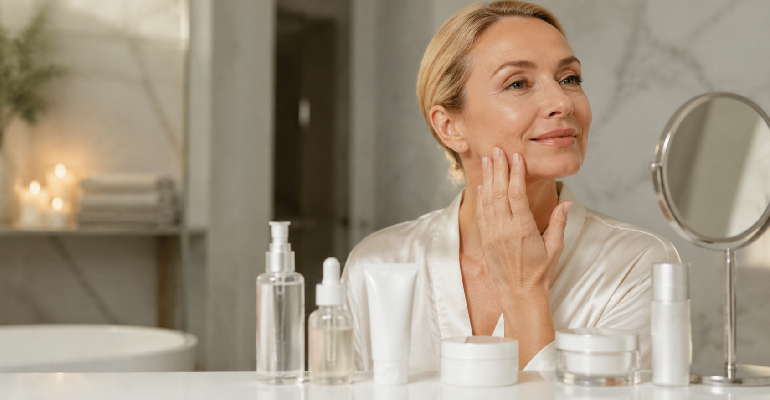
Anti-ageing skincare is the beauty category with the widest gap between marketing claims and clinical evidence. The specific language — “reduces the appearance of fine lines,” “visibly firms,” “clinically proven” — is carefully chosen to suggest what the science doesn’t always support. “Reduces the appearance” means makes look better temporarily (through hydration, light-scattering) rather than structurally improving the skin. “Clinically proven” means the brand ran a study — not that an independent scientific institution validated the finding.
The honest guide to anti-ageing skincare distinguishes between the ingredients with genuine evidence and the products that market sophisticatedly around insufficient data.
Retinoids (retinol and prescription tretinoin). The only topical skincare ingredient with decades of independent peer-reviewed evidence for visible impact on fine lines, skin texture, and collagen stimulation. Retinol is the over-the-counter form; tretinoin is the prescription-strength version available through a dermatologist. Both produce cell turnover that improves skin texture and stimulates collagen production — the structural mechanism, not just temporary appearance improvement.
SPF. Photodamage is the leading cause of visible skin ageing. Daily SPF prevents the accumulation of UV damage that produces fine lines, hyperpigmentation, and loss of elasticity. This is prevention rather than treatment but it’s more effective than any treatment — preventing damage is easier than reversing it.
Vitamin C. The topical antioxidant with the strongest clinical evidence base for hyperpigmentation correction and photoprotection support. Works synergistically with SPF to neutralise free radical damage from UV and pollution.
Peptides. Short chains of amino acids that signal collagen production — the mechanism is scientifically supported even if the magnitude of visible effect is more modest than retinoids.
Niacinamide. Addresses hyperpigmentation, supports barrier function, and provides some evidence for collagen protection. A broadly useful ingredient without the irritation profile of retinoids.
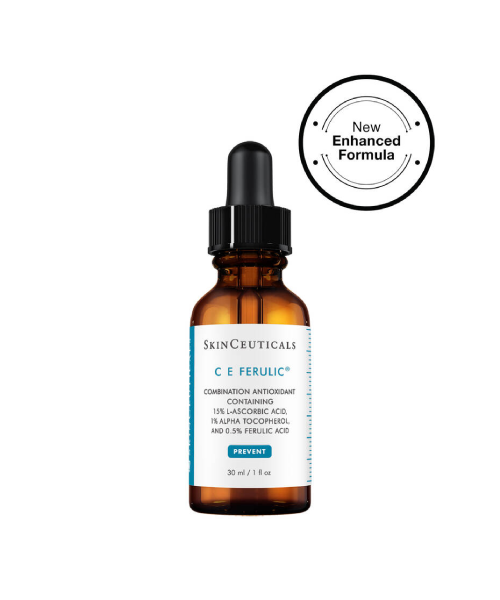
Available at: SkinCeuticals (skinceuticals.co.uk), Lookfantastic, dermatology clinics
Best for: The most thoroughly studied topical vitamin C formulation with published independent research.
SkinCeuticals C E Ferulic is the specific vitamin C formulation that is most consistently cited in independent skincare research. The combination of 15% L-ascorbic acid (the most bioavailable form of vitamin C), vitamin E, and ferulic acid produces a synergistic antioxidant effect that independent studies have documented. The price is significant. The clinical evidence is more substantial than most skincare products at any price point.
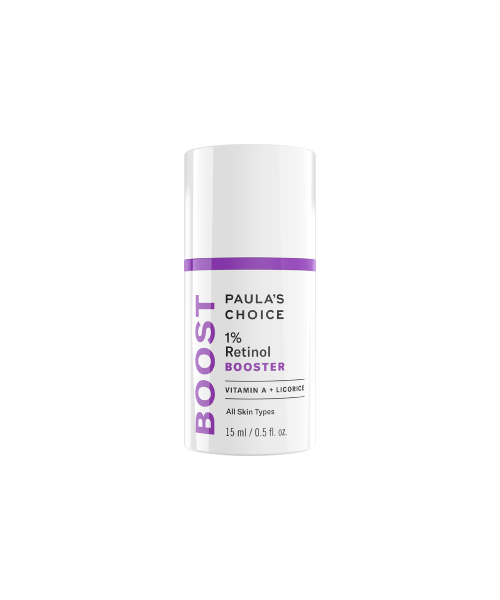
Available at: Paula’s Choice (paulaschoice.co.uk), Beauty Bay
Best for: Those who want the most effective OTC retinol concentration in a formulation that minimises irritation.
Paula’s Choice 1% Retinol represents the most effective OTC retinol concentration available in the UK market. The formulation includes soothing ingredients that reduce the dryness and irritation that pure retinol produces — making the 1% concentration more tolerable than lower-percentage alternatives from brands that use simpler formulations.
Retinol beginners should start three times per week, apply on clean dry skin, and wait five minutes before applying moisturiser. Increase frequency over four to eight weeks as tolerance builds.
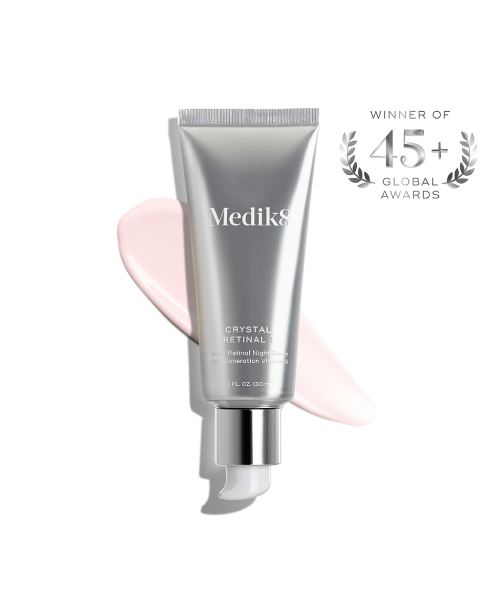
Available at: Medik8 (medik8.com), Lookfantastic, Harvey Nichols
Best for: Those who want faster results than standard retinol with lower irritation than tretinoin.
Retinaldehyde (retinal) is one step closer to retinoic acid (the active form) than retinol in the conversion pathway. It produces results faster than retinol while being less irritating than prescription tretinoin. Medik8’s Crystal Retinal range provides retinaldehyde at multiple concentrations — starting at Crystal Retinal 1 and progressing to 10 and 20 for experienced retinoid users.
Crystal Retinal 6 is the mid-range recommendation — appropriate for those who have used retinol for at least six months and want to step up in efficacy.
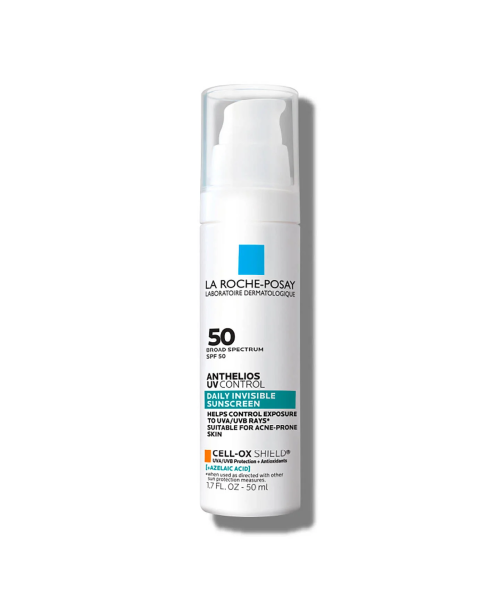
Available at: Boots, Superdrug, Amazon
Best for: Daily broad-spectrum UV protection — the single most evidence-supported anti-ageing step.
Already detailed in the beginner skincare content — the SPF step is repeated here because its importance cannot be overstated in an anti-ageing context. No treatment serum compensates for inadequate sun protection. Daily SPF 50+ is the most effective anti-ageing intervention available without prescription.
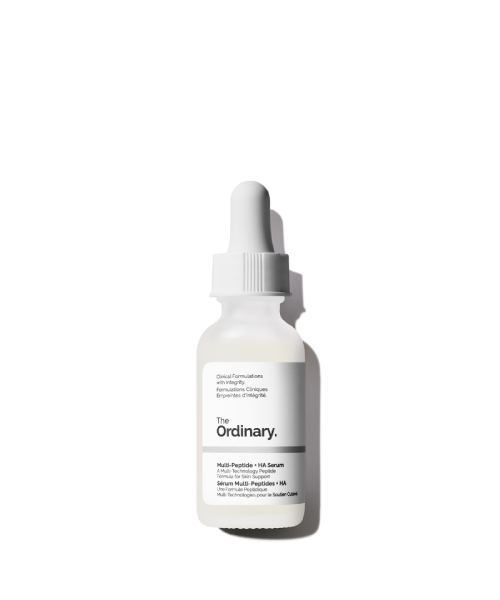
Available at: The Ordinary (theordinary.com), Boots, ASOS
Best for: Those who want a comprehensive peptide serum at an accessible price.
The Ordinary’s Buffet combines multiple peptide complexes with amino acids and hyaluronic acid in a formulation that addresses collagen support, hydration, and barrier function simultaneously at a price that makes the peptide category accessible. The evidence for the magnitude of peptide effect is more modest than retinoids — they’re the supporting cast rather than the lead.
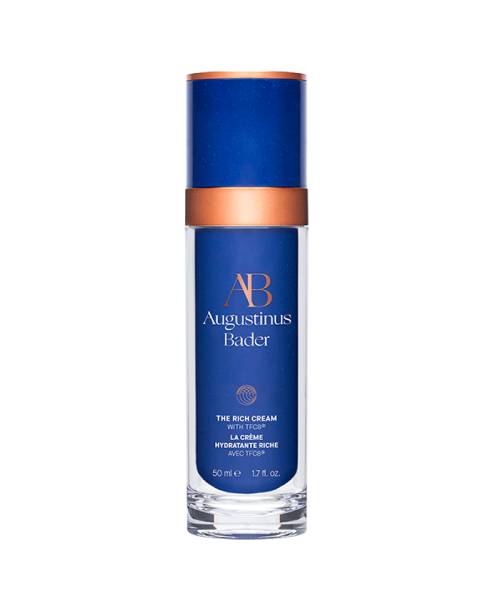
Available at: Augustinus Bader (augustinusbader.com), Selfridges, Net-a-Porter, Space NK
Best for: Those who want the most intensively researched luxury moisturiser with the strongest clinical heritage.
Augustinus Bader’s TFC8 technology — derived from Bader’s decades of research into wound healing and cellular regeneration — is the most scientifically substantiated luxury skincare claim available. The Rich Cream is the hero product, and the clinical research basis (unlike most luxury skincare whose “clinically proven” claims are from industry-funded studies with small sample sizes) gives the price premium a foundation in science that the majority of luxury skincare cannot match.
At £230–350, this is a genuine luxury investment. The skin improvement for those who use it consistently is real and documented. Whether it’s worth the price relative to less expensive alternatives that address the same mechanisms is a personal calculation, but the evidence is more compelling than most products at any price point.
Anti-ageing skincare produces genuine results from three evidence-based interventions: daily SPF (prevention), retinoids (the only topical ingredient with decades of independent evidence for structural skin improvement), and vitamin C (antioxidant protection and hyperpigmentation correction). SkinCeuticals C E Ferulic for the vitamin C investment with genuine independent research. Paula’s Choice 1% Retinol for the most effective OTC retinol. Medik8 Crystal Retinal 6 for the step up from standard retinol. La Roche-Posay SPF 50+ for the non-negotiable daily protection. The Ordinary Buffet for accessible peptide support. And Augustinus Bader Rich Cream for the luxury investment with the most clinically substantiated claim in the premium category. Start with SPF and add retinol — those two steps produce more visible improvement than any other combination.