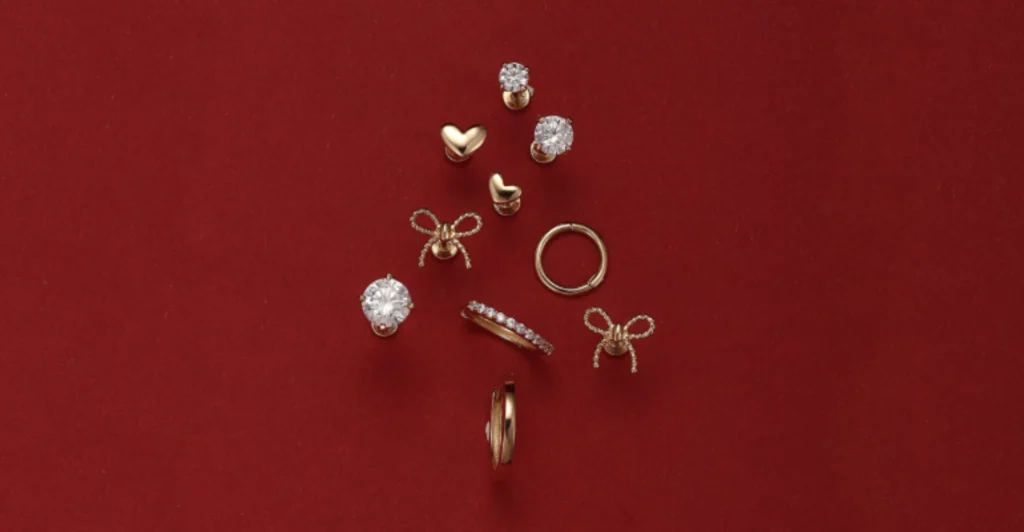
The earring sensitivity problem affects more people than the jewellery industry acknowledges. The redness, itching, swelling, and discharge that appear after wearing earrings are almost always caused by nickel — a metal used in virtually all base metal jewellery and in the alloys used for gold-plated and silver-plated pieces. The EU restricts nickel content in earrings that contact pierced ears for this reason. The sensitivity is a response to nickel specifically, not to metal in general, which means finding the right material eliminates the problem entirely rather than requiring management.
The materials that don’t cause nickel reactions: implant-grade titanium, solid 14k or 18k gold, solid platinum, and sterling silver (.925). These materials either contain no nickel or contain it in amounts too small to trigger reactions in most sensitive ears.
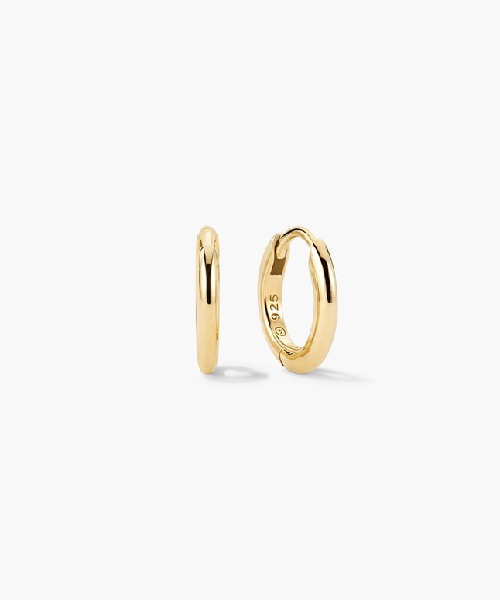
Solid 14k gold earrings are the universal answer for sensitive ears because gold itself is hypoallergenic and the alloys used in 14k gold (silver, copper, zinc) don’t include nickel in quality jewellery. The posts, the closures, and the entire earring surface are the same non-reactive material.
Mejuri’s gold hoop collection in 14k gold are the recommendation because the price is the most accessible for genuine solid gold and the designs cover the range from the most minimal thin hoops to slightly more substantial statement options. The 14k gold posts are specifically safe for sensitive ears in a way that gold-plated posts aren’t — the plating wears at the post and closure, exposing the base metal at exactly the point of skin contact with the piercing.
The Thin Hoop ($75-95 depending on size) is the most versatile starting point — small enough for daily work wear, interesting enough to photograph well, and in solid gold that will never cause a reaction.
Price: $75-145 depending on style and size
Available at: Mejuri directly (mejuri.com)
Best for: Those who want solid gold earrings that eliminate sensitivity concerns permanently.
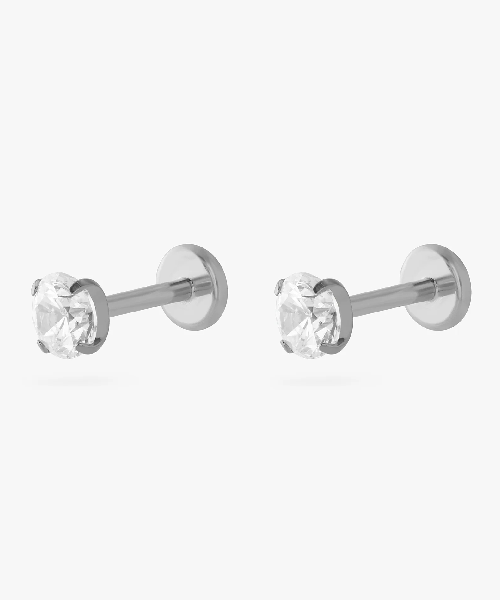
Implant-grade titanium is the most hypoallergenic earring material available — it’s the material used for body jewellery in new piercings because even the most reactive skin doesn’t respond to it. For everyday earrings, anodized titanium (available in multiple colors through the anodizing process) provides the color variety of plated metals without any of the reactive metals.
Brands like BVLA (Body Vision Los Angeles), Anatometal, and Gorilla Glass produce implant-grade titanium earrings in designs ranging from simple ball studs to more elaborate stone-set pieces. These are not available in typical jewellery stores — they’re sold through professional piercing studios and online piercing supply retailers.
The price range is wider than most earring categories — simple ball studs in implant-grade titanium start around $20-30, while stone-set or more elaborate pieces from quality manufacturers reach $100-200. All are appropriate for even the most reactive ears.
Price: $20-200 depending on design
Available at: Professional piercing studios, BVLA dealers, Anatometal dealers
Best for: Those with the most severe sensitivities who need the most hypoallergenic material available.
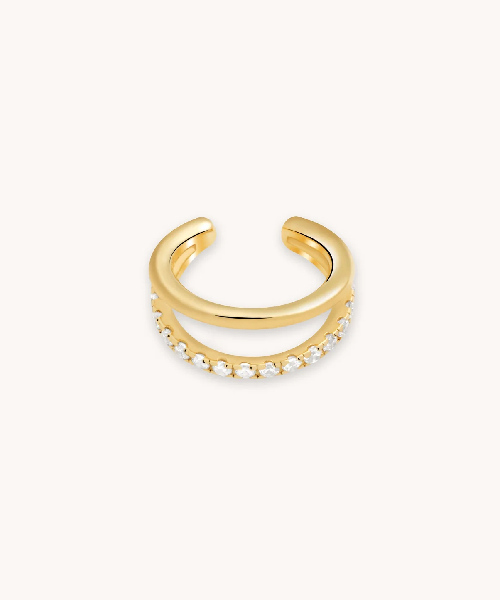
Astrid & Miyu’s ear cuff collection provides the curated ear look without requiring piercing — the cuffs clip to the outer ear cartilage without requiring a hole, and the sterling silver construction avoids the nickel content of most clip-on and cuff jewellery that causes reactions.
The ear cuff format is specifically relevant for sensitive ears because the piece doesn’t go through a piercing — there’s no open wound in contact with potentially reactive metal. The .925 sterling silver is safe against external skin contact for most people (sterling silver sensitivity is significantly rarer than nickel sensitivity).
The designs are contemporary — the architectural forms and the multiple-wear positions of ear cuffs produce looks that read as more elaborate than simple studs without requiring additional piercings.
Price: $45-85
Available at: Astrid & Miyu directly (astridandmiyu.com)
Best for: Those who want the curated ear look without piercings or who want to add non-piercing elements to an existing pierced ear setup.
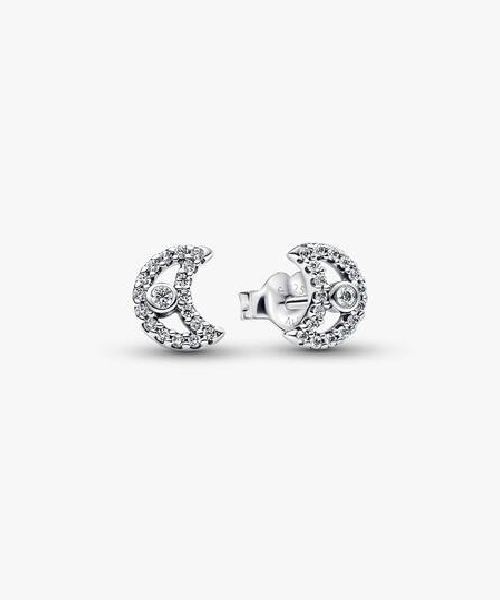
Pandora’s sterling silver earrings use .925 sterling throughout the earring construction — the posts, the closures, and the decorative elements. The silver posts are specifically appropriate for most sensitive ears because the nickel content in sterling silver is controlled to extremely low levels.
The Pandora earring range covers everything from simple studs to statement drops within the sterling silver material. For those who’ve identified sterling as tolerable (some people react to copper in sterling rather than nickel, in which case solid gold is the only appropriate material), Pandora’s range provides extensive design choice within a consistently appropriate material.
Price: $30-90
Available at: Pandora directly (pandora.net), in-store
Best for: Those whose sensitivity is to nickel and who tolerate sterling silver without reaction.
The nickel test. If your ears react to most earrings but not to solid gold (14k and above) or implant-grade titanium, you have nickel sensitivity. This is the most common earring sensitivity.
The copper test. If your ears react to sterling silver (which contains copper) but not to fine silver (99.9% silver) or gold, you may have copper sensitivity rather than nickel sensitivity. This is significantly rarer.
The topical test. Apply a small amount of the suspected earring material against the lobe for 24-48 hours before wearing — if no reaction occurs, the material is likely safe for wearing through your piercing.
Sensitive ears are not an impediment to beautiful earrings — they’re a constraint that points toward genuinely better materials. Mejuri’s solid 14k gold eliminates the sensitivity problem permanently and produces earrings that look and feel genuinely premium. Implant-grade titanium is the most hypoallergenic option for even the most reactive ears. Astrid & Miyu’s ear cuffs provide non-piercing options in appropriate materials. And Pandora’s sterling silver range offers accessible design variety for those who tolerate sterling. Whatever you choose, identifying the specific cause of your sensitivity (almost always nickel) and buying the material that avoids it is the decision that allows wearing earrings without managing a reaction rather than compromising between appearance and comfort.