HOME | Fashion | Beauty | Home Furnishing | Comparison | Top Reviews |

The reading advice that gets given most often is “just make time for it” — which is advice so general as to be useless. Of course you should make time for reading. Of course reading is good for you. The question is how, specifically, when the hours in your day are already spoken for by work, commuting, family, household management, and the basic requirements of being a person.
I want to give you the specific version. The one that identifies where reading time actually comes from in a real schedule rather than the version that assumes you have untapped hours waiting to be allocated.
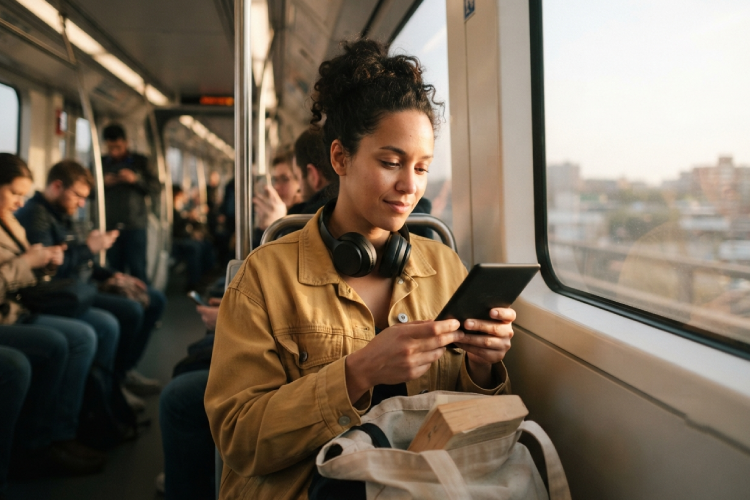
The commute. If you travel to work by public transport, bus, or as a passenger in a car, you have reading time that most people spend on their phones. A thirty-minute commute each way is five hours per week — enough to finish a book every two weeks for most people. The phone is the competition for this time, and the phone almost always wins without deliberate choice. The specific change: have the book (physical or e-reader) already out before you sit down. The friction of taking out and opening a book is enough to choose the phone instead. Removing that friction changes the default.
Before-sleep reading. Replacing the phone in bed with a book for thirty minutes before sleep is both a sleep quality improvement (blue light from screens interferes with melatonin production; reading a physical book does not) and a genuine thirty minutes of reading per day that adds up to three and a half hours per week. The Kindle Paperwhite, with its warm-light display adjustable to amber tones, is the e-reader compromise for people who find physical books impractical in bed.
Audio books for non-reading time. Cooking, cleaning, commuting by car, exercising — time that can’t be reading time but can be listening time. Audible or Libby (the free library app) makes the book accessible in exactly the situations where you can’t be reading but can absorb content. This is contested as “real reading” in some communities and the controversy is somewhat silly — the goal is to encounter and absorb books, not to perform a specific physical activity. If audiobooks work for your schedule, use them.
Most reading habit failures aren’t about time. They’re about book selection. Choosing books that feel like they should be read rather than books you actually want to read produces the specific experience of picking up a book, reading three pages, putting it down, and not returning to it for two weeks before giving up on the project entirely.
The permission to abandon books that aren’t working is more valuable than any time management advice for readers. Life is short and the number of books worth reading is large. A book that isn’t working for you at page fifty is unlikely to become the book that changes your reading life at page one hundred. Abandoning it and finding something better is not failure — it’s good editing.
The best predictor of reading more books is reading books you genuinely want to read. This sounds obvious and is consistently ignored in favor of reading what seems important or impressive.
Physical books produce better comprehension and retention in most studies. They’re also heavier, take up space, and are less convenient to carry. E-readers are lighter, hold thousands of books, and are convenient in most situations where physical books aren’t. Audiobooks are accessible in situations where neither is possible.

The correct answer is whatever format you’ll actually use. The person who won’t carry a physical book on public transport but would use a Kindle reads more with a Kindle. The person who absorbs audio content well during exercise gets through more books with Audible. Format preferences are personal and consequential for whether you actually read.
Keeping a running list of books you want to read — not a complex tracking system, just a note on your phone with titles — means you never reach the end of a book and spend three weeks choosing the next one. The three-week gap between books is where reading habits dissolve. The list eliminates the gap: finish a book, start the next one immediately.