HOME | Fashion | Beauty | Home Furnishing | Comparison | Top Reviews |

Smart home technology has a credibility problem produced by a decade of products that were technically impressive and practically useless. The smart refrigerator that connected to your phone to tell you what you had inside. The smart fork that monitored your eating speed. The smart garden sensor that required its own app, its own hub, and more maintenance than the plants it was supposed to help grow.
The actual useful smart home category is considerably smaller than the marketed one. There are maybe eight to ten categories of smart home technology where the connected version is genuinely more useful than the dumb version for the average home. Everything else is a product in search of a problem.
Here are the things actually worth buying.
The ability to control lighting with your voice, automatically, on a schedule, or from your phone changes how lighting works in a home in ways that matter daily. The convenience of saying “turn off the living room lights” from bed rather than getting up is small. The convenience of lights that automatically adjust color temperature throughout the day (warm in the morning, slightly cooler for midday work, warm again in the evening) is meaningful for focus and sleep quality. The convenience of lights that turn on at sunset without manual intervention is real over months and years of not thinking about it.
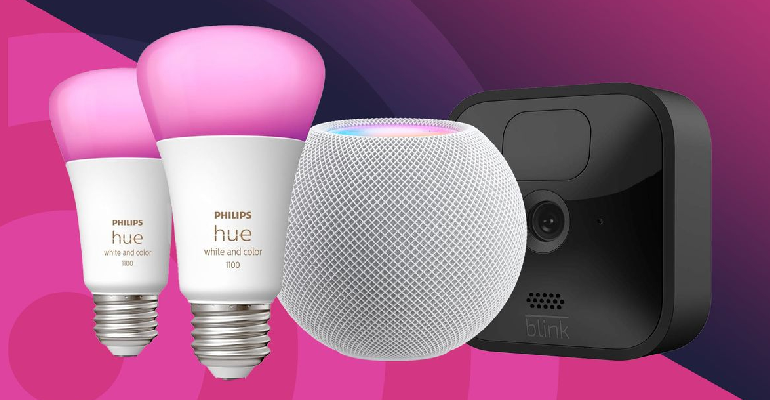
Philips Hue is the reference standard for smart bulbs — the ecosystem is the most complete, the color accuracy is excellent, the app and voice assistant integration (Alexa, Google, Apple HomeKit) is reliable. The cost is the limitation: Philips Hue bulbs cost $15-20 each, which adds up quickly in a home with many light fixtures. The Philips Hue starter kit (hub and four bulbs) costs around $200.
The LIFX smart bulbs skip the hub requirement (connect directly to Wi-Fi) and cost around $45-50 per bulb for the color version. No hub is an advantage for people who don’t want another device; the higher per-bulb cost is the trade-off.
The Wyze Smart Bulb is the budget option at around $10 per bulb. No hub required, works with Alexa and Google. The color accuracy and app polish don’t match Philips Hue, but for basic smart lighting at a price that makes large-scale implementation feasible, Wyze is the starting point.
A smart speaker (Amazon Echo or Google Nest) is the device that makes every other smart home product more useful because it provides voice control without reaching for your phone. The question of Alexa versus Google Assistant is mostly answered by which ecosystem you’re already in — if you use Google services extensively, Google Nest Home integrates better with your calendar, searches, and routines. If you use Amazon extensively or have Fire TV devices, Alexa works better.
The Echo Dot (around $50) is the right starting point — it sounds adequate for voice interaction and background music, and its smart home control function is identical to the more expensive Echo models. Upgrading to the Echo (around $100) or Echo Studio (around $200) makes sense only if audio quality for music is important.
A smart plug ($15-25) converts any dumb device into a smart one by allowing it to be controlled remotely, scheduled, and integrated with voice assistants. The lamp that isn’t a smart lamp can be turned on and off by voice and schedule with a smart plug. The coffee maker can be scheduled to start before your alarm. The fan in the bedroom can be turned off from bed.
The Kasa Smart Plug (TP-Link) is the consistently recommended option — reliable, works with Alexa and Google, provides energy monitoring on some models, and pairs quickly without app friction. The Govee and Wemo alternatives are comparable.
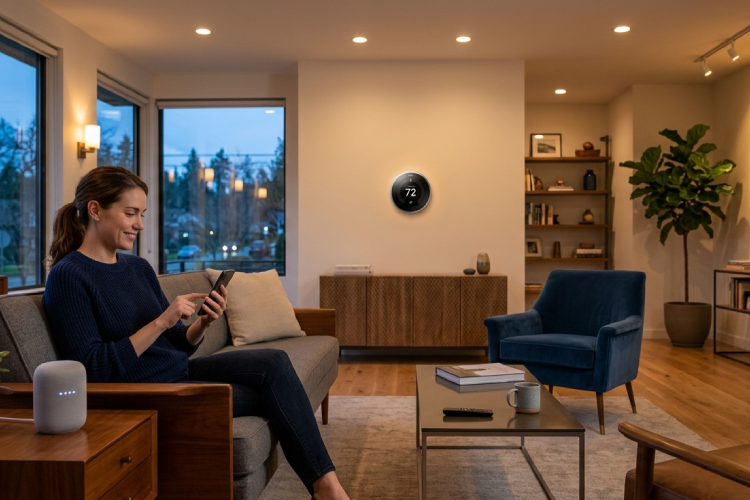
The Nest Learning Thermostat (around $130) and the Ecobee SmartThermostat (around $200) are the two smart thermostat recommendations that produce genuine energy savings rather than just convenience. Both learn your schedule and preferences, adjust automatically when you leave and return, and provide detailed energy usage data.
Studies consistently show smart thermostats reduce heating and cooling costs by 10-15% for most homes. At average energy costs, the payback period on a $150-200 smart thermostat is typically 12-18 months. After that point, the thermostat pays for itself annually.
The Ecobee has the advantage of room sensors — small sensors placed in specific rooms that report temperature to the thermostat and allow heating and cooling to prioritize the rooms being used. In a home with significant temperature variation between rooms, this feature is meaningful.