HOME | Fashion | Beauty | Home Furnishing | Comparison | Top Reviews |

I have killed plants in ways that should not be possible. I’ve overwatered things. I’ve underwatered things. I’ve put a cactus in a north-facing window and watched it slowly give up. I’ve bought a plant from a well-lit garden center and put it in a room that gets three hours of indirect light per day and wondered why it wasn’t thriving. I’ve done all the things that plant killers do.
What changed was understanding that plant failure is almost never about not caring enough. It’s almost always about the wrong plant in the wrong conditions. A low-light plant in direct sun dies just as certainly as a sun-loving plant in a dark corner. Matching the plant to the conditions you can actually provide — not the conditions you wish you had — is the foundation of successful plant ownership.
This guide is organized by the conditions you actually have, not by the plants that look best.
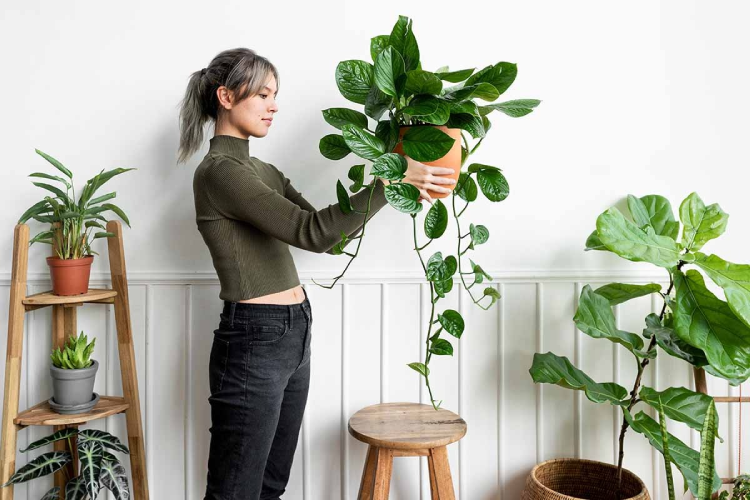
The Pothos (Epipremnum aureum) is the answer for spaces with low light. It tolerates neglect in a way that no other plant category matches — it will survive weeks without watering, months without fertilizer, and light conditions that would kill almost any other plant. The trailing habit is genuinely beautiful and the golden or marble variety in particular catches available light and looks expensive in a simple hanging planter or on a high shelf where the trails can fall freely.
The Snake Plant (Sansevieria, now reclassified as Dracaena trifasciata) is the second recommendation for low light and the specific recommendation for people who travel frequently or water very irregularly. Snake plants store water in their leaves and can go three to four weeks without watering without visible stress. The architectural quality of their upright, structured leaves works in modern and traditional interiors equally. They produce oxygen at night, which is a claim made about many plants and true of fewer — snake plants genuinely continue photosynthesis at lower light levels, including at night, and are a genuine recommendation for bedrooms.
The ZZ Plant (Zamioculcas zamiifolia) is the third genuinely low-light tolerant option. The waxy, dark green leaves are beautiful and distinctive, the plant grows slowly enough that it doesn’t outgrow its space quickly, and the rhizome root system stores water in a way that makes it remarkably drought tolerant. The ZZ plant caveat: it’s toxic to pets and people if ingested, which matters for households with cats, dogs, or small children.
The Monstera Deliciosa has become so ubiquitous in interior design content that it’s almost a cliché, but the cliché exists for reasons. A mature monstera in a large white ceramic pot is one of the most genuinely impressive plants a home can have — the split leaves are dramatic, the growth is reliable in medium indirect light, and the plant responds well to care without requiring expertise. Wipe the leaves with a damp cloth occasionally to remove dust and they’ll look better and photosynthesize more effectively.
The Peace Lily (Spathiphyllum) produces white flowers that are genuinely beautiful and requires less light than its appearance suggests. It communicates when it needs water in the most direct way possible: it droops. Visibly and dramatically. Water it at this point and it recovers within hours. This feedback loop makes it genuinely hard to kill because it tells you what it needs rather than requiring you to develop a watering intuition.
The Rubber Plant (Ficus elastica) in its burgundy or dark red variety is one of the best-looking indoor plants available and tolerates medium indirect light reliably. The large, glossy leaves are architectural in a way that smaller-leaved plants aren’t. Water when the top inch of soil is dry and provide adequate light and the rubber plant will grow steadily into a genuinely impressive interior feature.
Overwatering kills more houseplants than underwatering. The instinct to water regularly — on a schedule, because the plant looks like it might need it — produces root rot in plants that need to dry between waterings. The specific check before watering: push a finger an inch into the soil. If it’s damp, wait. If it’s dry, water thoroughly.
Thorough watering — enough water that it runs out of the drainage hole — is better than light watering. Light watering only wets the top of the soil and encourages roots to grow upward toward the moisture rather than downward where they should be. Thorough watering followed by a period of drying produces a root system that can access more of the available soil volume.
Drainage is not optional. Plants in pots without drainage holes, or in decorative pots without a drainage layer, accumulate water at the root zone that produces root rot regardless of watering frequency. A layer of pebbles at the bottom of a pot without drainage holes slows but does not prevent this problem. The correct solution is drainage holes.