HOME | Fashion | Beauty | Home Furnishing | Comparison | Top Reviews |

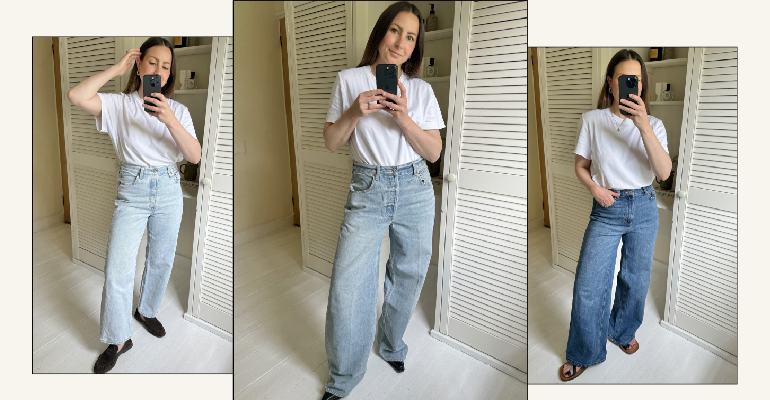
Let me describe a phenomenon that everyone who wears jeans knows but nobody in jeans marketing ever addresses directly. You put on a pair of jeans in the morning and they fit beautifully. By two in the afternoon they’ve bagged at the knees and stretched at the waist and the silhouette that looked intentional at 8am looks accidental by midday. You wash them and they shrink back and the cycle starts again.
This is not inevitable. It’s a fabric problem specific to certain constructions and certain elastane contents. Some jeans genuinely hold their shape through a full day of wear and return to their original dimensions after washing with minimal variation. They exist at multiple price points. They’re what this review is actually about.
Modern jeans almost universally contain elastane (also called spandex or Lycra). Elastane is what makes jeans comfortable to move in — it provides stretch that rigid denim doesn’t. The problem is that elastane is a fiber that loses its elastic memory over time and, critically, during extended wear. As the fibers are stretched through sitting, walking, and movement throughout the day, they don’t fully return to their original length. The waistband relaxes. The knees bag. The thighs loosen.
The key variable is how well the elastane recovers — its ability to return to original dimensions after being stretched. Premium denim construction uses elastane blended with other fibers or uses specific weave structures that support the elastane and improve its recovery. This is what you’re actually paying for in expensive jeans: not a logo, not branding, but fabric engineering.
High elastane content (above 3-4%) produces jeans that are very comfortable when new and stretch out quickly. Low elastane content (1-2%) produces jeans with excellent shape retention and a slightly stiffer feel. Zero elastane (rigid denim) holds its shape perfectly and requires a break-in period to become comfortable.
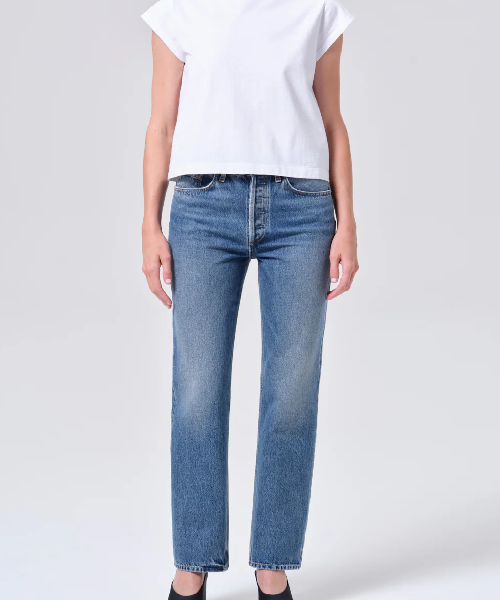
Agolde jeans run $200-250 and are the reference point for stretch denim that actually recovers. The Parker, the 90s Pinch Waist, and the Criss Cross Upsized are the three most popular models and the three most consistently reviewed for long-term shape retention.
The fabric uses premium Cone Mills denim with a specific elastane construction that Agolde has invested in developing and that makes a genuinely observable difference in how the jeans perform over a full day. Wearing them in the morning and removing them in the evening, the shape change is minimal compared to mass-market stretch denim. After washing, they return very close to their original dimensions.
The fit runs small — sizing up one size from your usual is the standard recommendation and I’ve found it accurate. The rise is genuinely high on most models, which is either ideal or limiting depending on preference and proportion.
The honest calculus: $200-250 is a real amount of money for jeans. The justification is longevity — Agolde jeans owned two years ago still look essentially the same. At $50 jeans that need replacing every eight months, you’ve spent the same amount and have less to show for it. This is a genuine argument rather than aspirational spending justification.

Madewell jeans at $90-140 represent the most useful middle position in the women’s denim market: meaningfully better than fast fashion denim in construction and fabric quality, meaningfully more accessible than Agolde pricing.
The 10″ High Rise Skinny and the Relaxed Denim Jogger are the models with the most consistent long-term ownership reviews. The fabric holds its shape better than ASOS or H&M equivalents through a full day of wear and returns more reliably to original dimensions after washing. Not as completely as Agolde — by midday there’s slightly more relaxation than in the more expensive option — but significantly better than anything priced below them.
Madewell runs frequent promotions (insider member sales, Cyber Monday, end-of-season events) that bring prices to $60-90, at which point the quality-to-cost argument becomes very strong. If you’re buying Madewell jeans, buying during a sale rather than full price is sensible and usually achievable within a few weeks of any purchase decision.
The denim quality also improves over multiple washings in a way that’s characteristic of better construction — not softening in a way that means degrading, but breaking in properly so that the shape becomes more personal to the wearer’s body over time.
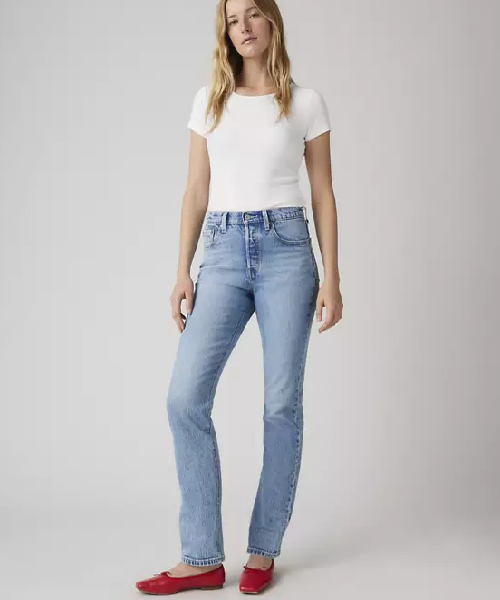
The Levi’s 501 costs $70-90 and is a fundamentally different product from stretch denim. It contains no elastane. The denim is rigid — stiff when new, requiring a genuine break-in period measured in weeks of regular wear, and not comfortable in the way that modern stretch denim is comfortable on first wear.
What the 501 provides in exchange: perfect shape retention, permanently. Rigid denim doesn’t stretch during the day because it can’t. The bag-at-the-knees phenomenon doesn’t exist with the 501. The waistband doesn’t relax. The silhouette you had at 8am is the silhouette you have at 8pm.
The 501 also ages beautifully in a way stretch denim doesn’t. Rigid denim fades along wear lines — the thighs, the seat, the knee — creating a pattern specific to how the individual wearer moves. This is the fading that premium denim enthusiasts pay significantly more to replicate artificially.
The fit is a straight leg cut that’s neither slim nor wide, and proportionally it works with most body types in a way that extreme cuts at either end don’t. The button fly is either a feature or an inconvenience depending entirely on personal preference.
Denim with polyester content. Polyester in denim produces a plastic feel that worsens with washing and looks obviously synthetic in a way that reads as cheap regardless of the brand label attached to it. Check the fabric composition before buying and avoid polyester blends.
Very high elastane content. Anything above 4-5% elastane will feel extremely comfortable initially and stretch out within months of regular wear regardless of the brand or price.
Pre-distressed denim that’s been artificially aged. The abrasion that creates pre-distressed effects also weakens the fabric at those points, producing jeans that wear through faster at the exact locations that look most worn. Naturally aged denim is a product of wear; artificially aged denim is a shortcut that shortens lifespan.