HOME | Fashion | Beauty | Home Furnishing | Comparison | Top Reviews |

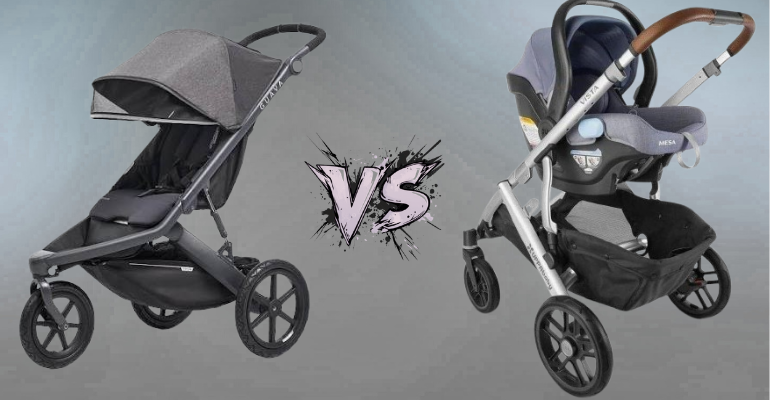
Baby gear purchasing is one of the specific categories where parental anxiety and marketing budgets meet in ways that produce genuinely irrational spending decisions. Everything matters for your baby. Therefore everything should be the best. Therefore you should spend whatever the best costs.
I have been through this logic myself. I also now know that it produces some genuinely good purchasing decisions and some very expensive mistakes, and the expensive mistakes often involve buying things from the same brands that the parents you admire use without asking whether those specific products are actually right for your specific life.
Guava Family and UPPAbaby are both well-regarded brands in the premium baby gear space. They overlap in a few product categories — most notably travel cribs — and diverge significantly in price. Here’s what the difference actually gets you.
UPPAbaby has been around since 2006 and built their reputation primarily on strollers — the Vista and Cruz are among the most expensive and most recommended strollers in their respective categories, and their reputation for quality and longevity is well-earned. The REMI play yard is their entry into the travel crib category. It’s an extension of the UPPAbaby design and quality philosophy into a category they weren’t originally known for.

Guava Family is younger and built their brand almost entirely on one product: the Lotus Travel Crib. The Lotus became a cult object in parenting communities because it solved a specific problem — the awkwardness of standard pack-and-play travel cribs — in a way that felt genuinely designed rather than engineered to a price. The Lotus folds into a backpack. A real backpack that you can carry on your back. For families who travel with infants, this is not a small detail.
The problem with most travel cribs before the Lotus was the same: they fold into a bag, technically, but the bag is awkward, heavy, requires a specific folding sequence that you’ll forget at 11pm in a hotel room, and it doesn’t actually fit in the overhead bin even when the dimensions technically should allow it.
The Lotus folds in one step. Pull the center, the whole thing collapses into itself, fits into the included backpack. The backpack is carry-on compliant. A person of average strength can carry it comfortably for a reasonable distance. This is the thing Guava figured out that no one else had prioritized, and it matters enormously in practice if you travel with a baby.
The crib itself — the sleeping surface — is breathable mesh on all four sides, the mattress pad is firm and flat as it should be for infant safety, and the whole structure feels more substantial than the price suggests. It’s a $300 crib that feels like a $300 crib, not a $300 crib that feels like a $150 crib with a markup.
The REMI is UPPAbaby’s answer to the travel crib category and it’s a genuinely well-made product. The construction is more substantial than the Lotus. The fabric is higher quality. The overall aesthetic is more refined in the way that UPPAbaby’s products generally are — this is a company that has invested in industrial design in a way that shows throughout their product range.
The REMI folds more simply than older pack-and-play designs. It’s not the one-step collapse of the Lotus — it requires a more deliberate folding process — but it’s manageable and considerably less frustrating than the generation of travel cribs it replaced.
The REMI is heavier than the Lotus. The bag it folds into is not designed to be worn as a backpack. For families who need to carry their travel crib through airports as a single traveler with other bags, this matters. For families who are driving to destinations and putting the crib in the car, it matters less.
The price difference is significant: the Lotus runs around $300, the REMI runs around $400-450. For what you’re getting, the UPPAbaby premium reflects a construction quality advantage. But for the use case of travel specifically, the Lotus is designed around that use case in a way that the REMI isn’t and the extra $150 doesn’t compensate for the portability difference.
This is where the comparison becomes less direct because the brands don’t overlap as much as people assume.
UPPAbaby’s strollers are what they’re genuinely known for and they deserve the reputation. The Vista is the best-built stroller in its price range. The conversion options — from single to double, the bassinet attachment, the compatibility with car seats — are genuinely comprehensive in a way that pays off over years of use. The cost is real: a Vista in a popular configuration can run $1,200-1,500 with accessories. But families who have Vista strollers tend to keep them and love them.
Guava Family has expanded beyond the Lotus but they’re still primarily a one-product brand in terms of what they’re genuinely known for. Their carrier, the Bamboo, and some accessories exist, but the Lotus is the thing. This is not a criticism — being excellent at one specific product is a legitimate brand position — but it means the comparison between these two brands isn’t really a comprehensive brand-versus-brand question for most categories. It’s specifically about travel cribs.
For travel cribs specifically: buy the Guava Family Lotus if you travel with a baby more than twice a year, if you need something carry-on compliant, or if you are the person who will be carrying the crib through an airport alone. The portability advantage is real and it matters.

Buy the UPPAbaby REMI if portability is less critical, you have car travel primarily in mind, and you want the construction and finishing quality that UPPAbaby brings to everything they make.
For strollers: UPPAbaby has no meaningful competitor from Guava because Guava doesn’t really play in strollers at the same level. The Vista is one of the best strollers available at any price.
For the brand overall: UPPAbaby’s product range is broader and more comprehensively excellent. But Guava Family solved a specific problem better than anyone else had, and for that specific problem, the Lotus remains the right answer.