HOME | Fashion | Beauty | Home Furnishing | Comparison | Top Reviews |
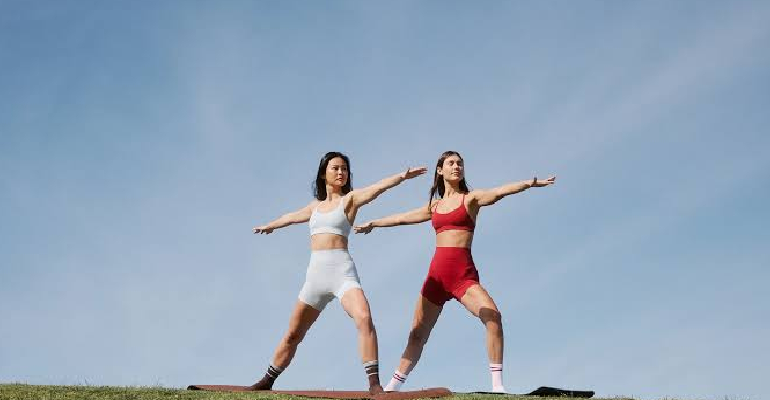
I want to tell you something before this list starts. The activewear industry is one of the most aggressively marketed categories in fashion, and it has gotten very good at making you believe you need new things when you don’t, and that the newest thing is better than what you have when it often isn’t.
So before we get into which brands are worth buying: you probably don’t need more activewear. You need better activewear. There’s a difference and it’s the difference between spending $400 on pieces that actually work and spending $400 on four things that are fine.
This list is what I’d tell a friend who was starting from scratch or replacing a worn-out collection and wanted to spend well.
Lululemon’s Align legging is the reference point against which everything else in this category gets measured, and the reason for that is simple: the Nulu fabric is genuinely unlike other fabrics. It’s soft in a way that makes every other activewear brand’s “soft” claim feel slightly inadequate. For yoga, Pilates, barre, and any movement that doesn’t require aggressive compression, the Align is still the best product of its type.
But I want to be honest about what’s happened to Lululemon’s quality consistency over the last three years, because it affects how I’d tell someone to shop there. The brand has scaled enormously and something has shifted. Not dramatically. But pieces from 2020 feel more substantial than equivalent pieces from 2024. The Align I bought four years ago has held up better than the Align I bought eighteen months ago. This is anecdotal but it’s consistent with what I hear from people who’ve been buying Lululemon for a long time.
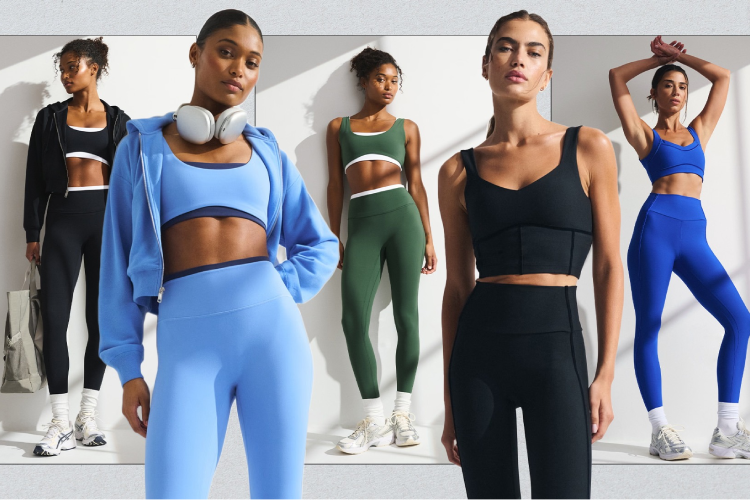
What to buy from Lululemon in 2026: the Align for gentle movement and daily wear, the Wunder Train for actual high-intensity workouts, the Define jacket which has maintained its quality and remains one of the most flattering fitted athletic jackets available, and the ABC trousers which are genuinely excellent work-casual trousers masquerading as activewear.
What to be more careful about: anything in categories where Lululemon has expanded beyond their original strengths, very lightweight fabrics that feel thin on arrival, and anything you’re ordering online without having touched the fabric first.
Girlfriend Collective doesn’t have Lululemon’s marketing budget or Alo’s celebrity adjacency. What they have is an excellent product at a lower price point and a sustainability story that’s more substantive than the industry average.
The Compressive High-Rise Legging is genuinely compressive in a way that makes it excellent for any workout where you want things held in place. The fabric is made from recycled plastic bottles — a claim that sounds like greenwashing until you see how it translates into a material that’s durable, moisture-managing, and comfortable for extended wear. Girlfriend Collective also runs proper extended sizing, which matters, and their LITE collection is lighter and more breathable for hot weather or outdoor running.
The price point is meaningful: typically $68-88 for leggings versus Lululemon’s $98-128. That’s not a small difference. If you’re buying multiple pieces, the savings accumulate into something real.
What’s not as strong at Girlfriend Collective: the aesthetic is functional rather than fashion-forward. If you want activewear that looks like it belongs in a fashion editorial, Girlfriend Collective isn’t trying to deliver that. The pieces look like sportswear. That’s fine if sportswear is what you want. It’s a limitation if aesthetics are a priority.
There is a version of buying activewear where function is secondary to looking like someone who takes very good care of themselves. I’m not saying this disparagingly. The aesthetic dimension of how you feel when you’re working out or going about your day in your activewear is real and it affects whether you actually use the stuff. If wearing Alo makes you more likely to go to the studio, the price is justified.
Alo’s Airbrush fabric has real compression and real structure. The pieces hold their shape in ways that make them particularly good for any movement that’s being photographed — reformer Pilates, yoga, outdoor running. The matching sets are one of Alo’s strongest categories and they photograph exceptionally well as a result.
The things that bother me about Alo: the size range is still not as inclusive as it should be for a brand at this price point and visibility. The brand has expanded but not enough. If you’re outside a fairly standard size range, Alo’s options become limited quickly.
The things I genuinely like about Alo: the product development is real. The Airbrush has gotten better since it launched. The accessories — specifically the crossbody bags and the headwear — are well-made additions to the range that work both in and out of the gym context. And the Alo Moves app, included with purchases, is a genuinely good workout resource that adds value beyond the product.
On Running has done something remarkable which is to make a technical Swiss running shoe into a lifestyle object that people wear everywhere. The Cloud series — the Cloudmonster, the Cloudstratus, the Cloudsurfer — are legitimately good running shoes with specific cushioning technology. They’re also the shoe you see on every woman in any major city right now who has an active lifestyle or wants to project one.
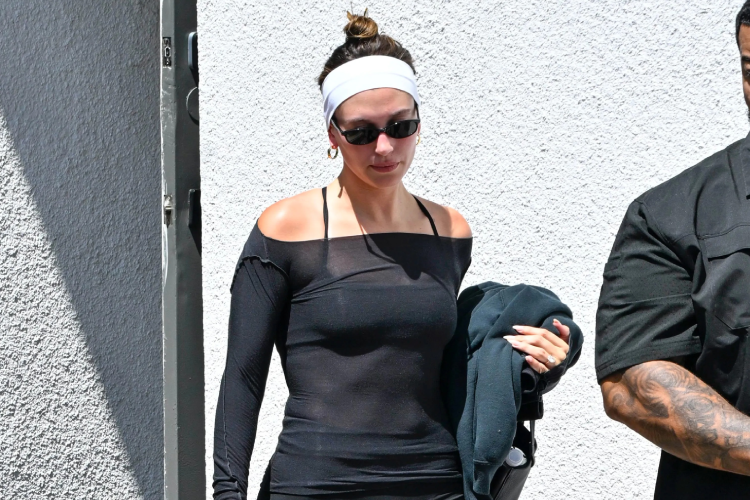
I want to be careful here because the lifestyle halo can obscure whether the shoe is actually right for you. On Running shoes have a specific feel — more responsive and less maximally cushioned than something like a Brooks Ghost or a HOKA Clifton. If you’re a heavy heel-striker with any knee issues, the responsiveness that performance runners love can be less comfortable for you specifically. Try before you buy rather than purchasing based on the aesthetic.
What’s genuinely excellent about On: the durability is above average, the traction is good across surfaces, and the brand’s commitment to developing Cyclon (a fully recyclable shoe) represents real investment in sustainability rather than the superficial version.
I know. Hear me out.
Decathlon’s Domyos activewear collection has quietly become one of the best value propositions in the entire category. The leggings specifically — the seamless collections and the more structured training tights — perform well, wash well, and cost a fraction of what Lululemon charges. They don’t have the Nulu softness. They don’t have the Airbrush structure. But they work, they hold up, and they don’t require budgeting the purchase the way a $120 pair of leggings does.
I recommend Decathlon to anyone who is new to activewear as a category and isn’t sure what kind of movement they’ll be doing most. Don’t start with a $100+ pair of leggings until you know whether you’re primarily a yoga person or a HIIT person or an outdoor runner, because those activities have genuinely different requirements and the right fabric for one is not the right fabric for another.
Start at Girlfriend Collective or Decathlon. Understand what you actually do and what fabric behavior you actually want. Then upgrade selectively to Lululemon or Alo for the specific pieces where the premium is justified for your specific use.
Don’t let activewear marketing tell you that you need to be wearing the same brand head to toe. The best activewear wardrobe is the one assembled piece by piece based on what actually serves your actual body doing your actual activities.