

Yoto’s fresh 2026 evidence is unusually well-suited to a precise, direct decision framework — a detailed Mumsnet test specifically comparing the Yoto Player against the Yoto Mini across three sisters aged 7, 5, and 2 gives genuinely useful, hands-on guidance for the single most common parent question: which model to actually buy. Pairing this with a specific, separate, documented pattern of return-process friction gives this fresh review its most useful structure.
Best for: Families with children aged 3-10 specifically — the age range a specialist retailer’s detailed guide and the brand’s own broader review pattern both confirm as the genuine sweet spot — who choose the Player for home/bedtime use and the Mini specifically for portability and younger children, and who track any return or delivery issue actively given the documented friction pattern in both areas.
Cross-referenced from Mumsnet’s detailed hands-on Player-vs-Mini comparative test across three sisters, Learning Bugs’ specialist retailer age-by-age guide (a business that sells Yoto daily), Trustpilot’s UK collection (40,164+ reviews across multiple pages), Thingtesting’s aggregated review collection, Busy Busy Learning’s detailed 5-7 year multi-brand comparative review, and Skinnedcartree’s nearly-two-year personal family ownership account. No commercial relationship with Yoto.
Yoto is a UK screen-free audio platform built around physical cards inserted into a player to trigger stories, music, podcasts, and educational content — no screen, no app navigation required on the child’s side once content is loaded. The current core lineup spans the Yoto Player (full home device, with nightlight and room thermometer) and the more compact Yoto Mini (designed specifically for travel and portability), both sharing the same card library and the Yoto Club subscription option for ongoing content delivery.
This deserves direct emphasis because it directly answers the single most common practical question UK buyers have. A detailed Mumsnet test, conducted with three sisters aged 7, 5, and 2 over multiple weeks across home, garden, and bedtime use, confirms the specific differences precisely: “The Yoto Player has a nightlight, better audio, wireless charging, an extra 16GB of storage and a room thermometer. It’s larger than the Yoto Mini and £40 more expensive.” Their direct, practical conclusion: “If you’re looking for a player to use at home and for bedtime, the Yoto Player has the edge with its nightlight feature. If you’re after a player to take on car journeys, camping and on holidays, the Yoto Mini is a better bet.”
A separate specialist retailer’s age-by-age breakdown — genuinely useful precisely because it comes from a business with daily direct sales experience rather than a single household’s perspective — confirms: “18 months to 3 years: Yoto Mini works well at this age with song and nursery rhyme cards… 3 to 6 years: The sweet spot. Story cards, sleep sounds, audiobooks… 6 to 10 years: Chapter books, longer stories, podcasts.” Their direct, specific guidance on the broader Tonie comparison: “Yoto wins for most ages — particularly 3 and up. The card library is bigger, the content is higher quality and the player itself is better designed for independent use.”
This deserves direct, careful treatment because it describes a genuinely confusing, multi-step failure rather than a simple delay. One detailed, specific UK account: “Ordered the incorrect goods. Had to go through numerous links to then be told I need to use chat to request a refund. QR code was sent, I dropped off the parcel and within two days the parcel was returned to my address. The return label had my address on it. It then took another two days to eventually get someone to understand my complaint as they kept sending QR codes with my address on it.” The customer’s own fair, direct conclusion: “Not on Yoto! To request for a return should be simple, not painful.” This is a meaningfully specific, traceable process failure — a returned parcel literally redirected back to the original sender due to a labeling error — worth knowing about precisely if you anticipate needing to return an incorrect order.
Multiple separate, fresh accounts confirm this remains a real pattern. One specific, detailed account: “Rather disappointed – ordered a Yoto player for my granddaughter’s birthday on 08 March 2026. Received a confirmation and notification from Australia Post. An enquiry was made as no unit was delivered.” A separate, equally specific account: “I ordered cards in September and realized a month later that I had never received them.” This level of repeated, specific, dated confirmation across separate accounts represents a real, ongoing operational concern worth planning around — order well ahead of any gift deadline and actively confirm tracking status rather than assuming delivery will proceed as scheduled.
This continues to be a well-evidenced strength, and the fresh 2026 data confirms the pattern holds. One detailed account: “Was having an issue with my daughters Yoto and they handled the issue quickly and sent her a replacement. Works perfect! Fast, friendly and convenient customer service through the messaging on the website.” A separate, specific account praises the brand’s responsiveness to known issues directly: “Yoto are open with issues and work with consumers to fix the issues.” This pattern of fast, friendly resolution for hardware faults specifically stands in genuine, documented contrast to the more difficult return-process experience documented above — suggesting the gap is process-specific (returns/refunds) rather than a uniform customer service weakness.
Multiple separate sources confirm a real, if secondary, technical concern: “Bluetooth connection is just a little patchy” in one otherwise highly positive review, alongside a separate confirmation that connecting from a phone “is quite difficult to connect… takes a long time and often needs a” retry. This is worth knowing as a genuine, repeated minor technical friction point rather than a dealbreaker, given the otherwise overwhelmingly positive product satisfaction evidence.
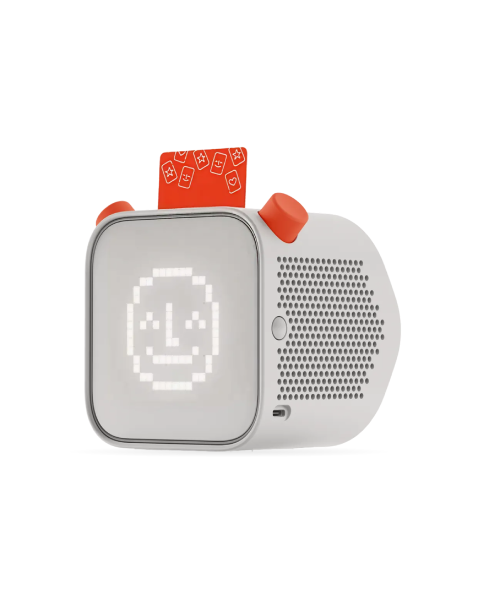
Best for: Home and bedtime use specifically — the model a detailed, controlled comparative test confirms has “the edge” for this exact use case.
One Honest Drawback: Larger and more expensive than the Mini — confirm this matches your actual primary use case (home vs. travel) before choosing.
Verdict: The right choice specifically for families prioritizing home/bedtime use, per direct, controlled comparative evidence.
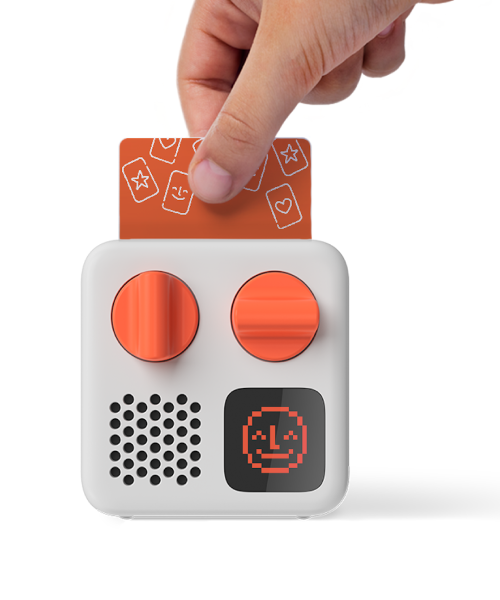
Best for: Travel, car journeys, camping, and younger children specifically.
One Honest Drawback: At least one detailed reviewer specifically notes the battery life requires more frequent plugging-in for extended use compared to the larger Player.
Verdict: The right choice specifically for portability-focused families, confirmed directly against the Player in hands-on testing.

Best for: Cost-conscious families wanting to extend the platform’s value with personal recordings.
One Honest Drawback: Requires some parental setup time through the app to record and load custom content.
Verdict: One of the most consistently and specifically praised features across this entire review.
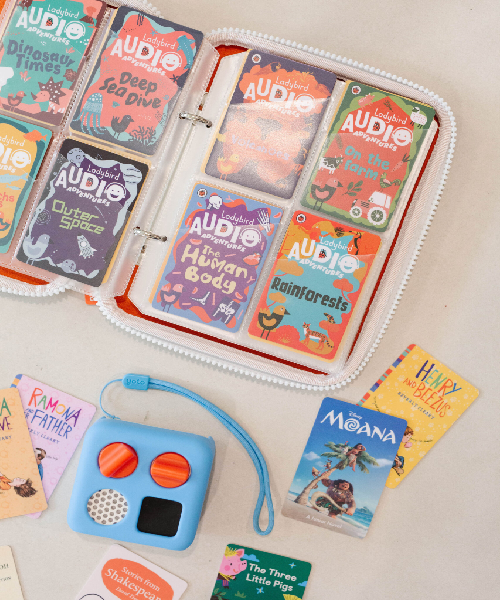
Best for: Families wanting a steady, curated stream of new content without individually selecting and purchasing each card.
One Honest Drawback: As a recurring subscription, confirm the actual usage justifies the ongoing cost relative to purchasing individual cards based on your child’s specific listening patterns.
Verdict: A reasonable ongoing-value option for families who’ve confirmed consistent daily or near-daily Yoto use.
Real accounts paraphrased:
For families with children aged 3-10 specifically: yes, with strong confidence — both a specialist retailer’s daily-sales-informed age guide and the broader review pattern confirm this as the genuine developmental sweet spot.
For choosing between Player and Mini: choose based on primary use case specifically — Player for home/bedtime (with its nightlight advantage confirmed in direct comparative testing), Mini for travel and portability.
For any order, particularly time-sensitive gifts: order with significant lead time and actively track delivery status, given the multiple, fresh, dated accounts of delivery confirmation failures.
For any return: document the process carefully and follow up promptly if a QR code or label appears incorrect, given the documented specific case of a return being redirected back to the sender’s own address.
Yoto Player | Yoto Mini | |
Best for | Home, bedtime | Travel, portability, younger children |
Nightlight | ✅ Yes | No |
Storage | More (+16GB) | Standard |
Price | Higher (~£40 more) | ✅ Lower |
Battery life | Stronger per comparative testing | Documented as needing more frequent charging |
Recommended age (per specialist retailer) | 3-10, especially home-based listening | 18 months-3 years, or any age for travel |
yotoplay.com — full UK catalog with free shipping options. Order well ahead of any gift deadline and actively track delivery status given documented delays.
Choose based on primary use case — a detailed, controlled hands-on test confirms the Player has “the edge” for home and bedtime use specifically, while the Mini is “a better bet” for travel, car journeys, and camping.
Per a specialist retailer’s detailed, daily-sales-informed guide: the genuine sweet spot is roughly 3-6 years for story cards and sleep sounds, extending to 6-10 years for chapter books and podcasts.
Yes — multiple separate, fresh, dated accounts document significant delivery delays or non-arrival, including at least one specific case involving a missed birthday gift deadline.
At least one specific, detailed account documents a genuinely confusing, multi-step return failure involving an incorrectly labeled return parcel — document your return process carefully and follow up promptly if anything seems off.
Yoto’s core product experience remains genuinely well-validated, with fresh 2026 evidence providing real, specific guidance for the most common buyer decision (Player vs. Mini) through a detailed, controlled comparative test. Customer service for hardware faults specifically continues to earn strong, repeated, specific praise.
The documented, fresh return-process and delivery reliability concerns deserve genuine, direct attention — order with significant lead time, track delivery actively, and document any return carefully given the specific case of a parcel being redirected back to the customer due to a labeling error.
Category | Score |
Content Library & Educational Value | 9 / 10 |
Player vs Mini Differentiation | 9 / 10 |
Build Quality & Durability | 9 / 10 |
App/Bluetooth Connectivity | 7 / 10 |
Delivery Reliability | 6.5 / 10 |
Return Process | 6 / 10 |
Customer Service (hardware issues) | 9 / 10 |
Overall | 8.7 / 10 |