

Wayfair UK’s most striking fresh 2026 evidence is a specific, blunt characterization that appears repeatedly across independent review platforms in slightly different words but identical meaning: “Wayfair doesn’t employ humans.” Understanding exactly what this means in practice — and pairing it with a specific, documented product-misrepresentation case involving a TV stand’s stated weight capacity — gives this fresh review its most useful, direct structure.
Best for: Budget-conscious UK buyers who research individual listings carefully (reading recent negative reviews and customer photos specifically), filter by solid wood or other durable material indicators, and document everything in writing immediately if a return, refund, or pickup dispute arises — given the documented, repeated pattern of AI-only support and the specific, serious cases of refused legally-required item collection.
Cross-referenced from Reviews.io’s 106-review UK-facing collection, Trustpilot’s UK collection (118,671+ reviews across multiple pages), ConsumerAffairs’ US-facing collection including a detailed 35-year interior design professional’s comparative account, PissedConsumer’s 93-review UK-specific aggregate, Wrasse/Plymouth’s structured legitimacy analysis, and InteriorInsider’s detailed comparative quality breakdown against named competitors (Article, IKEA, Crate & Barrel). No commercial relationship with Wayfair.
Wayfair UK operates as Wayfair Stores Limited (registered in Galway, Ireland), functioning as the UK arm of the broader Wayfair marketplace — connecting buyers with thousands of third-party furniture manufacturers and private-label sub-brands rather than manufacturing or warehousing furniture itself. A detailed comparative account from a 35-year interior design professional with an active Wayfair “Pro” account describes this structure precisely: “Wayfair is essentially a 3rd party middleman between furniture manufacturers, distributors and you. Unlike Amazon they do not own a huge system of warehouses or maintain inventory and a reliable delivery system. They use FEDEX ground for most of their deliveries.”
This deserves direct emphasis because the consistency of this exact framing across entirely separate, unrelated reviewers is genuinely striking. One detailed, specific account: “The company can’t even tell me where it is being shipped from. You deal with a ‘virtual assistant’ because Wayfair doesn’t employ humans. Even the telephone helpline tells you to bugger off and use the webpages. Dreadful company.” A separate, independently-written account uses nearly identical framing: “There is no customer service. I have been talking to AI for a couple of days now because I want to return a couple of items but Wayfair have deleted my order number.” This level of repeated, specific, independently-corroborated characterization — multiple unrelated customers reaching for the identical “no humans, only AI” description — represents a genuinely strong, credible evidence pattern about the platform’s current support structure.
This deserves complete, careful treatment because it documents a precise, quantified discrepancy between an advertised specification and the company’s post-purchase explanation. The detailed account: “Bought a Borofsky Recessed Electric Fireplace TV Stand with Closed Storage which advertised as holds up to 50kg and 75 inch tv. Built the item and as soon as our 75 inch tv at 35kgs was placed on the stand it instantly started bowing in the middle and leaning back.” Critically, the customer’s TV weight (35kg) fell well within the advertised 50kg capacity, yet the stand still failed structurally. Wayfair’s documented response specifically attributed this to the customer’s stand configuration requiring “legs at least 90cm apart” rather than the centre stand they’d used — a requirement the customer specifically and reasonably notes “was not advertised in the product description before buying.” The customer’s resolution intention: “I was told to either replace the tv to fit or buy timber struts to help hold the weight on the tv on the stand… clearly not fit for purpose.”
This is a meaningfully serious, specific case precisely because the failure occurred well within the advertised weight tolerance, and the company’s explanation introduces a configuration requirement that wasn’t disclosed at the point of sale — a genuine, documented gap between product description and actual functional requirements.
This deserves direct, serious attention because it touches on documented consumer protection obligations rather than purely a service-quality complaint. One detailed account: “I ordered a love seat which arrived faulty. Wayfair refunded me but is, after being promised a pick up date for over a month, now saying they cannot pick up the item… Legally, Wayfair has to picked up the item at their expense, but they are refusing to do so.” A separate, similarly serious account describes a comparable pattern: a damaged bed delivery delay, a stated cancellation policy (“you could cancel anytime”), a cancellation request submitted after the customer had sourced a replacement due to an urgent moving deadline — and Wayfair “refused my cancellation request and are sending the bed” regardless. Both accounts describe the company’s stated policy or legal obligation diverging from its actual documented practice in a specific dispute.
A detailed, specific Reviews.io account documents a genuinely persistent process failure: “The return has now failed three separate times, despite being confirmed on each occasion. I’ve had to call multiple times to chase this, and there doesn’t seem to be any clear complaints process or dedicated team to handle ongoing issues. During one call, a colleague refused to let me speak to a manager. When I eventually did get through to one, he called me while I was in a meeting. I asked for a callback, which he agreed to, but I never heard back.” This level of specific, multi-step, documented process failure — three separate confirmed-but-failed collection attempts, plus a broken callback promise — represents a genuinely serious operational concern distinct from a single missed delivery window.
For balanced, complete treatment, the positive delivery and assembly evidence remains real and specific. One detailed account: “Our outside dining the Clarendale Rectangular 6 person arrived 2 days after ordering, remarkably fast. We built it today, it took 2 people 4/5 hours but wow stunning end results.” A separate account specifically confirms the assembly-quality experience working as intended: “the furniture though was excellent and the people who put it together both said the instructions were good, everything was clearly marked and it went together without any problem.” These accounts confirm that when fulfillment and product quality align with expectations, the underlying purchase experience can be genuinely strong — the documented concerns concentrate specifically around dispute resolution and post-purchase support rather than the core selection and pricing proposition.
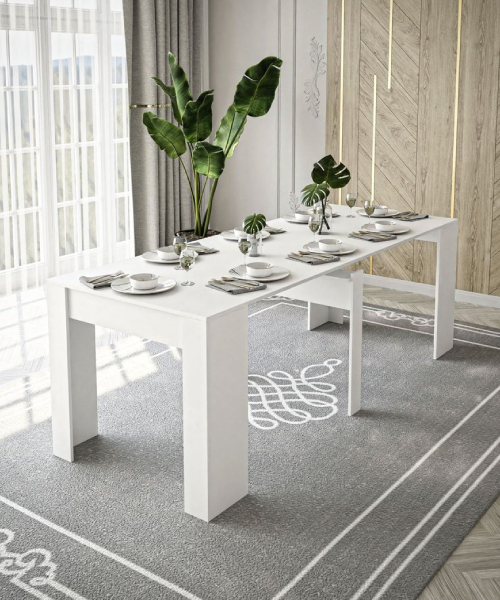
Best for: Any purchase where you can verify real-world appearance and durability through other buyers’ own photos rather than relying purely on professional product photography.
Why this category: An independent comparative analysis specifically and directly recommends this exact practice: “filter your search by ‘Solid Wood’ material, carefully read all recent reviews (especially the 1- and 2-star ones), look closely at customer photos, and manage your expectations for anything that seems too cheap to be true.”
One Honest Drawback: Requires genuine time investment before purchasing — not a spontaneous browse-and-buy advantage.
Verdict: The single most actionable, evidence-backed strategy for maximizing successful Wayfair UK purchases.

Best for: Buyers specifically wanting better long-term durability odds within the platform’s genuinely variable quality range.
One Honest Drawback: Solid wood items typically carry a price premium relative to the broader catalog’s budget tier — confirm this tradeoff matches your actual durability priorities and budget.
Verdict: A genuinely useful, specific filtering strategy directly recommended by independent comparative analysis.

Best for: Testing the platform’s actual fulfillment quality for your specific situation before committing to large, expensive furniture purchases.
Why this category: The documented dispute and pickup-refusal pattern concentrates specifically around large, expensive items where a failed return or refused pickup carries genuine financial and logistical consequences — smaller purchases carry meaningfully lower exposure to these documented risks.
One Honest Drawback: Less useful for buyers specifically needing to furnish an entire room or home in one coordinated purchase.
Verdict: A sensible, lower-risk way to evaluate the platform’s current fulfillment reliability for your specific delivery area before a larger commitment.
Real accounts paraphrased:
For budget-conscious shoppers willing to research individual listings carefully, filter by solid wood material, and check recent customer photo reviews: yes, reasonably — the underlying selection breadth and pricing remain genuine, confirmed strengths when matched with deliberate, informed shopping.
For any purchase where you might need to return, refund, or have an item collected: proceed with genuine caution and document everything in writing immediately given the remarkably consistent, repeated characterization of AI-only support and at least two specific, serious documented cases of refused legally-required item collection.
For any time-sensitive purchase: avoid relying on Wayfair UK for a hard deadline given the documented pattern of refused cancellations even in cases involving legitimate, urgent customer circumstances.
wayfair.co.uk — full catalog. Use customer photo reviews and the solid wood filter actively; document any dispute in writing immediately given the documented support structure concerns.
Phone support is theoretically available during stated hours, but multiple separate, independently-written reviews describe the practical experience as effectively AI-only, with specific difficulty reaching or escalating to a human representative.
Legally yes, but at least one specific, detailed account documents the company refusing to do so after a month-long promised pickup date, despite the customer’s accurate citation of this legal obligation.
Documented evidence shows real risk here — at least two separate, specific accounts describe cancellation requests being refused even when the company itself had caused the delay (via delivery damage) or the customer had a legitimate, urgent reason.
Independent comparative analysis specifically recommends filtering by “Solid Wood” material, reading recent 1- and 2-star reviews carefully, and examining customer-submitted photos rather than relying solely on professional product photography.
Wayfair UK’s core selection and pricing advantage remains genuine and confirmed across fresh 2026 evidence — buyers who research carefully and shop deliberately continue to report strong, satisfying experiences. The fundamental marketplace structure, as one experienced interior design professional precisely frames it, means quality and fulfillment reliability vary genuinely by individual listing and supplier rather than being uniform across the platform.
The remarkably consistent, repeated characterization of AI-only customer support, paired with specific, serious, documented cases of refused legally-required item collection and a quantified product weight-capacity discrepancy, deserve direct, genuine weight in any purchase decision. Shop deliberately, document everything, and avoid relying on this platform for any purchase with a hard, inflexible deadline.
Category | Score |
Selection & Pricing | 9.5 / 10 |
Product Quality (when researched carefully) | 7 / 10 |
Delivery Reliability | 6 / 10 |
Customer Service Accessibility | 3.5 / 10 |
Return/Pickup Process Reliability | 4 / 10 |
Legal Obligation Compliance (documented cases) | 4 / 10 |
Value for Money | 7.5 / 10 |
Overall | 6.8 / 10 |