HOME | Fashion | Beauty | Home Furnishing | Comparison | Top Reviews |
I have a complicated relationship with jewelry that costs more than £50 but less than £500. It’s the category where the promises are largest and the disappointments are most frequent.
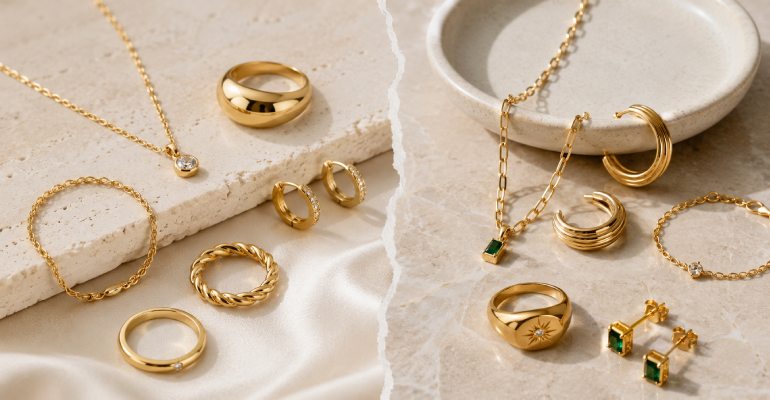
Demi-fine jewelry — real gold plating over sterling silver, positioned between costume and fine — has been the fastest growing segment in the jewelry market for the last several years. The appeal is obvious. You want pieces that look like fine jewelry without paying fine jewelry prices. The problem is that the category contains brands that genuinely deliver on that proposition and brands that deliver beautiful photographs and mediocre longevity.
Mejuri and Missoma are the two names that come up most consistently when people are researching this category. I’ve owned pieces from both for long enough to know what actually happens after the newness wears off.
Mejuri was founded in Toronto in 2013 by Noura Sakkijha, whose family had been in the jewelry business for three generations. The brand launched DTC before DTC was the obvious model for jewelry and built its entire marketing identity around something genuinely different for the industry at the time: the idea of women buying jewelry for themselves rather than waiting for it as a gift. This sounds simple. In the jewelry industry in 2013 it was a meaningful reframe. The marketing consistently showed women wearing their own pieces, buying their own pieces, treating jewelry as a form of self-expression rather than a form of sentiment received from others.
The aesthetic that developed from this positioning is minimal in a specific way — not stark minimal, but quietly expensive minimal. Thin bands, simple disc pendants, stud earrings with a single element, layering necklaces with small charms. The pieces are designed to be worn together in a way where the collection accumulates meaning rather than any individual piece trying to be the statement.
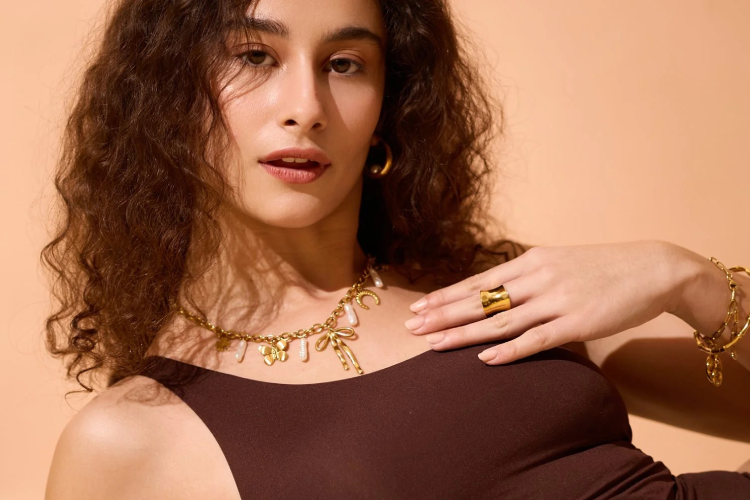
Missoma was founded in London in 2008 by Marisa Hordern. The brand built its following more gradually, through collaborations (the Harris Reed pieces were particularly significant for bringing the brand to a different audience) and through a consistent presence in the UK fashion media. The aesthetic is slightly more ornate than Mejuri — more visible texture, more shaped elements, more design detail that shows itself rather than receding.
Both brands hit the right moment. The demi-fine category expanded significantly during the pandemic years when people were making targeted purchases rather than shopping broadly, and jewelry that delivered a visual luxury hit without fine jewelry pricing captured a lot of that spending.
The central practical question with any gold-plated jewelry is: how long does the plating last? Because gold-plated jewelry will eventually show wear at friction points — clasps, the back of pendants, ring shanks, earring posts. The only questions are when and how visibly.
Mejuri uses 18k gold plating on their non-solid-gold pieces. The plating is applied via a process they describe as solid gold bonded, which is different from standard gold plating in thickness. The brand is reasonably transparent about care instructions: store pieces individually, avoid water and chemicals, remove before exercise. Following these instructions makes a meaningful difference to longevity.
In practice, my experience with Mejuri’s plated pieces has been one to two years of daily wear before I notice any fading at friction points. Rings, unsurprisingly, show wear faster than necklaces because rings experience more friction. Necklaces with minimal pendants and simple chains hold the plating better than heavily textured or worked pieces.
Missoma uses 18k gold vermeil, which is a specific legal designation meaning gold plating over sterling silver at a minimum thickness of 2.5 microns. This matters for two reasons: the sterling silver base is better for metal sensitivities than the brass base many gold-plated pieces use, and the vermeil standard means the plating is thicker than much of what’s sold as “gold-plated” without the vermeil specification.
In my experience Missoma’s plating holds similarly to Mejuri’s on comparable pieces. The vermeil standard is meaningful as a base specification but doesn’t translate to dramatically different longevity in practice. What affects longevity most is piece type and care habits — both from both brands.
Mejuri’s pieces have a deliberate restraint. If you laid them on a table without context you would describe them as elegant rather than ornate. The brand releases new pieces regularly but within a consistent vocabulary: thin bands, simple geometric elements, chains at various weights. The colorways lean warm gold with some rose gold and a deliberate silver offering. The pieces are designed to layer and to disappear into an overall look rather than demanding individual attention.
This is either the point or it’s not enough, depending on what you want from jewelry.
Missoma allows more visual presence. Their pieces have elements that announce themselves: a specifically shaped charm, a textured surface, a more visible construction. The collaborations they’ve done — particularly the Harris Reed collection, which introduced more sculptural and androgynous elements into the brand — have pushed the design vocabulary further than their core range. When you’re wearing Missoma, the piece participates in the outfit more actively than Mejuri tends to.
Both approaches are valid. The question is whether you want jewelry that integrates or jewelry that punctuates.
Both brands offer solid 14k gold pieces at prices significantly above their plated offerings. This is worth discussing separately because the considerations are different.
Mejuri’s solid gold range is one of the most accessible entries into actual fine jewelry available. A solid 14k gold simple hoop or band sits around £150-350 depending on size and weight. These pieces are not going to show wear the way plated pieces do. They will last indefinitely with basic care. If you’re buying something with the intention of wearing it daily for years or decades, Mejuri’s solid gold pieces represent genuinely good value for what they are.
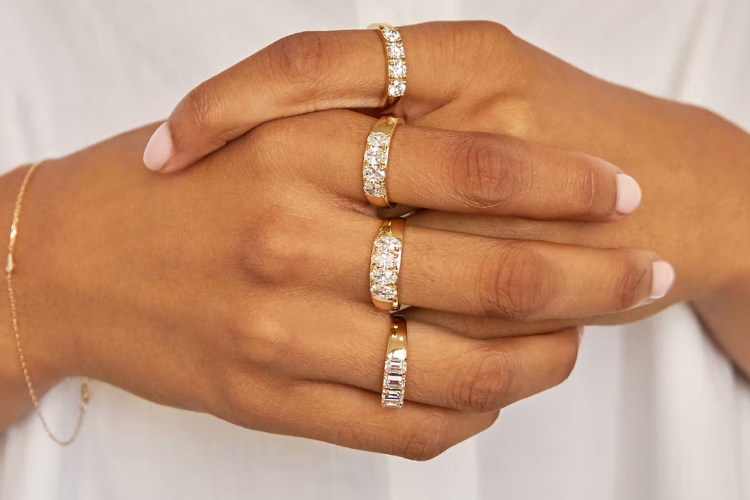
Missoma’s solid gold range exists but is less extensive and less competitively priced than Mejuri’s. If solid gold is where you’re headed, Mejuri is the better starting point for this price bracket.
Both brands have decent customer service reputations. Mejuri has a warranty and replacement policy for manufacturing defects. Missoma has similar protections.
Where the difference shows up is in sizing and return processes. Mejuri’s online sizing guidance for rings is helpful and reasonably accurate. Their return window is straightforward. Missoma’s international returns (relevant if you’re buying outside the UK) have sometimes been a friction point based on reviews.
For building a minimal layered jewelry wardrobe — multiple necklaces at different lengths, simple studs, thin bands — Mejuri is the better starting brand. The pieces work together because they share a design language. Starting with Mejuri and adding to it over time produces a cohesive result.
For a specific statement piece — something that reads as individual and designed, that you’re buying for a particular occasion or outfit context — Missoma’s more distinct pieces often deliver this better than Mejuri’s more receding aesthetic.
For metal sensitivity: Missoma’s vermeil base (sterling silver) is meaningfully better than brass-based plated pieces. If you’ve reacted to jewelry before, this is relevant.
For investing in something that lasts: Mejuri’s solid gold collection at the lower price tiers is the better entry into real fine jewelry at an accessible price.
For the specific collaborative pieces: Missoma has produced some genuinely distinctive collaboration pieces that don’t have a direct equivalent anywhere else. If those specifically are what you want, that’s where you go.
Both brands deliver on the demi-fine promise at their respective price points. Neither is fine jewelry and neither pretends to be. The plating will eventually show wear on both, the timeline is similar, and what happens after that depends on whether you replace, replating, or transition to solid gold pieces.
Buy Mejuri to build. Buy Missoma when you want a specific piece that makes a point. Use both for what they’re actually good at rather than treating the comparison as a zero-sum choice.