HOME | Fashion | Beauty | Home Furnishing | Comparison | Top Reviews |
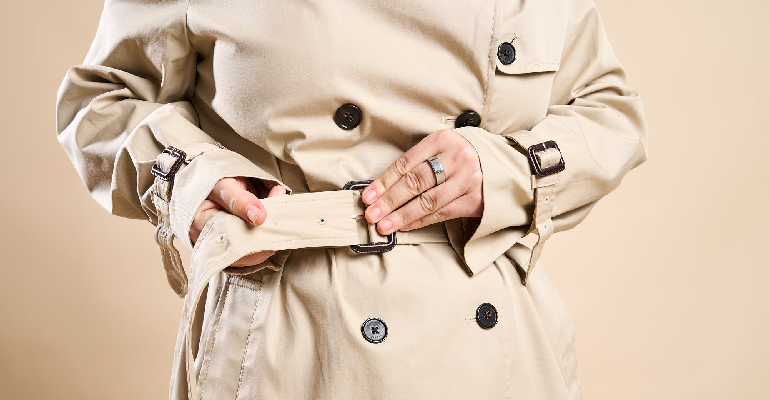
The trench coat is the outerwear piece with the strongest argument for spending more than feels immediately comfortable. Not because expensive trench coats are better in ways that are subtle or debatable — they genuinely are better in ways that are visible and specific. Better fabric weight. Better construction at the lining. Better button quality. Better shape retention over years of wear. The gap between a well-made trench and a poorly made one is more visible than the equivalent gap in most other clothing categories because the trench coat is worn as an outer layer, seen first, and defines the entire silhouette it’s draped over.
This doesn’t mean you need to spend $2,000 on a Burberry. It means understanding where the quality steps are in the market and making a considered decision about which step to buy at.
The fabric should have weight. A trench coat that floats off the shoulders and collapses in on itself when you remove it hasn’t been made with enough material to hold its shape properly. The classic gabardine — a tightly woven twill fabric — is the correct material for a proper trench. It has body, some weather resistance, and drapes in the way the silhouette is designed to fall.
The belt is structural, not decorative. A belt that’s too thin, too short to tie properly, or made from inferior material to the coat’s exterior reads as an afterthought and produces an asymmetrical, unresolved-looking belted silhouette. The belt should be the same weight as the coat’s exterior, long enough to tie in a knot at the front with fabric to spare, and secured by the same D-ring hardware that’s on the original design.
The lining determines warmth and longevity. A fully lined trench in a smooth fabric (silk lining in premium versions, satin or polyester in accessible ones) slides on and off over clothing without catching and maintains the coat’s interior structure. An unlined or half-lined trench loses shape at the shoulders over time.
The length matters practically. A mid-thigh length is the most versatile — long enough to provide genuine weather protection and visual proportion, short enough to work over trousers and skirts without creating proportion problems. Knee-length and below is more formal and less versatile in everyday use.
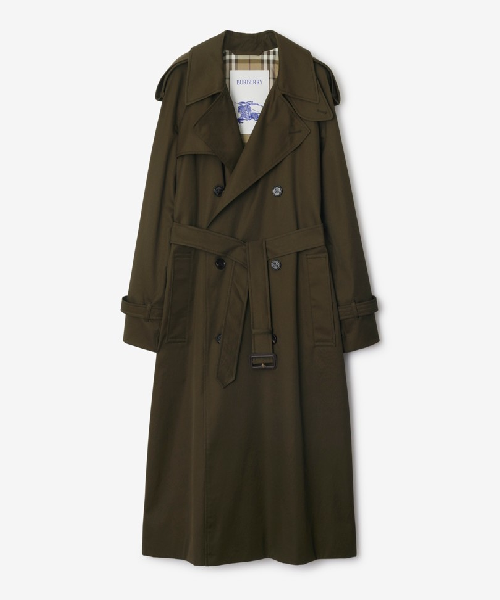
The Burberry Westminster trench costs around $2,000-2,400 and is the reference trench coat. The price buys: English gabardine woven specifically for Burberry with a thread density that produces genuine weather resistance without the plastic feel of treated fabrics, hand-finished details including the check lining that’s become a recognizable quality signal, and construction that includes full canvas interfacing in the shoulders rather than fused interfacing used in less expensive coats.
The honest assessment of the Burberry premium: the coat looks genuinely better than alternatives at close inspection and maintains its appearance over decades of wear. People who have owned Burberry trenches for ten to twenty years describe them as looking essentially the same as when purchased. This longevity, calculated over its life, brings the per-year cost to a level that’s not obviously unreasonable.
The counter-argument: the same $2,000 buys three to four excellent trench coats from accessible brands that will each last several years. Whether that represents better or worse value depends on how you think about quality, longevity, and what you want a coat to represent.
The secondhand market for Burberry trenches is robust and well-supplied — the trench coat is one of the most consistently resold items on platforms like The RealReal, Vestiaire Collective, and eBay. Secondhand Burberry in good condition at 40-60% of retail price is genuinely available and represents the most financially sensible way to own the reference product.
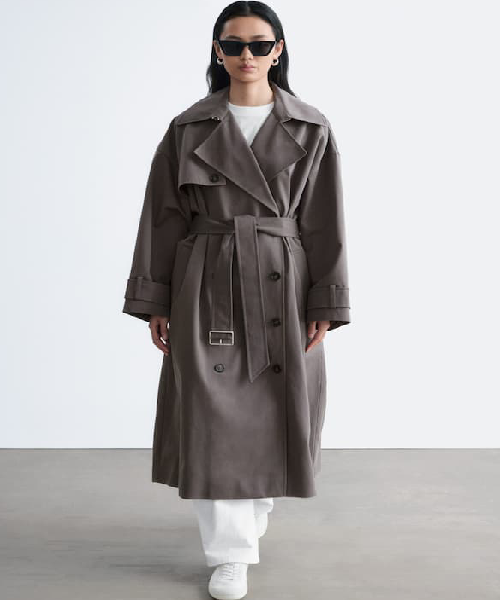
& Other Stories produces trench coats at $200-350 that are meaningfully better than high street alternatives in construction quality while remaining accessible enough to be a practical purchase. The fabric weight is appropriate, the construction includes proper interfacing that holds the shoulder shape, and the design is clean without being derivative.
The limitation versus the Burberry: the gabardine doesn’t have the same density and weather resistance, the lining is polyester rather than silk, and the hardware (buttons, D-rings, buckles) is lighter than premium alternatives. These are real differences that become more apparent over years rather than immediately.
For someone who wants a quality trench coat at an accessible price and is comfortable with the understanding that it’s a ten-year rather than a forty-year piece, & Other Stories represents good value. The seasonal colors they introduce alongside the classic beige and camel give options that premium brands at the same price point don’t offer.
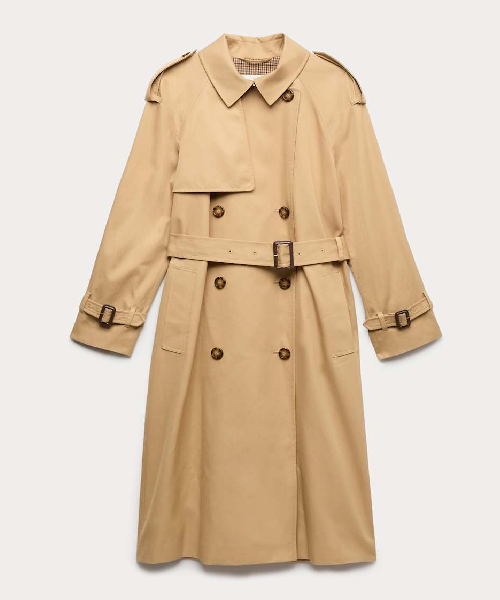
M&S produces a trench coat at around $120-180 that’s consistently underrated relative to its quality. The construction is better than the price suggests — M&S has specific quality standards for outerwear that reflect their heritage as a British clothing manufacturer, and the trench coat is one of the categories where these standards show most clearly.
The Pure Cotton Belted trench is the specific model worth looking at. The cotton content is higher than most alternatives at this price point (most accessible trenches use polyester blends that don’t behave the same way), the lining is adequate if not luxurious, and the cut is classic enough to remain appropriate across years of wear.
For a first trench coat purchase at a price that doesn’t require significant deliberation, M&S represents a better quality baseline than ASOS, Zara, or H&M alternatives at similar prices.
Polyester shell construction at any price point. Polyester doesn’t drape, it crinkles in ways the belted silhouette amplifies unpleasantly, and it doesn’t improve with wear the way natural fiber alternatives do. Check the fabric composition label before purchasing at any price.
Thin belts that are shorter than the coat’s waist circumference plus several feet of extra length. A belt that barely meets at the front cannot be tied in the front knot that is the trench coat’s defining feature.
Trench coats sold in temporary fast fashion colorways — bright red, cobalt blue, vivid green — at prices that suggest the garment was designed for one season. The investment argument for a trench coat is entirely dependent on the piece remaining appropriate for years. Fashion-forward colorways undermine this argument.