
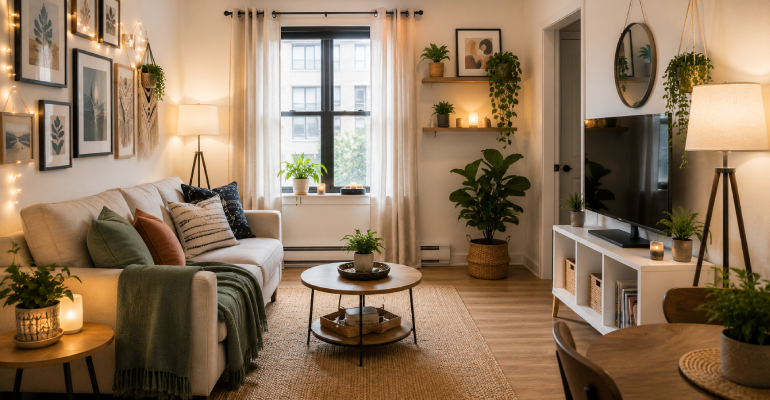
The rental apartment decorating challenge is specific: you want the space to feel like your home, not a temporary situation. You want to express your aesthetic without paying for it at the end of the lease. You want to make it genuinely comfortable without risking the deposit.
The solutions available now are meaningfully better than the solutions that existed five years ago. Command strips have evolved. Removable wallpaper has gotten genuinely good. Renter-specific products have developed into a real category. And there are strategies that require no products at all and no holes in walls that dramatically change how a space feels.
Removable wallpaper has improved dramatically and the best current options are genuinely indistinguishable from regular wallpaper in photographs and nearly indistinguishable in person. Tempaper is the reference brand — peel and stick, repositionable while wet, removable cleanly from most surfaces. The range includes everything from subtle textured patterns to bold geometric designs to botanical prints.
The application process requires patience rather than skill: a clean, smooth wall (wash and dry before application), careful alignment at the first panel, a squeegee or credit card to eliminate bubbles. Done correctly, Tempaper wallpaper looks as intentional as permanent wallpaper and removes without damage.
For an accent wall in a rental bedroom, a textured Tempaper application in a warm neutral transforms the room as completely as paint would and reverses in an afternoon when moving out.
Removable wall panels — the 3D textured panels that apply like giant tiles — have become a genuine design statement rather than a gimmick. The NovaBel and STIKWOOD panel systems use peel-and-stick application and produce a wood, tile, or brick effect that photographs beautifully and removes cleanly.
Command strips work. They also fail when misapplied in specific and consistent ways: applied to surfaces that aren’t clean and dry, applied to textured surfaces, pulled off without following the removal process, or loaded beyond their weight rating.
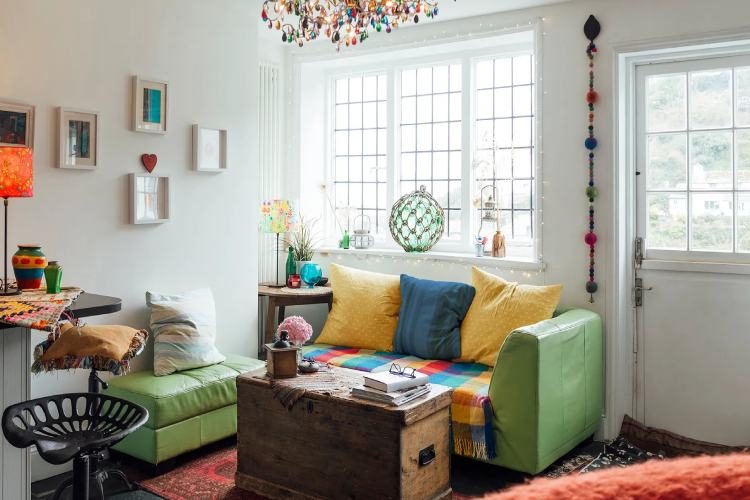
The removal process is the thing most people get wrong: you pull the tab straight down slowly against the wall, stretching the strip until it releases from the surface. Pulling the frame or hook outward before doing this pulls paint. Every Command strip damage story I’ve ever heard involves not following this process.
The weight ratings are real. A strip rated for five pounds loaded with eight pounds will fail eventually. Plan your frames and hanging objects and buy strips rated for what you’re actually hanging.
Most of the transformation of a rental comes not from what’s on the walls but from the furniture arrangement, the textiles, and the objects in the space. A rental with a large rug, quality throw pillows, good lighting, and intentional furniture placement looks like someone’s home. A rental without these things looks like a rental.
The sofa cover is underrated as a rental tool. If a rental comes furnished with a sofa that’s not to your taste, a well-fitted sofa cover (the Chun Yi sofa covers from Amazon receive consistent reviews for fit and quality) transforms the piece for under $50. Fitted covers look significantly better than draped throws, which look improvised.
Curtains — hung as high as the curtain rod allows, falling to the floor — are the rental upgrade that most dramatically changes the feeling of a space. The landlord’s curtain hardware is usually usable; replacing the landlord’s polyester curtain panels with linen-look panels on the existing rods costs $30-60 and changes the room completely.